February 6, 2016
Mohenjo
Medical
6% of modern Eurasian genomes, allergies, amazon, bacteria, bunch of sex, business, Business News, Caveman, Europe, fungi, Hotels, human-rights, Institut Pasteur, kickass, Max Planck Institute for Evolutionary Anthropology, medicine, mental-health, Modern Humans, National Center for Scientific Research in Paris, neanderthals, Parasites, pterodactyl-fighting immune systems, research, Science, Science News, technology, Technology News, travel, vacation

Click link below picture
.
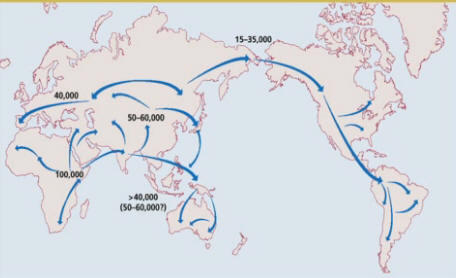
Thousands of years ago, modern humans met Neanderthals in Europe at whatever the equivalent of a singles bar was. They started having a bunch of sex, and now we exist. In the throes of creating the future of humanity, Neanderthals gave us two things: their kickass, pterodactyl-fighting immune systems and allergies.
Those are the discoveries of two papers published Thursday from researchers at the M Institute for Evolutionary Anthropology, the Institut Pasteur and the National Center for Scientific Research in Paris.
We’ve already heard that 1% to 6% of modern Eurasian genomes came from two forms of early man, the Neanderthals and the Denisovans. But the new studies explore how our inherited traits affected genes, specifically Toll-like receptors, which detect and respond to things like bacteria, fungi and parasites.
.
 Image Credit: Getty Images
.
.
Click link below for article:
http://mic.com/articles/132158/your-body-fights-sickness-like-a-caveman-and-that-s-a-good-thing#.C2NzcXuJl
.
__________________________________________
November 28, 2013
Mohenjo
Science
amazon, Ancient Human Breeding, ancient human history, Ancient Human Interbreeding, Ancient Human Sex, Ancient Humans, Ancient Humans Sex, anthropology, business, Business News, Denisovans, Denisovans Humans, evolution, Hotels, huffingtonpost, human-rights, Humans Neanderthals, Humans Neanderthals Breeding, LONDON, Mark Thomas, medicine, mental-health, Modern Humans, neanderthals, Prehistory, research, Royal Society, Science, Science News, Slideshow, technology, Technology News, travel, University College London, vacation, Video
FROM

Click link below picture
.
The ancient genomes, one from a Neanderthal and one from a different archaic human group, the Denisovans, were presented on 18 November at a meeting at the Royal Society in London. They suggest that interbreeding went on between the members of several ancient human-like groups living in Europe and Asia more than 30,000 years ago, including an as-yet unknown human ancestor from Asia.
“What it begins to suggest is that we’re looking at a ‘Lord of the Rings’-type world — that there were many hominid populations,” says Mark Thomas, an evolutionary geneticist at University College London who was at the meeting but was not involved in the work.
The first Neanderthal and the Denisovan genome sequences revolutionized the study of ancient human history, not least because they showed that these groups interbred with anatomically modern humans, contributing to the genetic diversity of many people alive today.
.
.
.
Click link below for story, video and slideshow:
.
__________________________________________
March 7, 2013
Mohenjo
Science
amazon, anthropology, big-game hunters, business, climate, dinner, Environment, evolution, featured, France, game hunters, Hotels, human-origins, hunting, hunting skills, limited hunting skills, mammal populations, Mammoth, nbc news, nbcnews, neanderthal, neanderthals, Portugal, rabbits, research, rhino, Science, Science News, Spain, spain portugal, technology, Technology News, travel, vacation

Click link below picture
.
Neanderthals were big-game hunters who feasted on mammoth and rhino but didn’t or couldn’t eat smaller, leaner meat. Their picky diet — or limited hunting skills — could have made them vulnerable when mammal populations shrank and their favorite dinner became harder to find.
A broad survey of animal remains recorded at early human and Neanderthal sites across Spain, Portugal and France gives us new insight as to what humans and Neanderthals ate. One trend stuck out to scientists who assembled the data: Rabbit remains became much more popular at human sites just about the time that Neanderthals disappeared, about 30,000 years ago.
.

.
.Click link below for article:
http://science.nbcnews.com/_news/2013/03/06/17208416-what-killed-neanderthals-scientists-blame-those-rascally-rabbits?lite
.
____________________________________________________
 James' World 2