It’s a creature so frightening that it may have inspired ancient legends such as the kraken, and so rare that only two intact adult specimens have ever been found. And on Tuesday, viewers around the world got to see the colossal squid like never before when scientists dissected one in a live webcast.
“This is essentially an intact specimen, which is almost an unparalleled opportunity for us to examine,” Kat Bolstad, squid scientist from the Auckland University of Technology and leader of the dissection, told the Associated Press. “This is a spectacular opportunity.”
Bolstad told AFP that the exam revealed the squid to be a female, still carrying eggs. Researchers also got an up-close look the eyes, which are nearly 14 inches in diameter.
Scientists from the University of California at Irvine may have found a way to restore the youthful flexibility of the still-developing brain. In a study on mice recently published in the journal Neuron, the researchers were able to re-activate a younger neural state in an older brain.
Most of us would rather not think about what happens to our bodies after death. But that breakdown gives birth to new life in unexpected ways, writes Moheb Costandi.
“It might take a little bit of force to break this up,” says mortician Holly Williams, lifting John’s arm and gently bending it at the fingers, elbow and wrist. “Usually, the fresher a body is, the easier it is for me to work on.”
Williams speaks softly and has a happy-go-lucky demeanor that belies the nature of her work. Raised and now employed at a family-run funeral home in north Texas, she has seen and handled dead bodies on an almost daily basis since childhood. Now 28 years old, she estimates that she has worked on something like 1,000 bodies.
Ahoy! Archaeologists excavating pirate Blackbeard’s sunken ship, named Queen Anne’s Revenge, recently unearthed from the wreckage various medical devices–and some of them look pretty darn terrifying.
Among the grisly finds were a urethral syringe that would have been used to treat syphilis, two pumps, and a porringer that would have been used in bloodletting, Live Science reported.
“We just have to understand that these people were suffering,” Dr. Linda Carnes-McNaughton, an archaeologist with the U.S. Department of Defense who volunteered on the excavation, told CNN. “They were seeking relief for any kind of ailment, and certainly if there was warfare on the water, there were wounds among other ailments that needed treatment. It wasn’t always a formally trained person in desperate times. That’s probably more common than we know.”
.
A urethral syringe used to treat syphilis found aboard Blackbeard’s ship Queen Anne’s Revenge, which wrecked off the coast of North Carolina in 1718. | North Carolina Department of Cultural Resources
Just how much has Earth changed since its Pangea days? You might be surprised.
Of course, our planet hasn’t always had seven continents. Deep in our planet’s geological past, Earth’s crust was just one giant supercontinent called Pangea, which broke apart into separate land masses around 200 million years ago.
Now scientists have detailed the remarkable transformation of our planet’s surface in a new, eye-popping computer model — which provides tantalizing insight into how the land on Earth breaks apart and skitters about.
Thanks to advances in 3-D printing, it’s now possible to whip up everything from pizza to prosthetics to human organs with the push of a button.
Now researchers have created a 3-D printer that works on the atomic scale, assembling complex molecules from scratch. And they say their molecule-making machine could revolutionize the drug-development process and simplify the fabrication of solar cells and other high-tech products.
A drug discovery revolution? “We’re really excited about the immediate impacts that this will have on drug discovery,” Dr. Martin D. Burke, a professor of chemistry at the University of Illinois at Urbana–Champaign and one of the researchers, says in a video released by the university.
Researchers examining a nearly 1,000-year-old statue of Buddha on display in Holland discovered something very unusual hidden inside: the mummy of a meditating monk.
Calling the mummy its “oldest patient ever,” the Meander Medical Center in the Dutch city of Amersfoort used a CT scanner to take images of the body inside the statue and an endoscope to examine the thoracic and abdominal cavities.
The mummy is believed to be that of Liuquan, a Buddhist monk who died in China around 1,100 A.D. During their examination, the researchers found that the mummy’s internal organs had apparently been removed and the space filled with “paper scraps that were printed with ancient Chinese characters,” the hospital said in a news release.
.
Buddha mummy statue (left) and CT scan image showing mummy inside (right).
Scientists are going gaga over the recent discovery of a baby woolly rhino.
The pristine specimen of the tiny extinct rhino–the only one of its type ever found–was discovered in permafrost along the bank of a stream in Siberia’s Sakha Republic, The Siberian Times reported.
“At first we thought it was a reindeer’s carcass, but after it thawed and fell down we saw a horn on its upper jaw and realized it must be a rhino,” Alexander ‘Sasha’ Banderov, the hunter who made the discovery, told the Times. “The part of the carcass that stuck out of the ice was eaten by wild animals, but the rest of it was inside the permafrost and preserved well.”
.
(Academy of Sciences Republic of Sakha/Siberian Times)
Tiny amounts of lead, chemical flame retardants and organophosphate pesticides, among other toxins, course through the blood of nearly every American. But just how much worry is a little poison worth?
A lot, especially when considering the cumulative effects of this chemical cocktail on children, warns a video unveiled Thursday during an environmental health conference in Ottawa, Canada. The seven-minute project, “Little Things Matter,” draws on emerging scientific evidence that even mild exposures to common contaminants can derail normal brain development — lowering IQs and raising risks of behavioral conditions such as attention deficit hyperactivity disorder, or ADHD.
“The chemical industry argues that the effect of toxins on children is subtle and of little consequence,” co-producer Bruce Lanphear, an environmental health expert at Simon Fraser University in British Columbia, states in the video. “But that is misleading.”
An ancient tragedy is shining new light on life in the Neolithic Era, as archaeologists have uncovered the remains of a woman who appears to have died with her twins during childbirth nearly 8,000 years ago.
It’s the oldest example of death by dystocia, or obstructed labor, and the earliest known example of twins on the archaeological record, researchers wrote in an article describing the discovery, published in the Feb. issue of the journal Antiquity.
Film and Writing Festival for Comedy. Showcasing best of comedy short films at the FEEDBACK Film Festival. Plus, showcasing best of comedy novels, short stories, poems, screenplays (TV, short, feature) at the festival performed by professional actors.
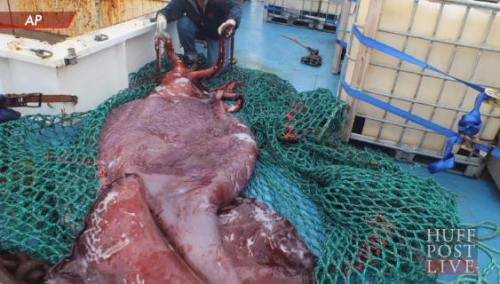 A colossal squid


 Earth’s tectonic plates
 .
.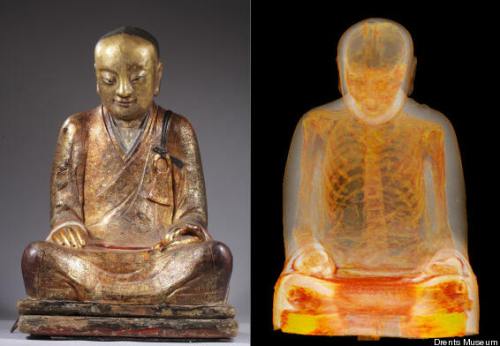 Buddha mummy statue (left) and CT scan image showing mummy inside (right).
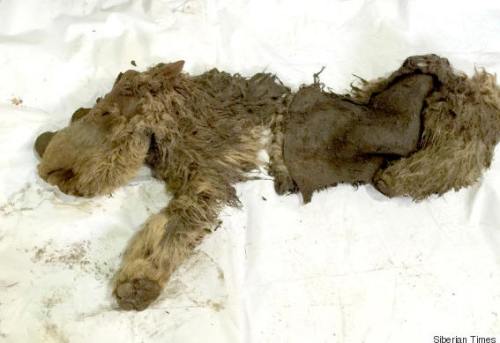 (Academy of Sciences Republic of Sakha/Siberian Times)
 .
. James' World 2