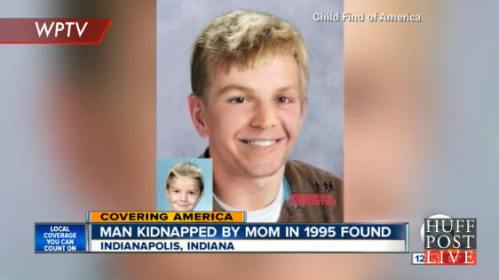
Nathan Slinkard was 5 years old when his mother failed to return him to his father as an Indiana court had ordered.
On Tuesday, the 23-year-old man was back home with his father, about a week after he walked into the United States Consulate in Guadalajara, Mexico, and identified himself.
Nathan Slinkard arrived in Indianapolis last week, 18 years after he went missing, the Hancock County Sheriff’s Department and National Center for Missing and Exploited Children said Tuesday.
You’re probably already thinking that the merger of the two biggest cable companies in the United States isn’t going to turn out great for regular people.
Guess what? You’re on to something. If Comcast’s proposed $45.2 billion acquisition of Time Warner Cable actually happens (and that’s a big if), then the giant company would have 30 million customers and dominate cable and Internet service throughout the U.S.
When Comcast announced its planned $45 billion merger with Time Warner Cable Thursday, the company cited the emergence of a new competitor as one reason that regulators should approve the deal: Google.
But some are questioning whether Google’s new ultra-fast Internet service, Google Fiber, presents enough of a challenge to justify dramatically increasing Comcast’s market power.
In a blog post, Comcast Executive Vice President David L. Cohen cited Google’s new role as an Internet provider as one reason why Comcast could not become too dominant. “Comcast believes that there can be no justification for denying the company the additional scale that will help it compete more effectively,” Cohen wrote.
.
Richard Robert McKeever, a fiber install technician for US Internet Corp., adjusts fiber optic internet cable so it does not become tangled during installation in Minneapolis, Minnesota, U.S., on Thursday, Sept. 11, 2013. The US Internet Corp. gigabit residential service is symmetrical with Google Inc. Fiber offering upload speeds of 1 Gbps and 1,024 Mbps for downloads. Photographer: Ariana Lindquist/Bloomberg via Getty Images | Bloomberg via Getty Images
I used to have a house. I used to go on vacations. I used to shop at department stores, get my hair done and even enjoy pedicures. Now, I don’t. I’m a member of the American “Used-to-Haves.”
Now, I’m renting an apartment and I’m desperately awaiting a check so I can pay the rent. Yet, I’m lucky to have an apartment that includes utilities. Despite my college degree from a prestigious college, and solid employment track record, I can’t get a job. It’s been so long since my corporate days, I now feel unemployable.
My age doesn’t help. But I’m as healthy as a thoroughbred, I appear quite young and would gladly accept a basic salary. I’m a bargain! But no. I’m freelancing for $15 an hour these days, but I used to earn $100 an hour. In fact, all the freelance hourly rates have been driven down to $15-30 an hour. To make ends meet, I also work as an aide ($13.75 an hour) and run a small local company. And my annual earnings are under $20,000.
When Senate Democrats fell just one vote short of advancing a bill to restore long-term unemployment insurance last Thursday, Russ Holton wept.
.
“Imagine that, a 44-year-old man crying while watching TV,” he said. He had watched the vote on C-SPAN 2. A day later, his cable provider cut him off because he hadn’t paid the bill.
.
Holton is one of the 1.7 million long-term unemployed people missing out on federal benefits because Congress stopped providing them in December. Six years ago, he was making $85,000 per year at his job in tech sales. Today, the seams of his life are fraying.
This image of a 100-foot crater was snapped by a NASA spacecraft last fall and released this week. The space agency says the impact formed sometime between July 2010 and May 2012, and sent debris as far as 9.3 miles away.
The crater and the big scar around it look blue due to the enhanced image and the removal of dust from the area, the agency said in a press release.
.
A fresh crater is seen on Mars in this image taken by the High Resolution Imaging Science Experiment (HiRISE) camera on NASA’s Mars Reconnaissance Orbiter. | NASA/JPL-Caltech/Univ. of Arizona
In the event of a future mass extinction, rats may be the animals best suited to repopulate the world, some scientists say.
And if rats did “take over” after such a wipeout, they’d likely balloon in size, scientists also say.
Mass extinctions have hit the Earth at least five times in geologic history, most recently about 65 million years ago, when scientists think an asteroid hit the planet and wiped out the dinosaurs. Mammals took advantage of the newly available ecological space and ultimately repopulated and dominated the animal kingdom.
.
Scientists say that after a mass extinction, oversized rats may repopulate Earth. | Simon Flint via Getty Images
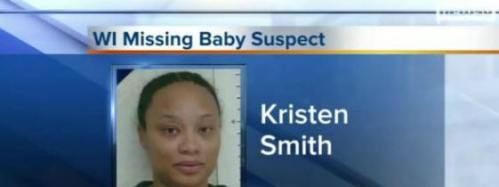
An hour after a woman reported her newborn son missing from a Wisconsin home, police were questioning her step-sister — found with a prosthetic pregnancy belly, baby clothes and a stroller, but no baby, according to court documents.
It was more than 24 hours after Kayden Powell went missing before authorities discovered the infant, less than a week old, in a plastic storage crate outside an Iowa gas station, miraculously alive and well despite frigid temperatures.
Kristen Smith of Denver had pretended to be pregnant, went to Wisconsin and stole her step-sister’s baby from his bassinet as his parents slept, court documents say. Then, as police closed in on her, she allegedly abandoned the infant, who was swaddled in blankets.
On Tuesday morning, a brain surgeon in Birmingham, Ala., walked six miles through a severe snow storm to save a patient’s life.
Dr. Zenko Hrynkiw, Trinity Medical Center’s only neurosurgeon, had just finished surgery at a neighboring hospital when Steve Davis, the charge nurse at Trinity’s neuro intensive care unit, called him with an emergency, AL.com reported. Hrynkiw attempted to drive to the hospital, but roadblocks prevented him from getting far.
Davis told The Huffington Post that both local authorities and Trinity tried to provide transportation for Hrynkiw, but to no avail.
“I called him again and he said, ‘I’m not getting anywhere, I’m walking,'” Davis told HuffPost.
Before they become part of our consciousness, memories aren’t much more than molecules. But how exactly do memories get stored in the brain?
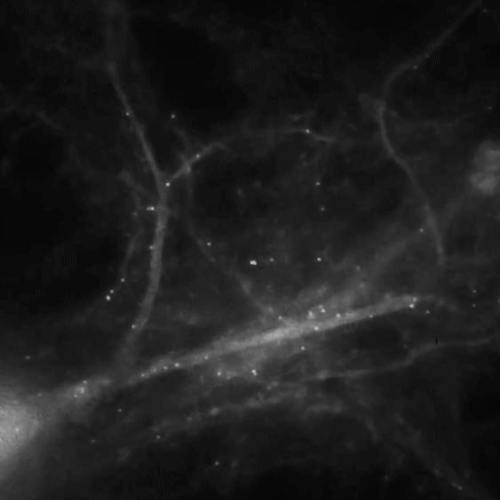
With the help of mice and some advanced imaging techniques, scientists from the Albert Einstein College of Medicine of Yeshiva University in New York recently sought to answer that question. This short video illustrates how the brain makes memories on a molecular level.
The team put fluorescent tags on messenger RNA (mRNA) molecules that code for beta-actin, a protein believed to be crucial for the formation of memories. As described in two studies published Jan. 24 in the journal Science, the team then stimulated neurons in the hippocampus — the part of the brain where memories are formed — and monitored a living brain cell.
Film and Writing Festival for Comedy. Showcasing best of comedy short films at the FEEDBACK Film Festival. Plus, showcasing best of comedy novels, short stories, poems, screenplays (TV, short, feature) at the festival performed by professional actors.







 James' World 2