The dancing was filmed on Moscow’s “overlook” in Sparrow Hills. Looking down from the “overlook” you see the largest stadium in Russia (140K capacity). The ski jump is for practice and training – if you make a mistake, you end up in the river below. The church at the end opposite to the ski jump is Holy Trinity Russian Orthodox Church. The large building on the opposite side of the road beside the overlook is the Moscow State University and the top of the tall center tower has one of the Kremlin stars.
Try and not smile as you watch this – you will. It’s a nice, gentle clip. “Putting on the Ritz”, in Moscow, no less! What a crazy, delightful, ever changing world! Who could have thought that in 2012 young people in Moscow would put on a “flash mob” happening, dancing to an 83-year-old American song?
Sound ON! Enjoy…
.
Young people in Moscow put on a “flash mob” happening, dancing to an 83-year-old American song?
Fishing in Cornwall, England, UK, has traditionally been one of the main elements of the economy of the county.Pilchard fishing and processing was a thriving industry in Cornwall from around 1750 to around 1880, after which it went into an almost terminal decline. During the 20th century the varieties of fish taken became much more diverse and crustaceans such as crab and lobster are now significant. Much of the catch is exported to France due to the higher prices obtainable there. Though fishing has been significantly damaged by overfishing, (the Southwest Handline Fishermen’s Association has started to revive the fishing industry). However, as of 2007, stocks are improving.
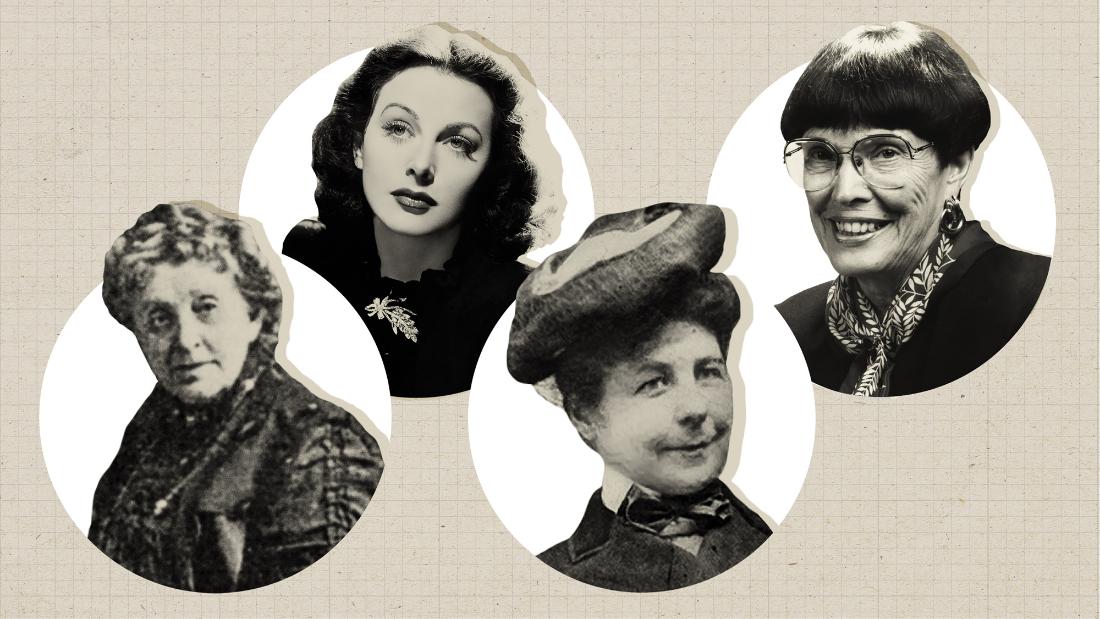
If you’ve used Wi-Fi, windshield wipers or a dishwasher — and who hasn’t? — you have a woman to thank.
Male inventors such as Henry Ford, Nikola Tesla and Alexander Graham Bell get all the press. But this Women’s History Month, it’s important to note that women have been the masterminds behind some invaluable creations, too.
.
Take Radia Perlman. She holds more than 100 US patents and paved the way for the development of the internet. Or Beulah Louise Henry, known as “Lady Edison” after she obtained 49 patents for her inventions, including an ice cream freezer. Or Carolyn Bertozzi, named on 50 US patents, who invented her own field of study: bio-orthogonal chemistry. The list goes on.
Get That Money is an exploration of the many ways we think about our finances — what we earn, what we have, and what we want.
Abigail Disney, 59, is an activist and Emmy-winning documentary filmmaker. She is also the granddaughter of Roy O. Disney, co-founder of The Walt Disney Company, making her an heiress to the Disney family fortune (she declines to say how much she inherited, but has given away over $70 million since she turned 21). Raised in North Hollywood, California, with three siblings, she has a doctorate from Columbia and currently lives in New York. Here, she talks about the paradoxes of growing up in tremendous wealth; she will also be featured on the Cut’s podcast, The Cut on Tuesdays, on April 9.
Mention McDonald’s to someone today, and they’re more likely to think about Big Mac than Big Data. But that could soon change: The fast-food giant has embraced machine learning, in a fittingly super-sized way.
McDonald’s is set to announce that it has reached an agreement to acquire Dynamic Yield, a startup based in Tel Aviv that provides retailers with algorithmically driven “decision logic” technology. When you add an item to an online shopping cart, it’s the tech that nudges you about what other customers bought as well. Dynamic Yield reportedly had been recently valued in the hundreds of millions of dollars; people familiar with the details of the McDonald’s offer put it at over $300 million. That would make it the company’s largest purchase since it acquired Boston Market in 1999.
The burger giant can certainly afford it; in 2018 alone it tallied nearly $6 billion of net income, and ended the year with a free cash flow of $4.2 billion. But that still doesn’t address the bigger question of why. For that, you have to head to the drive-thru.
There are many galleries included each containing several photos. There is also, narrative for each gallery and much more. If you like beautiful photos you can get your fill with this post.
I discovered that when you finish perusing a gallery you may:
Use your browser or smartphone back arrow (<-) to return to the set of galleries for your next selection.
Get ready for the next generation of wifi technology: Wi-fi 6 (for so it is named) is going to be appearing on devices from next year. But will you have to throw out your old router and get a new one? And is this going to make your Netflix run faster? Here’s everything you need to know about the new standard.
A brief history of wifi
Those of you of a certain age will remember when home internet access was very much wired—only one computer could get online, a single MP3 took half an hour to download, and you couldn’t use the landline phone at the same time.
Thank goodness for wifi technology then, which gradually became cheap and compact enough to fit inside a router suitable for home use. The first wifi protocol appeared in 1997, offering 2Mbit/s link speeds, but it was only with the arrival of 802.11b and 11Mbit/s speeds in 1999 that people seriously started thinking about home wifi.
Wildlife Watching. Algonquin Park is home to 55 mammal species, 32 kinds of reptiles and amphibians (none venomous), and more than 140 species of breeding birds.One cannot expect to see all of them in a single visit but, by following a few guidelines, it is possible to see a good sample.
Film and Writing Festival for Comedy. Showcasing best of comedy short films at the FEEDBACK Film Festival. Plus, showcasing best of comedy novels, short stories, poems, screenplays (TV, short, feature) at the festival performed by professional actors.






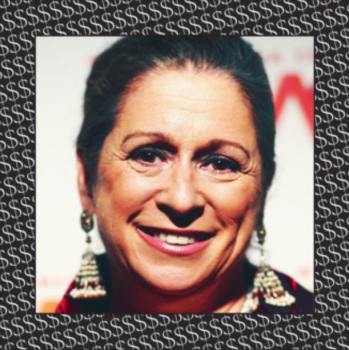 Abigail Disney

 Gallery 1
 Photo: rawpixel
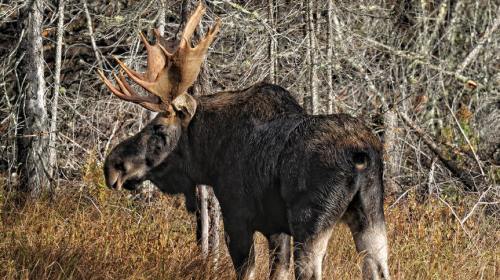 A moose in Algonquin Provincial Park
