1 Honor is no more associated with fools than snow with summer or rain with harvest.
Matthew Henry’s Commentary
Chapter 26
Verse 1
Note, 1. It is too common a thing for honor to be given to fools, who are utterly unworthy of it and unfit for it. Bad men, who have neither wit nor grace, are sometimes preferred by princes and applauded and cried up by the people. Folly is set in great dignity, as Solomon observed, Eccl. 10:6.
2. It is very absurd and unbecoming when it is so. It is an incongruous as snow in summer, and as great a disorder in the commonwealth as that is in the course of nature and in the seasons of the year; nay, it is as injurious as rain in harvest, which hinders the laborers and spoils the fruits of the earth when they are ready to be gathered. When bad men are in power they commonly abuse their power, in discouraging virtue, and giving countenance to wickedness, for want of wisdom to discern it and grace to detest it.
Ecclesiastes 10:6
New Living Translation
6 when they give great authority to foolish people and low positions to people of proven worth.
It’s been a tough couple of years in America. Whether Biden wins or Trump, Christians can exit campaign mode, take a moment, and regroup. Let’s talk about why that’s a great idea.
It seems that many Christians have become like the proverbial frog in the cooking pot. We want to protect the most vulnerable, so we’ve jumped in the pot marked “Trump.” Or we want to see equality, so we’ve jumped in the pot marked “Biden.”
(If you’ve read any of my posts, you know I’m more concerned about the Trump pot, but the Biden pot is also concerning. Politics always attracts the self-serving.)
The problem is, both of these pots are on the stove, and the heat is on. It’s been on for some time, but like frogs, we haven’t paid attention.
Our environment has become downright dangerous – and, instead of getting the heck outta there, we’ve adjusted.
Trump-supporting Christians have abandoned the call to be Christlike and turned Christianity into something barely recognizable. It’s time to ask ourselves honestly: what are we doing?
I’ve always referred to myself a lifelong Christian, and I intend to remain faithful to God till I die. I’m very grateful for being raised in the church. If not for the solid, heartfelt faith of my parents and extended family, I’m not sure I’d still be wearing the “Christian” label. Because of Trumpism.
Here’s a quote I saw recently, trying to belittle atheists:
“When people choose not to believe in God, they do not thereafter believe in nothing, they then become capable of believing in anything.”
I propose that, no, the exact opposite is true:
“When people choose to believe in God, they then become capable of believing in anything.”
It’s true. We have been guilty of a massive lack of discernment, and the sooner we admit it, the better.
First, we paired ourselves with a man who…well, you know the long list of strikes already against him even before he won in 2016. In spite of his many indiscretions and deep-seated vices, we Christians excused and embraced him. Every time some new trespass came to light, we found a way to brush it off.
Everyone is a work in progress; everyone deserves forgiveness and a second chance, but we’re not talking about a friend or coworker here. This is the man on track to be in charge of our country – the primary steward of our taxes, the priority-setter for the whole world. Before election day, he showed us that he was a fake Christian.
It’s practically a Golden Calf. The Conservative Political Action Conference (CPAC) is in full swing, and nothing has caused more buzz than the full-size golden statue of Donald Trump, dressed in American flag shorts and flip-flops. (I’m not allowed to steal a photo of this statue to show you, but you can see it here. It’s quite a sight, and it was made in Mexico.)
Honestly, if this statue doesn’t wake conservative Christians up to the idolatry they’re indulging in, nothing will – unless Charlton Heston comes back from the dead and recaps his Moses. That might do it.
Oh, wait. I spoke too soon – check it out. It didn’t work.
This is a come-to-Jesus moment for y’all, conservative, Evangelical Christians. You have a golden statue in front of you. It’s so obvious, you can’t possibly miss it…can you?
I spent most of my life as a conservative, Evangelical Christian. I often wonder, if I hadn’t gotten out around 2014, would the Trump frenzy have caused me to leave? I honestly don’t know. I do know that, as unnerving as it was to leave behind something I’d known all my life, I couldn’t stay with something that I’d seen to be so defective.
I pray that my Evangelical-leaning, pro-Trump readers will courageously open their eyes now when an almost-literal Golden Calf is staring you in the face.
A golden statue of Donald Trump that has caused a stir at the annual US gathering of conservatives was made in Mexico – a country the former president frequently demonized.
The statue is larger than life, with a golden head and Trump’s trademark suit jacket with a white shirt and red tie. Video and pictures of the tribute being wheeled through the halls of the Conservative Political Action Conference (CPAC) in Orlando, Florida, went viral on Friday.
The conference is seen as a vital gathering of the Republican right, and this year has become a symbol of Trump’s continued grip on the party, despite being cast out of office after two impeachments, seemingly endless parades of scandals, and a botched response to the coronavirus pandemic that has cost half a million lives in the US.
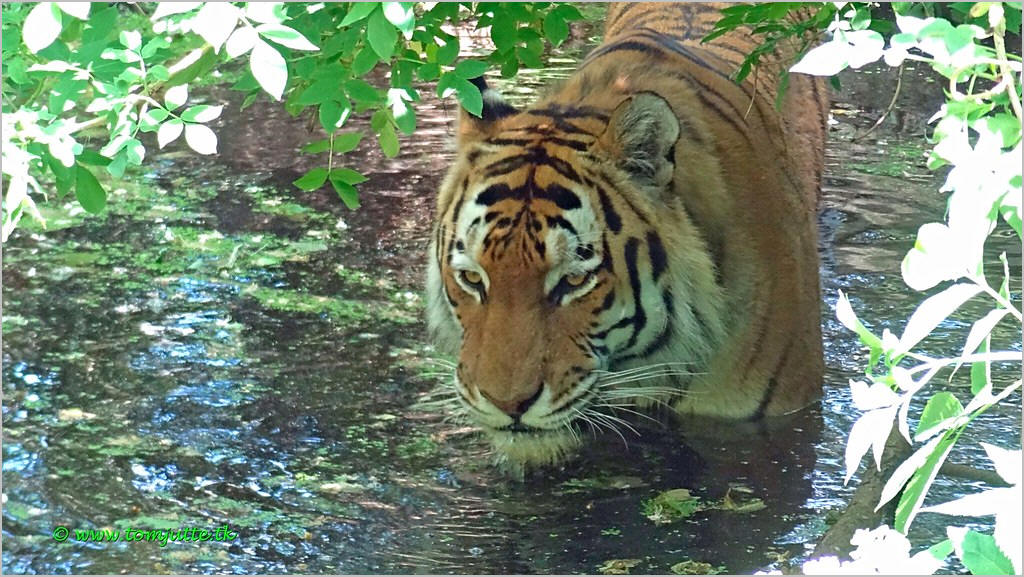
The Siberian tiger developed some physical adaptations to endure the cold climate of its habitat, like a thick layer of fat and a very dense fur, paler and with fewer dark stripes compared to other tigers. It has yellow or reddish skin with dark, narrow, and widely separated dark brown stripes. The chest, belly, inner limbs, and the area around the neck are white. It has a flexible body and a long tail, which measures about 39 inches in males and about 36 inches in females.
.
An image of a Siberian tiger in the Sikhote-Alin mountains of Russia
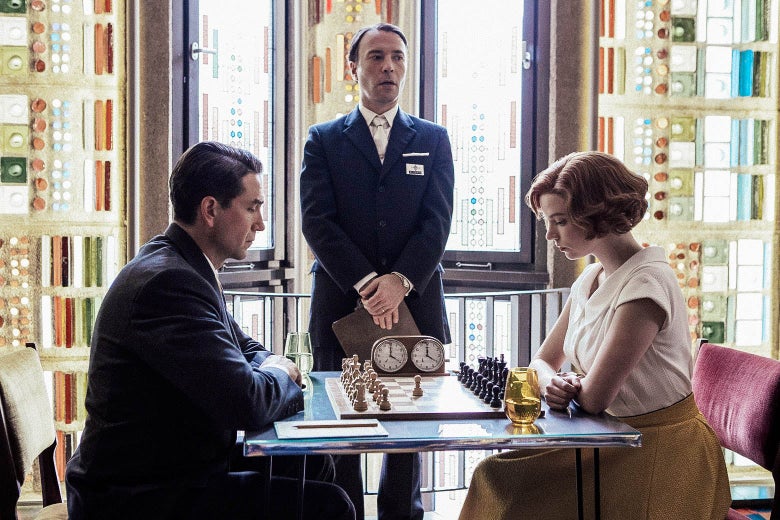
Netflix’s popular miniseries The Queen’s Gambit, which follows a young chess prodigy as she ascends the ranks of U.S. and world championship tournaments, has earned widespread praise from chess enthusiasts, historians, and even professionals for its startlingly accurate portrayal of chess gameplay and the world of high-stakes competition.Much of the reason The Queen’s Gambit has avoided the mockery that so many other depictions of the game have received is that the show’s creators consulted with chess heavyweights, including instructor Bruce Pandolfini (who advised the novel The Queen’s Gambit is adapted from) and grandmaster Garry Kasparov, a former world chess champion considered by some to be the greatest player ever. I spoke with Kasparov to learn more about his work on The Queen’s Gambit, what the show gets right about chess in the ’60s, and how it compares with other on-screen depictions of the game. Our conversation has been edited and condensed for clarity.
.
The Queen’s Gambit.Photo illustration by Slate. Photo by Netflix.
During the first wave of the pandemic in the winter, Mo Willems’s ‘‘Lunch Doodles’’ series, in which the beloved children’s-book author and illustrator led viewers in endearingly no-frills online drawing sessions, was a lifeline to families desperate to exercise their imaginations during the lockdown. (He pitched in again by hosting another doodle session on election night.) That Willems, who is 52, was ready to help during a hard, confusing time was no surprise. His two best-selling series of books — one about the odd couple Elephant and Piggie, the other about the mercurial Pigeon — resonate with the hard, confusing time of early childhood. In their whimsy, slapstick, and emotional matter-of-factness, these books have established their creator as sort of a cross between Dr. Seuss and Charles Schulz, with all the responsibility that implies. ‘‘The idea that one of my books would be one of the first that a child reads on their own — that’s incredibly powerful,’’ says Willems, who just published the latest in his Unlimited Squirrels series, ‘‘I Want to Sleep Under the Stars!’’ ‘‘Reading by yourself is the first time you don’t need your parents to do something vital. It’s a liberation.’’
When I was first putting together my questions for you, I realized that a lot of them had to do with things like how we can help kids with the ambient stress of parents’ worrying about the pandemic or politics. But maybe it’s wrong for me to assume that a has unique ideas about kids’ emotions. So let me ask you: Do you think you have special insights about kids? Probably the most fundamental insight is that even a good childhood is difficult: You’re powerless; the furniture is not made to your size. But when parents come up to me and ask, ‘‘How do you talk to the kid about the pandemic?’’ they’re asking me to be disloyal. They’re actually asking about a form of control. ‘‘Hey, you have this relationship with kids. Help me control them.’’ [Expletive] you! I’m not on your side. I wish there was a better way to say it. The real answer is: Show that you don’t know. Show them that you’re fumbling. Why wouldn’t you? How do you expect your child to fall and then stand up and say ‘‘That’s OK’’ when you won’t even say, ‘‘I don’t know how to discuss the pandemic with you’’? Are children not allowed to be upset? Does that inconvenience you? You want to protect and prepare them. But I’m not saying it’s easy.
Film and Writing Festival for Comedy. Showcasing best of comedy short films at the FEEDBACK Film Festival. Plus, showcasing best of comedy novels, short stories, poems, screenplays (TV, short, feature) at the festival performed by professional actors.