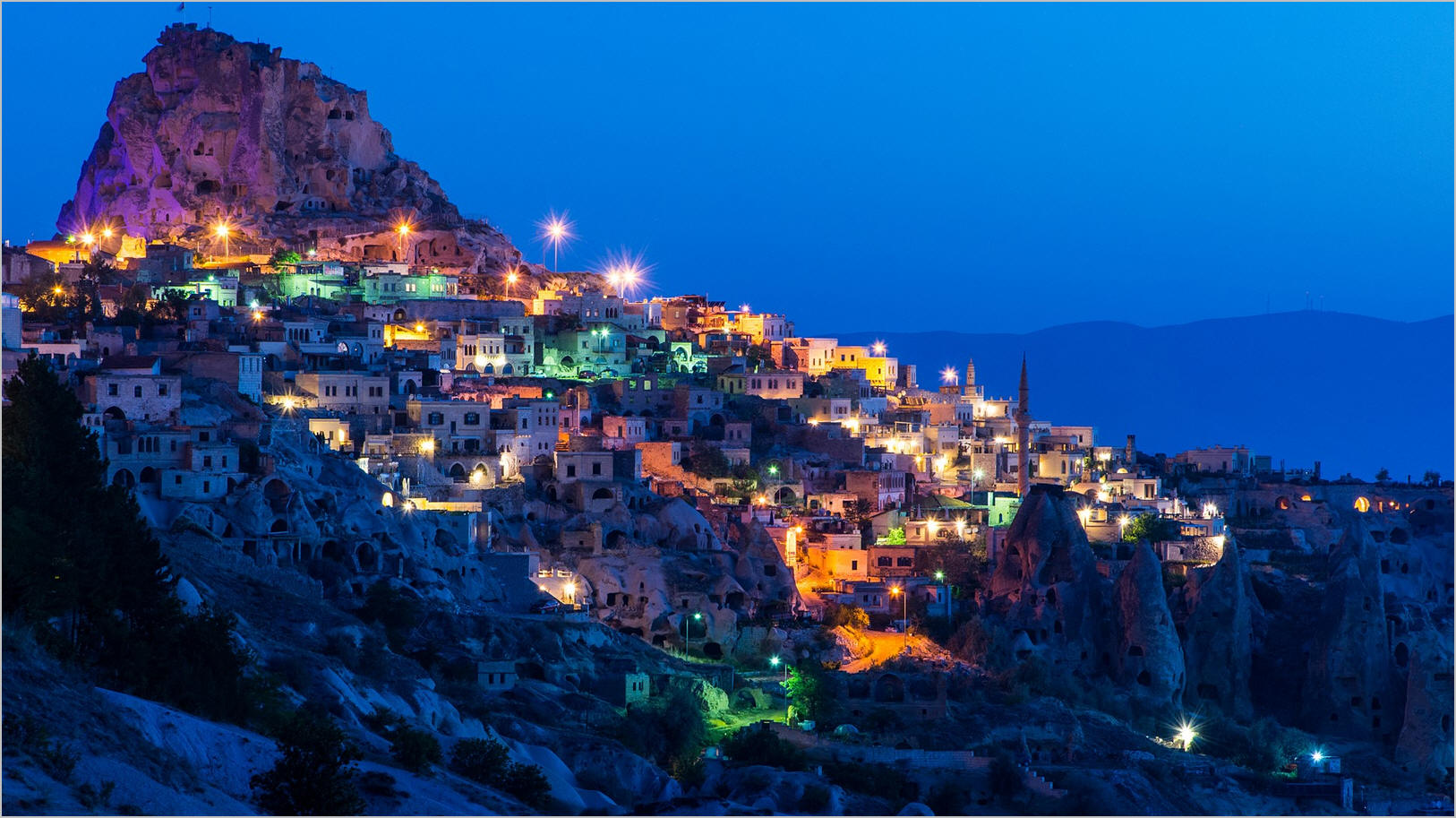
The Czech Republic, also known by its short-form name, Czechia, is a landlocked country in Central Europe. It is bordered by Austria to the south, Germany to the west, Poland to the northeast, and Slovakia to the east. The Czech Republic has a hilly landscape that covers an area of 78,866 square kilometers (30,450 sq mi) with a mostly temperate continental climate and oceanic climate. It is a unitary parliamentary republic. (Wikipedia)
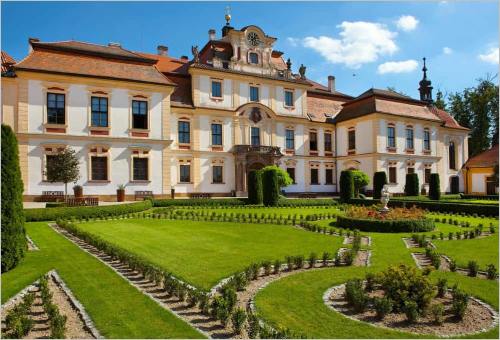
With one of the highest densities of castles in the world, the Czech Republic contains many formidable chateaus. Spend the night in a fairytale fortress while discovering the beauty of Czechia beyond Prague city center. (theculturetrip)
It was March 23, 2018, just days after the revelation that Cambridge Analytica, a consultancy that worked on Donald Trump’s 2016 presidential election campaign, had surreptitiously siphoned the personal data of tens of millions of Americans from their Facebook accounts in an attempt to influence how they voted. It was the biggest privacy breach in Facebook’s history, and Quiñonero had been previously scheduled to speak at a conference on, among other things, “the intersection of AI, ethics, and privacy” at the company. He considered canceling, but after debating it with his communications director, he’d kept his allotted time.
As he stepped up to face the room, he began with an admission. “I’ve just had the hardest five days in my tenure at Facebook,” he remembers saying. “If there’s criticism, I’ll accept it.”
The Cambridge Analytica scandal would kick off Facebook’s largest publicity crisis ever. It compounded fears that the algorithms that determine what people see on the platform were amplifying fake news and hate speech, and that Russian hackers had weaponized them to try to sway the election in Trump’s favor. Millions began deleting the app; employees left in protest; the company’s market capitalization plunged by more than $100 billion after its July earnings call.
.
The company’s AI algorithms gave it an insatiable habit for lies and hate speech. Now the man who built them can’t fix the problem.
In 1883, a Jerusalem antiquities dealer named Moses Wilhelm Shapira announced the discovery of a remarkable artifact: 15 manuscript fragments, supposedly discovered in a cave near the Dead Sea. Blackened with a pitch-like substance, their paleo-Hebrew script nearly illegible, they contained what Shapira claimed was the “original” Book of Deuteronomy, perhaps even Moses’ own copy.
The discovery drew newspaper headlines around the world, and Shapira offered the treasure to the British Museum for a million pounds. While the museum’s expert evaluated it, two fragments were put on display, attracting throngs of visitors, including Prime Minister William Gladstone.
Then disaster struck.
.
In 1883, 15 manuscript fragments found near the Dead Sea caused an international sensation.
Knoxville is a city in, and the county seat of, Knox County in the U.S. state of Tennessee. As of July 1, 2019, Knoxville’s population was 187,603, making it the largest city in the East Tennessee Grand Division, and the state’s overall third largest city after Nashville and Memphis. Knoxville is the principal city of the Knoxville Metropolitan Statistical Area, which had an estimated population of 869,046 in 2019.
First settled in 1786, Knoxville was the first capital of Tennessee. The city struggled with geographic isolation throughout the early 19th century. The arrival of the railroad in 1855 led to an economic boom. During the Civil War, the city was bitterly divided over the secession issue and was occupied alternately by both Confederate and Union armies. Following the war, Knoxville grew rapidly as a major wholesaling and manufacturing center. The city’s economy stagnated after the 1920s as the manufacturing sector collapsed, the downtown area declined and city leaders became entrenched in highly partisan political fights. Hosting the 1982 World’s Fair helped reinvigorate the city, and revitalization initiatives by city leaders and private developers have had major successes in spurring growth in the city, especially the downtown area.
While 2020 has been brutal on the whole, it’s been an unusually fruitful year for apps. In part, that’s because of the coronavirus pandemic, which has upended the ways we live and work for the foreseeable future. We’ve seen a glut of new and upgraded tools for working from home, of course, along with more apps to help us preserve our mental well-being.
To avoid the obvious, this list of 2020’s best apps won’t include the likes of Zoom and Slack—the stuff you already know about. But our mix does include some lesser-known ways to make those apps even better. Here are the best new and significantly upgraded apps of the year:
Better together
Unpresumptuous scheduling: While there are plenty of tools that promise to simplify event scheduling, Available for Gmail does so without any tacky branded widgets or awkward third-party websites to visit. The free Chrome extension adds a calendar button to Gmail’s compose window, letting you pick times from Google Calendar through a pop-up menu. Once you’ve chosen some meeting slots, the extension inserts them into the email as plain text so recipients can respond with their preferred time. It’s not as slick as other scheduling solutions like Calendly and Boomerang, but that’s the point. [Chrome]
Apple adds more functions to the iPhone every year, but the more it can do, the more complicated it gets.
If you recently got a new iPhone after sitting out several generations — or maybe just don’t fiddle around with your phone a lot — you might be missing out on some easy ways to get more done, faster. The iPhone has a bunch of “hidden” menus that help you do things like search across apps, go back to the last screen, find widgets that show snapshots of certain information, or quickly turn your Wi-Fi off and on.
Cappadocia is a comune and town with approximately 550 inhabitants in the province of L’Aquila in the Abruzzo region of central Italy. It is part of Marsica. It’s also part of the “Borghi autentici d’Italia” club
The area, collected in the Valley of The Nerfa, between the south-ovest versant of the Caresolain Mountains (Padiglione and Aurunzo), and marks the border between Abruzzo and Lazio, in the center of the Appenino Centrale Abbruzzese.
It’s 100 km to Rome 135 km to Pescara, 68 to L’Aquila and 22 from Avezzano. In the comune are included the frazione of Petrella Liri, Verrechie and the touristic destination of Camporotondo, collocated on the Cesca Mountains, and the Homonym ski station.
If you’re a WhatsApp user, you will have seen the alarming stories warning about the messaging platform’s surprise privacy changes, many suggesting you switch to alternatives. The good news is you don’t need to do that—WhatsApp is still okay to use. The bad news, though, is that you do need to change these critical settings to stay safe.
WhatsApp is changing. The messaging platform has now confirmed changes first announced in October, that open up further data sharing with Facebook. This last week has been the toughest for WhatsApp since the damaging spyware revelations in 2019. The idea that the world’s largest private messenger will share data with the world’s most ruthless data machine has prompted a backlash. Installs of rival messengers are soaring, up hundreds of percent in the last few days.
Time for some perspective. Your most private and sensitive data on WhatsApp, your messages, will remain private to you and the people you communicate with; messages are end-to-end encrypted as they’re sent—only you and the other side of each message can decrypt its content. Even WhatsApp has no means of accessing the content in transit, while the messages on your phone are protected by the security of your device.
Film and Writing Festival for Comedy. Showcasing best of comedy short films at the FEEDBACK Film Festival. Plus, showcasing best of comedy novels, short stories, poems, screenplays (TV, short, feature) at the festival performed by professional actors.


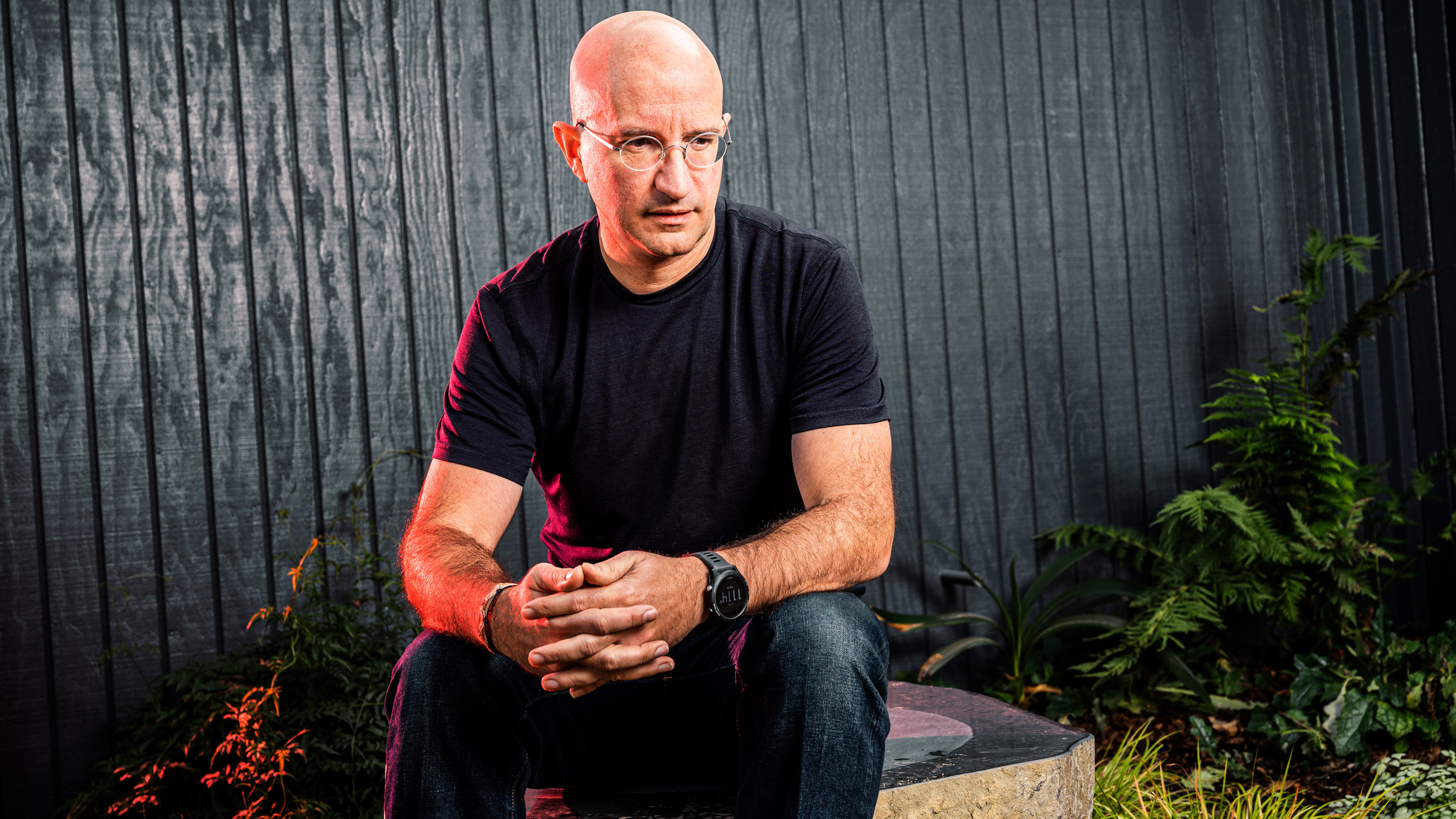 The company’s AI algorithms gave it an insatiable habit for lies and hate speech. Now the man who built them can’t fix the problem.





 [Photo: Dousan_Miao/iStock]