August 8, 2021
Mohenjo
Business, Food For Thought, Human Interest, Science, Technical
amazon, business, Business News, current-events, Future, Hotels, human-rights, medicine, mental-health, research, Science, Science News, technology, Technology News, travel, vacation

Click the link below the picture
.
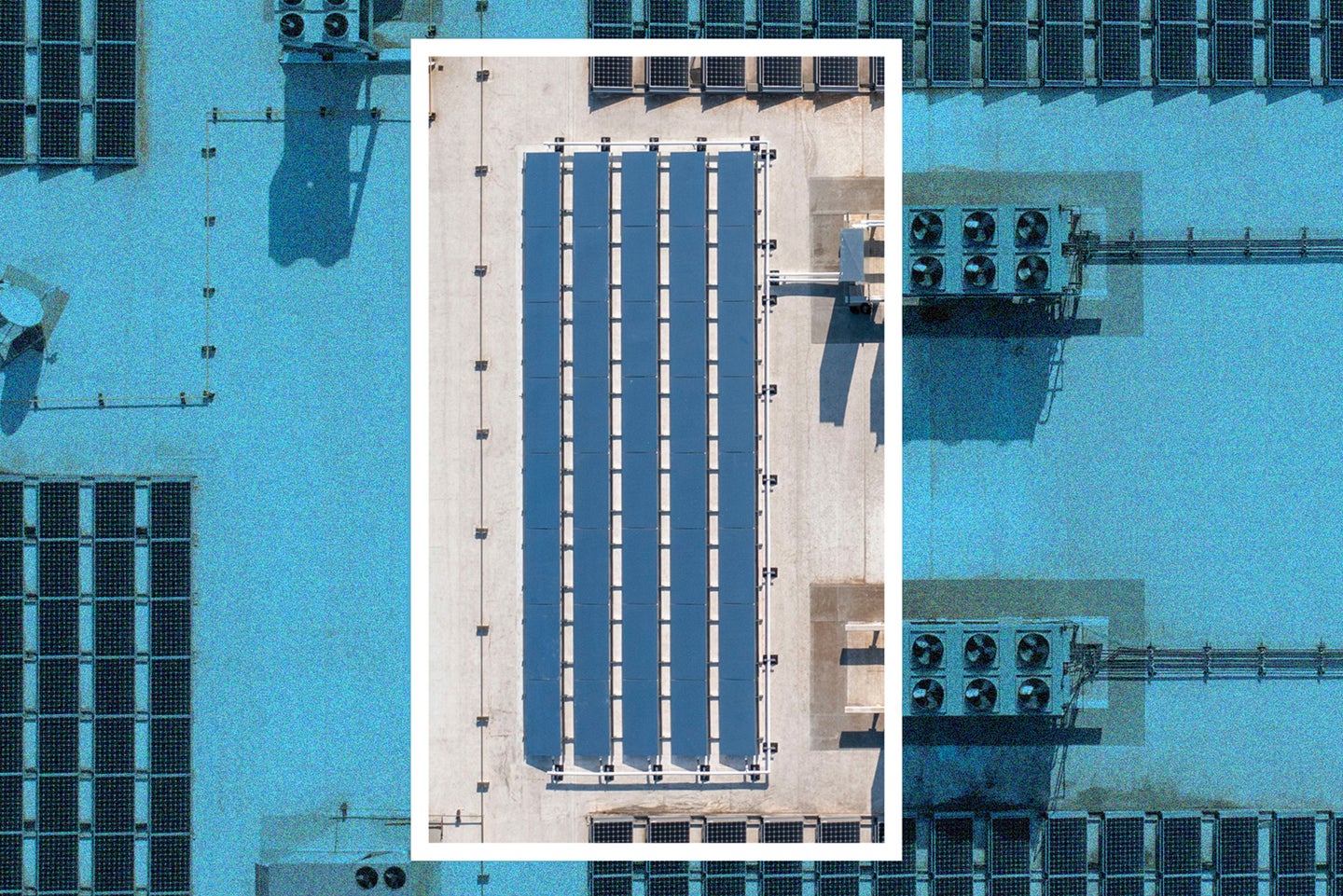
They look like mirrors: 32 rectangles neatly arranged in eight rows on the rooftop of a supermarket called Grocery Outlet in Stockton, California. Shimmering beneath a bright sky, at first glance they could be solar panels, but the job of this rig is quite different. It keeps the store from overheating.
Tilted toward the sun, the panels absorb almost none of the warmth beating down on them; they even launch some into space, improving the performance of the systems that keep things inside cold. The feat relies on a phenomenon called radiative cooling: Everything on Earth emits heat in the form of invisible infrared rays that rise skyward. At night, in the absence of mercury-raising daylight, this can chill something enough to produce ice. When your car’s windshield frosts over, even if the thermometer hasn’t dipped below freezing? That’s radiative cooling in action.
To Aaswath Raman, who was a key mind behind Grocery Outlet’s shiny tiles, that effect seemed like an opportunity. “Your skin, your roof, the ground, all of them are cooling by sending their heat up to the sky,” he says.
.
 Courtesy SkyCool Systems
.
.
Click the link below for the article:
.
__________________________________________
August 7, 2021
Mohenjo
Business, Enthralling, Human Interest, Photographs
amazon, business, Business News, current-events, Future, Hotels, human-rights, medicine, mental-health, research, Science, Science News, technology, Technology News, travel, vacation

Click the link below the picture
.
Würzburg is a city in the traditional region of Franconia in the north of the German state of Bavaria. At the next-down tier of local government, it is the administrative seat of Lower Franconia. It spans the banks of the Main.
Würzburg is about 120 kilometers (75 mi) from Frankfurt am Main, to the west, and Nuremberg (Nürnberg), to the east. The city has around 130,000 residents.
The regional dialect is East Franconian.
The city is outside of the Landkreis Würzburg (district of Würzburg) but has its administrative center.
A Bronze Age (Urnfield culture) refuge castle, the Celtic Segodunum, and later a Roman fort, stood on the hill known as the Leistenberg, the site of the present Fortress Marienberg. The former Celtic territory was settled by the Alamanni in the 4th or 5th century, and by the Franks in the 6th to 7th. Würzburg was the seat of a Merovingian duke from about 650. It was Christianized in 686 by Irish missionaries Kilian, Kolonat, and Totnan. The city is mentioned in a donation by Duke Hedan II to bishop Willibrord, dated 1 May 704, in castellum Virteburch. The Ravenna Cosmography lists the city as Uburzis at about the same time. The name is presumably of Celtic origin, but based on a folk etymological connection to the German word Würze “herb, spice”, the name was Latinized as Herbipolis in the medieval period. Wikipedia
.
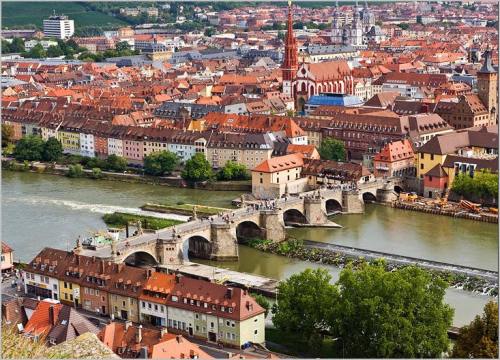 An image from Wurzburg, Germany
.
.
Click the link below for images:
.
__________________________________________
August 7, 2021
Mohenjo
Business, Food For Thought, Human Interest, Science, Technical
amazon, business, Business News, current-events, Future, Hotels, human-rights, medicine, mental-health, research, Science, Science News, technology, Technology News, travel, vacation

Click the link below the picture
.
More and more people are tossing out the harsh chemicals from their daily cleaning routine and instead of turning to natural products, such as baking soda and vinegar, to remove grime, disinfect surfaces, and leave spaces shiny and clean, according to Reader’s Digest. So why are these household items such effective cleaning agents? The answer is pretty basic — baking soda and vinegar lie on opposite ends of the pH scale.
“When you are cleaning using baking soda or vinegar, you are actually doing very complicated manipulations of molecules,” said May Nyman, a professor in the department of chemistry at Oregon State University.
Baking soda is the common name for sodium bicarbonate (NaHCO3). Most people probably associate it with cooking, because it makes your cakes and breads big and puffy. Vinegar is a dilute solution of acetic acid (HC2H3O2), produced by bacteria during fermentation.
.

Cleaning with baking soda can be an effective way to cut out harsh chemicals from your home. (Image credit: Credit: BSIP/UIG via Getty Images)
.
.
Click the link below for the article:
.
__________________________________________
August 7, 2021
Mohenjo
Business, Food For Thought, Human Interest, Science, Technical
amazon, business, Business News, current-events, Future, Hotels, human-rights, medicine, mental-health, research, Science, Science News, technology, Technology News, travel, vacation

Click the link below the picture
.
In the last 260 million years, dinosaurs came and went, Pangea split into the continents and islands we see today, and humans have quickly and irreversibly changed the world we live in.
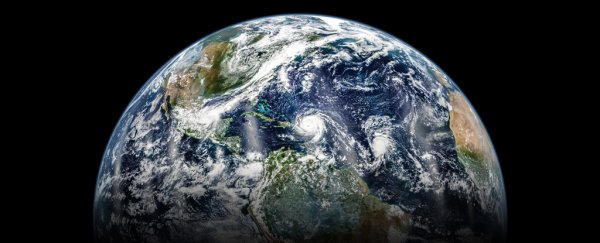
But through all of that, it seems Earth has been keeping time. A new study of ancient geological events suggests that our planet has a slow, steady ‘heartbeat’ of geological activity every 27 million years or so.
This pulse of clustered geological events – including volcanic activity, mass extinctions, plate reorganizations, and sea level rises – is incredibly slow, a 27.5-million-year cycle of catastrophic ebbs and flows. But luckily for us, the research team notes we have another 20 million years before the next ‘pulse’.
“Many geologists believe that geological events are random over time,” said Michael Rampino, a New York University geologist and the study’s lead author.
“But our study provides statistical evidence for a common cycle, suggesting that these geologic events are correlated and not random.”
The team conducted new analysis on the ages of 89 well-understood geological events from the past 260 million years.
.
 (NASA/Joshua Stevens)
.
.
Click the link below for the article:
.
__________________________________________
August 7, 2021
Mohenjo
Food For Thought, Human Interest, Made Me Laugh, Medical, missed News, Political, Science, Technical
amazon, business, Business News, current-events, Future, Hotels, human-rights, medicine, mental-health, research, Science, Science News, technology, Technology News, travel, vacation

.
News You might have missed!
Use your browser or smartphone back arrow (<-) to return to this table for your next selection.
.
__________________________________________
August 6, 2021
Mohenjo
Business, Enthralling, Human Interest, Photographs
amazon, business, Business News, current-events, Future, Hotels, human-rights, medicine, mental-health, research, Science, Science News, technology, Technology News, travel, vacation

Click the link below the picture
.
Litløy Lighthouse (Norwegian: Litløy fyr) is a coastal lighthouse in Bø Municipality in Nordland county, Norway. It is located on the island of Litløya in the Vesterålen archipelago, which overlooks the nearby Lofoten Islands.
The lighthouse and the adjoining buildings were built in 1912, and the light itself was electrified in 1959. In 1991, the light was automated. The people who worked at Litløy Lighthouse remained, however, first and foremost to do maintenance at the lighthouse and nearby beacons. Secondly, there was a need to keep shipping activity under observation, both to control and assist if need be. There was also a meteorological weather station on the island. Eventually, the cost of keeping the staff at the island caused the lighthouse to be depopulated on 26 June 2003.
In 2005-06, the Norwegian Coastal Administration (NCA) sold 20 lighthouses along the coast of Norway. One of these was Litløy Lighthouse. Bø municipality was offered to buy the lighthouse but chose not to accept the offer. It was then sold to Ellen Marie Hansteensen. She bought the lighthouse in order to make it accessible to the public, in accordance to Norwegian law (Stortingsmelding 28 (2000–2001)). Wikipedia
.
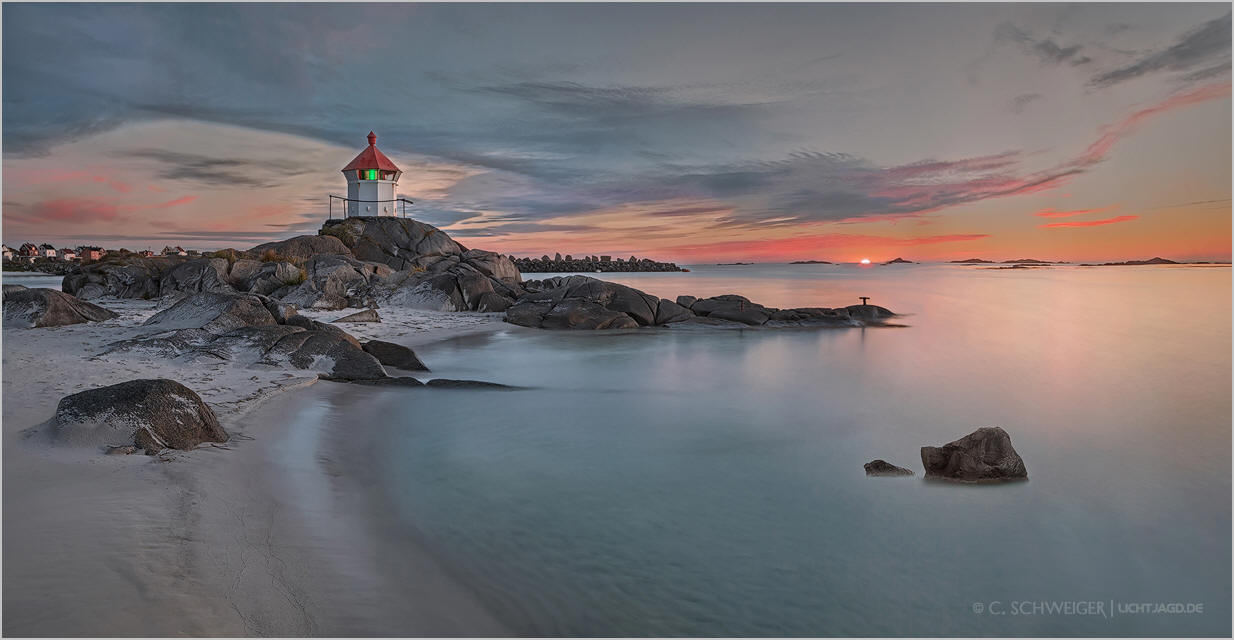
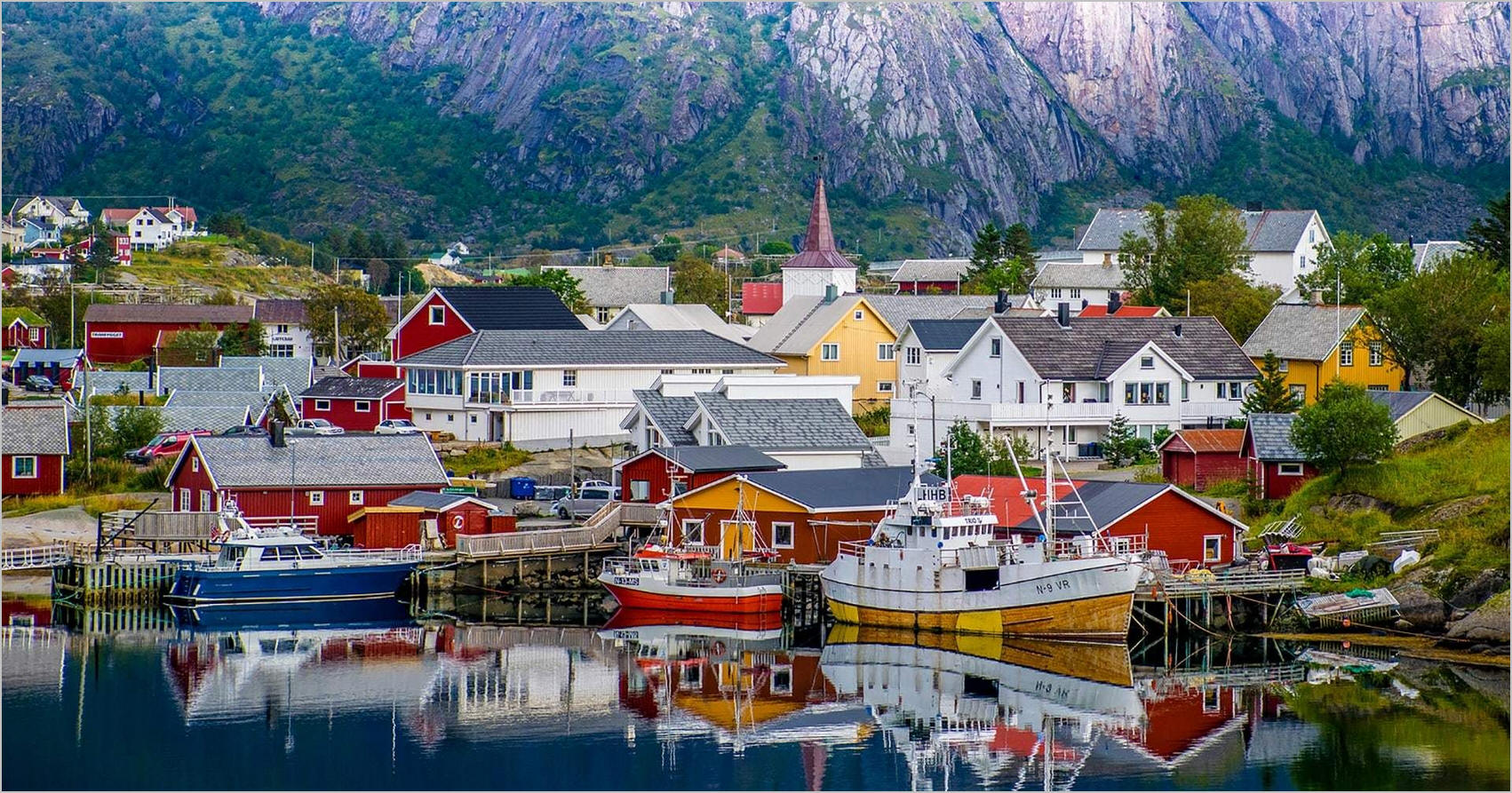 Images from Lofoten Islands Norway
.
.
Click the link below for images:
.
__________________________________________
August 6, 2021
Mohenjo
Business, Food For Thought, Human Interest, Science, Technical
amazon, business, Business News, current-events, Future, Hotels, human-rights, medicine, mental-health, research, Science, Science News, technology, Technology News, travel, vacation

Click the link below the picture
.
In upcoming research, scientists will attempt to show the universe has consciousness. Yes, really. No matter the outcome, we’ll soon learn more about what it means to be conscious—and which objects around us might have a mind of their own. What will that mean for how we treat objects and the world around us? Buckle in, because things are about to get weird.
What Is Consciousness?
The basic definition of consciousness intentionally leaves a lot of questions unanswered. It’s “the normal mental condition of the waking state of humans, characterized by the experience of perceptions, thoughts, feelings, awareness of the external world, and often in humans (but not necessarily in other animals) self-awareness,” according to the Oxford Dictionary of Psychology.
Scientists simply don’t have one unified theory of what consciousness is. We also don’t know where it comes from, or what it’s made of.
.

PM ImagesGetty Images
.
.
Click the link below for the article:
.
__________________________________________
August 6, 2021
Mohenjo
Business, Food For Thought, Human Interest, Science, Technical
amazon, business, Business News, current-events, Future, Hotels, human-rights, medicine, mental-health, research, Science, Science News, technology, Technology News, travel, vacation
Click the link below the picture
.
The universe bets on disorder. Imagine, for example, dropping a thimbleful of red dye into a swimming pool. All of those dye molecules are going to slowly spread throughout the water. Physicists quantify this tendency to spread by counting the number of possible ways the dye molecules can be arranged. There’s one possible state where the molecules are crowded into the thimble. There’s another where, say, the molecules settle in a tidy clump at the pool’s bottom. But there are uncountable billions of permutations where the molecules spread out in different ways throughout the water. If the universe chooses from all the possible states at random, you can bet that it’s going to end up with one of the vast set of disordered possibilities.
Seen in this way, the inexorable rise in entropy, or disorder, as quantified by the second law of thermodynamics, takes on an almost mathematical certainty. So of course physicists are constantly trying to break it.
One almost did. A thought experiment devised by the Scottish physicist James Clerk Maxwell in 1867 stumped scientists for 115 years. And even after a solution was found, physicists have continued to use “Maxwell’s demon” to push the laws of the universe to their limits.
.

It took physicists 115 years to tame Maxwell’s Demon. Samuel Velasco/Quanta Magazine
.
.
Click the link below for the article:
.
__________________________________________
August 6, 2021
Mohenjo
Crime, Food For Thought, Human Interest, Medical, missed News, Political, Science, Technical
amazon, business, Business News, current-events, Future, Hotels, human-rights, medicine, mental-health, research, Science, Science News, technology, Technology News, travel, vacation
.
News You might have missed!
Use your browser or smartphone back arrow (<-) to return to this table for your next selection.
.
__________________________________________
August 5, 2021
Mohenjo
Business, Enthralling, Human Interest, Photographs
amazon, business, Business News, current-events, Future, Hotels, human-rights, medicine, mental-health, research, Science, Science News, technology, Technology News, travel, vacation
Click the link below the picture
.
Warsaw ( WOR-saw; Polish: Warszawa [varˈʂava]) is the capital and largest city of Poland. The metropolis stands on the Vistula River in east-central Poland and its population is officially estimated at 1.8 million residents within a greater metropolitan area of 3.1 million residents, which makes Warsaw the 7th most populous capital city in the European Union. The city area measures 517.24 square kilometers (199.71 sq mi), while the metropolitan area covers 6,100.43 square kilometers (2,355.39 sq mi). Warsaw is an alpha global city, a major international tourist destination, and a significant cultural, political, and economic hub. Its historical Old Town was designated a UNESCO World Heritage Site.
The city rose to prominence in the late 16th century, when Sigismund III decided to move the Polish capital and his royal court from Kraków. The elegant architecture, grandeur, and extensive boulevards earned Warsaw the nickname ‘Paris of the North’ prior to the Second World War. Bombed at the start of the German invasion in 1939, the city withstood a siege but was largely destroyed by the Warsaw Ghetto Uprising in 1943, the general Warsaw Uprising in 1944, and the systematic razing by the Germans in advance of the Vistula–Oder Offensive. Warsaw gained the new title of Phoenix City because of its reconstruction after the war, which had leftover 85% of its buildings in ruins.
In 2012, the Economist Intelligence Unit ranked Warsaw as the 32nd most liveable city in the world. In 2017, the city came 4th in the “Business-friendly”, 8th in “Human capital and lifestyle” and topped the quality of life rankings in the region. The city is a significant center of research and development, business process outsourcing, and information technology outsourcing. The Warsaw Stock Exchange is the largest and most important in Central and Eastern Europe. Frontex, the European Union agency for external border security as well as ODIHR, one of the principal institutions of the Organization for Security and Cooperation in Europe have their headquarters in Warsaw. Jointly with Frankfurt and Paris, Warsaw features one of the highest number of skyscrapers in the European Union. Wikipedia
.
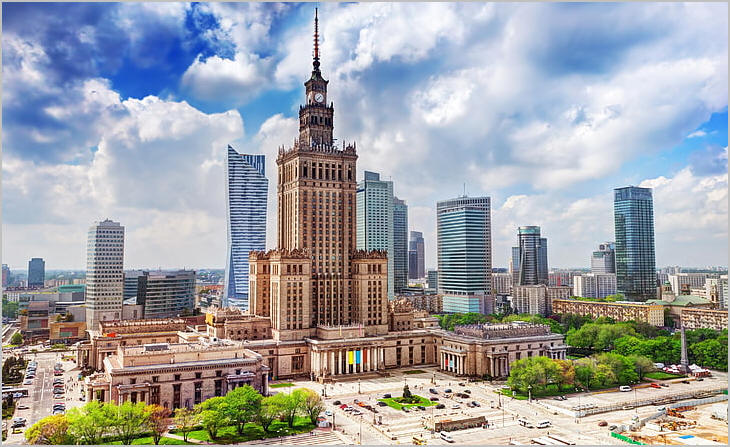 An image from Warszawa, Poland
.
.
Click the link below for images:
.
__________________________________________
Older Entries
Newer Entries

