
Click the link below the picture
.
After my grandmother died, we had to clean out her condominium. Wall to wall and floor to ceiling, her studio apartment in a Berkeley, Calif., high-rise was filled with books. Every surface was stacked with them except for a couple of chairs, the tiny kitchen counter, the bed, and narrow connecting paths like game trails in a forest. The shelves were three books deep and bowed in their middle.
But this wasn’t chaos. Besides being a communist, a labor activist, and a speaker of five languages that I knew of (Yiddish, English, German, some Russian, and some Spanish, in addition to her ability to read Latin), Grandma had been a lecturer in library science at the University of California, Berkeley. Every shelf and every pile was a subject, placed in proximity to related subjects and alphabetized by author.
When my wife and I started excavating, we found another organizational layer. Some of the books had whole magazines stuffed into them—the New Yorker, the London Review of Books, Smithsonian—folded open to an article that was relevant to their enveloping tome. Further into the stacks, a whole other classification system surfaced—articles neatly torn or clipped out, with notes stapled to them on which Grandma’s looping cursive noted their subject and bibliographic metadata.
This was more than a library. Sure, it contained books—objects that convey information—, but the condo itself was an object that conveyed information. It was what historian of memory Mary Carruthers calls an architectural mnemonic—a map of Grandma’s multivariate, interesting, and generally unshakable opinions. Its physical structure at every scale helped her to maintain not just her sources but her ideas and to send them forward in time to when she might need them. “The archive has always been a pledge,” according to a translation of philosopher Jacques Derrida’s book Archive Fever, “and like every pledge, a token of the future.”
Not every pledge gets fulfilled, of course. By the end of her life, my grandmother’s once-pointed mind had become less deft; she couldn’t really understand her own archive anymore. Information theory says that for a message to arrive, both sender and receiver have to agree on its form and timing. And now the receiver was gone. This happens all the time—at the scale of studio apartments and entire societies, on time spans of years or millennia. Even organizations dedicated to creating things and trying to remember them don’t always know how to ensure that those things make it through time. That’s understandable. Nobody really knows how to speak to the future in a way that it will hear.
When we try to unravel information from the past, we’re limited by what archives and nature have preserved. “The technical structure of the archiving archive determines the structure of the archivable content,” as Derrida put it. Take the oldest known piece of human art, a 73,000-year-old drawing of crosshatched red triangles on a chunk of rock. South African archaeologists found it in a cave called Blombos, about 185 miles east of Cape Town. Whether these triangles were a vision of mountains, an econometric chart of the seal harvest or an accident of boredom is lost to time. Maybe humans were constantly going around drawing ochre triangles on fragments of rock, and symbolic thinking was common. Maybe only Paleolithic geniuses did it. Whoever drew that fragment was thinking about something, but no one here in the future can know what.
Even when humans create written language and records, they often fail to send information up the line. Most of what historians know about ancient Greece and Rome is because of a lucky accident—scholars in the Abbasid Caliphate, which extended throughout much of the Middle East, got scrolls from Alexandrian libraries and translated them. But which scrolls never made it? Archaeologists know that a Babylonian copper merchant named Ea-nasir had supply chain problems nearly 4,000 years ago, but only because of the fluke survival of clay tablets saying that happened. The shape of the archive of the past limits the knowledge of the future.
Nobody really knows how to speak to the future in a way that it will hear.
The northeastern coast of Japan is dotted with future-message failures—hundreds of “tsunami stones” mark past catastrophes dating back 600 years. One in the village of Aneyoshi denotes the level of a flood in the 1800s and warns people not to build houses any lower along the hillside; others advise people to flee to Nokoriya, the “Valley of Survivors,” or Namiwake, “Waves’ Edge,” the extent of a tsunami in 1611. People mostly ignore them. The Tohoku earthquake and tsunami in 2011 hit that very same coast, swept away a bunch of stones, and killed more than 18,000 people.
Another example: In 1850, on the main canal leading from the Merrimack River to the industrial mill town of Lowell, Mass., James Francis built a dam. As the engineer in charge of Lowell’s water-powered textile mills, Francis was convinced that the Merrimack was liable to flood. So he built a 27-foot-wide, 25-foot-tall, 17-inch-thick palisade out of experimental pressure-treated pine. The cost of a project like this, “Great Gate” in 2025, would be about $413 million. The gate was so heavy that it had no mechanism to raise or lower it—it just hung over the Pawtucket Canal, suspended by a massive iron chain. Locals called it “Francis’s Folly.”
Two years later, a massive rainstorm flooded the Merrimack. At 3:30 in the morning on April 22, 1852, a worker used a chisel to cut the chain. The gate dropped; the town was saved; Boston newspapers hailed Francis as a hero.
In 1936, there was another storm and an even bigger flood. Lowell was doomed! But someone remembered that really big gate. Workers once again rushed to the gatehouse. No one had a key, so they broke in. Someone shined a light into the decaying shack, which was empty except for a spike stuck through the floor. On the wall hung a sledgehammer. Above it, a sign read, “Take the hammer. Hit the pin.” The men followed the instructions. The spike broke the chain; the gate fell; the town was saved. Francis’s message to the future had been received.
.
 Federico Tramonte
.
.
Click the link below for the complete article:
.
__________________________________________

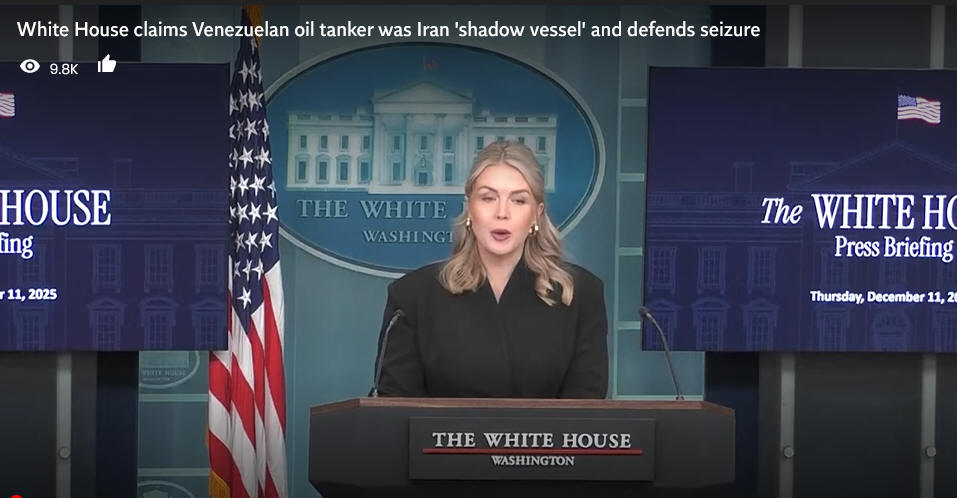 White House claims Venezuelan oil tanker was Iran ‘shadow vessel’ and defends seizure
:max_bytes(150000):strip_icc()/Chef-latke-tips-FT-DGTL1225-01-791253ca88fc4805857d903c61c61871.jpg)




 Opinions on Donald Trump’s mental state vary widely; some critics label him as “insane” due to his behavior and rhetoric, while others argue he is simply a product of mediocrity and privilege. Ultimately, whether he is considered “crazy” is subjective and depends on individual perspectives.
 Ross Woodhall/Getty Images/Image Source
 We may receive a portion of sales if you purchase a product through a link in this article.
 James' World 2