August 4, 2013
Mohenjo
Science
amazon, Astronomy, business, Business News, Cassini, Cassini Earth Photo, Cassini Photo, Cassini Photos, cassini saturn, cassini spacecraft, climate, Earth, earth photos, empty space, European Space Agency, Hotels, huffingtonpost, NASA, NASA News, orbiter images, research, robotic spacecraft, Saturn, saturn orbiter, Science, Science News, Slideshow, Solar System, space photos, Space Program, Spaceflight, technology, Technology News, travel, vacation
FROM

Click link below picture
.
Good photographers go to great lengths to get the best pictures, but few have ventured farther than Cassini did on July 19, 2013. From 5:27 p.m. to 5:42 p.m. EDT on that date, the robotic spacecraft peered across almost 900 million miles of empty space to capture a series of awe-inspiring images of Earth.
.
 Earth is the dot with the arrow
.
.Click link below for story and slideshow:
http://www.huffingtonpost.com/2013/07/23/cassini-earth-photos-saturn-orbiter-images-planet_n_3637540.html?ref=topbar
.
________________________________________________________________________________
July 12, 2013
Mohenjo
Science
amazon, Astronomy, business, Business News, Cape Canaveral, climate, comets, Environment, Heliosphere, Heliotail, Hotels, huffingtonpost, Ibex, Interstellar-Boundary-Explorer, NASA, Nasa Video, Planets, research, Science, Science News, Scientists, shape, Slideshow, Solar System, Solar System Tail, Space, spacecraft, Sun, technology, Technology News, travel, vacation, Video
FROM
Click link below picture
.49887
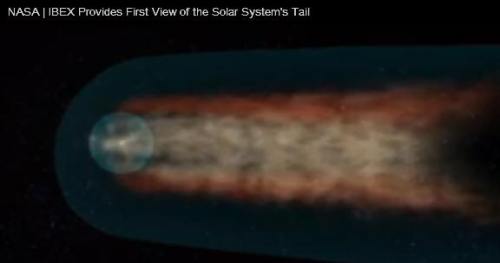
NASA can prove it now. Our solar system has a tail, just like comets.
Scientists revealed images Wednesday showing the tail emanating from the bullet-shaped region of space under the grip of the sun, including the solar system and beyond. The region is known as the heliosphere, thus the name heliotail.
The findings are based on data from by NASA’s Interstellar Boundary Explorer, or IBEX. The Earth-orbiting spacecraft was launched in 2008.
Scientists always presumed the heliosphere had a tail, but this provides the first real data on the shape.
.
.
.Click link below for story, video, and slideshow:
http://www.huffingtonpost.com/2013/07/11/solar-system-tail-nasa-video_n_3575805.html
.
____________________________________________________
June 30, 2013
Mohenjo
Science
3 Super Earths, Alien Life, Alien Planets, amazon, Astronomy, business, Environment, european southern observatory, Exoplanets, Gliese 667Cd, Habitable Planets, Habitable Zone, huffingtonpost, life scientists, Paranormal, Planets, research, rocky planets, Science, Science News, Search for E.T., Slideshow, Space, star gliese, Super Earths, technology, Technology News, three suns, Three Super Earths, travel, vacation, Video
FROM
Click link below picture
.
The habitable zone of a nearby star is filled to the brim with planets that could support alien life, scientists announced today (June 25).
An international team of scientists found a record-breaking three potentially habitable planets around the star Gliese 667C, a star 22 light-years from Earth that is orbited by at least six planets, and possibly as many as seven, researchers said. The three planet contenders for alien life are in the star’s “habitable zone” — the temperature region around the star where liquid water could exist. Gliese 667C is part of a three-star system, so the planets could see three suns in their daytime skies.
The three potentially rocky planets in Gliese 667C’s habitable zone are known as super-Earths — exoplanets that are less massive than Neptune but more massive than Earth. Their orbits make them possible candidates for hosting life, officials from the European Southern Observatory said in a statement.
.

.
.Click link below for story, video, photos, and slideshow:
http://www.huffingtonpost.com/2013/06/25/three-super-earths-star-gliese-667c-_n_3497371.html?ref=topbar
.
______________________________________________________
June 25, 2013
Mohenjo
Science
2013 Supermoon, amazon, Astronomy, business, celestial phenomenon, Earth, Environment, full moon, Hotels, html ref, huffingtonpost, Moon, NASA, research, Science, Science News, skywatchers, Slideshow, Solar System, Space, spectacular images, submit photos, Supermoon, Supermoon 2013, Supermoon Images, Supermoon June 2013, Supermoon Photos, Supermoon Photos 2013, Supermoon Pictures, technology, Technology News, travel, vacation, Video
FROM
Click link below picture
.
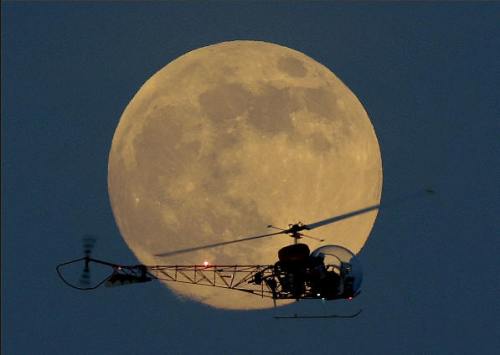
Did you get a chance to see the supermoon? Don’t worry if you didn’t. In our gallery of supermoon photos (see below), you can page through scores and scores of spectacular images — snapped by skywatchers around the world. Many were collected during our supermoon live blog, which has now concluded.
But there’s still time to submit any photos you might have snapped of the dazzling celestial phenomenon. You can tweet them to us using the #HPsupermoon hashtag, or submit them directly in the gallery.
.
.
.Click link below for story, video, and slideshow:
http://www.huffingtonpost.com/2013/06/23/supermoon-2013-photos-biggest-full-moon-slideshow_n_3487882.html?ref=topbar
.
_____________________________________________________
May 21, 2013
Mohenjo
Science
amazon, Astronomy, business, climate, Environment, environment office, Hotels, huffingtonpost, looking at the moon, Lunar Reconnaissance Orbiter, mare imbrium, Meteorite Crash, Meteorites, Meteors, Moon, Moon Explosion, Moon Meteorite, myaol, NASA, nasa scientists, research, Science, Science News, Slideshow, Space, Space Rocks, technology, Technology News, travel, vacation, Video
FROM
Click link below picture
.
The moon has a new hole on its surface thanks to a boulder that slammed into it in March, creating the biggest explosion scientists have seen on the moon since they started monitoring it.
The meteorite crashed on March 17, slamming into the lunar surface at a mind-boggling 56,000 mph (90,000 kph) and creating a new crater 65 feet wide (20 meters). The crash sparked a bright flash of light that would have been visible to anyone looking at the moon at the time with the naked eye, NASA scientists say.
“On March 17, 2013, an object about the size of a small boulder hit the lunar surface in Mare Imbrium,” Bill Cooke of NASA’s Meteoroid Environment Office said in a statement. “It exploded in a flash nearly 10 times as bright as anything we’ve ever seen before.” [The Greatest Lunar Crashes Ever]
.

This artist’s illustration shows a meteor crashing into the surface of the moon. Scientists say hundreds of space rocks impact the lunar surface every year.
.
.Click link below for story, videos, and slideshow:
http://www.huffingtonpost.com/2013/05/18/moon-explosion-meteorite-crash-lunar-surface-nasa_n_3294710.html?icid=maing-grid7|myaol|dl12|sec1_lnk3%26pLid%3D315221
.
___________________________________________________
May 21, 2013
Mohenjo
Science
1998 QE2, amazon, Asteroid 1998 QE2, Asteroid Flyby, Asteroids, Astronomy, business, climate, current-events, distance between earth and the moon, Environment, goldstone radar, high resolution images, Hotels, huffingtonpost, jet propulsion laboratory, Jpl, NASA, Near-Earth Asteroids, Near-Earth Objects, radar telescopes, research, Science, Science News, Slideshow, Space, Space Rocks, technology, Technology News, travel, vacation, Video
FROM
Click link below picture
.
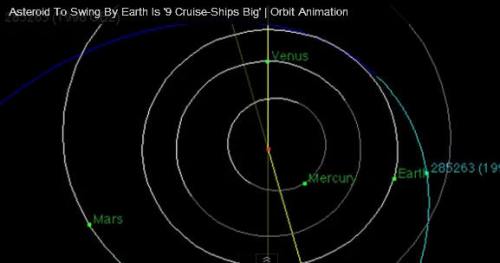
A gigantic asteroid will fly by our planet at the end of this month, making its closest approach for at least the next two centuries on May 31. But, don’t worry, it won’t get closer than about 3.6 million miles, which is around 15 times the distance between Earth and the moon.
Astronomers plan to use radar telescopes to get a good look at the space rock, named Asteroid 1998 QE2, between May 30 and June 9.
“Asteroid 1998 QE2 will be an outstanding radar imaging target at Goldstone and Arecibo [observatories] and we expect to obtain a series of high-resolution images that could reveal a wealth of surface features,” radar astronomer Lance Benner, the principal investigator for the Goldstone radar observations from NASA’s Jet Propulsion Laboratory, said in a written statement.
.
.
.Click link below for story, video, and slideshow:
http://www.huffingtonpost.com/2013/05/18/asteroid-1998-qe2-earth-video_n_3294388.html?ref=topbar
.
____________________________________________________
February 15, 2013
Mohenjo
Science
amazon, Astronomers, Astronomy, climate, companion star, Forecast Star Death, giant explosions, Hotels, huffingtonpost, million light years, NASA, NASA's Swift mission, palomar observatory, research, Science, Science News, Space, Star Death, Stars, stellar explosions, Supernova Death, Supernova Explosion, Supernova Forecast, Supernovas, technology, Telescope, travel, vacation, Video
FROM
Click link below picture
.
Forecasting when stars will die in giant explosions may one day be possible by looking for the warning outbursts they release beforehand, researchers say.
Supernovas are the most powerful stellar explosions in the universe, visible all the way to the edge of the cosmos. These stars detonate for two known reasons: either from gorging on too much mass stolen from a companion star or by running out of fuel and abruptly collapsing.
Astronomers have suggested that stars can give off smaller explosions just before they go supernova. To find out more about supernovas, researchers used three telescopes — the Palomar Observatory, the Very Large Array and NASA’s Swift mission — to investigate a star 500 million light-years away.
.

The image shows a simulation of a collision between two shells of matter ejected by a massive star in two subsequent pulsational pair-instability supernova eruptions, only years apart, just before the star dies. Image released Feb. 7, 2013.
.
.Click link below for story, slideshow, and video:
http://www.huffingtonpost.com/2013/02/12/supernova-warning-explosion-star-death_n_2668510.html?ref=topbar
.
_____________________________________________________
February 15, 2013
Mohenjo
Science
amazon, ancient civilization, Astronomy, aviation, cars, Curiosity Rover, Hotels, huffingtonpost, Mars, Mars Protuberance, Mars Rover, Mars Shiny Object, Mars Surface, myaol, NASA's Mars rover Curiosity, Olympus Mons, research, Science, Science News, shiny object, Space, Space Exploration, technology, transportation, travel, vacation, Video
FROM
Click link below picture
.
NASA’s Mars rover Curiosity has photographed a shiny, metallic-looking object that bears a passing resemblance to a door handle or a hood ornament.
The Curiosity rover has not stumbled onto evidence of an ancient civilization that took the family van to Olympus Mons for vacation, however. The object is simply a rock that the wind has sculpted into an interesting shape, scientists said.
.

NASA’s Mars rover Curiosity has photographed a shiny, metallic-looking object that bears a passing resemblance to a door handle or a hood ornament.
.
.Click link below for story, slideshow, video:
http://www.huffingtonpost.com/2013/02/12/mars-metal-shiny-object-nasa-curiosity-rover_n_2671432.html?icid=maing-grid7|myaol|dl5|sec1_lnk3%26pLid%3D269611
.
____________________________________________________
January 31, 2013
Mohenjo
Science
alien planet, Alien Planets, Astronomy, business, climate, Environment, Exoplanet Habitable Zone, Exoplanets, far distances, goldilocks, Goldilocks Zone, Habitable Zone, Habitable Zone Planets, huffingtonpost, Paranormal, parent star, penn state university, research, Science, Science News, technology, travel, vacation, Video
FROM
Click link below picture
.
One of the most important characteristics of an alien planet is whether or not it falls into what’s called the habitable zone — a Goldilocks-like range of not-too-close, not-too-far distances from the parent star that might allow the planet to host life.
Now scientists have redefined the boundaries of the habitable zone for alien planets, potentially kicking out some exoplanaets that were thought to fall within it, and maybe allowing a few that had been excluded to squeeze in.
“This will have a significant impact on the number of exoplanets that are within habitable zone,” said research team leader Ravi Kumar Kopparapu of Penn State University.
.

A new definition of the habitable zone around planets, denoting where liquid water
could exist, shifts Earth toward the very edge of the solar system’s own habitable zone.
.
.Click link below for story, slideshow, and video:
http://www.huffingtonpost.com/2013/01/30/habitable-zone-alien-planet-exoplanet-goldilocks_n_2580640.html?utm_hp_ref=science
.
__________________________________________________
January 21, 2013
Mohenjo
Science
America's Inauguration, America's Inauguration Night, Astronomy, aviation, brightest objects in the nighttime sky, climate, entertainment, Environment, How To See Jupiter, huffingtonpost, Jupiter, Jupiter Monday, jupiter moon, Jupiter Moon Together, keeping the moon, Moon, moon 78 percent illuminated, Moon And Jupiter, nature, non-twinkling, pairing-off between two of the brightest objects, research, Science, Science News, silvery "star, Sky Map, Stargazers, Stargazing, technology, transportation, travel, vacation, very bright, Video, waxing gibbous phase
FROM
Click link below Picture
.
Stargazers looking up as darkness falls on Monday (Jan. 21) will notice an eye catching pairing-off between two of the brightest objects in the nighttime sky, weather permitting.
The moon, appearing as a waxing gibbous phase, 78 percent illuminated, will appear to stand close below a very bright, non-twinkling, silvery “star.” But it won’t be a star that will be keeping the moon company on America’s Inauguration Night, but the largest planet in our solar system: Jupiter.
.

This sky map shows the location of Jupiter as it dances with the moon on
the evening of Jan. 21, 2013. This diagram shows the appearance of the pair
from Jan. 20 to Jan. 23rd, looking south, high in the evening sky.
.
.Click link below for story, slideshow, and video:
http://www.huffingtonpost.com/2013/01/20/jupiter-moon-together_n_2515967.html?ref=topbar
.
_____________________________________________________
Older Entries
Newer Entries
 James' World 2