September 5, 2020
Mohenjo
Business, Food For Thought, Human Interest, Science, Technical
amazon, business, Business News, current-events, Future, Hotels, human-rights, medicine, mental-health, research, Science, Science News, technology, Technology News, travel, vacation

Click the link below the picture
.
As I was growing up in England in the latter half of the 20th century, the concept of intelligence loomed largely. It was aspired to, debated, and – most important of all – measured. At the age of 11, tens of thousands of us all around the country were ushered into desk-lined halls to take an IQ test known as the 11-Plus. The results of those few short hours would determine who would go to grammar school, to be prepared for university and the professions; who was destined for technical school and thence skilled work; and who would head to secondary modern school, to be drilled in the basics then sent out to a life of low-status manual labor.
The idea that intelligence could be quantified, like blood pressure or shoe size, was barely a century old when I took the test that would decide my place in the world. But the notion that intelligence could determine one’s station in life was already much older. It runs like a red thread through Western thought, from the philosophy of Plato to the policies of UK prime minister Theresa May. To say that someone is or is not intelligent has never been merely a comment on their mental faculties. It is always also a judgment on what they are permitted to do. Intelligence, in other words, is political.
.

Photo from peepo/Getty Images.
.
.
Click the link below for the article:
.
__________________________________________
September 5, 2020
Mohenjo
Food For Thought, Human Interest, missed News, Political, Science, Technical
amazon, business, Business News, current-events, Future, Hotels, human-rights, medicine, mental-health, research, Science, Science News, technology, Technology News, travel, vacation
.
News You might have missed!
Use your browser or smartphone back arrow (<-) to return to this table for your next selection.
.
__________________________________________
September 4, 2020
Mohenjo
Arts, Crime, Food For Thought, Human Interest, Made Me Laugh, Medical, missed News, Political, Science, Technical
amazon, business, Business News, current-events, Future, Hotels, human-rights, medicine, mental-health, research, Science, Science News, technology, Technology News, travel, vacation

.
News You might have missed!
Use your browser or smartphone back arrow (<-) to return to this table for your next selection.
.
__________________________________________
September 2, 2020
Mohenjo
Business, Crime, Human Interest, Science, Technical
amazon, business, Business News, current-events, Future, Hotels, human-rights, medicine, mental-health, research, Science, Science News, technology, Technology News, travel, vacation

Click the link below the picture
.
On Aug. 18, 2010, a police lieutenant in Gary, Ind., received an e-mail, the subject line of which would be right at home in the first few scenes of a David Fincher movie:
“Could there be a serial killer active in the Gary area?”
It isn’t clear what the lieutenant did with that e-mail; it would be understandable if he waved it off as a prank. But the author could not have been more serious. He’d attached source material—spreadsheets created from FBI files showing that over several years the city of Gary had recorded 14 unsolved murders of women between the ages of 20 and 50. The cause of each death was the same: strangulation. Compared with statistics from around the country, he wrote, the number of similar killings in Gary was far greater than the norm. So many people dying the same way in the same city—wouldn’t that suggest that at least a few of them, maybe more, might be connected? And that the killer might still be at large?
.
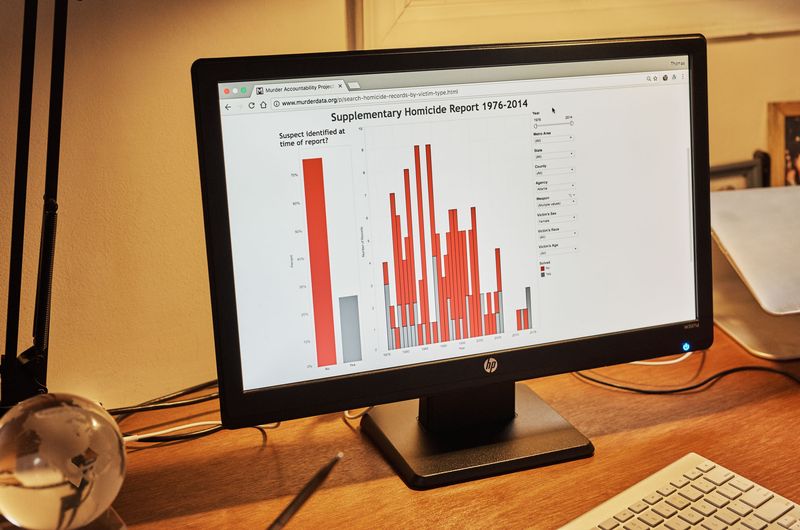
Data on the Murder Accountability Project’s website. Photos by Cait Oppermann for Bloomberg Businessweek.
.
.
Click the link below for the article:
.
__________________________________________
September 2, 2020
Mohenjo
Human Interest, Made Me Laugh, Medical, missed News, Political, Science, Technical
amazon, business, Business News, current-events, Future, Hotels, human-rights, medicine, mental-health, research, Science, Science News, technology, Technology News, travel, vacation
.
News You might have missed!
Use your browser or smartphone back arrow (<-) to return to this table for your next selection.
.
__________________________________________
September 1, 2020
Mohenjo
Business, Human Interest, Technical
amazon, business, Business News, current-events, Future, Hotels, human-rights, medicine, mental-health, research, Science, Science News, technology, Technology News, travel, vacation
Click the link below the picture
.
We can all play a role in helping defuse even the most bitter conflicts. Veteran negotiator William Ury shares his hard-won insights.
.
My passion in life is helping people and societies to move from no to yes. As a negotiator, mediator, and co-founder of the Program on Negotiation at Harvard University, I’ve spent more than four decades traveling the world and getting involved in some of the most difficult conflicts of our time, from the Cold War to the Middle East.
One of my favorite negotiation stories is about a man who leaves his herd of 17 camels to his three sons as their inheritance. To the first son, he leaves half the camels; to the middle son, he leaves a third of the camels; and to the youngest son, he leaves a ninth of the camels. The three sons get into an intense negotiation over who should get how many because 17 doesn’t divide by two, or by three, or by nine. Tempers become strained, so in desperation, they consult a wise, old woman. She listens to their problem and says, “Well, I don’t know if I can help you, but if you want, at least you can have my camel.” Now they have 18 camels, so the first son takes half of them or nine camels; the middle son takes his third, or six camels, and the youngest son takes his ninth, or two camels. Nine plus six plus two add up to a total of 17 camels. There is one camel left over, so the brothers give it back to the woman.
.

Photo by Sacha Vega/iStock.
.
.
Click the link below for the article:
.
__________________________________________
September 1, 2020
Mohenjo
Business, Food For Thought, Human Interest, Science, Technical
amazon, business, Business News, current-events, Future, Hotels, human-rights, medicine, mental-health, research, Science, Science News, technology, Technology News, travel, vacation
Click the link below the picture
.
If you’ve ever failed at reaching any goal in life, the problem could all be in your mind. That’s how important your mindset is. Your mind is your most powerful force. The stories you tell yourself and the things you believe about yourself can either prevent change from happening or allow new ideas to blossom.
A mindset is a set of assumptions, methods, or notations that is so established that it creates a powerful incentive within you to continue to adopt or accept prior behaviours, choices, or tools.
It’s so powerful that it affects every decision making processes. It predetermines your responses and interpretations of situations.
You can’t outsmart your mindset!
.
 Photo bny Melinda Podor / Getty Images.
.
.
Click the link below for article:
https://getpocket.com/explore/item/if-you-are-serious-about-achieving-success-in-any-area-of-your-life-master-your-mindset
.
__________________________________________
September 1, 2020
Mohenjo
Crime, Food For Thought, Human Interest, Medical, missed News, Political, Science, Technical
amazon, business, Business News, current-events, Future, Hotels, human-rights, medicine, mental-health, research, Science, Science News, technology, Technology News, travel, vacation
.
News You might have missed!
Use your browser or smartphone back arrow (<-) to return to this table for your next selection.
.
__________________________________________
August 31, 2020
Mohenjo
Business, Human Interest, Medical, Science, Technical
amazon, business, Business News, current-events, Future, Hotels, human-rights, medicine, mental-health, research, Science, Science News, technology, Technology News, travel, vacation
Click the link below the picture
.
Aimee Hartley, like most people, thought she knew how to breathe – she had, after all, been doing it all her life. She had also given it plenty of thought, having trained as a yoga teacher. But then she took a lesson with a breathing coach, who told her where she was going wrong. He pointed out she wasn’t taking the air into her lower lungs but was, she says, an “upper chest breather. He then taught me this conscious breathing and I felt my lower belly open, and I felt myself breathing a lot better after just one session. So I then became fascinated by how we breathe.”
Watching her students in her yoga class, and observing people in everyday life, she started noticing that almost nobody breathes that well, by which she means in a way that makes your belly expand and your upper chest and back lift slightly, in a fluid motion. The exception, she says, is “babies, until they’re about three”. Then we forget how to breathe.
.
 We take in 23,000 breaths a day, but few of us know how to breathe well. Photo by Oscar Wong / Getty Images.
.
.
Click the link below for article:
.
__________________________________________
August 31, 2020
Mohenjo
Arts, Crime, Food For Thought, Human Interest, Medical, missed News, Political, Science, Technical
amazon, business, Business News, current-events, Future, Hotels, human-rights, medicine, mental-health, research, Science, Science News, technology, Technology News, travel, vacation
.
News You might have missed!
Use your browser or smartphone back arrow (<-) to return to this table for your next selection.
.
__________________________________________
Older Entries
Newer Entries
 James' World 2