February 26, 2021
Mohenjo
Arts, Business, Food For Thought, Human Interest, Technical
amazon, business, Business News, current-events, Future, Hotels, human-rights, medicine, mental-health, research, Science, Science News, technology, Technology News, travel, vacation

Click the link below the picture
.
Max Brooks is getting a little tired of being proved right. An author with cult appeal and massive sales, he is regularly referred to as “a soothsayer” and “a genius”. His 2006 novel, World War Z, was about a deadly virus originating in China that causes global devastation, and his compulsive new one, Devolution: A Firsthand Account of the Sasquatch Massacre, is about people forced into self-isolation, huddling in terror from an unimaginable threat outside. But Brooks, 47, is dismissive of the hyperbole: “Everything I write about has already happened. The history of pandemics tends to come in extremely predictable cycles. So if I’m the smartest guy in the room, we’re in big trouble,” he tells me over Skype from his home in Los Angeles (our interview was in May, before the national protests after the killing of George Floyd, but well after lockdown started.). He has the jittery energy of the chronically anxious, and the easy confidence of one who has been thoroughly validated.
He certainly saw the coronavirus coming long before most politicians, and was making preparations in January. On 16 March, when most people in the western world were barely getting to grips with the lockdown, he made a video about the importance of social distancing to protect the elderly. He enlisted the help of the oldest person in his life, his father, comedy god, Mel Brooks. “If I get the coronavirus, I’ll probably be OK. But if I give it to him, he could give it to Carl Reiner, who can give it to Dick Van Dyke, and before I know it, I’ve wiped out a whole generation of comedic legends,” says Brooks, pointing to his father behind a glass door and listing his closest friends. The video has been watched more than 16m times. “I wasn’t given some secret information. I got my information from the news. Really deep state: turning on CNN and watching Wuhan getting locked down,” he says dryly.
.
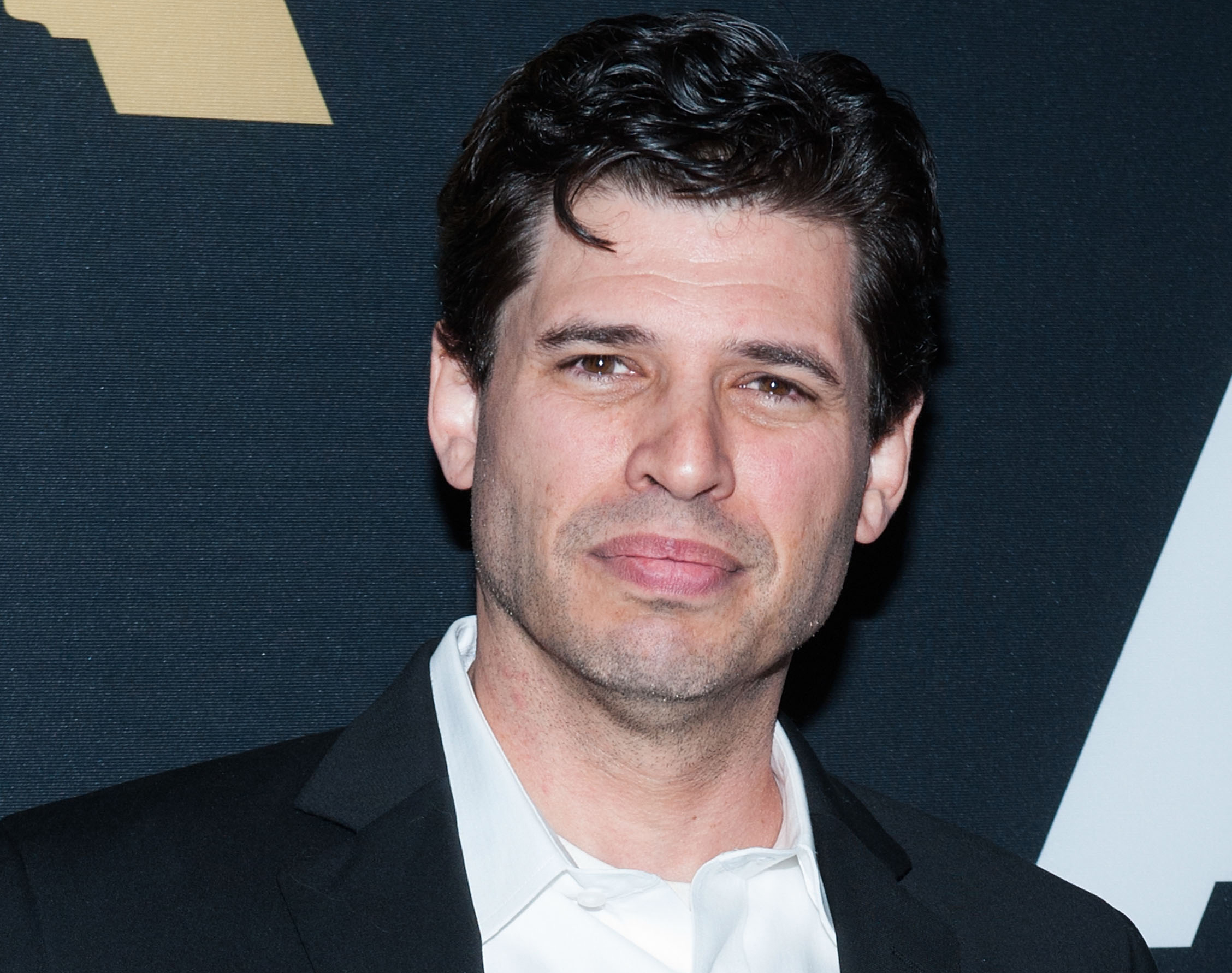 ‘Everything I write about has already happened’ … Max Brooks. Photo by Valerie Macon / Getty Images.
.
.
Click the link below for the article:
.
__________________________________________
February 26, 2021
Mohenjo
Arts, Business, Enthralling, Food For Thought, Human Interest, Technical
amazon, business, Business News, current-events, Future, Hotels, human-rights, medicine, mental-health, research, Science, Science News, technology, Technology News, travel, vacation
Click the link below the picture
.
Shirley Jackson was born more than 100 years ago on December 14, 1916. During her lifetime, she wrote “The Lottery,” and The Haunting of Hill House and We Have Always Lived in the Castle, the latter of which features what I consider to be the best first paragraph of all time, or at least of any novel that I have ever read. Here it is:
My name is Mary Katherine Blackwood. I am eighteen years old, and I live with my sister Constance. I have often thought that with any luck at all I could have been born a werewolf, because the two middle fingers on both my hands are the same length, but I have had to be content with what I had. I dislike washing myself, and dogs, and noise. I like my sister Constance, and Richard Plantagenet, and Amanita phalloides, the death-cup mushroom. Everyone else in my family is dead.
It almost seems like overkill to explain why this paragraph is so wonderful. It either strikes you or it doesn’t. You must have a certain sensibility to truly appreciate its charms. The rhythm is key. But let’s make an attempt, shall we?
.
 Merricat
.
.
Click the link below for the article:
.
__________________________________________
February 26, 2021
Mohenjo
Business, Food For Thought, Human Interest, Science, Technical
amazon, business, Business News, current-events, Future, Hotels, human-rights, medicine, mental-health, research, Science, Science News, technology, Technology News, travel, vacation

Click the link below the picture
.
Three decades after the Chernobyl disaster—the world’s worst nuclear accident—signs of life are returning to the exclusion zone. Wild animals in Chernobyl are flourishing within the contaminated region; puppies roaming the area are capturing the hearts of thousands. Tourists who have watched the critically acclaimed HBO series Chernobyl are taking selfies with the ruins. Once thought to be forever uninhabitable, the Chernobyl Exclusion Zone has become a haven for flora and fauna that prove that life, as they say in Jurassic Park, finds a way.
.

Photo from iStock / Tijuana2014.
.
.
Click the link below for the article:
.
__________________________________________
February 26, 2021
Mohenjo
Arts, Enthralling, Human Interest, Medical, missed News, Political, Science, Technical
amazon, business, Business News, current-events, Future, Hotels, human-rights, medicine, mental-health, research, Science, Science News, technology, Technology News, travel, vacation

.
News You might have missed!
Use your browser or smartphone back arrow (<-) to return to this table for your next selection.
.
__________________________________________
February 25, 2021
Mohenjo
Business, Human Interest, Medical, Political, sports, Technical
amazon, business, Business News, current-events, Future, Hotels, human-rights, medicine, mental-health, research, Science, Science News, technology, Technology News, travel, vacation

Click the link below the picture
.
For more than a quarter-century, professional golf has endured a binary existence: a tournament either had Tiger Woods in the field or it did not. Everything flowed from his presence or lack thereof — prestige, television ratings, gallery size, buzz. Wins by his competitors were even plunked in two buckets: Did you beat Tiger? Or did you just beat everyone else?
.
 Powered by Microsoft News
.
.
Click the link below for the articles:
.
__________________________________________
February 25, 2021
Mohenjo
Arts, Business, Food For Thought, Human Interest, Technical
amazon, business, Business News, current-events, Future, Hotels, human-rights, medicine, mental-health, research, Science, Science News, technology, Technology News, travel, vacation

Click the link below the picture
.
In 1998, Boston Youth Symphony Orchestras launched the Intensive Community Program (ICP) as a response to the barriers keeping classical music training out of reach for many would-be musicians, including African Americans and Latinxs, who are underrepresented in orchestras.
The program lowers those barriers in Massachusetts by providing top-tier orchestra training to students in kindergarten through twelfth grade from underserved communities in and around Boston. ICP serves as an audition-based feeder program for BYSO’s six performance ensembles — 12% of BYSO musicians attend ICP.
First Republic spoke with ICP Artistic Director Nicole Cariglia and students Kensie Carroll and Noanddi Manigat to learn about their intensive music community, which adapted to virtual performances in the wake of the pandemic.
Waking up to music
As a very young child, 9-year-old Kensie Caroll woke up each morning to the sounds of cello and viola as her two sisters, twins six years older than Kensie, practiced their respective instruments for ICP.
“She was in a stroller, going to Sydney and Sadie’s auditions,” said Kensie’s father, Marc. Born into their music and the ICP lifestyle, when Kensie auditioned for the program at the age of four, she was ready.
But five years ago, as Kensie’s parents considered having her audition for ICP, Artistic Director Nicole Cariglia was a bit concerned: “I said, ‘Marc, she’s really young.’” Most four-year-olds don’t earn one of the selective program’s 90 slots. Kensie did. And as she began her own cello training, the demands didn’t surprise her. “By default, she knew what she had to do: Get up, practice, then go to school, and then go to the rehearsals and lessons,” Marc said.
.
 Diversifying Musical Training
.
.
Click the link below for the article:
.
__________________________________________
February 25, 2021
Mohenjo
Arts, Food For Thought, Human Interest, Medical, missed News, Political, Science, Technical
amazon, business, Business News, current-events, Future, Hotels, human-rights, medicine, mental-health, research, Science, Science News, technology, Technology News, travel, vacation
.
News You might have missed!
Use your browser or smartphone back arrow (<-) to return to this table for your next selection.
.
__________________________________________
February 24, 2021
Mohenjo
Business, Human Interest, Medical, Science, Technical
amazon, business, Business News, current-events, Future, Hotels, human-rights, medicine, mental-health, research, Science, Science News, technology, Technology News, travel, vacation

Click the link below the picture
.
It’s uttered in hushed tones during mommy-and-me yoga classes and at Montessori-school drop-offs, discussed ad nauseam in breastfeeding support groups and on parenting message boards.
It’s called tongue-tie, and it’s everywhere. In online mom groups, it’s blamed for all sorts of parenting woes. Baby isn’t gaining weight, or won’t take a bottle? Have you tried checking for ties? Kid won’t nap? It’s probably related to tongue-tie. Baby has a rash? Check under the tongue!
Tongue-tie, or ankyloglossia, is characterized by an overly tight lingual frenulum, the cord of tissue that anchors the tongue to the bottom of the mouth. It occurs in 4 to 11 percent of newborns. A lip tie—a related condition—is an unusually tight labial frenulum, the piece of tissue that keeps the upper lip tethered close to the gum line. Tongue and lip ties often occur in tandem.
To breastfeed effectively, babies need to create negative pressure (in a word, a vacuum) on the breast. This differs from the compression that some babies with limited tongue mobility use, effectively squeezing the milk out rather than sucking.
.

Photo from Shutterstock.
.
.
Click the link below for the article:
.
__________________________________________
February 24, 2021
Mohenjo
Enthralling, Food For Thought, Human Interest, Medical, missed News, Political, Science, Technical
amazon, business, Business News, current-events, Future, Hotels, human-rights, medicine, mental-health, research, Science, Science News, technology, Technology News, travel, vacation
.
News You might have missed!
Use your browser or smartphone back arrow (<-) to return to this table for your next selection.
.
__________________________________________
February 23, 2021
Mohenjo
Business, Food For Thought, Human Interest, Technical
amazon, business, Business News, current-events, Future, Hotels, human-rights, medicine, mental-health, research, Science, Science News, technology, Technology News, travel, vacation
Click the link below the picture
.
There are plenty of things we hold onto for good reason. Treasures from our travels, family heirlooms, sentimental birthday cards—all justifiable keepsakes. Then there are the odds and ends we accumulate just because we have the space to store them. You know, the “But what if I need this one day?” items. It seems like a rather harmless habit—until those nonessentials add up and turn your cabinets and closets into living nightmares. The chaos stops here. It’s time to repurpose, recycle, or kick ’em to the curb.
While we aren’t here to push a hyper-minimalist agenda, we do believe every object in your home should serve a distinct purpose or, at the very least, brighten your day a little. We doubt your excessive tote bag collection or rubber band–filled junk drawer is offering you much.
.

Photo by Aaron Bengochea.
.
.
Click the link below for the article:
.
__________________________________________
Older Entries
Newer Entries
 James' World 2