It’s a good time to look up. One of the year’s most spectacular skywatching shows, the annual Perseid meteor shower, is back to light up the night sky.
The Perseid meteor shower peaks in mid-August, when up to 100 meteors can be seen per hour, but the celestial event will be active beginning Wednesday, which means shooting stars may be visible on clear nights starting this week. The Perseids are considered “the best meteor shower of the year,” according to NASA.
In the Northern Hemisphere, the best way to view the Perseids is to head out in the predawn hours, though some meteors may be visible earlier, from 10 p.m. onward, according to NASA. Meteor showers are best viewed from places that are away from city lights, as light pollution can drown out the shooting stars.
The Perseid meteor shower is called that because the shooting stars appear to stream from a point in the sky where the constellation of Perseus is located. While the constellation is not the source of the meteors, it can help skywatchers figure out where to look.
.
A meteor streaks across the sky above Mount Fuji in Fujinomiya in Shizuoka prefecture in Japan during the annual Perseid meteor shower Aug. 13. Yasushi Kanno / The Yomiuri Shimbun via AP file
My first school bus conversion (skoolie) was an escape. I was living under the dual thumbs of my student loans and mortgage, and working two jobs to pay for a life I didn’t have time to enjoy. After a crash course in converting a 16-seat school bus into a dwelling, I had both an outlet for adventure and an income source I loved (West Virginia’s top-rated Airbnb since 2015).
Why on Earth did I convert a retired school bus into a mobile tiny home? Simple: Big yellow buses are cheap and durable. A used bus at auction goes for around $2,000 to $5,000—about 10 percent of the cost of a used RV. And where RVs are designed to be lightweight, buses are designed to work. That gets you a steel-framed body and steel paneling on top of a heavy-duty commercial truck frame. And under the hood, most school buses feature commercial-grade diesel engines that fleet mechanics have reliably maintained for years.
My book, Skoolie!: How to Convert a School Bus or Van into a Tiny Home or Recreational Vehicle, covers every step of the process, along with time-, sweat-, and money-saving insights I’ve picked up along the way. But to show (and hopefully inspire) anyone who can hold an angle grinder that they’re capable of building a home on wheels, I’m sharing the basic process for converting a school bus into a clean, well-insulated room to outfit as you please.
A suburban playground on a cold winter’s day. A man in his early 30s, wearing a beanie, leather jacket, and scarf, pushes a toddler on a swing, a dead look in his eyes. On the climbing frame, twins are jostling each other. Their mother stands underneath, hopping from foot to foot, her eyes darting from one girl to the next, issuing warnings, instructions; her voice rises anxiously in pitch. Looking around, I see only one adult smiling, but then she’s talking to her friend; their children are some way off, fighting each other with sticks.
There’s nothing particularly striking here. It could be any day of the week, in any town. And there’s nothing revelatory about the thought of parents secretly wishing they were anywhere else but the local playground, perhaps envying their childless friends; even wondering, during the sleepless nights, or in the aftermath of a fight with a recalcitrant teenager, why they had children at all. What is distinctive of our times is how few parents — still, even in our post-Freudian age — will openly admit to feelings of ambivalence towards their children. In an age where very little — from sex to money — is left a mystery, parental ambivalence remains one of the last taboos.
And yet the fact of parental ambivalence is a truth as old as mythology itself. Think how many fairytales begin with children being cast out by parents, either, as in the Brothers Grimm story ‘Brother and Sister’, being forced to leave on their own; or, like Hansel and Gretel, abandoned in a place from where they cannot find their way back. The fate reserved for older children, often adolescents, is usually more severe: the jealous queen in ‘Snow White’ orders her stepdaughter to be killed; and, in ‘The Three Languages’ by the Brothers Grimm, the king, frustrated by an adolescent son who persists in going against his wishes, eventually casts him out and orders his servants to do away with him. The narrative use of the wicked stepmother is worth noting here: it’s as if the child intuitively understands that his mother (and indeed father) can sometimes harbor hostile feelings towards him, but it’s safer to locate this cruelty in the figure of the stepmother, who can then be dispatched to a bloody end.
I was at a party for Bastille Day in Paris a few years back, and we were leaning over the balcony to watch the fireworks. A cute French girl sat next to me, but after a few flirty glances the moment was entirely ruined with the most basic of interactions: “What’s your name?” she asked in French. “Cody,” I said.
That was it. We were done. “Co-zee?” she said, sounding out the entirely foreign name, looking more disgruntled with each try. “Col-bee?” “Cot-ee?”
I tried a quick correction, but I probably should’ve just lied, said my name was Thomas or Pierre like I did whenever I ordered takeaway or made restaurant reservations. Not being able to pronounce a name spells a death sentence for relationships. That’s because the ability to pronounce someone’s name is directly related to how close you feel to that person. Our brains tend to believe that if something is difficult to understand, it must also be high-risk.
Birth order, according to conventional wisdom, molds personality: Firstborn children, secure with their place in the family and expected to be the mature ones, grow up to be intellectual, responsible, and conformist. Younger siblings work harder to get their parents’ attention, take more risks and become creative rebels.
That’s the central idea in psychologist Frank J. Sulloway’s Born to Rebel, an influential book on birth order that burst, like a water balloon lobbed by an attention-seeking third-born, onto the pop psychology scene two decades ago. Sulloway’s account of the nuclear family claimed that firstborn children command their parents’ attention and resources, so later-borns must struggle to carve out their niche. Sibling behaviors then crystallize into adult personalities.
“I thought — and I still think — it’s very plausible and intuitive,” said Ralph Hertwig, a psychologist at the Max Planck Institute for Human Development in Berlin, who published a study on unequal parental investment with Sulloway in 2002.
The trouble is the growing pile of evidence, Hertwig’s included, that’s tilted against it.
Humans are not all equal in every way. There are a few individuals who have achieved an unparalleled mastery in their field — and they are what I call the exceptionals. Put another way, they are the 1% of the 1% of the world’s most successful people.
Some examples include innovators like Elon Musk and Jeff Bezos, athletes like Michael Jordan and Serena Williams, and musicians like Mozart and Beethoven. Or they may be people you’ve never heard of who invented life-saving drugs or won Nobel Prizes by making fundamental advances in knowledge.
In my five-plus years of studying how to raise exceptional adults, I’ve found that almost all of them, at a young age, developed the skills to maximize the physical, mental and social potential available to them. In most cases, their parents had an enormous impact in creating an environment that allowed them to thrive.
One of the most troubling features of the digital revolution is that some people pay to subject themselves to surveillance that others are forced to endure and would, if anything, pay to be free of.
Consider a GPS tracker you can wear around one of your arms or legs. Make it sleek and cool — think the Apple Watch or FitBit — and some will pay hundreds or even thousands of dollars for the privilege of wearing it. Make it bulky and obtrusive, and others, as a condition of release from jail or prison, being on probation, or awaiting an immigration hearing, will be forced to wear one — and forced to pay for it too.
In each case, the device collects intimate and detailed biometric information about its wearer and uploads that data to servers, communities, and repositories. To the providers of the devices, this data and the subsequent processing of it are the main reasons the devices exist. They are means of extraction: That data enables further study, prediction, and control of human beings and populations. While some providers certainly profit from the sale of devices, this secondary market for behavioral control and prediction is where the real money is — the heart of what Shoshana Zuboff rightly calls surveillance capitalism.
Film and Writing Festival for Comedy. Showcasing best of comedy short films at the FEEDBACK Film Festival. Plus, showcasing best of comedy novels, short stories, poems, screenplays (TV, short, feature) at the festival performed by professional actors.

 A meteor streaks across the sky above Mount Fuji in Fujinomiya in Shizuoka prefecture in Japan during the annual Perseid meteor shower Aug. 13. Yasushi Kanno / The Yomiuri Shimbun via AP file



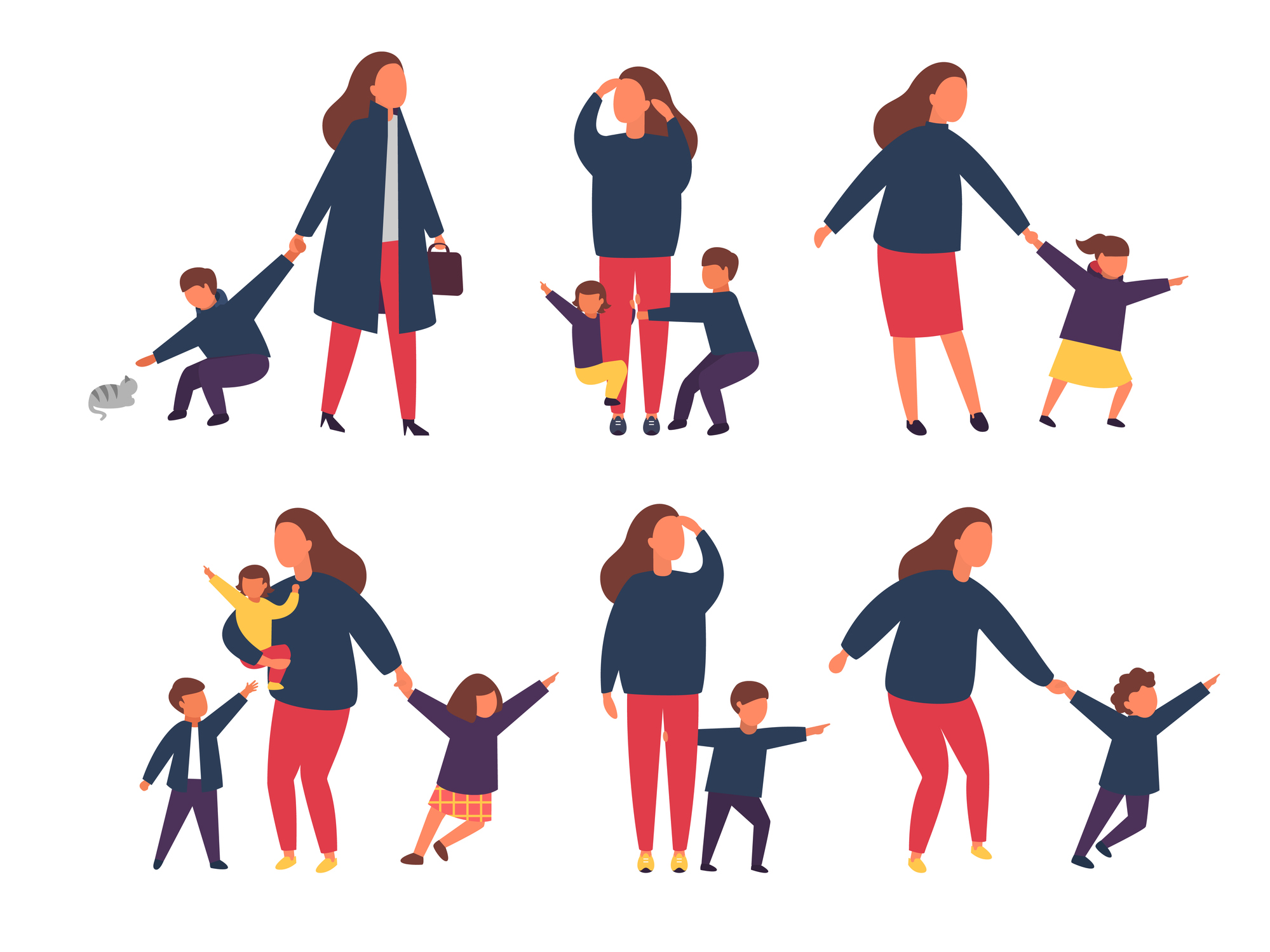






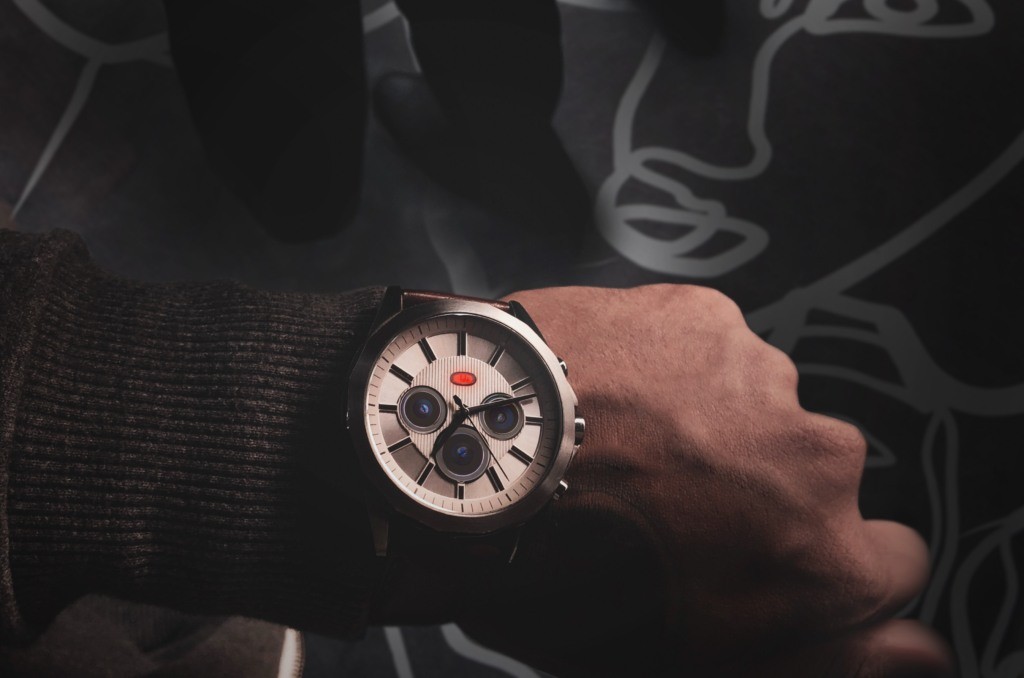 Image: By Russell Sadeghpour for Real Life.
 James' World 2