December 10, 2021
Mohenjo
Business, Food For Thought, Human Interest, Science, Technical
amazon, business, Business News, current-events, Future, Hotels, human-rights, medicine, mental-health, research, Science, Science News, technology, Technology News, travel, vacation

Click the link below the picture
.
About 5,300 years ago, an ancient civilization emerged in the east of China, building a brilliant city the likes of which had perhaps never been seen before in all of Asia – nor possibly even the whole world.
The surviving traces of the Liangzhu culture, which rose up along the banks of the Yangtze River Delta in China’s east, are a testament to what this unique Neolithic society was capable of in the final stretches of the Stone Age.
The archaeological ruins of Liangzhu City demonstrate numerous signs of social, cultural, and technological advancements for the period, especially in agriculture and aquaculture.
Sophisticated architectural features, meanwhile – including clever hydraulic engineering that enabled canals, dams, and water reservoirs – led to allusions of Liangzhu being a Neolithic “Venice of the East”.
None of these marvels would last, however.
.
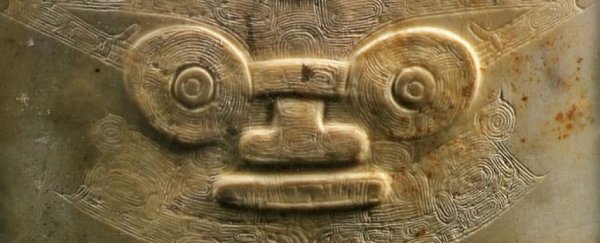 Detail from ancient Liangzhu jade carving. (Liangzhu Archeology Ruins Management Bureau)
.
.
Click the link below for the article:
.
__________________________________________
December 10, 2021
Mohenjo
Arts, Crime, Food For Thought, Human Interest, Medical, missed News, Political, Science, sports, Technical
amazon, business, Business News, current-events, Future, Hotels, human-rights, medicine, mental-health, research, Science, Science News, technology, Technology News, travel, vacation

.
News You might have missed!
Use your browser or smartphone back arrow (<-) to return to this table for your next selection.
.
__________________________________________
December 9, 2021
Mohenjo
Business, Food For Thought, Human Interest, Science, Technical
amazon, business, Business News, current-events, Future, Hotels, human-rights, medicine, mental-health, research, Science, Science News, technology, Technology News, travel, vacation

Click the link below the picture
.
On Sunday morning, Dec. 7, 1941, Mess Attendant 2nd Class Jesus Garcia, stationed aboard the USS Oklahoma, was preparing to go to mass.
Just before 8 a.m., Japanese dive bombers launched their surprise attack on Pearl Harbor and the battleship, crippled by torpedoes, began to capsize. Some crew members jumped into a sea of burning oil to escape or crawled across mooring lines to safety.
In the ensuing hours, rescuers freed others trapped inside by drilling through the hull and hatches. But roughly half the crew of 864 men were entombed, some of the first American casualties of World War II. Among them was Garcia, 21, who had joined the Navy on the U.S. territory of Guam.
It took almost 80 years, but on Oct. 6, Garcia completed his journey.
.

.
.
Click the link below for the article:
.
__________________________________________
December 9, 2021
Mohenjo
Business, Food For Thought, Human Interest, Science, Technical
amazon, business, Business News, current-events, Future, Hotels, human-rights, medicine, mental-health, research, Science, Science News, technology, Technology News, travel, vacation

Click the link below the picture
.
When I first adopted Lucas nine years ago from a cat rescue organization in Washington, D.C., his name was Puck. “Because he’s mischievous,” his foster mother said. Although we changed the name, her analysis proved correct. Unlike his brother Tip, whom I also adopted, a gray cat with white paws and an Eeyore-ish dour doofy sweetness, Lucas was from the start a fierce black fireball, a menace to stray toes or blanket fringes or loose items on tabletops. He was my alarm clock in the morning with his habit of knocking my hairbrush, deodorant, and earrings box off my bureau until I got up to feed him.
Then, almost four years ago, my husband and I had a child. Lucas, no longer the most important small creature in the apartment, retreated to the top shelf of his cat tree, where he would lie all day, staring morosely over the edge. When he did want attention, his solicitations became aggressive. Instead of waiting until 7 a.m. to start knocking things off of the bureau, he started hopping up there at 4 a.m. We closed the bedroom door and were still woken up at 4 every day by Lucas rattling the doorknob or hurling the weight of his 13-pound body against it. At mealtimes, he would gobble down his food and then shove Tip out of the way to eat Tip’s food. He started marking the carpets in our living room and my son’s room, and his play with Tip turned more violent too.
.
 Illustration by Jackie Ferrentino.
.
.
Click the link below for the article:
.
__________________________________________
December 9, 2021
Mohenjo
Crime, Food For Thought, Human Interest, Medical, missed News, Political, Science, Technical
amazon, business, Business News, current-events, Future, Hotels, human-rights, medicine, mental-health, research, Science, Science News, technology, Technology News, travel, vacation
.
News You might have missed!
Use your browser or smartphone back arrow (<-) to return to this table for your next selection.
.
__________________________________________
December 8, 2021
Mohenjo
Business, Food For Thought, Human Interest, Science, Technical
amazon, business, Business News, current-events, Future, Hotels, human-rights, medicine, mental-health, research, Science, Science News, technology, Technology News, travel, vacation

Click the link below the picture
.
Among the smartest animals on Earth, octopuses are unique for being utterly weird in their evolutionary path to developing those smarts. Philosopher Peter Godfrey-Smith has called the octopus the closest thing to an alien that we might encounter on Earth, and their bizarre anatomy speaks to this: An octopus’ mind isn’t concentrated in its head but spread throughout its body. Their tentacles are packed with neurons that endow each one with a hyperaware sense of touch, as well as the ability to smell and taste. Marine biologists have remarked that each tentacle sometimes seems like it has a mind of its own. Every octopus is a tactile thinker, constantly manipulating its surroundings with a body so soft it almost seems liquid.
All of these things are surprising, at least in theory, because scientists have learned to associate intelligence with vertebrates and a tendency to socialize. Octopuses are either asocial or partially social — and all of them are invertebrates. This raises an obvious question: How did octopuses become so smart?
Scientists know surprisingly little about this subject, as a great deal of the research on octopus neuroanatomy up to this point has focused on one species, the European common octopus (Octopus vulgaris) — which has about as many neurons in its body as a dog. Thanks to the scientists behind a new study in the scientific journal Current Biology, we now know more about the neural wiring of four very different types of octopuses (or, in one case, octopus-like animals): the vampire squid (Vampyroteuthis infernalis), which dwells in the deep sea and is technically neither an octopus nor a squid; the blue-lined octopus (Hapalochlaena fasciata), a venomous creature that keeps to itself while roaming the ocean at night; and “two diurnal reef dwellers,” Abdopus capricornicus and Octopus cyanea (also known as the day octopus).
.
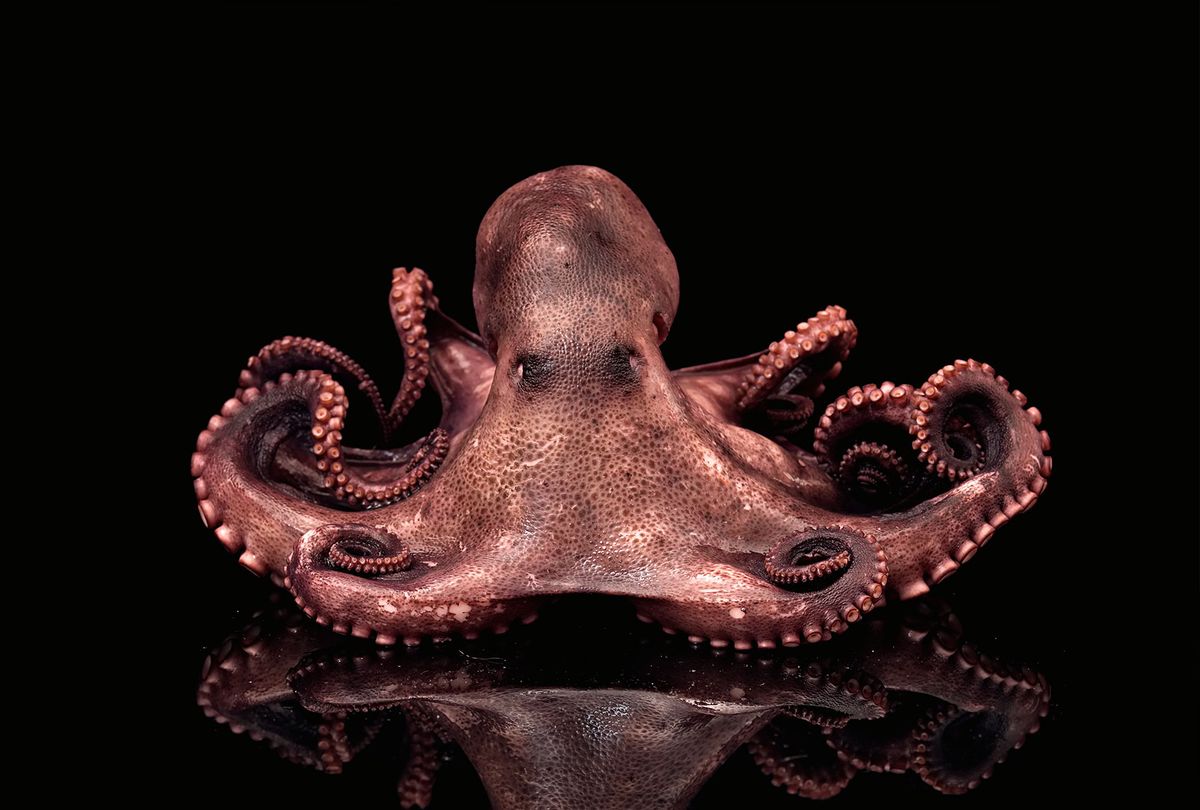 Octopus (Getty Images/sko)
.
.
Click the link below for the article:
.
__________________________________________
December 8, 2021
Mohenjo
Crime, Food For Thought, Human Interest, Medical, missed News, Political, Science, Technical
amazon, business, Business News, current-events, Future, Hotels, human-rights, medicine, mental-health, research, Science, Science News, technology, Technology News, travel, vacation
.
News You might have missed!
Use your browser or smartphone back arrow (<-) to return to this table for your next selection.
.
__________________________________________
December 7, 2021
Mohenjo
Business, Food For Thought, Human Interest, Medical, Science, Technical
amazon, business, Business News, current-events, Future, Hotels, human-rights, medicine, mental-health, research, Science, Science News, technology, Technology News, travel, vacation

Click the link below the picture
.
Just a few years ago, I was opposed to vaccines. I felt that the risks of measles were being exaggerated when periodic outbreaks would occur. I refused to get my tetanus, diphtheria, and pertussis booster when my doctor offered it, and I declined the flu shot every year. I particularly regret the decision regarding the flu shot. As a hospital employee at the time, even though I worked in an area where I did not come into contact with patients, if I had caught the flu during that time, I could have spread it, putting others at risk.
The measles outbreak underway in Clark County, Wash., and the cases that have been reported in nine other states this year are a reminder for me of just how far my views have shifted. In previous years when I rejected vaccination, I would have thought that I didn’t have to worry about measles because I lived a healthy lifestyle, or that the news was just being used to scare people into vaccinating unnecessarily. I can’t help but think back to my old beliefs and how much of my reasoning was based on misleading or false information. But my experience is also a reminder that education and compassion can be valuable tools in the fight against anti-vaccination sentiment.
My reasons for being against vaccines stemmed mostly from misunderstanding the ingredients in the vaccines and how they worked. People who tried to persuade me not to vaccinate told me about the many ingredients in vaccines, such as aluminum salts, polysorbate 80, and formaldehyde, but they did not explain the purpose of those ingredients. They advised me to read the vaccine package inserts without giving me an understanding of how to correctly interpret the information. I had also become convinced that many vaccine reactions were overlooked for various reasons and that they occurred much more frequently than documentation on vaccine safety showed.
.
 A child receives a vaccine in a hospital in Belgrade, Serbia, on Sept. 3, 2018. (Marko Djurica/Reuters)
.
.
Click the link below for the article:
.
__________________________________________
December 7, 2021
Mohenjo
Crime, Food For Thought, Human Interest, Medical, missed News, Political, Science, Technical
amazon, business, Business News, current-events, Future, Hotels, human-rights, medicine, mental-health, research, Science, Science News, technology, Technology News, travel, vacation
.
News You might have missed!
Use your browser or smartphone back arrow (<-) to return to this table for your next selection.
.
__________________________________________
December 6, 2021
Mohenjo
Business, Food For Thought, Human Interest, Science, Technical
amazon, business, Business News, current-events, Future, Hotels, human-rights, medicine, mental-health, research, Science, Science News, technology, Technology News, travel, vacation

Click the link below the picture
.
The Beresheet crash-landed on Earth’s Moon in 2019. Part of the ill-fated Israeli lunar lander’s payload was a bunch of tardigrades, or “water bears.” These organisms are under a millimeter long and can survive extreme cold and radiation by expelling nearly all their moisture before entering a nearly death-like state. The Beresheet tardigrades may have survived the crash and could, potentially, be resurrected by being reintroduced to water.
The tardigrades—sometimes called moss piglets—are safely asleep and probably not running amok on the surface of the Moon. But, in general, scientists, governments, and space agencies around the world agree that bringing Earth’s life to extraterrestrial locales, or vice versa, isn’t great.
A new paper builds on the growing body of literature about this cosmic no-no and draws on the burgeoning field of invasion science—the research of how, on Earth, non-native species spread to and alter new locations. The zebra mussel’s spread across North America through its ability to outcompete native species is a classic example.
Right now, when it comes to other celestial bodies, humans are more likely to find or introduce microorganisms rather than filter-feeders (or anything big). “The ecosystem concept is a very general concept. It doesn’t just apply to lakes or forests,” Anthony Ricciardi—a McGill University biologist and one of the authors of the paper—told Ars.
.
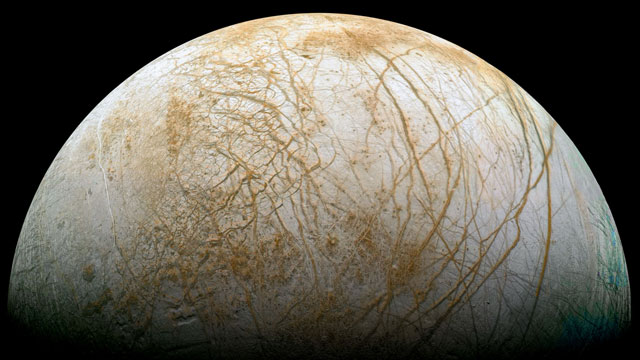 Europa could harbor complex life, and we’ll have to take care to avoid any cross-contamination.
.
.
Click the link below for the article:
.
__________________________________________
Older Entries
Newer Entries
 James' World 2