December 17, 2021
Mohenjo
Business, Food For Thought, Human Interest, Medical, Science, Technical
amazon, business, Business News, current-events, Future, Hotels, human-rights, medicine, mental-health, research, Science, Science News, technology, Technology News, travel, vacation

Click the link below the picture
.
What good things did you do for yourself in 2021?
This year on Well, we suggested a number of small habits that can make life just a little better. It’s not too late to try them, and pick a few you’d like to continue. Here are eight of our favorites.
Give the best hours of your day to yourself. What time of day do you feel your best? For some people, we may feel most energetic during the first few hours of the morning. For night owls, evening might be our best time of day. Now ask yourself, “Who gets those hours?” Do you spend your best hours checking emails, catching up on work, or doing tasks for your family? Try giving that time to yourself instead. Use it to focus on your priorities, rather than someone else’s. You can use that hour or two for anything you want — it might be for a hobby, a project that you feel passionate about, time with your children, or even to volunteer and help others. Setting aside your best hours to focus on personal goals and values is the ultimate form of self-care.
.
 Mike McQuade
.
.
Click the link below for the article:
.
__________________________________________
December 17, 2021
Mohenjo
Business, Food For Thought, Human Interest, Science, Technical
amazon, business, Business News, current-events, Future, Hotels, human-rights, medicine, mental-health, research, Science, Science News, technology, Technology News, travel, vacation

Click the link below the picture
.
The dry room at Solid Power’s Louisville, Colorado, facility is abrasively bright, and yet the low, encompassing hum of the fans and chillers is oddly soothing. It’s here in the humidity- and contaminant-free production area where Solid Power produced their first full-size solid-state lithium-metal battery cells. The cells, a shining silver contrast to their surroundings, were a moonshot.
The technology, in theory, sounded too good to be true: a 10x jump in power (or 10x drop in size) from traditional lithium-ion cells. Solid Power was aiming for more modest gains in its first prototypes, but could still see an 80 percent improvement in the near future. Then on August 7, 2021, three engineers donned protective Tyvek “bunny suits,” entered the dry room, and drew voltage from the largest prototype lithium-metal battery to date.
Josh Buettner-Garrett, Solid Power’s chief technology officer, monitored from his office. He felt confident, but a little apprehensive: “We knew we could make something that looked like a battery cell, but there was still a chance we’d have a brick.”The lithium-ion battery that Solid Power hopes to make obsolete is already a modern marvel that earned its key researchers a Nobel Prize. And the preceding lithium-iodine cells of the 1970s lasted years longer than existing alkaline-based AA, AAA, or D batteries, thanks to the material’s unmatched energy density. They were, for example, an immediate boon for pacemaker patients, who could now rely on a battery for 10 years instead of two. But lithium’s greatest impact on batteries came with the rechargeable lithium-ion batteries in the 1990s for portable electronics and electric cars.
.
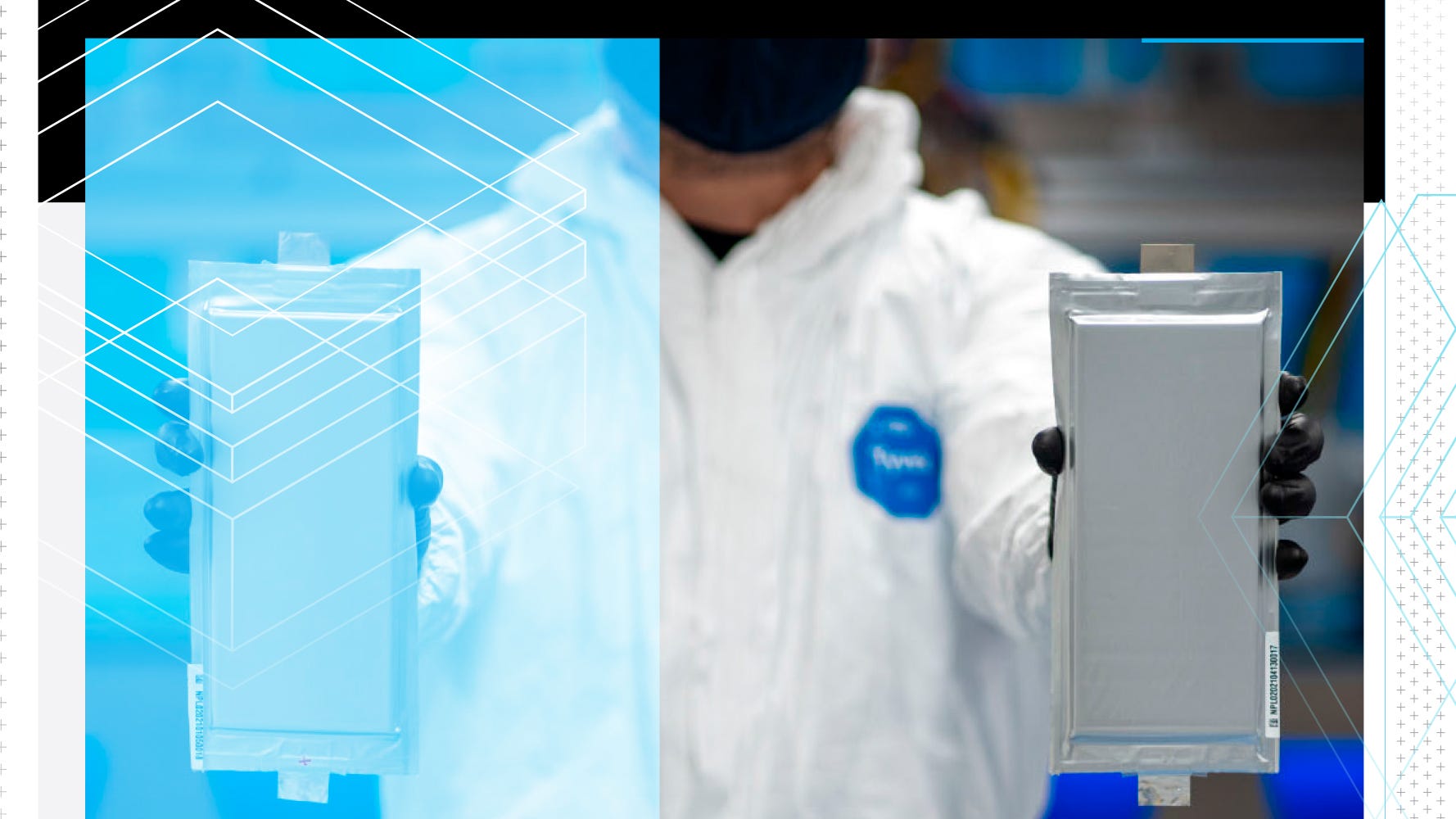 Courtesy Solid Power
.
.
Click the link below for the article:
.
__________________________________________
December 17, 2021
Mohenjo
Arts, Crime, Food For Thought, Human Interest, Medical, missed News, Political, Science, Technical
amazon, business, Business News, current-events, Future, Hotels, human-rights, medicine, mental-health, research, Science, Science News, technology, Technology News, travel, vacation

.
News You might have missed!
Use your browser or smartphone back arrow (<-) to return to this table for your next selection.
.
__________________________________________
December 16, 2021
Mohenjo
Business, Food For Thought, Human Interest, Science, Technical
amazon, business, Business News, current-events, Future, Hotels, human-rights, medicine, mental-health, research, Science, Science News, technology, Technology News, travel, vacation

Click the link below the picture
.
The tree of life just got another major branch. Researchers recently found a certain rare and mysterious microbe called a hemimastigote in a clump of Nova Scotian soil. Their subsequent analysis of its DNA revealed that it was neither animal, plant, fungus nor any recognized type of protozoan — that it in fact fell far outside any of the known large categories for classifying complex forms of life (eukaryotes). Instead, this flagella-waving oddball stands as the first member of its own “supra-kingdom” group, which probably peeled away from the other big branches of life at least a billion years ago.
“It’s the sort of result you hope to see once in a career,” said Alastair Simpson, a microbiologist at Dalhousie University who led the study.
Impressive as this finding about hemimastigotes is on its own, what matters more is that it’s just the latest (and most profound) of a quietly and steadily growing number of major taxonomic additions. Researchers keep uncovering not just new species or classes but entirely new kingdoms of life — raising questions about how they have stayed hidden for so long and how close we are to finding them all.
.
 Photo by dra_schwartz / Getty Images.
.
.
Click the link below for the article:
.
__________________________________________
December 16, 2021
Mohenjo
Business, Food For Thought, Human Interest, Science, Technical
amazon, business, Business News, current-events, Future, Hotels, human-rights, medicine, mental-health, research, Science, Science News, technology, Technology News, travel, vacation
Click the link below the picture
.
Nobody understands quantum mechanics,” Richard Feynman famously said. Long after Max Planck’s discovery in 1900 that energy comes in separate packets or quanta, quantum physics remains enigmatic. It is vastly different from how things work at bigger scales, where objects from baseballs to automobiles follow Newton’s laws of mechanics and gravitation, consistent with our own bodily experiences. But at the quantum level, an electron is a particle and a wave, and light is a wave and a particle (wave-particle duality); an electron in an atom takes on only certain energies (energy quantization); electrons or photons can instantaneously affect each other over arbitrary distances (entanglement and teleportation); a quantum object exists in different states until it is measured (superposition, or popularly, Schrödinger’s cat); and a real physical force emerges from the apparent nothingness of vacuum (the Casimir effect).
For a theory that nobody understands, quantum physics has changed human society in remarkable ways. It lies behind the digital technology of integrated circuit chips, and the new technology of light-emitting diodes moving us toward a greener world. Scientists are now excited by one of the more elusive notions in quantum physics, the idea of ephemeral “virtual” photons, which could make possible non-invasive medical methods to diagnose the heart and brain. These connections illustrate the flow of ideas from scientific abstraction to useful application. But there is also a counter flow, where pragmatic requirements generate deep insight. The universal laws of thermodynamics have roots in efforts by 19th-century French engineer Sadi Carnot to make the leading technology of the time, the steam engine, more efficient. Similarly, the growth of quantum technology leads to deeper knowledge of quantum. The interplay between pure theory, and its outcomes in the everyday world, is a continuing feature of science as it develops. In quantum physics, this interaction traces back to one of its founders, Danish physicist Niels Bohr
.
 Quantum Theory
.
.
Click the link below for the article:
.
__________________________________________
December 16, 2021
Mohenjo
Food For Thought, Human Interest, Medical, missed News, Political, Science, Technical
amazon, business, Business News, current-events, Future, Hotels, human-rights, medicine, mental-health, research, Science, Science News, technology, Technology News, travel, vacation
.
News You might have missed!
Use your browser or smartphone back arrow (<-) to return to this table for your next selection.
.
__________________________________________
December 15, 2021
Mohenjo
Business, Food For Thought, Human Interest, Science, Technical
amazon, business, Business News, current-events, Future, Hotels, human-rights, medicine, mental-health, research, Science, Science News, technology, Technology News, travel, vacation
Some content on this page was disabled on April 15, 2025 as a result of a DMCA takedown notice from Guardian Media Group. You can learn more about the DMCA here:
https://wordpress.com/support/copyright-and-the-dmca/
December 15, 2021
Mohenjo
Business, Food For Thought, Human Interest, Science, Technical
amazon, business, Business News, current-events, Future, Hotels, human-rights, medicine, mental-health, research, Science, Science News, technology, Technology News, travel, vacation

Click the link below the picture
.
If there’s one equation that people learn about physics — and no, not Einstein’s E = mc2 — it’s Newton’s F = ma. Despite the fact that it’s been in widespread use for some ~350 years now since Newton first put it forth in the late 17th century, it rarely makes the list of most important equations. Yet it’s the one that physics students learn more than any other at the introductory level, and it remains important as we advance: through our undergraduate educations, through graduate school, in both physics and engineering, and even when we move on to engineering, calculus, and some very intense and advanced concepts.
F = ma, despite its apparent simplicity, keeps on delivering new insights to those who study it, and has done so for centuries. Part of the reason why it’s so undervalued is because it’s so ubiquitous: After all, if you’re going to learn anything about physics, you’re going to learn about Newton, and this very equation is the key statement of Newton’s second law. In addition, it’s just three parameters — force, mass, and acceleration — related through an equals sign. While it might seem like there’s very little to it, the truth is that there’s a fantastic world of physics that opens up when you investigate the depths of F = ma. Let’s dive in.
.
 When describing any object that’s acted upon by an outside force, Newton’s famous F = ma is the equation that describes how its motion will evolve with time. Although it’s a seemingly simple statement and a seemingly simple equation, there’s an entire Universe to explore encoded in this seemingly straightforward relationship. (Credit: Dieterich01/Pixabay)
.
.
Click the link below for the article:
.
__________________________________________
December 15, 2021
Mohenjo
Arts, Food For Thought, Human Interest, Medical, missed News, Political, Science, sports, Technical
amazon, business, Business News, current-events, Future, Hotels, human-rights, medicine, mental-health, research, Science, Science News, technology, Technology News, travel, vacation
.
News You might have missed!
Use your browser or smartphone back arrow (<-) to return to this table for your next selection.
.
__________________________________________
December 14, 2021
Mohenjo
Business, Food For Thought, Human Interest, Science, Technical
amazon, business, Business News, current-events, Future, Hotels, human-rights, medicine, mental-health, research, Science, Science News, technology, Technology News, travel, vacation
Click the link below the picture
.
The Universe’s normal matter consists, humbly, of atoms.
Every atom’s nucleus contains protons, whose number determines that element’s properties.
Over 100 elements, sortable into a periodic table, are presently known.
Only eight processes occur to create them all.
.
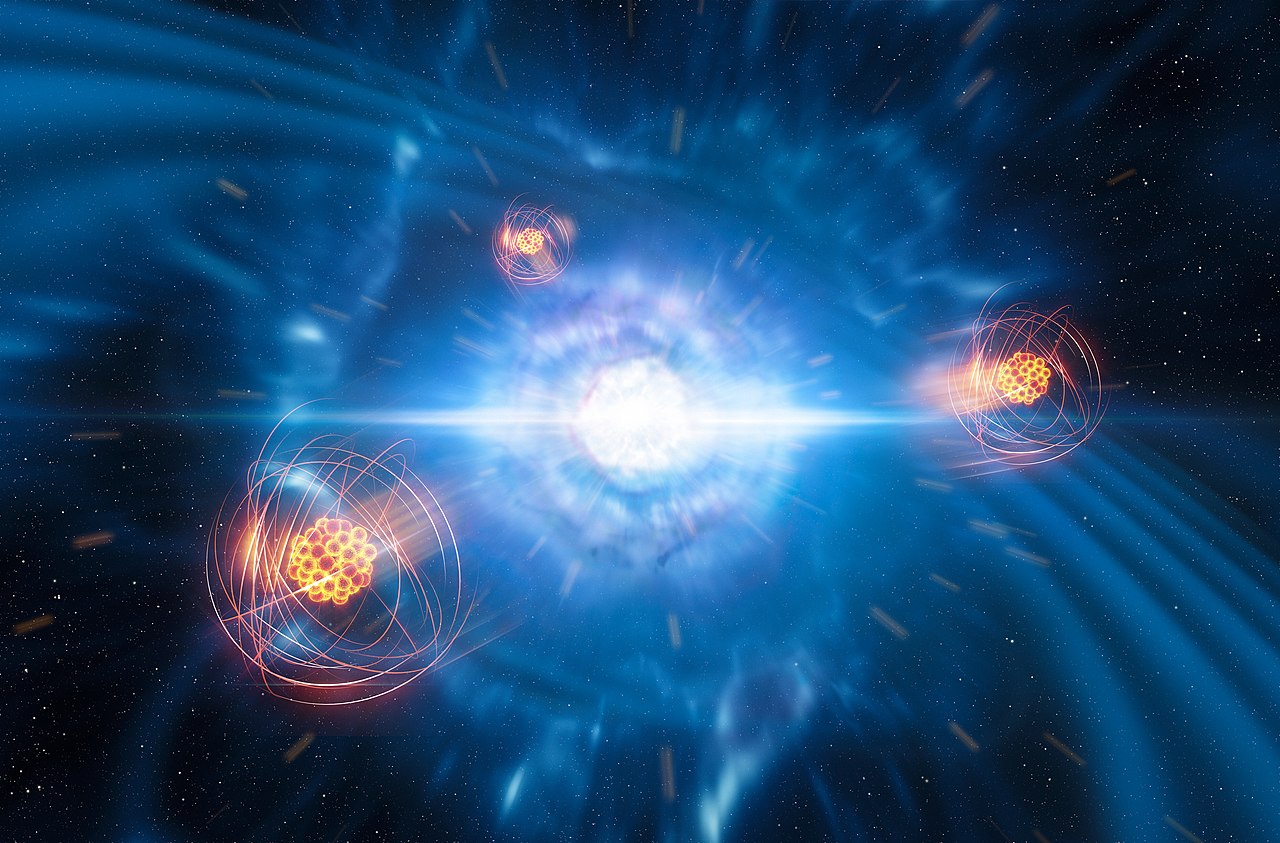 The Universe itself, through a variety of nuclear processes involving stars and stellar remnants, as well as other means, can naturally copiously produce nearly 100 elements of the periodic table. There are only 8 total processes, both natural and human-made, that cause them all. (Credit: ESO/L. Calçada/M. Kornmesser)
.
.
Click the link below for the article:
.
__________________________________________
Older Entries
Newer Entries
 James' World 2