April 4, 2019
Mohenjo
Business, Food For Thought, Human Interest, Science, Technical, Weird
amazon, business, Business News, current-events, Future, Hotels, human-rights, medicine, mental-health, research, Science, Science News, technology, Technology News, travel, vacation

Click the link below the picture
.
In fact, it wasn’t until this year that they realized the bones were human at all, because they were found among animal bones. The researchers discovered that they were human during a lab analysis, according to Science in Poland.
.
The two tiny phalanges, or digital bones of the hand, are about 1 centimeter long and belonged to a Neanderthal child who was between 5 and 7 years old. The researchers have determined that the bones are 115,000 years old.
.
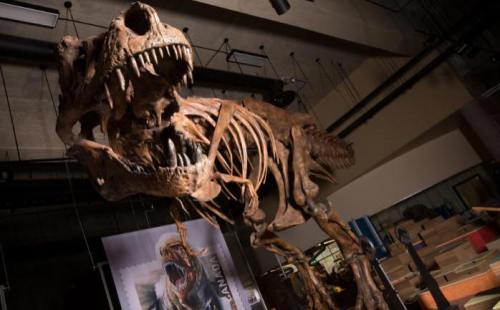

This is slide 1 of 68 slides of ancient finds by anthropologists.
.
.
Click the link below for the article:
https://www.cnn.com/2018/10/10/health/neanderthal-child-eaten-by-giant-bird/index.html
.
__________________________________________
April 4, 2019
Mohenjo
Business, Enthralling, Human Interest, Science
amazon, business, Business News, current-events, Future, Hotels, human-rights, medicine, mental-health, research, Science, Science News, technology, Technology News, travel, vacation

Click the link below the picture
.
The world’s largest creatures reside in the ocean, and its depths are home to unusual species whose surprising proportions are unknown on land.
.
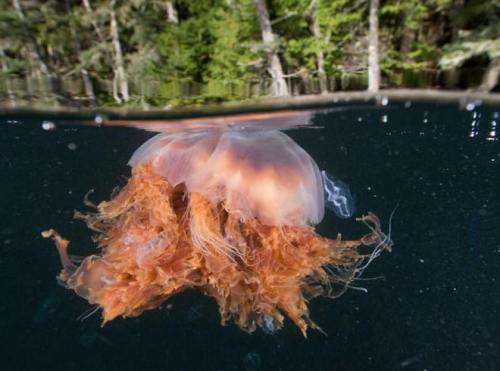 Lion’s Mane Jellyfish
Here, an underwater view captures the billowing tentacles of a lion’s mane jellyfish. The most potent species of jellyfish, the lion’s mane can reach a diameter of 6.6 feet (2 meters) with tentacles topping 49 feet (15 meters).
.
.
Click the link below for the article:
https://www.nationalgeographic.com/environment/oceans/photos/colossal-sea-creatures/
.
__________________________________________
April 4, 2019
Mohenjo
Arts, Business, Crime, Human Interest, Medical, missed News, Political, Science
amazon, business, Business News, current-events, Future, Hotels, human-rights, medicine, mental-health, research, Science, Science News, technology, Technology News, travel, vacation

.
News You might have missed!
Use your browser or smartphone back arrow (<-) to return to this table for your next selection.
.
__________________________________________
April 3, 2019
Mohenjo
Business, Food For Thought, Human Interest, Science, Technical
amazon, business, Business News, current-events, Future, Hotels, human-rights, medicine, mental-health, research, Science, Science News, technology, Technology News, travel, vacation

Click the link below the picture
.
For a few days this summer, Alexa, the voice assistant who speaks to me through my Amazon Echo Dot, took to ending our interactions with a whisper: Sweet dreams. Every time it happened, I was startled, although I thought I understood why she was doing it, insofar as I understand anything that goes on inside that squat slice of black tube. I had gone onto Amazon.com and activated a third-party “skill”—an applike program that enables Alexa to perform a service or do a trick—called “Baby Lullaby.” It plays an instrumental version of a nursery song (yes, I still listen to lullabies to get to sleep), then signs off softly with the nighttime benediction. My conjecture is that the last string of code somehow went astray and attached itself to other “skills.” But even though my adult self knew perfectly well that Sweet dreams was a glitch, a part of me wanted to believe that Alexa meant it. Who doesn’t crave a motherly goodnight, even in mid-afternoon? Proust would have understood.
.
 The voice revolution has only just begun. Today, Alexa is a humble servant. Very soon, she could be much more—a teacher, a therapist, a confidant, an informant.
.
.
Click the link below for the article:
https://www.theatlantic.com/magazine/archive/2018/11/alexa-how-will-you-change-us/570844/
.
__________________________________________
April 3, 2019
Mohenjo
Business, Human Interest, Science, Technical
amazon, Austin, business, Business News, current-events, Future, Hotels, human-rights, medicine, mental-health, research, Science, Science News, technology, Technology News, travel, vacation

Click the link below the picture
.
It was Christmas Eve 1994, and James P. Allison was testing his theory that T cells, a type of white blood cell that fights viral and bacterial infections, could help the immune system fight cancer. That week, he was covering for a postdoc aide on a European trip, who’d injected cancerous mice with an antibody to activate T cells to go after tumors. The results were stunning: All of those given the antibody became cancer-free, while the mice not provided with the antibody saw their tumors grow until they eventually died.
Allison ran back the experiment. But this time, the cancer didn’t respond. Allison grew frustrated. “I was being told, ‘You’re just foolish, this is never gonna work,’ ” he said in an interview with The Washington Post. “That was one that really pissed me off.”
But when he returned four days later to check on his furry subjects, the tumors in the mice injected with the antibody had totally disappeared. “I went, ‘Wow,’ ” said Allison, 70. “That was a real turning point. I said, ‘Okay, we’re onto something here.’ I never expected that to happen. I did have a notion that if we could figure that out, then we might have a shot at cancer.”
.
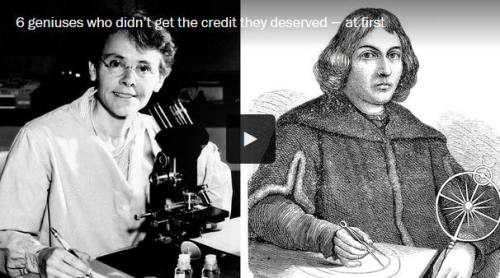
Scientists like Jim Allison and Barbara McClintock faced harsh criticism for their discoveries. Independently, they both later won the Nobel Prize. (Allie Caren/The Washington Post)
.
.
Click the link below for the article:
https://www.washingtonpost.com/nation/2019/03/25/texas-scientist-was-called-foolish-arguing-immune-system-could-fight-cancer-then-he-won-nobel-prize/?utm_term=.6e37ca3a8a56
.
__________________________________________
April 3, 2019
Mohenjo
Breaking News, Business, Crime, Human Interest, Medical, missed News, Science
amazon, business, Business News, current-events, Future, Hotels, human-rights, medicine, mental-health, research, Science, Science News, technology, Technology News, travel, vacation
.
News You might have missed!
Use your browser or smartphone back arrow (<=) to return to this table for your next selection.
.
__________________________________________
April 2, 2019
Mohenjo
Business, Human Interest, Science, Technical
amazon, business, Business News, current-events, Future, Hotels, human-rights, medicine, mental-health, research, Science, Science News, technology, Technology News, travel, vacation

Click the link below the picture
.
As the Bible tells it, the first crime committed was a lapse of self-control. Eve was forbidden from tasting the fruit on the tree of knowledge. But the temptation was too much. The fruit was just so “pleasing to the eye, and also desirable for gaining wisdom,” Genesis reads. Who wouldn’t want that? Humanity was just days old, but already we were succumbing to a vice.
The takeaway from this story was clear: when temptation overcomes willpower, it’s a moral failing, worthy of punishment.
Modern-day psychologists might not blame Eve for her errant ways at all. Because what’s true today was also true at the beginning of time (regardless of what story you believe in): Human beings are horrible at resisting temptation.
.

Photo by: Shutterstock
.
.
Click the link below for the article:
https://getpocket.com/explore/item/the-myth-of-self-control
.
__________________________________________
April 2, 2019
Mohenjo
Business, Food For Thought, Human Interest, Science, Technical
amazon, business, Business News, current-events, Future, Hotels, human-rights, medicine, mental-health, research, Science, Science News, technology, Technology News, travel, vacation

Click the link below the picture
.
As a specialist in Alzheimer’s prevention, Jessica Langbaum knows that exercising her mental muscles can help keep her brain sharp.
But Langbaum, who holds a doctorate in psychiatric epidemiology, has no formal mental fitness program. She doesn’t do crossword puzzles or play computer brain games.
“Just sitting down and doing Sudoku isn’t probably going to be the one key thing that’s going to prevent you from developing Alzheimer’s disease,” she says.
Instead of using a formal brain training program, she simply goes to work.
.
If you like sudoku, go ahead and play. But staying sharp means using many parts of your brain.
Yasuyoshi Chiba/Getty Images
.
.
Click the link below for the article:
https://www.npr.org/sections/health-shots/2018/10/08/654903558/a-brain-scientist-who-studies-alzheimers-explains-how-she-stays-mentally-fit
.
__________________________________________
April 2, 2019
Mohenjo
Business, Crime, Human Interest, Medical, missed News, Political, Science, Technical
amazon, business, Business News, current-events, Future, Hotels, human-rights, medicine, mental-health, Science, Science News, technology, Technology News, travel, vacation
.
News You might have missed!
Use your browser or smartphone back arrow (<-) to return to this table for your next selection.
.
__________________________________________
April 1, 2019
Mohenjo
Breaking News, Human Interest, Medical, missed News, Political, Science, Technical
amazon, business, Business News, current-events, Future, Hotels, human-rights, medicine, mental-health, research, Science, Science News, technology, Technology News, travel, vacation
.
News You might have missed!
Use your browser or smartphone back arrow (<-) to return to this table for your next selection.
.
__________________________________________
Older Entries
Newer Entries

 James' World 2