June 6, 2019
Mohenjo
Business, Food For Thought, Human Interest, Political, Science, Technical
amazon, business, Business News, current-events, Future, Hotels, human-rights, medicine, mental-health, research, Science, Science News, technology, Technology News, travel, vacation

Click the link below the picture
.
Here is how fast America is changing: By the time today’s teenagers hit their 30s, there will be — for the first time ever — more minorities than whites, more old people than children, and more people practicing Islam than Judaism.
The big picture: The slow demographic shifts we’ve watched over decades will finally reach a tipping point in the 2040s. They’ll transform what America looks like, where we live and what we fear.
.
Illustration: Sarah Grillo/Axios
.
.
Click the link below for article:
.
__________________________________________
June 6, 2019
Mohenjo
Business, Human Interest, Medical, missed News, Political, Science, Technical
amazon, business, Business News, current-events, Future, Hotels, human-rights, medicine, mental-health, research, Science, Science News, technology, Technology News, travel, vacation

.
News You might have missed!
Use your browser or smartphone back arrow (<-) to return to this table for your next selection.
.
__________________________________________
June 5, 2019
Mohenjo
Breaking News, Business, Food For Thought, Human Interest, Medical, Science, Technical
amazon, business, Business News, current-events, Future, Hotels, human-rights, medicine, mental-health, research, Science, Science News, technology, Technology News, travel, vacation

Click the link below the picture
.
A team of researchers inside Pfizer made a startling find in 2015: The company’s blockbuster rheumatoid arthritis therapy Enbrel, a powerful anti-inflammatory drug, appeared to reduce the risk of Alzheimer’s disease by 64 percent.
The results were from an analysis of hundreds of thousands of insurance claims. Verifying that the drug would actually have that effect in people would require a costly clinical trial — and after several years of internal discussion, Pfizer opted against further investigation and chose not to make the data public, the company confirmed.
Researchers in the company’s division of inflammation and immunology urged Pfizer to conduct a clinical trial on thousands of patients, which they estimated would cost $80 million, to see if the signal contained in the data was real, according to an internal company document obtained by The Washington Post.
.
Pfizer’s arthritis drug appeared to reduce the risk of getting Alzheimer’s disease. The Washington Post’s Chris Rowland explains why Pfizer did not pursue it. (Luis Velarde/The Washington Post)
.
.
Click the link below for article:
.
__________________________________________
June 5, 2019
Mohenjo
Business, Food For Thought, Human Interest, Science, Technical
amazon, business, Business News, current-events, Future, Hotels, human-rights, medicine, mental-health, research, Science, Science News, technology, Technology News, travel, vacation

Click the link below the picture
.
The share of teens with driver’s licenses peaked in 1983, when 72 percent of Americans aged 16–19 were legally approved to drive. Today, only about 50 percent are.
The decline has stupefied many a baby boomer and Gen Xer, who can’t imagine why young people today don’t want to hit the open road. Writing in The Atlantic in May 2018, Penn State professor Gary Cross fretted about the loss of that “magical age of 16, when suddenly a world opened up.” The Washington Post in 2015 dedicated more than 2,000 words to how America’s love affair with cars was “cruising towards oblivion” because those damn kids don’t want to drive.
What do teens actually say? According to a University of Michigan survey, the two most common reasons given for not having a driver’s license were being “too busy” to get one (37 percent) and thinking that owning a car “is too expensive” (32 percent). Most of the teens surveyed (70 percent) said they planned to get a license eventually.
.

(RUSSELLTATEdotCOM/iStock)
.
.
Click the link below for article:
.
__________________________________________
June 5, 2019
Mohenjo
Business, Food For Thought, Human Interest, Science, Technical
amazon, business, Business News, current-events, Future, Hotels, human-rights, medicine, mental-health, research, Science, Science News, technology, Technology News, travel, vacation
Some content on this page was disabled on April 15, 2025 as a result of a DMCA takedown notice from Guardian Media Group. You can learn more about the DMCA here:
https://wordpress.com/support/copyright-and-the-dmca/
June 5, 2019
Mohenjo
Business, Food For Thought, Human Interest, Medical, Science, Technical
amazon, business, Business News, current-events, Future, Hotels, human-rights, medicine, mental-health, research, Science, Science News, technology, Technology News, travel, vacation

Click the link below the picture
.
I live in explicit defiance of the rules of good sleep hygiene. Rule one: Don’t expose yourself to the blue light that’s emitted from phones and computers before bed. (When else am I going to catch up on the day’s hot takes?) Rule two: Sleep in a darkened bedroom. (I had’t considered this when buying my gauzy curtains, which are sufficient to keep my neighbors from peeping but definitely not to block out their overactive security floodlights.) Rule three: No afternoon coffee. (Ha!)
Since middle school over a decade ago, my terrible sleeping habits have manifested in various literal failures to launch: waking up for an early-morning run is a laughable concept. I hit the snooze button, on average, four times every morning. My record is eleven. Lately, my energy’s been peaking later and later—I do my best thinking and running starting around 4:30 p.m. In my one attempt to have a consistent sleep schedule after college, I tried to be in bed by 10 p.m. But I often ended up just staring at my ceiling for hours, wondering who the hell is able to fall asleep in 10 to 20 minutes, which is evidently the average.
.

Photo: Christopher D. Thompson
.
.
Click the link below for article:
.
__________________________________________
June 5, 2019
Mohenjo
Business, Crime, Food For Thought, Human Interest, missed News, Political, Science, Technical
amazon, business, Business News, current-events, Future, Hotels, human-rights, medicine, mental-health, research, Science, Science News, technology, Technology News, travel, vacation
.
News You might have missed!
Use your browser or smartphone back arrow (<-) to return to this table for your next selection.
.
__________________________________________
June 5, 2019
Mohenjo
Business, Enthralling, Food For Thought, Human Interest, Science, Technical
amazon, business, Business News, current-events, Future, Hotels, human-rights, medicine, mental-health, research, Science, Science News, technology, Technology News, travel, vacation

Click the link below the picture
.
Though some of us consider ourselves to be “clean” people, there are parts of our homes and spaces that end up being neglected. While lots of us clean regularly, most of us avoid doing a “deep clean” until we have company or there is some sort of special occasion.
But you don’t have to keep avoiding cleaning up those cracks and crevices. Get the job done quickly and easily with these deep cleaning tricks.
.
 Tips For The Deepest Clean
.
.
Click the link below for article:
.
__________________________________________
June 5, 2019
Mohenjo
Business, Enthralling, Food For Thought, Human Interest, Science, Weird
amazon, business, Business News, current-events, Future, Hotels, human-rights, medicine, mental-health, research, Science, Science News, technology, Technology News, travel, vacation
Received This Video From A Friend
Click the link below the picture
.
A seal climbs onto a boat to escape the whales!
.
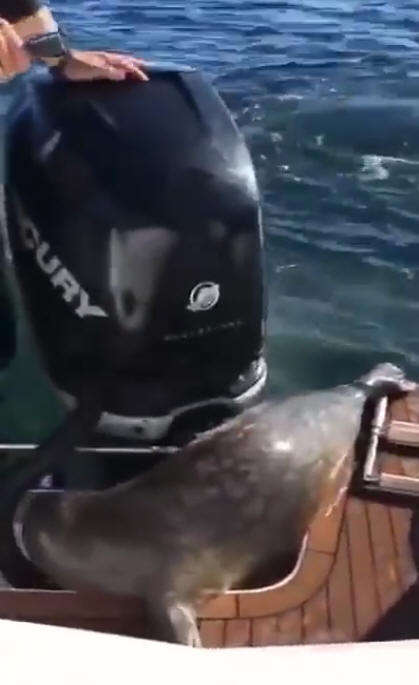
A seal finds a safe haven!
.
.
Click the link below for article:
.
__________________________________________
June 4, 2019
Mohenjo
Breaking News, Business, Enthralling, Food For Thought, Human Interest, Science, Technical
amazon, business, Business News, current-events, Future, Hotels, human-rights, medicine, mental-health, research, Science, Science News, technology, Technology News, travel, vacation

Click the link below the picture
.
In America, the conventional wisdom of how to live healthily is full of axioms that long ago shed their origins. Drink eight glasses of water a day. Get eight hours of sleep. Breakfast is the most important meal of the day. Two thousand calories a day is normal. Even people who don’t regularly see a doctor are likely to have encountered this information, which forms the basis of a cultural shorthand. Tick these boxes, and you’re a healthy person.
In the past decade, as pedometers have proliferated in smartphone apps and wearable fitness trackers, another benchmark has entered the lexicon: Take at least 10,000 steps a day, which is about five miles of walking for most people. As with many other American fitness norms, where this particular number came from has always been a little hazy. But that hasn’t stopped it from becoming a default daily goal for some of the most popular activity trackers on the market.
Now new research is calling the usefulness of the 10,000-step standard into question—and with it, the way many Americans think about their daily activities. While basic guidelines can be helpful when they’re accurate, human health is far too complicated to be reduced to a long chain of numerical imperatives. For some people, these rules can even do more harm than good.
.
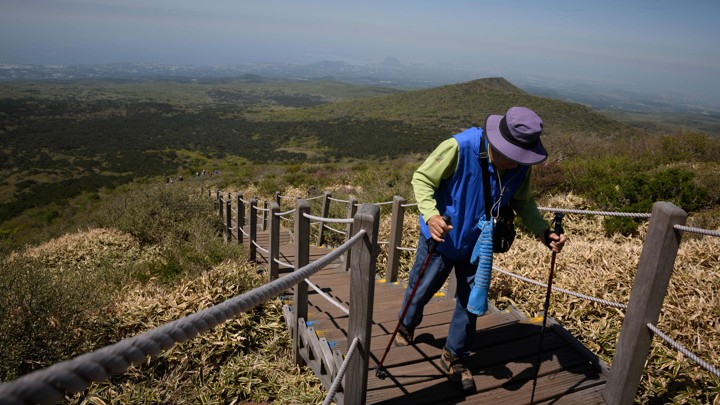 Ed Jones / AFP / Getty
.
.
Click the link below for article:
.
__________________________________________
Older Entries
Newer Entries

 James' World 2