
.
News You might have missed!
Use your browser or smartphone back arrow (<-) to return to this table for your next selection.
.
__________________________________________
Assorted human interest posts.
August 27, 2021
Crime, Food For Thought, Human Interest, Medical, missed News, Political, Science, Technical amazon, business, Business News, current-events, Future, Hotels, human-rights, medicine, mental-health, research, Science, Science News, technology, Technology News, travel, vacation 1 Comment
.
.
__________________________________________
August 26, 2021
Business, Food For Thought, Human Interest, Science, Technical amazon, business, Business News, current-events, Future, Hotels, human-rights, medicine, mental-health, research, Science, Science News, technology, Technology News, travel, vacation Leave a comment

Click the link below the picture
.
As the car with the blacked-out windows came to a halt in a sidestreet near Tübingen’s botanical gardens, keen-eyed passersby may have noticed something unusual about its number plate. In Germany, the first few letters usually denote the municipality where a vehicle is registered. The letter Y, however, is reserved for members of the armed forces.
Military men are a rare, not to say unwelcome, sight in Tübingen. A picturesque 15th-century university town that brought forth great German minds including the philosopher Hegel and the poet Friedrich Hölderlin, it is also a modern stronghold of the German Green party, thanks to its left-leaning academic population. In 2018, there was growing resistance on campus against plans to establish Europe’s leading artificial intelligence research hub in the surrounding area: the involvement of arms manufacturers in Tübingen’s “cyber valley”, argued students who occupied a lecture hall that year, brought shame to the university’s intellectual tradition.
Yet the two high-ranking officials in field-grey Bundeswehr uniforms who stepped out of the Y-plated vehicle on 1 February 2018 had traveled into hostile territory to shake hands on a collaboration with academia, the like of which the world had never seen before.
The name of the initiative was Project Cassandra: for the next two years, university researchers would use their expertise to help the German defense ministry predict the future.
.
 Jürgen Wertheimer, who set up Project Cassandra: ‘Writers operate on a plane that is both objective and subjective.’ Photograph: Dominik Gigler/The Guardian
.
.
Click the link below for the article:
.
__________________________________________
August 26, 2021
Crime, Food For Thought, Human Interest, Medical, missed News, Political, Science, Technical amazon, business, Business News, current-events, Future, Hotels, human-rights, medicine, mental-health, research, Science, Science News, technology, Technology News, travel, vacation Leave a comment
.
.
__________________________________________
August 25, 2021
Business, Food For Thought, Human Interest, Science, Technical amazon, business, Business News, current-events, Future, Hotels, human-rights, medicine, mental-health, research, Science, Science News, technology, Technology News, travel, vacation Leave a comment

Click the link below the picture
.
The giant tech companies with their power-hungry, football-field-size data centers are not the environmental villains they are sometimes portrayed to be on social media and elsewhere.
Shutting off your Zoom camera or throttling your Netflix service to lower-definition viewing does not yield a big saving in energy use, contrary to what some people have claimed.
Even the predicted environmental impact of Bitcoin, which does require lots of computing firepower, has been considerably exaggerated by some researchers.
Those are the conclusions of a new analysis by Jonathan Koomey and Eric Masanet, two leading scientists in the field of technology, energy use and the environment. Both are former researchers at the Lawrence Berkeley National Laboratory. Mr. Koomey is now an independent analyst, and Mr. Masanet is a professor at the University of California, Santa Barbara. (Mr. Masanet receives research funding from Amazon.)
.
 Credit…Erica Urech for The New York Times
.
.
Click the link below for the article:
.
__________________________________________
August 25, 2021
Business, Human Interest, Medical, Science, Technical amazon, business, Business News, current-events, Future, Hotels, human-rights, medicine, mental-health, research, Science, Science News, technology, Technology News, travel, vacation 2 Comments

Click the link below the picture
.
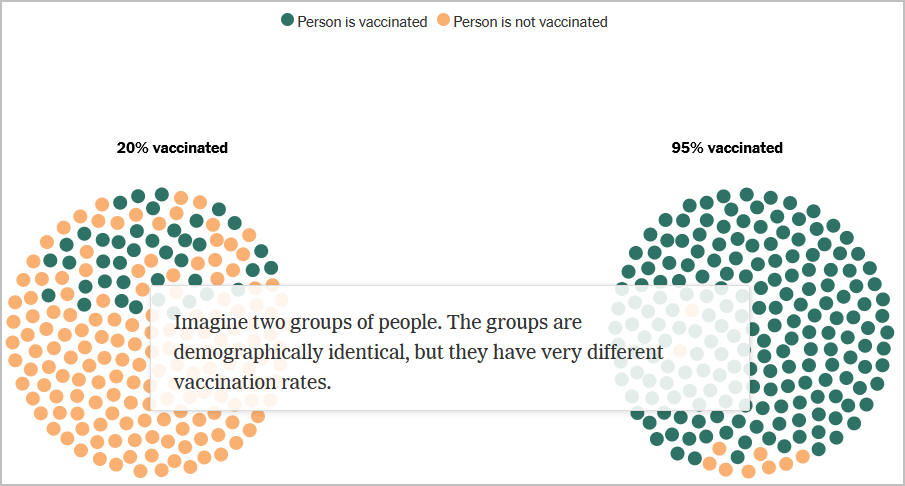
The Delta variant, the highly transmissible version of the coronavirus that now makes up almost all new cases in the United States, continues to drive a surge throughout the country, with average new cases topping 100,000 for the past week.
Some of those infections have been reported in fully vaccinated people in so-called breakthrough cases. As the sheer number of those vaccinated increases, so will the raw number of breakthrough cases, especially with the Delta variant circulating. But experts say breakthrough cases do not mean the vaccine is ineffective.
The Delta variant’s dominance is new enough that authoritative data does not yet exist, but the available data shows that unvaccinated people are still much more likely to contract Covid-19 and far more likely to experience symptomatic disease, while vaccines drastically reduce the risk of hospitalization and death from the virus.
.
 .
.
.
Click the link below for the article:
.
__________________________________________
August 25, 2021
Crime, Food For Thought, Human Interest, Medical, missed News, Political, Science, Technical amazon, business, Business News, current-events, Future, Hotels, human-rights, medicine, mental-health, research, Science, Science News, technology, Technology News, travel, vacation Leave a comment
.
.
__________________________________________
August 24, 2021
Business, Food For Thought, Human Interest, Science, Technical amazon, business, Business News, current-events, Future, Hotels, human-rights, medicine, mental-health, research, Science, Science News, technology, Technology News, travel, vacation Leave a comment

Click the link below the picture
.
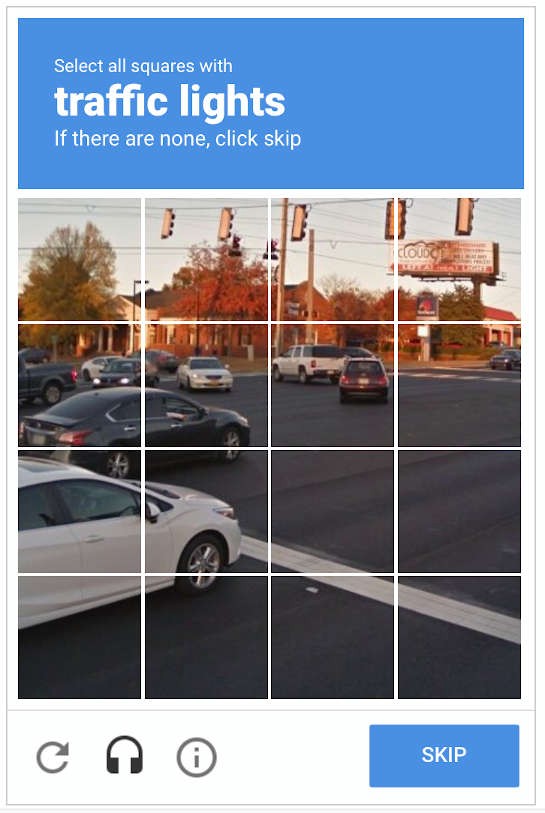
I hate doing Google’s CAPTCHAs.
Part of it is the sheer hassle of repeatedly identifying objects — traffic lights, staircases, palm trees, and buses — just so I can finish a web search. I also don’t like being forced to donate free labor to AI companies to help train their visual-recognition systems.
But a while ago, while numbly clicking on grainy images of fire hydrants, I was struck by another reason:
The images are deeply, overwhelmingly depressing.
CAPTCHA images are never joyful vistas of human activity, full of Whitmanesque vigor. No, they’re blurry, anonymous landscapes that possess positively Soviet anomie.
.
.
.
Click the link below for the article:
.
__________________________________________
August 24, 2021
Business, Food For Thought, Human Interest, Science, Technical amazon, business, Business News, current-events, Future, Hotels, human-rights, medicine, mental-health, research, Science, Science News, technology, Technology News, travel, vacation Leave a comment

Click the link below the picture
.
Even iPhone users with nothing to hide could be forgiven for being a little creeped out that Apple will scan their photos and see if they match existing databases of known illegal pornographic images. Privacy experts called the idea a potential back door for governments to request or demand scans for other images or files. Some of Apple’s own employees are reportedly pushing back on the idea.
It’s a good indication that things are headed in the wrong direction when your company’s anti-child-pornography initiative gets panned.
A major reason for the failure of Apple’s defense is that the photo-scanning program confirms a fear many users already harbor: Personal data, even the most sensitive, is effectively out of users’ control, accessible at the flip of a switch.
Apple says, relentlessly, that privacy is the central feature of its iPhones. But as the photo scanning demonstrates, that’s true only until the company changes its mind about its policies.
.
 Credit…Shawn Michael Jones
.
.
Click the link below for the article:
.
__________________________________________
August 24, 2021
Crime, Food For Thought, Human Interest, Medical, missed News, Political, Science, Technical amazon, business, Business News, current-events, Future, Hotels, human-rights, medicine, mental-health, research, Science, Science News, technology, Technology News, travel, vacation Leave a comment
.
.
__________________________________________
August 23, 2021
Business, Food For Thought, Human Interest, Medical, Science, Technical amazon, business, Business News, current-events, Future, Hotels, human-rights, medicine, mental-health, research, Science, Science News, technology, Technology News, travel, vacation Leave a comment

Click the link below the picture
.
For someone who played sports throughout the majority of her life, I admit I was never good at portion control or exercising for weight loss. My teammates were extremely lean while I looked — as my brother would say — chonky.
I didn’t have the best relationship with my body so I wanted to slim down and feel better about it, but I couldn’t find anything in the U.S that I felt like I could realistically accomplish. To be honest, the fitness culture in this country scares me. I knew I didn’t want to drink Kombucha every day or attend expensive SoulCycle classes for the rest of my life.
When I lived in Japan for a couple of years, I was shocked by the not-so-intense fitness culture. None of my peers went to the gym, drank protein smoothies, or ate granola bars for meals. Throughout my time learning about their culture, I realized that the health culture in Japan gravitates towards prevention rather than cure, which is different from the US philosophy. Rather than overworking the body to compensate for the overconsumption of high-calorie food, Japanese people eat balanced meals and walk miles for commute every day. Not many people go to the gym or buy expensive products to sustain their healthy lifestyle because their daily routine is already healthy.
.
 Source: Diana Polekhina / Unsplash
.
.
Click the link below for the article:
.
__________________________________________
Dragoste si lumina
Find the Best Forex Broker for Your Trading Success
AS HUMILDES OPINIÕES DE UMA MULHER DE CORAGEM QUE DIZ SIM À VIDA!
Să facem glume, nu război
In the world, human beings are facing various problems. People who are full of greed, anger, and ignorance are seen to be fighting with each other in words and deeds. As the fighting continues, various problems such as civil wars, wars of aggression, and wars of aggression are occurring. As world peace is being destroyed, humans are facing unbearable problems. Innocent children and women are not getting the rights they deserve and deserve. I can't think of one thing every time. What is it? The United Nations. If we look at the responsibilities and duties of the United Nations, I think it is not suitable for solving the problems that are happening in the world today. In fact, the United Nations and the World Security Council, such an organization must rule the world, must be able to give orders, and must have various ways to obey orders. There must be no organization that can influence more than that organization. There should be experts from each country. They can even dominate the superpowers like the US, China, and Britain. Only then will global peace be achieved quickly. Now, if a country with power develops more militarily, economically, or socially than its own country, then powerful countries will jealously seek out enemies and wage war. Or they will attack with fighter jets. In this, innocent people are losing their lives. No one understands the value of a life. You should think about how to achieve global peace by controlling these. If the US continues to be the permanent president of the UN, world peace will never be achieved. If you think carefully, no one sees that they are working for the common good, but for their own benefit, for the benefit of their own country. The permanent president of the UN and the Security Council has rejected this, As a young Rohingya, I have come to realize that only by electing the president and secretary from among the countries in the world through a secret ballot system and governing the world fairly can we achieve global peace. The United Nations and the Security Council are organizations in which any country must govern, give orders, and make them obey their orders. For example, only when a defendant is tried in court can we hold the leaders of the countries in check and control them, can we achieve global peace smoothly. Otherwise, it will not be easy for powerful countries to use various excuses to end this war every year, every year, for the benefit of themselves and their countries. No country's leaders pay any attention to the words of the United Nations and the Security Council. If we look at it in practice, look at the Rohingya issue. Myanmar is a small country. Even that country has been under siege for 8 years. What action can be taken? Why is the UN and the Security Council Powerless? Without such Power, how can the organization bring about global peace? Everyone should think about it. Whether there is a veto or a strong one, all countries in the world can only achieve global peace if they are subject to the UN and the Security Council. Seek peace in the quiet embrace of nature. Peace is an indispensable need of the human race. It is not as if one person can kill another person, and it is as if one country can attack another country, but instead of trying to build peace, we must try to destroy the peace now, and the world is getting hotter and is on the verge of collapse. I especially appeal to all the world experts to urgently try to bring about peace in all parts of the world. Mr, Noor Muhamed Arkhan Rohingya Youth Myanmar
Publicație umoristică dedicată glumeților de pretutindeni
Faith saved us from the savages that we were, losing faith makes us savages again
Where Trends Meet Truth
https://www.tangietwoods
Freelance poetry writing
Zalai Betti
INOVATION BLOG PEOPLE AND NEWS
Németh György
Konsultan Lingkungan Hidup di Lombok - NTB
Lea Krasznai (LeaArt21) – Idezetek (Idézetek) WordPress (Budapest, Hungary)
Appunti, spunti e passioni in liberta'
Gyorgy Nemeth
تعنى بتقديم نصائح للمعلمين المبتدئين، والطلبة الممتحنين، ومشاركة الاخرين تجربة الادخار في المال، بترشيد الاستهلاك المنزلي، وترتيب البيت، والحفاظ على البيئة، وتشجيع السيارات صديقةالبيئة، والسياحة والاسفار، ونماء رؤوس الاموال، والطب البديل وتشجيع التعليم الرقمي والذكاء الاصطناعي، والعناية بالنحل وتربية الاسماك، والاسثمار في رؤوس الاموال، الزراعة العضوية، والعناية باسنان الرضع، و صحة الحوامل، وتفسير القران
apprendre pour évoluer
Thoughts on books, language, meaning, and the culture around it.
Outdoor Recreation & Adventure in the Great Lakes Region
News, Info, Bio, Articles, Reviews, Lyrics, Technology, Science, Inspiration, Motivation, Philosphy and many more...
Christian Lifestyle Blogger
CEO and president of The Mullins Companies
Two Cultures. One Life. Endless Stories
Real Estate Development Specialist
¡Bienvenido de vuelta viajero!
so looking to the sky ¡ sing and from my heart to YOU ¡ bring...
CEO and Founder of Nsight Health
Catholic News, Prayers, HD Images, Rosary, Music, Videos, Holy Mass, Homily, Saints, Lyrics, Novenas, Retreats, Talks, Devotionals and Many More
Decoding Power. Defying Narratives.
A creative collaboration introducing the art of nature and nature's art.
The Home Of Entertainment News, Reviews and Reactions
•Whenever you are confronted with an opponent, conquer him with love.(Gandhi)
Algotrader at TRADING-CLUBS.COM
Film and Writing Festival for Comedy. Showcasing best of comedy short films at the FEEDBACK Film Festival. Plus, showcasing best of comedy novels, short stories, poems, screenplays (TV, short, feature) at the festival performed by professional actors.
Peace. Tranquility. Insanity.
Take a ride on the wild side
Découvre des musiques prometteuses (principalement) dans la sphère musicale française.
No tiene que Ser una Pesadilla.
Life in Kana-text (er... CONtext)
Where feelings meet metaphors and make questionable choices.

