June 6, 2020
Mohenjo
Business, Crime, Food For Thought, Human Interest, Political, Science, Technical
amazon, business, Business News, current-events, Future, Hotels, human-rights, medicine, mental-health, research, Science, Science News, technology, Technology News, travel, vacation

Click the link below the picture
.
Most of us who grow up in the United States learn a reassuring narrative of ever-expanding tolerance. Yes, the country’s birth was tainted with the original sin of slavery, but Lincoln freed the slaves, the Supreme Court desegregated schools, and we finally elected a black president. The Founding Fathers may have all been men, but in their wisdom, they created a constitution that would later allow women to gain the vote. And now the legal definition of marriage has broadened to include gays and lesbians. We are, it appears, an increasingly inclusive nation.
But a parallel, much darker river runs through American history. The Know-Nothing Party of the 1850s viciously attacked Catholics and immigrants. Eugenics enthusiasts of the early twentieth century warned about the nation’s gene pool being polluted by ex-slaves, the feeble-minded, and newcomers of inferior races. In the 1930s, 16 million Americans regularly listened to the anti-Semitic radio rants of Father Charles E. Coughlin.
The most notorious of all the currents in this dark river has been the Ku Klux Klan. It flourished first in the South after the Civil War, lynching and terrorizing African-Americans who tried to vote, and then gradually disbanded in the early 1870s under pressure from the federal government. After a long spell of quiescence, it reemerged into national prominence in the 1920s, reaching an all-time peak membership in 1924—a year, incidentally, that saw the dedication of various Confederate memorials, including the Robert E. Lee statue in Charlottesville, Virginia, whose planned removal was the pretext for the “Unite the Right” rally there in August. After another eclipse, the Klan roared back to life a third time in protest against the civil rights movement of the 1960s. Among other acts of violence, Klansmen took part in the murder of three voter registration workers near Philadelphia, Mississippi, in the summer of 1964—James Chaney, Michael Schwerner, and Andrew Goodman.
.
 Ku Klux Klan paraders, Muncie, Indiana, 1922. Photo from the Ball State University Archives & Special Collections.
.
.
Click the link below for the article:
.
__________________________________________
June 6, 2020
Mohenjo
Business, Crime, Human Interest, Medical, missed News, Political, Science
amazon, business, Business News, current-events, Future, Hotels, human-rights, medicine, mental-health, research, Science, Science News, technology, Technology News, travel, vacation

.
News You might have missed!
Use your browser or smartphone back arrow (<-) to return to this table for your next selection.
.
__________________________________________
June 5, 2020
Mohenjo
Arts, Food For Thought, Human Interest, missed News, Political, Science, Technical
amazon, business, Business News, current-events, Future, Hotels, human-rights, medicine, mental-health, research, Science, Science News, technology, Technology News, travel, vacation

.
News You might have missed!
Use your browser or smartphone back arrow (<-) to return to this table for your next selection.
.
__________________________________________
June 4, 2020
Mohenjo
Business, Food For Thought, Human Interest, Political
amazon, business, Business News, current-events, Future, Hotels, human-rights, medicine, mental-health, research, Science, Science News, technology, Technology News, travel, vacation

Click the link below the picture
.
Conventional wisdom says that place matters more for people who live in distressed neighborhoods—places with low median incomes and not a lot of opportunity. That’s why policymakers have traditionally focused on one of two place-based solutions. Community development grants and tax breaks, for example, are aimed at improving conditions by luring investment into disadvantaged areas. Housing voucher programs, meanwhile, are supposed to help low-income families escape distressed neighborhoods and move to ones with higher median incomes and better educational outcomes.
But what if our approach to geographical inequality is lopsided? What if we’re overlooking the contribution of so-called advantaged neighborhoods in maintaining the status quo?
In a 2019 paper published in Sociological Quarterly, Junia Howell, a sociologist at the University of Pittsburgh, argues just that. “As important as investigations into disadvantaged neighborhoods are,” she writes, “the nearly exclusive analytical focus on them has the unintentional consequence of downplaying the role that advantaged neighborhoods play in stratifying educational outcomes.”
.
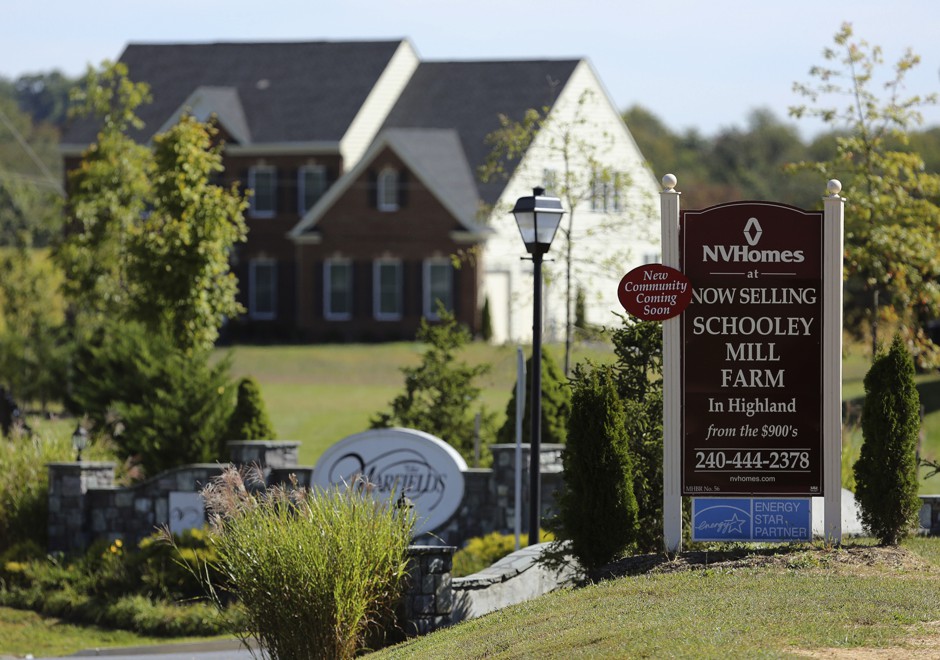
A new subdivision of high-end suburban homes in Highland, Maryland. Photo by Gary Cameron/Reuters.
.
.
Click the link below for article:
.
__________________________________________
June 4, 2020
Mohenjo
Business, Human Interest, Medical, Political
amazon, business, Business News, current-events, Future, Hotels, human-rights, medicine, mental-health, research, Science, Science News, technology, Technology News, travel, vacation

Click the link below the picture
.
President Trump signed an executive order Thursday instructing agencies to waive long-standing environmental laws to speed up federal approval for new mines, highways, pipelines, and other projects are given the current economic “emergency.”
Declaring an economic emergency allows the president to invoke a section of federal law “where emergency circumstances make it necessary to take any action with significant environmental impact without” observing normal requirements imposed by laws such as the Endangered Species Act and the National Environmental Policy Act. These laws require agencies to solicit public input on proposed projects and analyze in detail how federal decisions could harm the environment.
In the order, the president said setting aside these requirements would help the nation recover from the economic losses it has suffered since the outbreak of the novel coronavirus. “Unnecessary regulatory delays will deny our citizens opportunities for jobs and economic security, keeping millions of Americans out of work and hindering our economic recovery from the national emergency.”
.
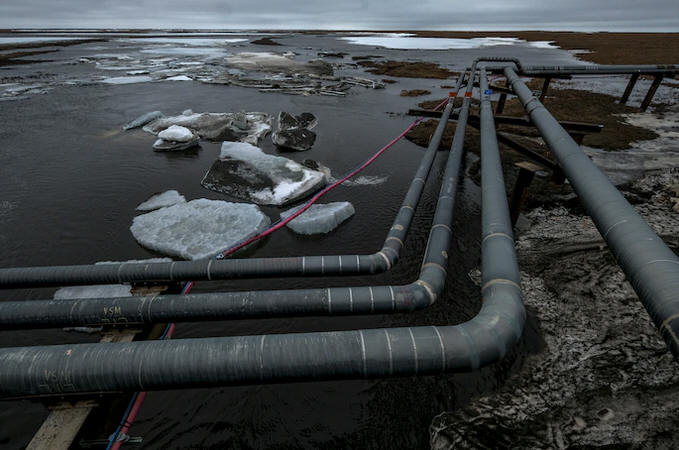 Pipelines extend across the landscape outside Nuiqsut, Alaska, last year. (Bonnie Jo Mount/The Washington Post)
.
.
Click the link below for article:
.
__________________________________________
June 4, 2020
Mohenjo
Business, Crime, Food For Thought, Human Interest, Medical, missed News, Political, Science, Technical
amazon, business, Business News, current-events, Future, Hotels, human-rights, medicine, mental-health, research, Science, Science News, technology, Technology News, travel, vacation
.
News You might have missed!
Use your browser or smartphone back arrow (<-) to return to this table for your next selection.
.
__________________________________________
June 2, 2020
Mohenjo
Food For Thought, Human Interest, Medical, missed News, Political, Science, Technical
amazon, business, Business News, current-events, Future, Hotels, human-rights, medicine, mental-health, research, Science, Science News, technology, Technology News, travel, vacation
.
News You might have missed!
Use your browser or smartphone back arrow (<-) to return to this table for your next selection.
.
__________________________________________
June 1, 2020
Mohenjo
Arts, Business, Crime, Food For Thought, Human Interest, Medical, missed News, Political, Science, Technical
amazon, business, Business News, current-events, Future, Hotels, human-rights, medicine, mental-health, research, Science, Science News, technology, Technology News, travel, vacation
.
News You might have missed!
Use your browser or smartphone back arrow (<-) to return to this table for your next selection.
.
__________________________________________
May 30, 2020
Mohenjo
Business, Crime, Food For Thought, Human Interest, Political
amazon, business, Business News, current-events, Future, Hotels, human-rights, medicine, mental-health, research, Science, Science News, technology, Technology News, travel, vacation

Click the link below the picture
.
The Tulsa race massacre (also called the Tulsa race riot, the Greenwood Massacre, or the Black Wall Street Massacre) of 1921 took place on May 31 and June 1, 1921, when mobs of white residents attacked black residents and businesses of the Greenwood District in Tulsa, Oklahoma It has been called “the single worst incident of racial violence in American history. The attack carried out on the ground and from private aircraft, destroyed more than 35 square blocks of the district – at that time the wealthiest black community in the United States, known as “Black Wall Street”.
.

Residential block burned down.
.
.
Click the link below for article:
Click the link below for an additional article:
https://jtm71.com/2017/02/24/tulsa-oklahoma-black-wall-street-race-riot-hd-video-full-documentary-black-history-month/
.
__________________________________________
May 30, 2020
Mohenjo
Business, Human Interest, Political
amazon, business, Business News, current-events, Future, Hotels, human-rights, medicine, mental-health, research, Science, Science News, technology, Technology News, travel, vacation

.
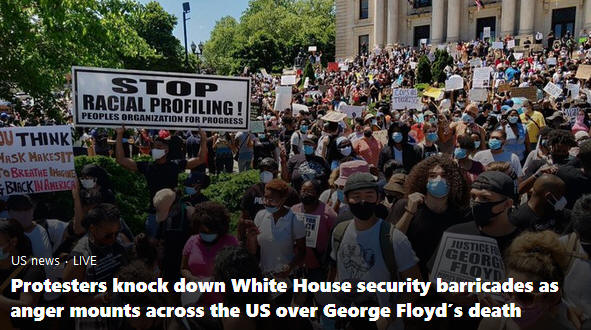
Trump Karma!
.
__________________________________________
Older Entries
Newer Entries
 James' World 2