May 18, 2023
Mohenjo
Business, Food For Thought, Human Interest, Political, Science, Technical
amazon, business, Business News, current-events, Future, Hotels, human-rights, medicine, mental-health, research, Science, Science News, technology, Technology News, travel, vacation

Click the link below the picture
.
A growing share of childless adults in the U.S. don’t expect to ever have children, according to a 2021 Pew Research Center survey. Some people gave specific reasons, like medical conditions or finances, but a lot of people said they just don’t want to.
If that’s you, you might find yourself facing unwanted commentary or questions. Angela L. Harris can relate. She’s child-free by choice, and she says people often question her choice or want to know all the details.
Harris has a doctorate degree in clinical psychology and is the founder of #NoBibsBurpsBottles, an online community for Black women who are child-free. She says, first of all, to remember that you don’t owe anyone an explanation: “If you don’t feel like explaining, don’t explain. Your life is your life.”
Harris tends to share. “I explain my choice all the time, especially if someone’s curious about it,” she says. “That’s the way we’re going to decrease the stigma.” Sometimes Harris’ responses might be more sincere; other times, she opts for levity. “I think there’s a playful and joking way in which you can respond,” she says.
.
 Ana Galvañ for NPR
.
.
Click the link below for the article:
.
__________________________________________
May 17, 2023
Mohenjo
Business, Food For Thought, Human Interest, Political, Science, Technical
amazon, business, Business News, current-events, Future, Hotels, human-rights, medicine, mental-health, research, Science, Science News, technology, Technology News, travel, vacation

Click the link below the picture
.
How is Simone Biles like a honeybee? That’s not a riddle. Nor is it a trick question. It’s a profoundly serious inquiry, and the answer is found within an emerging field of neuroscience, one that promises to unlock the secrets of how our brains decide if it’s the right time to quit.
As the world’s premier gymnast, Biles has done many amazing things, but it was the thing she did in Tokyo in 2021 that stunned the world like nothing else in her career ever had: she gave up. So what’s the connection between one of the greatest athletes in history and a flying insect?
“Perseverance, in a biological sense, doesn’t make sense unless it’s working.”
That’s Jerry Coyne, emeritus professor at the University of Chicago, one of the top evolutionary biologists of his generation. I’ve called Coyne to ask him about animals and quitting. I want to know why human beings tend to adhere to the Gospel of Grit—while other creatures on this magnificently diverse earth of ours follow a different strategy. Their lives are marked by purposeful halts, fortuitous side steps, canny retreats, nick‑of‑time recalculations, wily workarounds, and deliberate do‑overs, not to mention loops, pivots, and complete reversals.
.
 Credit: Nithya / Adobe Stock
.
.
Click the link below for the article:
.
__________________________________________
May 17, 2023
Mohenjo
Business, Food For Thought, Human Interest, Political, Science, Technical
amazon, business, Business News, current-events, Future, Hotels, human-rights, medicine, mental-health, research, Science, Science News, technology, Technology News, travel, vacation

Click the link below the picture
.
Graduation season can be one of both opportunity and existential dread. You’re about to embark on a new chapter of your life and have seemingly endless possibilities ahead of you, whether you’re graduating from undergrad, are beginning your career straight out of high school, or have taken a non-traditional path. All that promise and potential can be just as liberating as it is terrifying.
Almost everyone has well-wishes for new college graduates, advice ranging from trite (“Find a job you love and you’ll never work a day in your life!”) to the ill-advised (any platitude with the word “hustle” in it; anyone who recommends you sacrifice sleep to be more productive).
However, professors who actually work with students, financial experts, and people who’ve been at the crossroads of life say otherwise. Their advice for new graduates is all about relationships: your relationship with your job, your money, and yourself. If you’re looking for a little bit of guidance post-graduation, try a tip or two.
Responses have been edited and condensed for clarity.
.
:format(webp)/cdn.vox-cdn.com/uploads/chorus_image/image/72278997/GettyImages_1303781768.0.jpg) Getty Images
Getty Images
.
.
Click the link below for the article:
.
__________________________________________
May 16, 2023
Mohenjo
Business, Food For Thought, Human Interest, Political, Science, Technical
amazon, business, Business News, current-events, Future, Hotels, human-rights, medicine, mental-health, research, Science, Science News, technology, Technology News, travel, vacation

Click the link below the picture
.
Don’t drive when it snows.
Okay, that’s not realistic, so it’s really more like Always check the weather before you go on a four-hour road trip in the dead of winter to see your friend Jen in Bend, Oregon, during the height of the pandemic.
But let’s rewind a bit since there were other ways to die on this long journey to reach Jen. You first flew across the country from New York to Oregon. You could have died then, too, gambling with your life with that five-hour flight, breathing the same stuffy plane air as everyone else.
Remember when you were advised to stay at least six feet away from people, or else risk getting COVID? Then possibly dying? That four-hour car ride on the final leg of your trip, then, was both a foolish and fitting thing to do.
Because it’s on this drive from the coast of Oregon to Bend that your car slips on the snow and crashes into the highway barrier. You find out later — see, this is why you should always check the weather before you drive — that that day was the first heavy snowfall of the season, and you’re in one of many car accidents around town, just half an hour away from Jen and her husband, who put all their belongings in storage and decided to rent an Airbnb in town indefinitely. (People did that during the pandemic, in that uncertain time between the fear of succumbing to the disease and the boredom of staying at home.)
You have photos of this carnage and general mayhem and, much later — after all this is more or less over — gleefully show them to people who ask, while watching kind of sadistically as they squirm and wince and gravely tell you they’re glad you’re alive.
.
 Stock art by David Malan/Getty Images. Image by CLR.
.
.
Click the link below for the article:
.
__________________________________________
May 16, 2023
Mohenjo
Business, Food For Thought, Human Interest, Political, Science, Technical
amazon, business, Business News, current-events, Future, Hotels, human-rights, medicine, mental-health, research, Science, Science News, technology, Technology News, travel, vacation

Click the link below the picture
.
If we were to draw one key lesson about longevity from the centenarians of the Blue Zones regions (places that are home to the longest-living folks on Earth), it would be that it doesn’t come from fad diets or overwrought workout routines, or really any practice that’s bound to fizzle within months. Rather, people with extraordinary longevity “live in environments that nudge them unconsciously toward healthier behaviors, like moving more and eating plants,” says Dan Buettner, author of The Blue Zones Challenge: A 4-Week Plan for a Longer, Better Life. And those environments start within the spaces of their homes, which include elements of design and organization that facilitate healthy habits.
In essence, the set-up of your home can play a role in your longevity because of the often passive ways in which we make everyday lifestyle decisions, like what to eat and when to move. “For example, Cornell found that up to 90 percent of the food choices we make each day are unconscious,” says Buettner. “So, even if I were to convince you to make good conscious decisions about what you eat, and get you to remember to make those decisions for the next 30 years, that would only cover a fraction of the total number of food decisions you’d be making daily.”
.
 Photo: Getty Images / Westend61
.
.
Click the link below for the article:
.
__________________________________________
May 15, 2023
Mohenjo
Business, Food For Thought, Human Interest, Political, Science, Technical
amazon, business, Business News, current-events, Future, Hotels, human-rights, medicine, mental-health, research, Science, Science News, technology, Technology News, travel, vacation
Click the link below the picture
.
Over the last few years, you may have noticed that the dairy section at your local grocery store has grown to feature far more than your run-of-the-mill milk selection. Nowadays, there are tons of brands to choose from, and yes, most of them are plant-based.
The move to plant-based milk has been a long time coming, considering an estimated 68 percent of people worldwide are lactose intolerant (30 to 50 million adults in the U.S. alone) and research shows that nearly 1.3 percent of the total carbon emissions produced in the United States—which is one of the main drivers of climate change and a harmful greenhouse gas for our environment—is due to the dairy industry. Comparatively, plant-based milk emits far fewer emissions and requires far less land use than the dairy industry.
Aside from the positive outcomes for the environment, plant-based milk options have been shown to offer tons of health benefits, too. But with so many options to pick from—oat, soy, almond, rice, and the list goes on—which one is the best one, at least in terms of digestion? We recently caught up with Will Bulsie wicz, MD, a gastroenterologist and New York Times bestselling author of The Fiber Fueled Cookbook, who spilled the beans milk on the number-one type of plant-based milk for gut health—his answer may surprise you.
.
 Photo: Stocksy/ Martí Sans
.
.
Click the link below for the article:
.
__________________________________________
May 15, 2023
Mohenjo
Business, Food For Thought, Human Interest, Political, Science, Technical
amazon, business, Business News, current-events, Future, Hotels, human-rights, medicine, mental-health, research, Science, Science News, technology, Technology News, travel, vacation

Click the link below the picture
.
If you’re tight on space, adjustable dumbbells are at-home workout lifesavers. These versatile weights help you save room by allowing you to switch out the plates on the same bar by simply turning a dial or unscrewing the plates.
This way you’re not stacking one dumbbell on top of another, but stashing just one pair. After all, your living room or garage is meant to have other furniture.
“Before quarantine, I bought so many weights that I basically have a full gym in my spare bedroom — but they take up a ton of space that I don’t have,” says Gerren Liles, CPT, master instructor at Equinox and founding trainer of the Mirror. “Adjustable dumbbells present a great convenience when it comes to smaller workout areas.”
.
 Most of today’s adjustable dumbbells allow you to change the weight by simply turning a dial. Image Credit: LIVESTRONG.com
.
.
Click the link below for the article:
.
__________________________________________
May 14, 2023
Mohenjo
Business, Food For Thought, Human Interest, Political, Science, Technical
amazon, business, Business News, current-events, Future, Hotels, human-rights, medicine, mental-health, research, Science, Science News, technology, Technology News, travel, vacation

Click the link below the picture
.
Most of us use ChatGPT wrong.
We don’t include examples in our prompts.
We ignore that we can control ChatGPT’s behavior with roles.
We let ChatGPT guess stuff instead of providing it with some information.
This happens because we mostly use standard prompts that might help us get the job done once, but not all the time.
We need to learn how to create high-quality prompts to get better results. We need to learn prompt engineering! And, in this guide, we’ll learn 4 techniques used in prompt engineering.
Few Shot Standard Prompts
Few-shot standard prompts are the standard prompts we’ve seen before but with examples of the task in them.
Why examples? Well, If you want to increase your chances to get the desired result, you have to add examples of the task that the prompt is trying to solve.
Few-shot standard prompts consist of a task description, examples, and the prompt. In this case, the prompt is the beginning of a new example that the model should complete by generating the missing text.
.
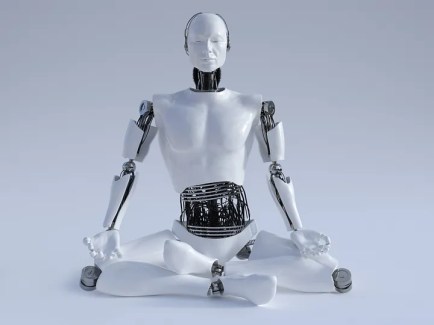 Image licensed from Shutterstock
.
.
Click the link below for the article:
.
__________________________________________
May 14, 2023
Mohenjo
Business, Food For Thought, Human Interest, Political, Science, Technical
amazon, business, Business News, current-events, Future, Hotels, human-rights, medicine, mental-health, research, Science, Science News, technology, Technology News, travel, vacation
Click the link below the picture
.
Of all the great mysteries out there in the Universe, perhaps the greatest one of all is the question of our cosmic origin, “where did all this come from?” For countless millennia, we told one another stories: of a fiery birth, of the separation of light from dark, of order emerging from chaos, of a dark, empty, formless state from which we emerged, or even of an existence that was eternal and unchanging. Some stories involved an active creator; others needed no intervention from anything other than nature itself. But despite our propensity to believe in one of these stories or another, in science, we don’t settle for belief: we want to know.
Today, we talk about the Big Bang as though it’s foundational and taken for granted. But that wasn’t always the case. So how did we get to this point? What critical scientific steps occurred to promote the Big Bang from just one among many ideas to a scientific certainty? That’s what Muhammed Ayatullah wants to know, as he writes in and asks, simply and straightforwardly:
“How was it proven that the Big Bang actually took place?”
It’s a story that started long before it was proven. Let’s go back to when the idea was first conceived: nearly a full 100 years ago.
Back in 1915, Einstein shook up our understanding of the Universe by publishing his theory of General Relativity: a radically new conception of gravity. Previously, Newton’s law of universal gravitation was how we conceived of gravity, where space and time were absolute quantities, that masses occupied certain positions in space at certain moments in time, and that every mass exerted a force on every other mass, inversely proportional to their distances. This explained most observed phenomena very well, but fell short under a few physical circumstances: at speeds that began to approach the speed of light, and in very strong gravitational fields, where you were only a short distance away from a large mass.
.
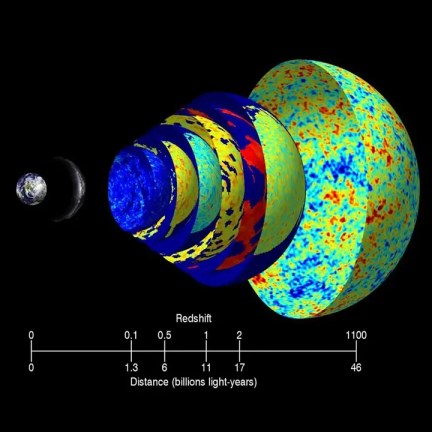 At any epoch in our cosmic history, any observer will experience a uniform “bath” of omnidirectional radiation that originated back at the Big Bang. Today, from our perspective, it’s just 2.725 K above absolute zero and hence is observed as the cosmic microwave background, peaking in microwave frequencies. At great cosmic distances, as we look back in time, that temperature was hotter dependent on the redshift of the observed, distant object. As each new year passes, the CMB cools down further by about 0.2 nanokelvin, and in several billion years, will become so redshifted that it will possess radio, rather than microwave, frequencies. (Credit: Earth: NASA/BlueEarth; Milky Way: ESO/S. Brunier; CMB: NASA/WMAP)
.
.
Click the link below for the article:
.
__________________________________________
May 14, 2023
Mohenjo
Business, Food For Thought, Human Interest, Political, Science, Technical
amazon, business, Business News, current-events, Future, Hotels, human-rights, medicine, mental-health, research, Science, Science News, technology, Technology News, travel, vacation
 .
.
__________________________________________
Older Entries
Newer Entries
 James' World 2