June 8, 2024
Mohenjo
Business, Food For Thought, Human Interest, Political, Science, Technical
amazon, business, Business News, current-events, Future, Hotels, human-rights, medicine, mental-health, research, Science, Science News, technology, Technology News, travel, vacation

Click the link below the picture
.
Boeing’s Starliner’s first-ever astronaut mission is underway.
Starliner, Boeing’s new astronaut taxi for NASA, soared into space today (June 5) from Launch Complex 41 at Cape Canaveral Space Force Station, notching a huge milestone after nearly two decades of commercial crew planning.
Veteran NASA astronauts Barry “Butch” Wilmore and Suni Williams, both
former U.S. Navy test pilots, with 11,000 flight hours between them, are riding aboard the Boeing Starliner capsule, which launched today at 10:52 a.m. EDT (1452 GMT) atop a United Launch Alliance’s (ULA) workhorse Atlas V rocket. As it was for Starliner, this was also the first time astronauts have launched atop an Atlas V in its 22-year flight history.
“We all know that when the going gets tough, as it often does, the tough get going, and you all have,” Wilmore said while waiting on the pad for liftoff. “Let’s get going, let’s put some fire in this rocket. “
“Let’s go Calypso, take us to space and back,” pilot Sunita Williams said just minutes before launch, referring to the name of the Starliner capsule.
Starliner is headed toward the International Space Station (ISS), where Wilmore and Williams will spend about eight days putting the spacecraft through a series of tests toward operational crew certification. Rendezvous is scheduled for Thursday (June 6) around 12:15 p.m. EDT (1615 GMT). You can follow the mission with our Starliner live updates page.
The fiery launch brings NASA within reach of a goal the agency set more than a decade ago: getting two American commercial vehicles up and running for astronaut missions to the ISS. It’s been a long road to get here, as the roots of this goal go back to at least 2006.
The newly launched Starliner mission, a roughly 10-day jaunt known as Crew Flight Test (CFT), was originally scheduled to lift off on May 6. But that attempt was scrubbed about two hours before launch, when team members noticed a “buzzing” valve on the Atlas V’s upper stage.
ULA decided to replace the valve, which required rolling the rocket off the pad and back to the company’s vertical integration facility. That work delayed the planned liftoff until May 17, but then another issue arose: a slight helium leak in one of the reaction-control thrusters in Starliner’s service module.
.
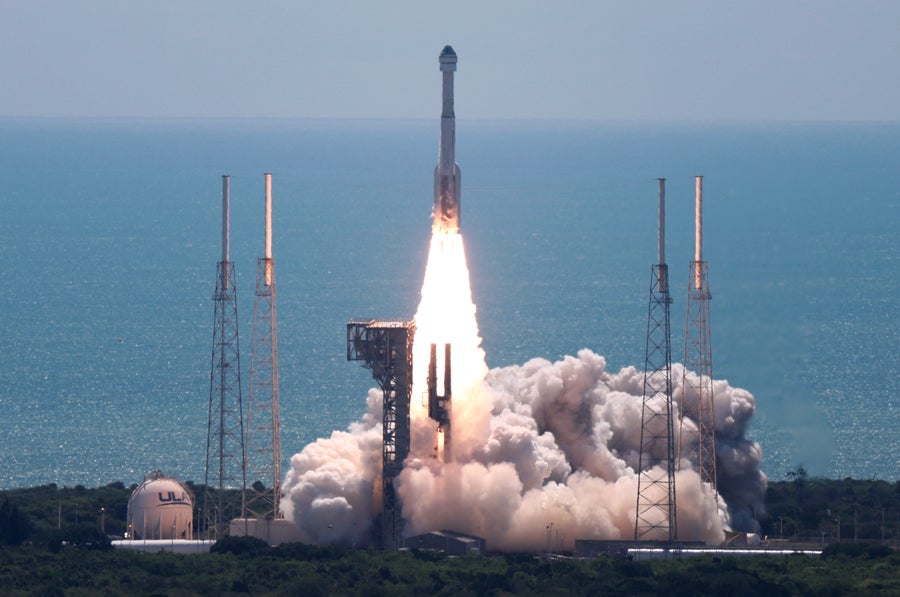
Boeing’s Starliner spacecraft atop a United Launch Alliance Atlas V rocket lifts off from Space Launch Complex 41 during NASA’s Boeing Crew Flight Test on June 05, 2024, in Cape Canaveral, Florida. The mission is sending two astronauts to the International Space Station. Joe Raedle/Getty Images
.
.
Click the link below for the article:
.
__________________________________________
June 8, 2024
Mohenjo
Business, Food For Thought, Human Interest, Political, Science, Technical
amazon, business, Business News, current-events, Future, Hotels, human-rights, medicine, mental-health, research, Science, Science News, technology, Technology News, travel, vacation

Click the link below the picture
.
Many people today worry about how to find time to keep fit and healthy in the midst of their busy lives. Believe it or not, but this was also a problem in ancient times.
So, how did ancient people deal with it?
A universal problem
The physician Galen, who lived from around 129 to 216 AD, dealt with thousands of patients in the city of Rome.
He used to complain some people didn’t devote enough time to keeping fit. In his treatise, Hygiene, Galen wrote one of his patients, a philosopher called Premigenes, was such a workaholic he stayed inside all the time writing books. Because of this bad lifestyle, Premigenes got sick.
Galen said Premigenes needed to work less, and devote more time to getting exercise and some sun.
Some 2,000 years later, most of us will be able to relate to this. The World Health Organization has a number of recommendations for the amount of exercise one should do each week. But it can be difficult to balance work and other commitments with our health and fitness.
The trade-offs of a busy life
People in the Greco-Roman period recognized that being busy has an effect on health.
The writer Lucian of Samosata, from the 2nd century AD, talks in his essay On Salaried Posts in Great Houses about how certain jobs offered workers no time to maintain their health. A bad diet, endless labor and a lack of sleep all contributed to making them unhealthy:
the sleeplessness, the sweating, and the weariness gradually undermine you, giving rise to consumption, pneumonia, indigestion, or that noble complaint, the gout. You stick it out, however, and often you ought to be in bed, but this is not permitted. They think illness a pretext, and a way of shirking your duties. The general consequences are that you are always pale and look as if you were going to die any minute.
The doctors of the time also noticed this problem. Galen said, in his opinion, one of the determinants of whether we are able to be healthy or not is the amount of free time we have.
He recognized some people had no choice but to be “bound up with the circumstances of their activities” – such as those taken into slavery – but noted others seemed to have
chosen a life caught up in the circumstances of their activities, either through ambition or whatever kind of desire, so they are least able to spend time on the care of their bodies.
Galen was also affected by this problem. As a doctor, he had little free time, and his normal routine was often interrupted by patients’ problems. Nonetheless, he explains how, in his 20s, he started adhering to a daily health routine:
after I reached the age of 28, having persuaded myself that there is an art of hygiene, I followed its precepts for the whole of my subsequent life, and was never sick with any disease apart from the occasional ephemeral fever in some degree.
This routine involved eating one full meal each evening, and doing some sort of exercise every day. One of these exercises may have been wrestling, as he also mentions dislocating his shoulder while wrestling at the gym at the age of 35.
.
 Mosaic at the Villa Romana del Casale near Piazza Armerina in Sicily. Wikimedia Commons
.
.
Click the link below for the article:
.
__________________________________________
June 7, 2024
Mohenjo
Business, Crime, Food For Thought, Human Interest, missed News, Political, Science, Technical
amazon, business, Business News, current-events, Future, Hotels, human-rights, medicine, mental-health, research, Science, Science News, technology, Technology News, travel, vacation

.
News You might have missed!
Use your browser or smartphone back arrow (<-) to return to this table for your next selection.
.
__________________________________________
June 7, 2024
Mohenjo
Business, Food For Thought, Human Interest, Political, Science, Technical
amazon, business, Business News, current-events, Future, Hotels, human-rights, medicine, mental-health, research, Science, Science News, technology, Technology News, travel, vacation
Click the link below the picture
.
A small, unassuming fern-like plant has something massive lurking within: the largest genome ever discovered, outstripping the human genome by more than 50 times.
The plant (Tmesipteris oblanceolata) contains a whopping 160 billion base pairs, the units that make up a strand of DNA. That’s 11 billion more than the previous record holder, the flowering plant Paris japonica, and 30 billion more than the marbled lungfish (Protopterus aethiopicus), which has the largest animal genome. The findings were published today in iScience.
Study co-author Jaume Pellicer, an evolutionary biologist at the Botanical Institute of Barcelona in Spain who also co-discovered P. japonica’s gargantuan genome, had thought that the earlier discovery was close to the genome size limit. “But the evidence has once again surpassed our expectations,” he says.
Genomic giants
The world’s genomic champion, which is native to New Caledonia and neighboring archipelagos in the South Pacific, is a species of plant called a fork fern. Its colossal number of base pairs raises questions as to how the plant manages its genetic material. Only a small proportion of DNA is made of protein-coding genes, leading study co-author Ilia Leitch, an evolutionary biologist at London’s Royal Botanic Gardens, Kew, to wonder how the plant’s cellular machinery accesses those bits of the genome “amongst this huge morass of DNA. It’s like trying to find a few books with the instructions for how to survive in a library of millions of books — it’s just ridiculous.”
There’s also the question of how and why an organism evolved to have so many base pairs. Generally, having more base pairs leads to higher demand for the minerals that comprise DNA and for energy to duplicate the genome with every cell division, Leitch says. But if the organism lives in a relatively stable environment with little competition, a gargantuan genome might not come with a high cost, she adds.
.
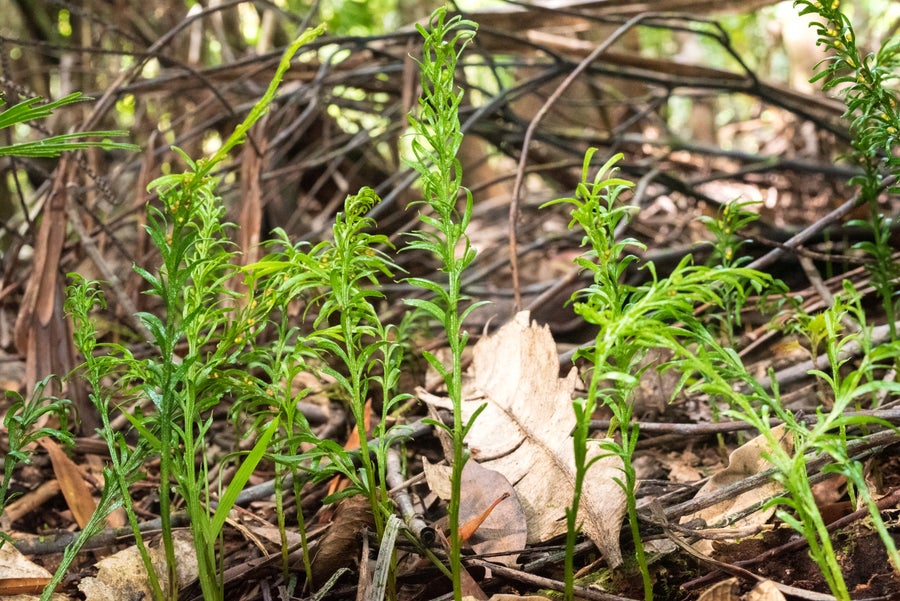
The record-breaking species Tmesipteris oblanceolata is easy to miss on the forest floor. Pol Fernandez
.
.
Click the link below for the article:
.
__________________________________________
June 7, 2024
Mohenjo
Business, Food For Thought, Human Interest, Political, Science, Technical
amazon, business, Business News, current-events, Future, Hotels, human-rights, medicine, mental-health, research, Science, Science News, technology, Technology News, travel, vacation

Click the link below the picture
.
Welcome to The Twilight Zone. Not some science fiction fantasy, but a real place where up to 90 percent of us spend the majority of our waking lives.
We have built a world that hides us from daylight in dimly-lit offices, and then illuminates the night. We talk of burning the candle at both ends. The midnight oil. There not being enough hours in the day. We depend on night shift workers to mend our roads and staff our hospitals.
Small wonder, then, that a third of us are struggling to sleep. Finally, though, the degree to which we’ve been playing a dangerous game with our biology is being understood.
Until recently, sleep science was often synonymous with circadian science, but the latter is now emerging out of the shadows. The 2017 Nobel Prize in Physiology or Medicine was awarded to three scientists in the field of circadian rhythm. As a result of theirs and others’ breakthroughs, we’re waking up to the power of the body’s internal biological clock.
Like plants and animals, we too are preprogrammed to do certain activities at specific times of the day. Our circadian rhythms are controlled by circadian clocks, present in every organ and every cell, and these clocks tell our brain when to sleep, tell our gut when to digest our food optimally, tell our heart to pump more blood, and when to slow down.
The health risks associated with a disrupted circadian rhythm
Ignore them at your peril. In the short term, you may feel lethargic, suffer insomnia, and weight gain. One report showed that 57 percent of junior doctors have had a crash, or near miss, on the way back from a night shift.
And the long-term effects? Chronic disease, such as type 2 diabetes, Alzheimer’s, and cancer, have been linked to disruption of our circadian rhythm. The impact of disrupting our circadian sleep rhythm is such that night-shift workers have a higher mortality rate. The 24-hour society comes with a high price tag.
For Dr Satchin Panda, one of the scientists at the forefront of the circadian science revolution, the challenge for humanity is to rethink the world which we have built over the past 100 years.
“It’s an asbestos moment,” he says. “We figured out asbestos was harmful in the Seventies, and we’re still removing it now. We’re going through that moment with circadian disruption, but it will take a generation to implement change.”
.
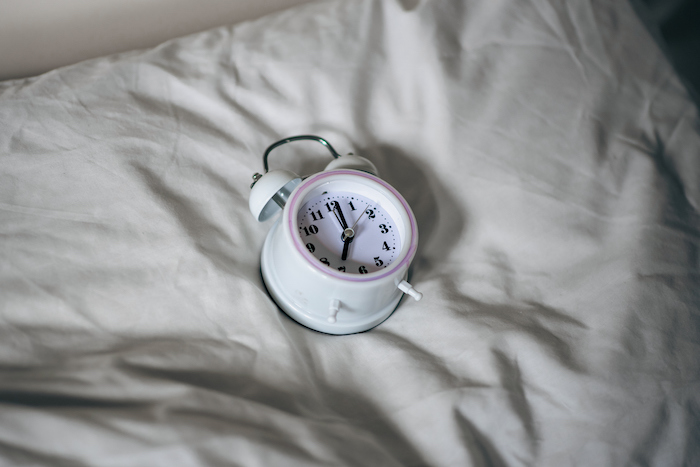 Nebasin/Getty Images
.
.
Click the link below for the article:
.
__________________________________________
June 6, 2024
Mohenjo
Business, Food For Thought, Human Interest, Political, Science, Technical
amazon, business, Business News, current-events, Future, Hotels, human-rights, medicine, mental-health, research, Science, Science News, technology, Technology News, travel, vacation
Click the link below the picture
.
China has landed on the moon’s mysterious far side — again.
The robotic Chang’e 6 mission touched down inside Apollo Crater, within the giant South Pole-Aitken basin, at 6:23 a.m. Beijing Time on Sunday (June 2) , according to Chinese space officials. It was 6:23 p.m. EDT (2223 GMT) on June 1 at the time of the landing. The probe “successfully landed in the pre-selected area,” China’s space agency said.
The China National Space Administration (CNSA) now has two far-side landings under its belt — this one and Chang’e 4, which dropped a lander-rover combo onto the gray dirt in January 2019. No other country has done it once.
And Chang’e 6 will make further history for China, if all goes according to plan: The mission aims to scoop up samples and send them back to Earth, giving researchers their first-ever up-close looks at material from this part of the moon.
“The Chang’e-6 mission is the first human sampling and return mission from the far side of the moon,” CNSA officials said in a translated statement. (To be clear: Chang’e 6 is a robotic, not crewed, mission.) “It involves many engineering innovations, high risks, and great difficulty.”
Sampling a new environment
Chang’e 6 launched on May 3 with a bold and unprecedented task: haul home samples from the moon’s far side, which always faces away from us. (The moon is tidally locked to Earth, completing one rotation on its axis in roughly the same amount of time it takes to orbit our planet. So observers here on Earth always see the same side of our natural satellite.)
Every lunar surface mission before Chang’e 4 targeted the near side, largely because that area is easier to explore. It’s harder to communicate with robots operating on the far side, for example; doing so generally requires special relay orbiters, which China launched ahead of both Chang’e 4 and Chang’e 6. China’s newest moon relay satellite, called Queqiao-2, aided the Chang’e 6 landing, CNSA officials said.
.
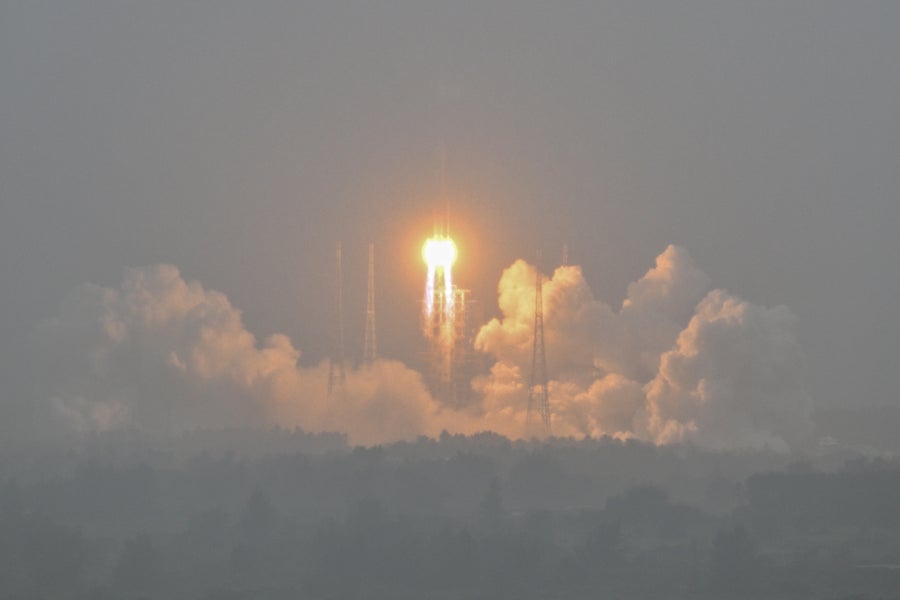
A Long March 5 rocket, carrying the Chang’e-6 mission lunar probe, lifts off as it rains at the Wenchang Space Launch Centre in southern China’s Hainan Province on May 3, 2024. Hector Retamal/AFP via Getty Images
.
.
Click the link below for the article:
.
__________________________________________
June 6, 2024
Mohenjo
Business, Food For Thought, Human Interest, Political, Science, Technical
amazon, business, Business News, current-events, Future, Hotels, human-rights, medicine, mental-health, research, Science, Science News, technology, Technology News, travel, vacation

Click the link below the picture
.
I can’t think of anything permeating mainstream camera culture as aggressively as the DJI Osmo Pocket 3. The Fujifilm X100VI has stolen some of its thunder among film simulation enthusiasts, but DJI’s still having somewhat of a cultural moment on YouTube, Instagram, and the troubled TikTok by spurring all sorts of creator glee.
Of course, the camera buffs are all over it, but serious and casual creators from other genres have paused their usual programming to rave about how it transcends amateur vlogging pursuits, whether you’re filming a wedding or self-shooting a scene for a Sundance-hopeful short film.
Some of us at The Verge are excited, too: Vjeran liked it enough to call it his favorite gadget of 2023, and Sean just bought one after using it to elevate his Today I’m Toying With videos.
I felt tingles about the $519 Osmo Pocket 3 when DJI first announced it, but it wasn’t until I purchased a Creator Combo that I fully understood the hype. The video quality often comes close to my full-frame Sony mirrorless (although I can’t get all the same shots) and is very noticeably better than my phone.
The original Osmo Pocket and Pocket 2 couldn’t make those boasts, but the Pocket 3 is a cut above. Its larger one-inch-equivalent sensor is now bigger than those in most phones, with better low-light performance and more reliable autofocusing than predecessors. It has a much bigger display, longer battery life, faster charge time, more microphones — the list goes on like that for nearly everything that makes it tick.
.
:format(webp)/cdn.vox-cdn.com/uploads/chorus_asset/file/25441475/DJI_Osmo_Pocket_3_Kennemer_6.jpg)
Despite its name, the Pocket 3 isn’t exactly comfortable to stuff in tighter pockets. Photo by Quentyn Kennemer / The Verge
.
.
Click the link below for the article:
.
__________________________________________
June 5, 2024
Mohenjo
Business, Food For Thought, Human Interest, Political, Science, Technical
amazon, business, Business News, current-events, Future, Hotels, human-rights, medicine, mental-health, research, Science, Science News, technology, Technology News, travel, vacation

Click the link below the picture
.
Kris Hansen had worked as a chemist at the 3M Corporation for about a year when her boss, an affable senior scientist named Jim Johnson, gave her a strange assignment. 3M had invented Scotch Tape and Post-it notes; it sold everything from sandpaper to kitchen sponges. But on this day, in 1997, Johnson wanted Hansen to test human blood for chemical contamination.
Several of 3M’s most successful products contained man-made compounds called fluorochemicals. In a spray called Scotchgard, fluorochemicals protected leather and fabric from stains. In a coating known as Scotchban, they prevented food packaging from getting soggy. In a soapy foam used by firefighters, they helped extinguish jet-fuel fires. Johnson explained to Hansen that one of the company’s fluorochemicals, PFOS—short for perfluorooctanesulfonic acid—often found its way into the bodies of 3M factory workers. Although he said that they were unharmed, he had recently hired an outside lab to measure the levels in their blood. The lab had just reported something odd, however. For the sake of comparison, it had tested blood samples from the American Red Cross, which came from the general population and should have been free of fluorochemicals. Instead, it kept finding a contaminant in the blood.
Johnson asked Hansen to figure out whether the lab had made a mistake. Detecting trace levels of chemicals was her specialty: she had recently written a doctoral dissertation about tiny particles in the atmosphere. Hansen’s team of lab technicians and junior scientists fetched a blood sample from a lab-supply company and prepped it for analysis. Then Hansen switched on an oven-size box known as a mass spectrometer, which weighs molecules so that scientists can identify them.
As the lab equipment hummed around her, Hansen loaded a sample into the machine. A graph appeared on the mass spectrometer’s display; it suggested that there was a compound in the blood that could be PFOS. That’s weird, Hansen thought. Why would a chemical produced by 3M show up in people who had never worked for the company?
Hansen didn’t want to share her results until she was certain that they were correct, so she and her team spent several weeks analyzing more blood, often in time-consuming overnight tests. All the samples appeared to be contaminated. When Hansen used a more precise method, liquid chromatography, the results left little doubt that the chemical in the Red Cross blood was PFOS.
Hansen now felt obligated to update her boss. Johnson was a towering, bearded man, and she liked him: he seemed to trust her expertise, and he found something to laugh about in most conversations. But, when she shared her findings, his response was cryptic. “This changes everything,” he said. Before she could ask him what he meant, he went into his office and closed the door.
This was not the first time that Hansen had found a chemical where it didn’t belong. A wiry woman who grew up skiing competitively, Hansen had always liked to spend time outdoors; for her chemistry thesis at Williams College, she had kayaked around the former site of an electric company on the Hoosic River, collecting crayfish and testing them for industrial pollutants called polychlorinated biphenyls (PCBs). Her research, which showed that a drainage ditch at the site was leaking the chemicals, prompted a news story and contributed to a cleanup effort overseen by the Massachusetts Department of Environmental Protection. At 3M, Hansen assumed that her bosses would respond to her findings with the same kind of diligence and care.
Hansen stayed near Johnson’s office for the rest of the day, anxiously waiting for him to react to her research. He never did. In the days that followed, Hansen sensed that Johnson had notified some of his superiors. She remembers his boss, Dale Bacon, a paunchy fellow with gray hair, stopping by her desk and suggesting that she had made a mistake. “I don’t think so,” she told him. In subsequent weeks, Hansen and her team ordered fresh blood samples from every supplier that 3M worked with. Each of the samples tested positive for PFOS.
.

.
.
Click the link below for the article:
.
__________________________________________
June 5, 2024
Mohenjo
Food For Thought, Human Interest, missed News, Political, Science, Technical
amazon, business, Business News, current-events, Future, Hotels, human-rights, medicine, mental-health, research, Science, Science News, technology, Technology News, travel, vacation
.
News You might have missed!
Use your browser or smartphone back arrow (<-) to return to this table for your next selection.
.
__________________________________________
June 5, 2024
Mohenjo
Food For Thought, Human Interest, missed News, Political, Science, Technical
amazon, business, Business News, current-events, Future, Hotels, human-rights, medicine, mental-health, research, Science, Science News, technology, Technology News, travel, vacation
.
News You might have missed!
Use your browser or smartphone back arrow (<-) to return to this table for your next selection.
.
__________________________________________
Older Entries
Newer Entries
 James' World 2