August 1, 2022
Mohenjo
Business, Enthralling, Human Interest, Photographs
amazon, business, Business News, current-events, Future, Hotels, human-rights, medicine, mental-health, research, Science, Science News, technology, Technology News, travel, vacation

Click the link below the picture
.
The Democratic Republic of the Congo, informally Congo-Kinshasa, DR Congo, the DRC, the DROC, or the Congo, and formerly and also colloquially Zaire, is a country in Central Africa. The DRC is located in sub-Saharan Africa, bordered to the northwest by the Republic of the Congo, to the north by the Central African Republic, to the northeast by South Sudan, to the east by Uganda, Rwanda, and Burundi, and by Tanzania (across Lake Tanganyika), to the south and southeast by Zambia, to the southwest by Angola, and to the west by the South Atlantic Ocean and the Cabinda exclave of Angola.
By area, it is the second-largest country in Africa and the 11th-largest in the world. With a population of around 108 million, the Democratic Republic of the Congo is the most populous officially Francophone country in the world. It is a member of the United Nations, Non-Aligned Movement, African Union, East African Community, COMESA, Southern African Development Community, and the Economic Community of Central African States. The capital and largest city is Kinshasa, which is also the world’s most populous Francophone city and largest city in Africa. It is the third largest African city in metropolitan area after Lagos and Cairo.
Centered on the Congo Basin, the territory of the DRC was first inhabited by Central African foragers around 90,000 years ago and was reached by the Bantu expansion about 3,000 years ago. In the west, the Kingdom of Kongo ruled around the mouth of the Congo River from the 14th to 19th centuries. In the northeast, center, and east, the kingdoms of Azande, Luba, and Lunda ruled from the 16th and 17th centuries to the 19th century. King Leopold II of Belgium formally acquired rights to the Congo territory in 1885 and declared the land his private property, naming it the Congo Free State. From 1885 to 1908, his colonial military forced the local population to produce rubber and committed widespread atrocities. In 1908, Leopold ceded the territory, which thus became a Belgian colony.
Congo achieved independence from Belgium on 30 June 1960 and was immediately confronted by a series of seccessionist movements, which culminated in the seizure of power of Mobutu in a 1965 coup d’état. Mobutu renamed the country Zaire in 1971 and imposed a harsh dictatorship until his overthrow in 1997 by the First Congo War. The country then had its name changed back and was confronted by the Second Congo War from 1998 to 2003, which resulted in the deaths of 5.4 million people. The war ended under President Joseph Kabila who governed the country from 2001 to 2019, under whom human rights in the country remained poor and included frequent abuses such as forced disappearances, torture, arbitrary imprisonment, and restrictions on civil liberties. Following the 2018 general election, in the country’s first peaceful transition of power since independence, Kabila was succeeded as president by Félix Tshisekedi, who has served as president since. Since 2015, the Eastern DR Congo has been the site of an ongoing military conflict in Kivu.
The Democratic Republic of the Congo is extremely rich in natural resources but has suffered from political instability, a lack of infrastructure, corruption, and centuries of both commercial and colonial extraction and exploitation with little widespread development. Besides the capital Kinshasa, the two next largest cities, Lubumbashi and Mbuji-Mayi, are both mining communities. The DRC’s largest export is raw minerals, with China accepting over 50% of its exports in 2019. In 2019, DR Congo’s level of human development was ranked 175th out of 189 countries by the Human Development Index. As of 2018, around 600,000 Congolese have fled to neighbouring countries from conflicts in the center and east of the DRC. Two million children risk starvation, and the fighting has displaced 4.5 million people. Wikipedia
.
 An image from Congo City
.
.
Click the link below for images:
.
__________________________________________
July 30, 2022
Mohenjo
Business, Enthralling, Human Interest, Photographs
amazon, business, Business News, current-events, Future, Hotels, human-rights, medicine, mental-health, research, Science, Science News, technology, Technology News, travel, vacation
Click the link below the picture
.
The Isle of Skye, or simply Skye, is the largest and northernmost of the major islands in the Inner Hebrides of Scotland. The island’s peninsulas radiate from a mountainous hub dominated by the Cuillin, the rocky slopes of which provide some of the most dramatic mountain scenery in the country. Although Sgitheanach has been suggested to describe a winged shape, no definitive agreement exists as to the name’s origins.
The island has been occupied since the Mesolithic period, and over its history has been occupied at various times by Celtic tribes including the Picts and the Gaels, Scandinavian Vikings, and most notably the powerful integrated Norse-Gaels clans of MacLeod and MacDonald. The island was considered to be under Norwegian suzerainty until the 1266 Treaty of Perth, which transferred control over to Scotland. The 18th-century Jacobite risings led to the breaking-up of the clan system and later clearances that replaced entire communities with sheep farms, some of which involved forced emigrations to distant lands. Resident numbers declined from over 20,000 in the early 19th century to just under 9,000 by the closing decade of the 20th century. Skye’s population increased by 4% between 1991 and 2001. About a third of the residents were Gaelic speakers in 2001, and although their numbers are in decline, this aspect of island culture remains important.
The main industries are tourism, agriculture, fishing, and forestry. Skye is part of the Highland Council local government area. The island’s largest settlement is Portree, which is also its capital, known for its picturesque harbor. Links to various nearby islands by ferry are available, and since 1995, to the mainland by a road bridge. The climate is mild, wet, and windy. The abundant wildlife includes the golden eagle, red deer, and Atlantic salmon. The local flora is dominated by heather moor, and nationally important invertebrate populations live on the surrounding sea bed. Skye has provided the locations for various novels and feature films and is celebrated in poetry and song.
The first written references to the island are Roman sources such as the Ravenna Cosmography, which refers to Scitis, and Scetis, which can be found on a map by Ptolemy. One possible derivation comes from skitis, an early Celtic word for “winged”, which may describe how the island’s peninsulas radiate out from a mountainous center. Subsequent Gaelic-, Norse- and English-speaking peoples have influenced the history of Skye; the relationships between their names for the island are not straightforward. Various etymologies have been proposed, such as the “winged isle” or “the notched isle”, but no definitive solution has been found to date; the place name may be from an earlier, non-Gaelic language. Wikipedia
.
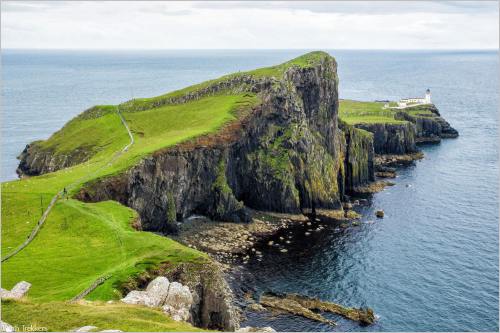 An image from Isle of Skye, Scotland
.
.
Click the link below for images:
.
__________________________________________
July 29, 2022
Mohenjo
Business, Enthralling, Human Interest, Photographs
amazon, business, Business News, current-events, Future, Hotels, human-rights, medicine, mental-health, research, Science, Science News, technology, Technology News, travel, vacation
Click the link below the picture
.
Burundi, officially the Republic of Burundi, is a landlocked country in the Great Rift Valley where the African Great Lakes region and East Africa converge. It is bordered by Rwanda to the north, Tanzania to the east and southeast, and the Democratic Republic of the Congo to the west; Lake Tanganyika lies along its southwestern border. The capital cities are Gitega and Bujumbura, the latter of which is the country’s largest city.
The Twa, Hutu, and Tutsi peoples have lived in Burundi for at least 500 years. For more than 200 of those years, Burundi was an independent kingdom, until the beginning of the 20th century, when Germany ruled the region. After the First World War and Germany’s defeat, the League of Nations “mandated” the territory to Belgium. After the Second World War, this transformed into a United Nations Trust Territory. Both Germans and Belgians ruled Burundi and Rwanda as a European colony known as Ruanda-Urundi. Burundi and Rwanda had never been under common rule until the time of European invasion of Africa.
Burundi gained independence in 1962 and initially had a monarchy, but a series of assassinations, coups, and a general climate of regional instability culminated in the establishment of a republic and a one-party state in 1966. Bouts of ethnic cleansing and ultimately two civil wars and genocides during the 1970s and again in the 1990s resulted in hundreds of thousands of deaths, leaving the economy undeveloped and the population as one of the world’s poorest. The year 2015 witnessed large-scale political strife as President Pierre Nkurunziza opted to run for a third term in office, a coup attempt failed and the country’s parliamentary and presidential elections were broadly criticized by members of the international community.
The sovereign state of Burundi’s political system is that of a presidential representative democratic republic based upon a multi-party state. The president of Burundi is the head of state and head of government. There are currently 21 registered parties in Burundi. On 13 March 1992, Tutsi coup leader Pierre Buyoya established a constitution, which provided for a multi-party political process and reflected multi-party competition. Six years later, on 6 June 1998, the constitution was changed, broadening the National Assembly’s seats and making provisions for two vice-presidents. Because of the Arusha Accord, Burundi enacted a transitional government in 2000. In October 2016, Burundi informed the UN of its intention to withdraw from the International Criminal Court.
Burundi remains primarily a rural society, with just 13.4% of the population living in urban areas in 2019. The population density of around 315 people per square kilometer (753 per sq mi) is the second highest in Sub-Saharan Africa. Roughly 85% of the population are of Hutu ethnic origin, 15% are Tutsi, and fewer than 1% are indigenous Twa. The official languages of Burundi are Kirundi, French, and English, Kirundi being recognized officially as the sole national language.
One of the smallest countries in Africa, Burundi’s land is used mostly for subsistence agriculture and grazing, which has led to deforestation, soil erosion, and habitat loss. As of 2005, the country was almost completely deforested, with less than 6% of its land covered by trees and over half of that being commercial plantations.
Burundi is the poorest country according to gross domestic product (nominal) per capita, with $272 in 2022, and the least developed country facing poverty, corruption, instability, authoritarianism, illiteracy, and more.
Burundi is densely populated, and many young people emigrate in search of opportunities elsewhere. The World Happiness Report 2018 ranked the country as the world’s least happy with a rank of 156. Burundi is a member of the African Union, Common Market for Eastern and Southern Africa, United Nations, and the Non-Aligned Movement. Burundi has the lowest GDP per capita as of 2022. Wikipedia
.
 An image from Bujumbura Capital
.
.
Click the link below for images:
.
__________________________________________
July 28, 2022
Mohenjo
Business, Enthralling, Human Interest, Photographs
amazon, business, Business News, current-events, Future, Hotels, human-rights, medicine, mental-health, research, Science, Science News, technology, Technology News, travel, vacation
Click the link below the picture
.
Punakaiki is a small village on the West Coast of the South Island of New Zealand. It is located between Westport and Greymouth on State Highway 6, the only through-road on the West Coast. Punakaiki is immediately adjacent to Paparoa National Park and is also the access point for a popular visitor attraction, the Pancake Rocks and Blowholes.
Punakaiki is located on State Highway 6 and is 46.3 kilometers (28.8 mi) north of Greymouth and 56.3 kilometers (35.0 mi) south of Westport. Because State Highway 6 is the only through-road on the West Coast, a large number of visitors pass through the town.
The village is on the southern border of Buller District, where it meets Grey District, and lies on the edge of Paparoa National Park. To the north is the sheer bluff Perpendicular Point, known as Te Miko. The settlement sits to the south, by the Pororari Lagoon at the mouth of the Porarari River. To the south of the village is Dolomite Point, site of the Pancake Rocks, and Razorback Point at the mouth of the Punakaiki River. A feature of this part of the West Coast are the steep forested bluffs and cliffs of the Paparoa Range, descending several hundred meters to small beaches and sheer headlands, with occasional flats and terraces in between.
The coastal caves and overhangs of the area bear traces of seasonal Māori occupation, and by the time Europeans arrived the area was the home of the Ngāti Waewae people, a hapū of Kai Tahu, who traded much-prized pounamu.
Early European explorers navigating the coast encountered sheer cliffs at Te Miko, navigable only by climbing ladders totaling 46 feet high (or so Haast estimated) made of harakeke and rotting rātā vine. Charles Heaphy noted in 1846 that “…as several of the rotten steps gave way under our feet, our position was far from being pleasant. A number of cormorants and other marine birds, too, that had their nests in the crevices of the rock were screaming and wheeling about us at the intrusion.” During the gold rush of the 1860s these were replaced by chain ladders, soon known as “Jacob’s Ladder”, but the wooden rungs were destroyed by overuse, and travelers slid down the chains instead or jammed sticks into the links.
There was, however, an inland trail crossing a higher terrace through rātā forest; prospector William Smart was guided through it by local Māori to avoid the “rotten” ladders. By October 1866 the authorities had cut a track to avoid the ladders, but it soon degenerated into a morass. In 1867 under-employed “diggers”(prospectors) were used to cut the “Razorback Road”, now known as the Inland Pack Track, to avoid the coast completely, heading up the Fox River, south through rough hill country, and emerging at the mouth of the Punakaiki River. The route which linked Cobden, north of Greymouth, with the gold workings at Brighton on the mouth of the Fox River, cost perhaps £10,000 and was completed by October 1867, but was not a success: it required too many river crossings that were difficult in times of flood, and after the gold rush ended and the diggers moved on it fell into disrepair. In January 1873 the Grey River Argus called the road “perfectly useless” and it was little used after the 1870s. Wikipedia
.
 An image from Punakaiki, West Coast, New Zealand
.
.
Click the link below for article:
.
__________________________________________
July 27, 2022
Mohenjo
Business, Enthralling, Human Interest, Photographs
amazon, business, Business News, current-events, Future, Hotels, human-rights, medicine, mental-health, research, Science, Science News, technology, Technology News, travel, vacation
Click the link below the picture
.
Rwanda, officially the Republic of Rwanda, is a landlocked country in the Great Rift Valley of Central Africa, where the African Great Lakes region and Southeast Africa converge. Located a few degrees south of the Equator, Rwanda is bordered by Uganda, Tanzania, Burundi, and the Democratic Republic of the Congo. It is highly elevated, giving it the soubriquet “land of a thousand hills”, with its geography dominated by mountains in the west and savanna to the southeast, with numerous lakes throughout the country. The climate is temperate to subtropical, with two rainy seasons and two dry seasons each year. Rwanda has a population of over 12.6 million living on 26,338 km2 (10,169 sq mi) of land and is the most densely populated mainland African country; among countries larger than 10,000 km2, it is the fifth most densely populated country in the world. One million people live in the capital and largest city Kigali.
The population is young and predominantly rural; Rwanda has one of the youngest populations in the world, with the average age being 19 years. Rwandans are drawn from just one cultural and linguistic group, the Banyarwanda. However, within this group, there are three subgroups: the Hutu, Tutsi, and Twa. The Twa are a forest-dwelling pygmy people and are often considered descendants of Rwanda’s earliest inhabitants. Scholars disagree on the origins of and differences between the Hutu and Tutsi; some believe differences are derived from former social castes within a single people, while others believe the Hutu and Tutsi arrived in the country separately, and from different locations. Christianity is the largest religion in the country; the principal language is Kinyarwanda, spoken by most Rwandans, with English and French serving as additional official languages. The sovereign state of Rwanda has a presidential system of government. The president is Paul Kagame of the Rwandan Patriotic Front (RPF), who has served continuously since 2000. Today, Rwanda has low levels of corruption compared with neighboring countries, although human rights organizations report suppression of opposition groups, intimidation, and restrictions on freedom of speech. The country has been governed by a strict administrative hierarchy since precolonial times; there are five provinces delineated by borders drawn in 2006. Rwanda is one of only three countries in the world with a female majority in the national parliament, the two other countries being Bolivia and Cuba.
Hunter-gatherers settled the territory in the Stone and Iron Ages, followed later by Bantu peoples. The population coalesced first into clans and then into kingdoms. The Kingdom of Rwanda dominated from the mid-eighteenth century, with the Tutsi kings conquering others militarily, centralizing power, and later enacting anti-Hutu policies. Germany colonized Rwanda in 1884 as part of German East Africa, followed by Belgium, which invaded in 1916 during World War I. Both European nations ruled through the kings and perpetuated a pro-Tutsi policy. The Hutu population revolted in 1959. They massacred numerous Tutsi and ultimately established an independent, Hutu-dominated republic in 1962 led by President Grégoire Kayibanda. A 1973 military coup overthrew Kayibanda and brought Juvénal Habyarimana to power, who retained the pro-Hutu policy. The Tutsi-led Rwandan Patriotic Front launched a civil war in 1990. Habyarimana was assassinated in April 1994. Social tensions erupted in the Rwandan genocide that followed, in which Hutu extremists killed an estimated 500,000–1,000,000 Tutsi and politically moderate Hutu in the span of one hundred days. The RPF ended the genocide with a military victory in July 1994.
Rwanda’s developing economy suffered heavily in the wake of the 1994 genocide but has since strengthened. The economy is based mostly on subsistence agriculture. Coffee and tea are the major cash crops for export. Tourism is a fast-growing sector and is now the country’s leading foreign exchange earner. In the 21st century, Rwanda has been described as an emerging tech hub for Africa, with an increase of start-up companies. Rwanda is one of only two countries in which mountain gorillas can be visited safely, and visitors pay high prices for gorilla tracking permits. Music and dance are an integral part of Rwandan culture, particularly drums and the highly choreographed intore dance. Traditional arts and crafts are produced throughout the country, including imigongo, a unique cow dung art. Wikipedia
.
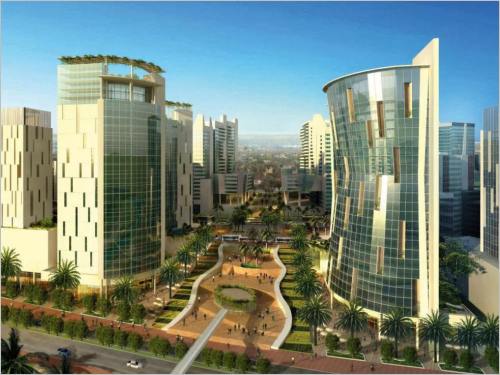 An image from Rwanda Cities
.
.
Click the link below for images:
.
__________________________________________
July 26, 2022
Mohenjo
Business, Enthralling, Human Interest, Photographs
amazon, business, Business News, current-events, Future, Hotels, human-rights, medicine, mental-health, research, Science, Science News, technology, Technology News, travel, vacation
Click the link below the picture
.
Mount Roraima is the highest of the Pakaraima chain of tepuis (table-top mountain) or plateaux in South America. It is located at the junction of Venezuela, Brazil, and Guyana. A characteristic large flat-topped mountain surrounded by cliffs 400 to 1,000 meters high. The highest point of Mount Roraima is located on the southern edge of the cliff at an altitude of 2,810 meters in Venezuela, and another protrusion at an altitude of 2,772 meters at the junction of the three countries in the north of the plateau is the highest point in Guyana. The name of Mount Roraima came from the native Pemon people. Roroi in the Pemon language means “blue-green”, and ma means “great”.
Leaching caused by intense rainfall has shaped the peculiar topography of the summit, and the geographical isolation of Mount Roraima has made it home to much endemic flora and fauna. Western exploration of Mount Roraima did not begin until the 19th century when it was first climbed by a British expedition in 1884. Yet despite subsequent expeditions, its flora and geology remain largely unknown. The privileged setting and relatively easy access and climbing conditions on the south side of the cliffs make Mount Roraima one of the most popular destinations for hikers.
Mount Roraima is located in the northern part of South America, the Pacarema Mountains in the eastern part of the Guyana Plateau, Brazil in the east accounting for 5% of its area, Guyana in the north accounting for 10%, and Venezuela in the south and west accounting for 85%. Access to Mount Roraima from the Venezuelan side is close to the road and relatively easy; however, for both Brazil and Guyana the area is completely isolated and can only be reached by a few days of forest hikes or small local airstrip.
Mount Roraima is a flat-topped mountain, typical of the Guyana Shield, with an elevation of about 1,200 meters in the southeast and only about 600 meters in the northwest. The south, southeast, east, northeast, and northwest faces are all formed by straight cliffs up to about 1,000 meters high. At the southern end of the mountain, part of the cliff has collapsed, forming a spectacular natural boulder. The base of the cliff is surrounded by steep slopes to the south and east, and the north and west sides form river valleys leading to the summit.
The top of Mount Roraima has a length of more than 10 kilometers, a maximum width of 5 kilometers, an area of about 33 to 50 square kilometers, an altitude of more than 2200 meters, and an average altitude of 2600–2700 meters. The plateau is a pseudo-karst surface etched by heavy rainfall. The highest point is 2810 meters above sea level, located at the southern end of the plateau and the highest point in the state of Bolivar, 8.25 kilometers north of the summit is another high point with an altitude of 2,772 meters, which is the highest point in Guyana. In the northern part of the plateau is the landmark of the border between Brazil, Venezuela, and Guyana, with an altitude of 2734 meters.
Due to its high altitude and proximity to the equator, Mount Roraima has a constant average annual temperature between 20 and 22 °C and annual rainfall of more than 1,500 mm, with 1,800 to 3,000 mm in parts of the rainy season from April to November. The climatic conditions at the top of the mountain differ significantly from its base, the high cloudiness in the region is associated with the prevailing northeasterly and southeasterly winds, and the relative humidity of the air remains between 75% and 85%.
.
 An image from Mount Roraima Pools
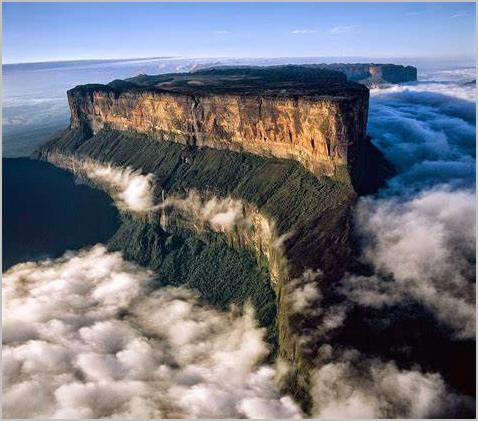 Mount Roraima
.
.
Click the link below for images:
.
__________________________________________
July 25, 2022
Mohenjo
Business, Enthralling, Human Interest, Photographs
amazon, business, Business News, current-events, Future, Hotels, human-rights, medicine, mental-health, research, Science, Science News, technology, Technology News, travel, vacation
Click the link below the picture
.
Tanzania, officially the United Republic of Tanzania, is a country in East Africa within the African Great Lakes region. It borders Uganda to the north; Kenya to the northeast; Comoro Islands and the Indian Ocean to the east; Mozambique and Malawi to the south; Zambia to the southwest; and Rwanda, Burundi, and the Democratic Republic of the Congo to the west. Mount Kilimanjaro, Africa’s highest mountain, is in northeastern Tanzania.
Many important hominid fossils have been found in Tanzania, such as 6-million-year-old Pliocene hominid fossils. The genus Australopithecus ranged across Africa between 4 and 2 million years ago, and the oldest remains of the genus Homo are found near Lake Olduvai. Following the rise of Homo erectus 1.8 million years ago, humanity spread all over the Old World, and later in the New World and Australia under the species Homo sapiens. H. sapiens also overtook Africa and absorbed the older species of humanity.
Later in the Stone and Bronze Age, prehistoric migrations into Tanzania included Southern Cushitic speakers who moved south from present-day Ethiopia; Eastern Cushitic people who moved into Tanzania from north of Lake Turkana about 2,000 and 4,000 years ago; and the Southern Nilotes, including the Datoog, who originated from the present-day South Sudan–Ethiopia border region between 2,900 and 2,400 years ago. These movements took place at about the same time as the settlement of the Mashariki Bantu from West Africa in the Lake Victoria and Lake Tanganyika areas. They subsequently migrated across the rest of Tanzania between 2,300 and 1,700 years ago.
German rule began in mainland Tanzania during the late 19th century when Germany formed German East Africa. This was followed by British rule after World War I. The mainland was governed as Tanganyika, with the Zanzibar Archipelago remaining a separate colonial jurisdiction. Following their respective independence in 1961 and 1963, the two entities merged in 1964 to form the United Republic of Tanzania. The countries had joined the British Commonwealth in 1961 and Tanzania is still a member of the Commonwealth as one republic.
The United Nations estimated Tanzania’s population at 63.59 million, which is slightly smaller than South Africa and makes it the second-most populous country located entirely south of the Equator. The population is composed of about 120 ethnic, linguistic, and religious groups. The sovereign state of Tanzania is a presidential constitutional republic and since 1996 its official capital city has been Dodoma where the president’s office, the National Assembly, and all government ministries are located. Dar es Salaam, the former capital, retains most government offices and is the country’s largest city, principal port, and leading commercial center. Tanzania is a de facto one-party state with the democratic socialist Chama Cha Mapinduzi party in power.
Tanzania is mountainous and densely forested in the northeast, where Mount Kilimanjaro is located. Three of Africa’s Great Lakes are partly within Tanzania. To the north and west lie Lake Victoria, Africa’s largest lake, and Lake Tanganyika, the continent’s deepest lake, known for its unique species of fish. To the south lies Lake Malawi. The eastern shore is hot and humid, with the Zanzibar Archipelago just offshore. The Menai Bay Conservation Area is Zanzibar’s largest marine protected area. The Kalambo Falls, located on the Kalambo River at the Zambian border, is the second-highest uninterrupted waterfall in Africa.
Christianity is the largest religion in Tanzania, but there are also substantial Muslim and Animist minorities. Over 100 different languages are spoken in Tanzania, making it the most linguistically diverse country in East Africa. The country does not have a de jure official language, although the national language is Swahili. Swahili is used in parliamentary debate, in the lower courts, and as a medium of instruction in primary school. English is used in foreign trade, in diplomacy, in higher courts, and as a medium of instruction in secondary and higher education; although the Tanzanian government is planning to discontinue English as the primary language of instruction, it will be available as an optional course. Approximately 10% of Tanzanians speak Swahili as a first language, and up to 90% speak it as a second language. Wikipedia
.
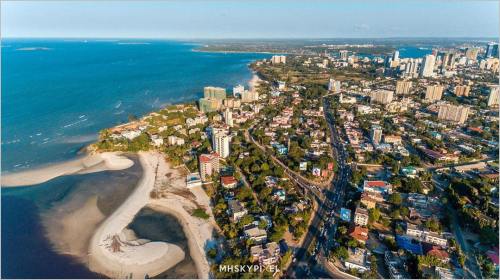 An image from Beautiful Tanzania
.
.
Click the link below for images:
.
__________________________________________
July 23, 2022
Mohenjo
Business, Enthralling, Human Interest, Photographs
amazon, business, Business News, current-events, Future, Hotels, human-rights, medicine, mental-health, research, Science, Science News, technology, Technology News, travel, vacation
Click the link below the picture
.
The Ngorongoro Conservation Area is a protected area and a UNESCO World Heritage Site located in Ngorongoro District, 180 km (110 mi) west of Arusha City in Arusha Region, within the Crater Highlands geological area of northern Tanzania. The area is named after Ngorongoro Crater, a large volcanic caldera within the area. The conservation area is administered by the Ngorongoro Conservation Area Authority, an arm of the Tanzanian government, and its boundaries follow the boundary of the Ngorongoro District in Arusha Region. The western portion of the park abuts the Serengeti National Park (also a UNESCO World Heritage Site), and the area comprising the two parks and Kenya’s Maasai Mara game reserve is home to Great Migration, a massive annual migration of millions of wildebeest, zebras, gazelles, and other animals. The conservation area also contains Olduvai Gorge, one of the most important paleoanthropological sites in the world.
The 2009 Ngorongoro Wildlife Conservation Act placed new restrictions on human settlement and subsistence farming in the Crater, displacing Maasai pastoralists, most of whom had been relocated to Ngorongoro from their ancestral lands to the north when the British colonial government established Serengeti National Park in 1959.
The name of the crater has an onomatopoeic origin; it was named by the Maasai pastoralists after the sound produced by the cowbell (ngoro ngoro). Based on fossil evidence found at the Olduvai Gorge, various hominid species have occupied the area for 3 million years.
Hunter-gatherers were replaced by pastoralists a few thousand years ago. The Mbulu came to the area about 2,000 years ago and were joined by the Datooga around the year 1700. Both groups were driven from the area by the Maasai in the 1800s.
No Europeans are known to have set foot in the Ngorongoro Crater until 1892 when it was visited by Oscar Baumann. Two German brothers (Adolph and Friedrich Siedentopf) farmed in the crater until the outbreak of World War I, after leasing the land from the administration of German East Africa. The brothers regularly organized shooting parties to entertain their German friends. They also attempted to drive the wildebeest herds out of the crater. Wikipedia
.
 An image from Ngorongoro Conservation Area
.
.
Click the link below for images:
.
__________________________________________
July 22, 2022
Mohenjo
Business, Enthralling, Human Interest, Photographs
amazon, business, Business News, current-events, Future, Hotels, human-rights, medicine, mental-health, research, Science, Science News, technology, Technology News, travel, vacation
Click the link below the picture
.
Nairobi is the capital and largest city of Kenya. The name comes from the Maasai phrase Enkare Nyorobi, which translates to “place of cool waters”, a reference to the Nairobi River which flows through the city. The city proper had a population of 4,397,073 in the 2019 census, while the metropolitan area has a population of 9,354,580. The city is popularly referred to as the Green City in the Sun.
Nairobi was founded in 1899 by the colonial authorities in British East Africa, as a rail depot on the Uganda – Kenya Railway. The town quickly grew to replace Mombasa as the capital of Kenya in 1907. After independence in 1963, Nairobi became the capital of the Republic of Kenya. During Kenya’s colonial period, the city became a center for the colony’s coffee, tea, and sisal industry. The city lies in the south-central part of Kenya, at an elevation of 1,795 meters (5,889 ft).
According to the 2019 census, in the administrative area of Nairobi, 4,397,073 inhabitants lived within 696 km2 (269 sq mi).
Nairobi is home of the Kenyan Parliament Buildings and hosts thousands of Kenyan businesses and over 100 major international companies and organizations, including the United Nations Environment Programme (UN Environment) and the United Nations Office at Nairobi (UNON). Nairobi is an established hub for business and culture. The Nairobi Securities Exchange (NSE) is one of the largest in Africa and the second-oldest exchange on the continent. It is Africa’s fourth-largest exchange in terms of trading volume, capable of making 10 million trades a day. It also has the Nairobi National Park with a large game reserve. Nairobi is currently under the Nairobi Metropolitan Service. Nairobi joined the UNESCO Global Network of Learning Cities in 2016.
Nairobi is found within the Greater Nairobi Metropolitan region, which consists of 5 out of 47 counties in Kenya, which generates about 60% of the entire nation’s GDP. The counties are: The site of Nairobi was originally part of an uninhabited swamp. The name Nairobi itself comes from the Maasai expression meaning “cool waters”, referring to the cold water stream which flowed through the area. With the arrival of the Uganda Railway, the site was identified by Sir George Whitehouse for a store depot, shunting ground, and camping ground for the Indian laborers working on the railway. Whitehouse, chief engineer of the railway, favored the site as an ideal resting place due to its high elevation, temperate climate, adequate water supply, and being situated before the steep ascent of the Limuru escarpments. His choice was however criticized by officials within the Protectorate government who felt the site was too flat, poorly drained, and relatively infertile. Wikipedia
.
 An image from Nairobi City Kenya
.
.
Click the link below for images:
.
__________________________________________
July 21, 2022
Mohenjo
Business, Enthralling, Human Interest, Photographs
amazon, business, Business News, current-events, Future, Hotels, human-rights, medicine, mental-health, research, Science, Science News, technology, Technology News, travel, vacation
Click the link below the picture
.
Nahuel Huapi Lake is a lake in the lake region of northern Patagonia between the provinces of Río Negro and Neuquén, in Argentina. The tourist center of Bariloche is on the southern shore of the lake.
The June 2011 eruption of the Puyehue-Cordón Caulle volcanic complex, in neighboring Chile, caused parts of the lake’s surface to be blanketed in volcanic ash.
During the Last Glacial Maximum of the Llanquihue glaciation, the lake basin was wholly occupied by a glacier.
The name of the lake derives from the toponym of its major island in Mapudungun (Mapuche language): “Island of Puma”, from nahuel, “puma”, and huapí, “island”. There is, however, more to the word “Nahuel” – it can also signify “a man who by sorcery has been transformed to a puma”.
Nahuel Huapi lake, located within the Nahuel Huapi National Park, has a surface of 530 km2 (200 sq mi), rests 2,510 feet (770 m) above the sea level, and has a maximum measured depth (as of 2007) of 1,522 feet (464 m).
The lake depression consists of several glacial valleys carved out along faults and Miocene valleys that were later dammed by moraines.
Its seven branches are named Blest (36 km²), Huemul (21.5 km²), de la Tristeza (18.5 km²), Campanario (7.9 km²), Machete, del Rincón and Última Esperanza. It is connected to other smaller lakes such as Gutiérrez, Moreno, Espejo, and Correntoso. The deep-blue waters hold a number of islands, most notably Isla Victoria with an area of 31 km², and Isla Huemul on the south end of the lake.
A curious fact about the lake is that, despite being nowhere near any ocean and being at high altitude, it is also home for kelp gull and the blue-eyed cormorant (Phalacrocorax atriceps), otherwise strictly marine birds.
The lake’s crystal clear waters are very susceptible to climate changes and have an average surface temperature of 45 °F (7 °C); this makes it both beautiful and treacherous. Hypothermia is one of the risks bathers must undertake. Kayaking is a popular sport on this and adjacent lakes. The lake is also the starting point of the Limay River.
.
 An image from Nahuel Huapi Lake
.
.
Click the link below for images:
.
__________________________________________
Older Entries
Newer Entries
 James' World 2