Using less than a drop of blood, a new test can reveal nearly every virus a person has ever been exposed to, scientists reported on Thursday.
The test, which is still experimental, can be performed for as little as $25 and could become an important research tool for tracking patterns of disease in various populations, helping scientists compare the old and the young, or people in different parts of the world.
It could also be used to try to find out whether viruses, or the body’s immune response to them, contribute to chronic diseases and cancer, the researchers said.
.
Stephen J. Elledge, a professor of genetics at Harvard Medical School and Brigham and Women’s Hospital. A blood test he helped develop could become an important tool for tracking disease patterns.Credit Bryce Vickmark for The New York Times
There’s no way to structure this coherently. They are random observations that might help explain the mental processes. But often, I think that we look at the academic problems of poverty and have no idea of the why. We know the what and the how, and we can see systemic problems, but it’s rare to have a poor person actually explain it on their own behalf. So this is me doing that, sort of.
Rest is a luxury for the rich. I get up at 6AM, go to school (I have a full course load, but I only have to go to two in-person classes) then work, then I get the kids, then I pick up my husband, then I have half an hour to change and go to Job 2. I get home from that at around 12:30AM, then I have the rest of my classes and work to tend to. I’m in bed by 3. This isn’t every day, I have two days off a week from each of my obligations. I use that time to clean the house and soothe Mr. Martini and see the kids for longer than an hour and catch up on schoolwork. Those nights I’m in bed by midnight, but if I go to bed too early I won’t be able to stay up the other nights because I’ll fuck my pattern up, and I drive an hour home from Job 2 so I can’t afford to be sleepy. I never get a day off from work unless I am fairly sick. It doesn’t leave you much room to think about what you are doing, only to attend to the next thing and the next. Planning isn’t in the mix.
Could it be blowing from farm to farm in the dirt? Could determined starlings and pigeons be carrying it into poultry houses on their feet? Is it spreading in feed, or being carried on truck tires?
Federal agriculture officials are looking everywhere they can think of for H5N2 bird flu, which has spread to poultry flocks in 14 states and killed or forced the slaughter of more than 39 million birds.
Highly pathogenic avian influenza has never spread like this before in the United States, and it’s flummoxed the U.S. Department of Agriculture, farmers and scientists alike.
First new strain found in the U.S. in several years
A new strain of rabies has been discovered in southern New Mexico, federal and state health officials confirmed Tuesday.
While it doesn’t present any more of a public health threat than the known strains of the potentially fatal disease, the discovery is generating curiosity in scientific circles because it’s the first new strain to be found in the United States in several years.
“It’s exciting. It’s related to another bat strain. It’s similar but unique, so the question is what’s the reservoir for this strain,” state public health veterinarian Paul Ettestad said.
An Iowa girl who was so badly injured in an accident four years ago that her family had started discussing funeral arrangements is now graduating from high school.
In September 2011, just two weeks into her freshman year, Taylor Hale suffered a traumatic brain injury while horsing around with friends after a high school football game. She slid off a car hood and hit her head, hard, against pavement. Her incredible trajectory — from being declared brain-dead, according to her family, to now getting ready to go to college — was first documented in the Des Moines Register.
“‘Taylor’s been in an accident. She’s laying in the middle of the street, and the ambulance is on its way,'” Taylor’s mom, Stacy Henningsen, recalled one of Taylor’s friends telling her that night four years ago.
Tom Brokaw was diagnosed with multiple myeloma, a treatable but incurable blood cancer, in August 2013. Through months of specialized treatment, he is in remission and he is opening up about his battle with the disease.
You’re sitting on a train that’s slightly warm, packed with passengers, and suddenly you get a whiff of “rotten egg” stench.
Stop after stop, the crowd thins out, but that onerous odor remains. You search for the offender as subtly as you can, so you can find a seat in the opposite direction. As your head swivels, you’re hit with that stench again, so strong you could swear it was you.
You nonchalantly dip your head down toward your underarm — wait a minute. It is you. But you didn’t even work out today. And you took a shower this morning. And you’re wearing deodorant.
When Dr. Ian Crozier was released from Emory University Hospital in October after a long, brutal fight with Ebola that nearly ended his life, his medical team thought he was cured. But less than two months later, he was back at the hospital with fading sight, intense pain and soaring pressure in his left eye.
Test results were chilling: The inside of Dr. Crozier’s eye was teeming with Ebola.
His doctors were amazed. They had considered the possibility that the virus had invaded his eye, but they had not really expected to find it. Months had passed since Dr. Crozier became ill while working in an Ebola treatment ward in Sierra Leone as a volunteer for the World Health Organization. By the time he left Emory, his blood was Ebola-free. Although the virus may persist in semen for months, other body fluids were thought to be clear of it once a patient recovered. Almost nothing was known about the ability of Ebola to lurk inside the eye.
.
Before he contracted Ebola, Dr. Ian Crozier had two blue eyes. After he was told he was cured of the disease, his left eye turned green.Credit Emory Eye Center
Photographer Anne Betton, 37, was diagnosed with bipolar disorder in 2009. After an arts-focused education, she had moved on to a career in business communication—but a breakdown caused her to cycle between mania and depression for several years, including stints in psychiatric hospitals.
Stabilized since 2012, Betton has moved on to a second career in the arts, and now she’s focusing on portraying the journeys of others who, like her, have battled with mental illness.
. Betton decided to commit to the cause after deep reflection on mental illness, its meaning, and the place of the mentally ill in society. Her photography collection, “Putting A Face on Mental Illness,” illustrates the humanity of mentally ill people—making them subjects, not objects of derision, scorn and misunderstanding. In her portraits, which she takes in the homes of her subjects, she seeks to draw them out in conversation and “reflect the soul” of each person in their portraits. A selection of her works was recently exhibited in an art gallery in Paris, to an enthusiastic local reception.
In 2011, William Tran, a Vietnamese Buddhist monk with the honorable ranking of Highest Buddhist Master, went to the dentist for inflammation in his gums. Antibiotics did not help and when the dentist saw him again, he was so concerned that he personally took Tran to the emergency room.
There, Tran was diagnosed with acute myeloid leukemia and was told that his disease might not be cured. After chemotherapy treatment, a period of remission and then a relapse, his doctors at Cedars-Sinai hospital in Los Angeles, California decided that it was time to investigate transplant options. When they could not find a perfect match for him for a bone marrow or stem cell transplant, Tran’s doctors looked to a relatively new transplantation option for adults with promising results: umbilical cord transplants. Before Tran could receive his transplant from donated and matched umbilical cord blood…
Film and Writing Festival for Comedy. Showcasing best of comedy short films at the FEEDBACK Film Festival. Plus, showcasing best of comedy novels, short stories, poems, screenplays (TV, short, feature) at the festival performed by professional actors.


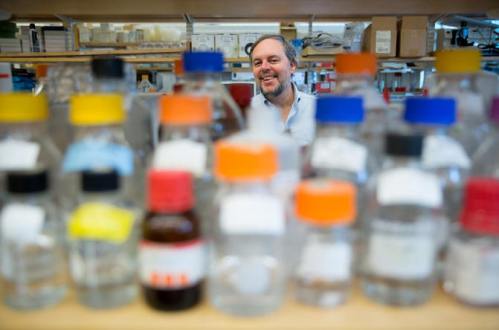 Stephen J. Elledge, a professor of genetics at Harvard Medical School and Brigham and Women’s Hospital. A blood test he helped develop could become an important tool for tracking disease patterns.Credit Bryce Vickmark for The New York Times




 Bat
Bat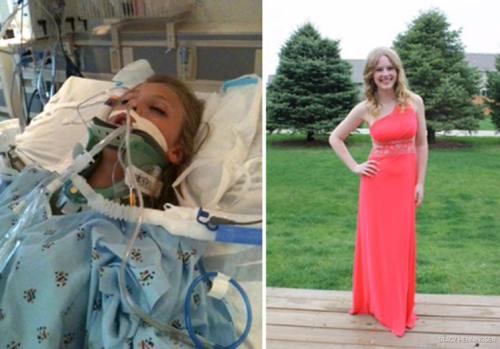 Taylor Hale
 Meredith and Tom Brokaw