As you might imagine, spending a career thinking about the food-borne illnesses that make people sick (or worse) would force a person to think about the kind of meals he puts into his own body.
That’s because every year, there are approximately 48 million cases of food-borne illnesses in the U.S., according to the Food and Drug Administration. An estimated 128,000 people are hospitalized for these sicknesses, and about 3,000 die on an annual basis.
For Bill Marler, a Seattle-based products liability and personal injury attorney who has worked as a food safety advocate in the U.S. for the past two decades, there are some innocuous-seeming edibles that won’t ever make it into his grocery cart. The lawyer has represented the victims of major food poisoning cases against companies like Chili’s, Dole, Taco Bell and Wendy’s, prompting him to come up with some very specific rules about the food he eats.
.
HandmadePictures via Getty Images Food poisoning expert Bill Marler does not take a bite of any produce that’s been pre-cut or pre-washed.
Back in old-timey days, if you were a single woman who hadn’t popped a yowling infant from your snizz, you were either considered a fugly spinster, a lesbian or a literal witch.
Luckily, we currently live in the 21st century, a time when women aren’t burned at the stake for their reproductive choices but are instead interrogated about them on Twitter. So it’s no surprise that women are increasingly opting out of early motherhood and focusing on other important things, like their jobs and relationships, instead of expelling babies like T-shirt guns at a hockey game.
According to a recent study from the Centers for Disease Control, women in the United States are increasingly delaying having kids, which has resulted in the average age of first childbirth reaching a record high of 26.2 years old. Compare that to the average age of first motherhood in 2000, which was about 24.9 years old, and compare that to the average age in 1970, which was about 21.4 years old.
.
Centers for Disease Control, women in the United States are increasingly delaying having kids
A handful of families are cursed with “fatal insomnia”, a cruel disease that leads to months of sleepless nights and terrible exhaustion. Will a controversial cure save their lives?
Silvano was on a cruise ship when the family curse struck. An elegant 53-year-old with striking red hair who enjoyed wearing a tuxedo at every possible occasion, he tried to present himself with the poise of the film stars he admired. But while on the ship’s dance floor one evening, he was embarrassed to find that his shirt had become drenched in sweat.
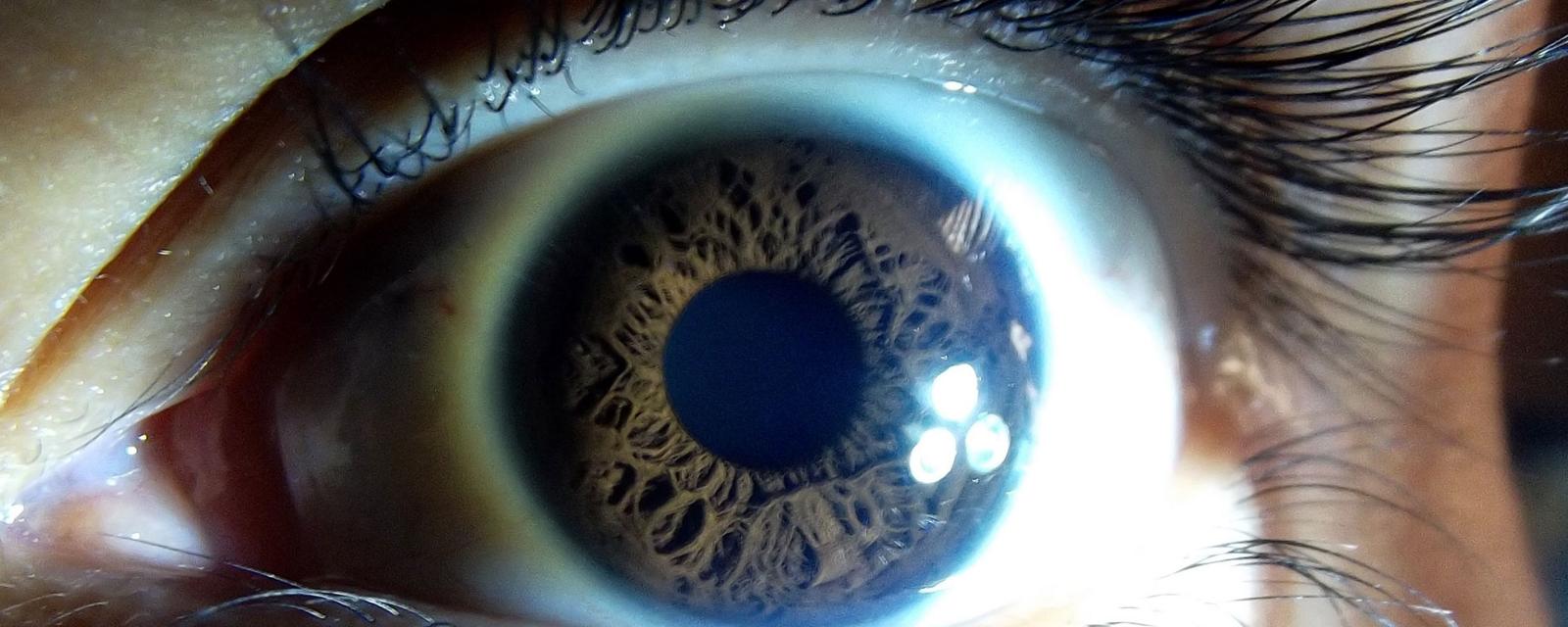
Concerned, he examined himself in a mirror, only to find that his pupils had shrunk to two tiny black pinpricks. It was the same glassy-eyed stare that had afflicted his father and two sisters at the beginning of their mysterious illnesses.
You might not know their official name, but you’ve no doubt seen eye floaters. The perception of these floating apparitions, sometimes also called vitreous floaters or Muscae volitantes (Latin for “flying flies”), is known as myodesopsia. They may appear as spots, small threads, filaments, or cobwebs and they’re not optical illusions. They’re really there, drifting about inside your eyes.
To understand where they come from, it helps to bone up on a little ocular anatomy. At the front of your eye is the cornea, and behind it you can find the pupil (the dark centre of your eye) and the iris (the colourful fringe around the pupil). Between the two lies a small reservoir of liquid called the aqueous humour.
A layer of light-sensitive cells lining the back of your eye is called the retina. When the neurons that form the retina become excited by…
In 2015, four doctors in Miami delivered a Christmas miracle for one set of parents with the help of a Google Cardboard headset, according to CBS Miami.
Two Minnesota parents sought the help of doctors at Nicklaus Children’s Hospital in Miami to save their 4-month-old daughter, after other doctors had brushed off her case as inoperable. Teegan Lexcen was born with only half her heart and one lung. To save Lexcen, doctors scanned her heart and lungs, uploaded the images onto a smartphone and viewed them through Google’s Cardboard virtual reality headset in preparation for the surgery. The images gave the surgical team an opportunity to look at Lexcen’s heart tissue in 3-D as a means for planning how to conduct the actual surgery.
Researchers may be able to explain how sugar might fuel the growth of cancer. They say it boils down to one type of sugar in particular: fructose.
Tests in mice show a possible mechanism for how it happens. The findings, published in the journal Cancer Research, support studies that suggest people who consume more sugar have a higher risk of cancer — especially breast cancer.
“A lot of patients are told it doesn’t matter what you eat after you are diagnosed with cancer. This preliminary animal research suggests that it does matter,” said Lorenzo Cohen of the University of Texas M.D. Anderson Cancer Center, who worked on the study.
Eating when you’re not remotely hungry: It’s a classic American pastime. Who among us, when confronted with a bag of potato chips glistening in grease, has politely responded, “No thanks, I’m full”?
Unfortunately, eating when your body doesn’t physically need food won’t just make you feel uncomfortably full — it could also take other tolls on your health.
In a recent study, 45 students were asked to rate their levels of hunger before eating a carbohydrate-heavy meal — known to produce blood sugar spikes. After the meal, students’ blood glucose levels were measured at regular intervals.
Students who weren’t all that hungry before eating tended to have higher post-meal blood sugar levels than those who reported feeling moderately hungry, the study revealed.
The dying process usually begins well before death actually occurs.
Death is a personal journey that each individual approaches in their own unique way. Nothing is concrete, nothing is set in stone. There are many paths one can take on this journey but all lead to the same destination.
As one comes close to death, a process begins; a journey from the known life of this world to the unknown of what lies ahead.
Sudden cardiac arrest may not always be so sudden: New research suggests a lot of people may ignore potentially life-saving warning signs hours, days, even a few weeks before they collapse.
Cardiac arrest claims about 350,000 U.S. lives a year. It’s not a heart attack, but worse: The heart abruptly stops beating, its electrical activity knocked out of rhythm. CPR can buy critical time, but so few patients survive that it’s been hard to tell if the longtime medical belief is correct that it’s a strike with little or no advance warning.
An unusual study that has closely tracked sudden cardiac arrest in Portland, Oregon, for over a decade got around that roadblock, using interviews with witnesses, family and friends after patients collapse and tracking down their medical records.
.
Fuse via Getty Images
“About half of middle-aged patients for whom symptom information could be found had experienced warning signs, mostly chest pain or shortness of breath, in the month before suffering a cardiac arrest.”
We all know as adults what it takes to lose weight and as parents how to prevent our children from packing on unhealthy pounds in the first place: diet and exercise are the two pillars of any weight-reduction/obesity prevention program. But what if there was a third approach we have been largely ignoring, which could contribute substantially to our ability to achieve and maintain a healthy weight? That important and often overlooked factor: sleep.
A large number of studies now support a connection between both sleep amount and timing and an increased risk of obesity in adults, children and teens. When you examine the trajectory of increasing rates of obesity in the United States and the concurrent decline in average sleep duration, the graphs are nearly parallel, strongly suggesting that there is an association between the two.
Both cross-sectional studies (which look at the relationship between sleep and weight/Body Mass Index [BMI] at Time Point A) and prospective studies (which examine the relationship between sleep duration at Time Point A and BMI at a later Time Point B) have demonstrated that short sleep and increased weight are closely related even when controlling for factors we know to contribute to obesity, like family history, television viewing and socioeconomic status.
Film and Writing Festival for Comedy. Showcasing best of comedy short films at the FEEDBACK Film Festival. Plus, showcasing best of comedy novels, short stories, poems, screenplays (TV, short, feature) at the festival performed by professional actors.

 HandmadePictures via Getty Images Food poisoning expert Bill Marler does not take a bite of any produce that’s been pre-cut or pre-washed.




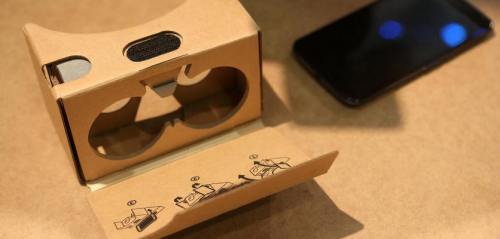 Google Cardboard headset


 Eating when you’re not remotely hungry


 .
.
