September 18, 2024
Mohenjo
Business, Food For Thought, Human Interest, Medical, Political, Science, Technical
amazon, business, Business News, current-events, Future, Hotels, human-rights, medicine, mental-health, research, Science, Science News, technology, Technology News, travel, vacation

Click the link below the picture
.
It’s easy for parents to attribute their child’s poor behavior to a friend who they believe is a “bad influence.” Kids often get into trouble in pairs or groups, so there’s generally someone there to take the blame. And criticizing someone else’s child allows parents to hold onto the belief that their own child is fundamentally “good” — that they wouldn’t have engaged in the misbehavior were it not for the influence of their peer.
There are a couple of problems with this line of thinking. By characterizing children as intrinsically good or bad, parents run the risk of leading their children to believe that they are bad people when they do something wrong. Instead, viewing all children as essentially good people who sometimes make poor decisions allows kids room for personal growth.
In addition, parents generally follow up the naming of a friend as a bad influence with a prohibition on spending time with that friend — and new research shows that this approach tends to backfire.
Why banning a friend who is a “bad influence” doesn’t work.
We know that as kids move into middle school, they tend to place increasing value on the opinions of their peers as they try to find their place in the social landscape.
“As children get older, their peers become more and more prominent in their physical lives and their psychological lives,” Cristine Legare, a professor of psychology at the University of Texas at Austin, told HuffPost. The impact of peer influence is very real, and can lead to kids making dangerous choices.
Research has consistently shown, for example, that teen drivers are more likely to get into a car accident when there are other passengers in the car, particularly when those passengers are their peers. In 2022, 56% of teens who died in car crashes were in cars being driven by another teen. This is one of the reasons most states now have graduated license requirements that restrict who else can be in the car when a teen is driving. These changes are credited with a substantial decrease in the number of teen car crashes. Without friends in the car, teen drivers are less likely to speed or take their eyes off the road.
The reasons that teens are more likely to do something “wrong” when they are with their peers, as opposed to alone or with their parents, are both social and biochemical.
.
 Mistakes
.
.
Click the link below for the article:
.
__________________________________________
September 17, 2024
Mohenjo
Business, Food For Thought, Human Interest, Medical, Political, Science, Technical
amazon, business, Business News, current-events, Future, Hotels, human-rights, medicine, mental-health, research, Science, Science News, technology, Technology News, travel, vacation

Click the link below the picture
.
On a spring day in 2011, neuroscientist Cynthia Lemere stood nervously before scientists gathered to appraise the world’s latest research—including hers—at a conference on immune strategies for treating Alzheimer’s disease. Advancing her presentation slides to show stained brain tissue from a recent set of mouse experiments, Lemere circled the pointer around the reddish-brown clumps: protein fragments called amyloid beta that form plaques, a hallmark of the disease. In Lemere’s experiments, mice that received antibody treatment accumulated fewer amyloid plaques than animals receiving placebo.
Some in the audience were skeptical. As Lemere recalls, when she finished her presentation one prominent researcher rose and proclaimed: “It’s not a real thing. It’s a biochemical artifact.”
What that researcher dismissed, others pursued. Lemere and colleagues at Brigham and Women’s Hospital in Boston have studied this form of amyloid beta since the 1990s; so have researchers in Japan and Germany. Now, the rogue protein is center stage: A drug (donanemab) that targets the molecule recently showed clear benefits in a large clinical study of people with mild Alzheimer’s disease.
Donanemab’s success follows another Alzheimer’s drug, lecanemab (brand name Leqembi), which hit the market in January, and aducanumab (brand name Aduhelm), which got a nod from the U.S. Food and Drug Administration in 2021 after a controversial review. (Aducanumab was withdrawn from the market in 2024.) These are the first new Alzheimer’s treatments since 2003, and the only ones to impede the disease’s progression; earlier drugs only eased symptoms.
The new therapies are revitalizing Alzheimer’s research and renewing hope for millions of families touched by this devastating disease. Yet these treatments carry some risk and a formidable price tag. Translating them from controlled studies to clinical use will require diagnostics that are more scalable and accessible, as well as new training to equip physicians to recognize early-stage disease and decide who is eligible for treatment.
Molecular underpinnings
Alzheimer’s is the most common cause of dementia. It afflicts nearly 7 million people in the United States and more than 30 million worldwide. Older drugs—including donepezil, galantamine, and rivastigmine—work by prolonging the activity of key chemical messengers in the brain. This enhancement of nerve cell communication offers a temporary boost but does not get at the disease’s molecular roots.
The newest drugs do. They are the long-awaited fruit of the amyloid hypothesis, the theory that identifies amyloid buildup as an essential trigger that disrupts neural circuits, causing mental decline and other signs of dementia decades later. This theory has driven much of the Alzheimer’s disease research and drug development since the 1990s.
Creating drugs to slow this progression requires a deep understanding of how the culprit molecules form and how they become a threat. Before amyloid clumps into disease-associated plaques, it floats in the blood as harmless proteins. Day by day, decade after decade, these amyloid beta peptides are churned out and cleared out, like scores of other proteins processed in the brain as part of normal metabolism.
.
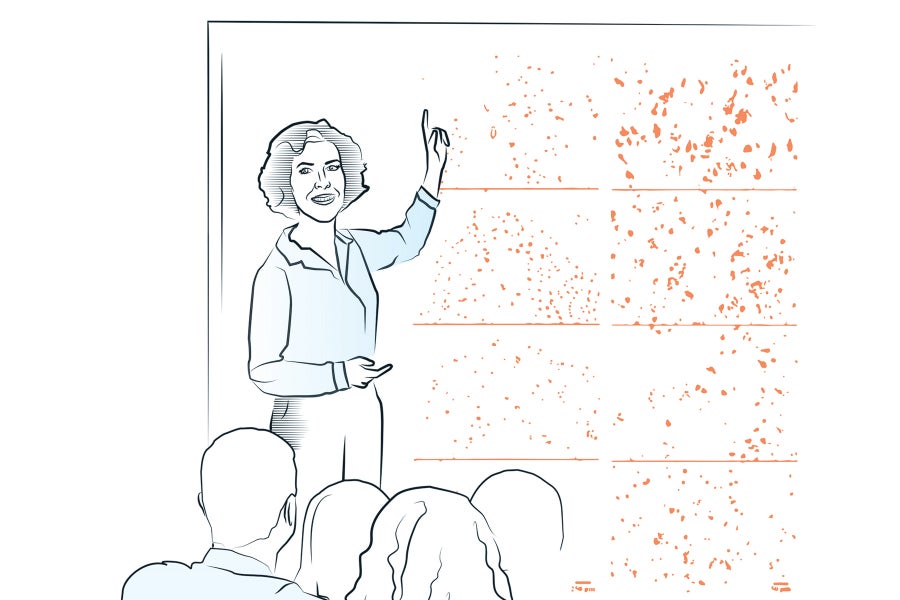
Cynthia Lemere overcame scientific skepticism to show that antibodies against rogue forms of amyloid beta could protect mouse brains from damage. Joelle Bolt
.
.
Click the link below for the article:
.
__________________________________________
September 17, 2024
Mohenjo
Business, Food For Thought, Human Interest, Medical, Political, Science, Technical
amazon, business, Business News, current-events, Future, Hotels, human-rights, medicine, mental-health, research, Science, Science News, technology, Technology News, travel, vacation
This article relates to several articles about Alzheimer’s that have been and will be posted on, James’ World 2!
Click the link below the picture
.
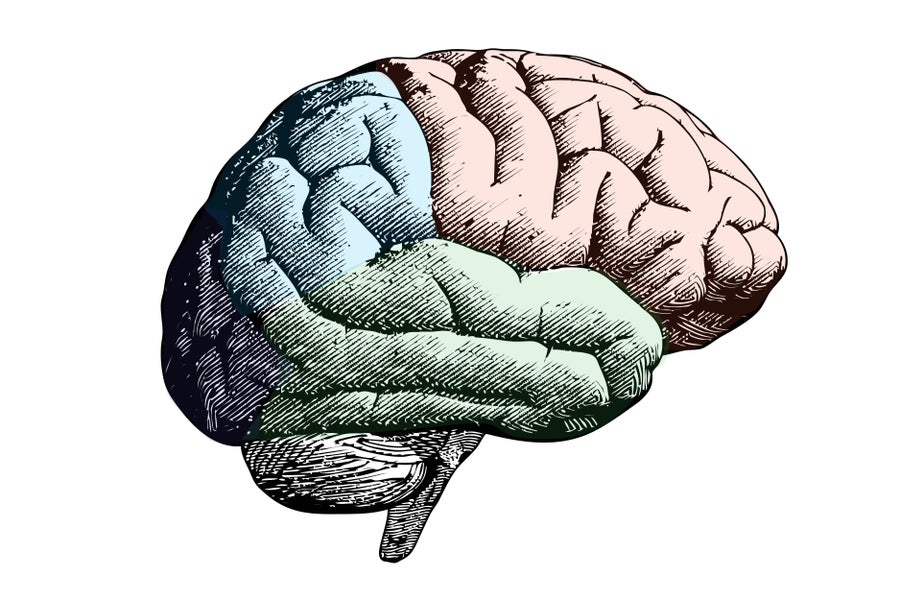
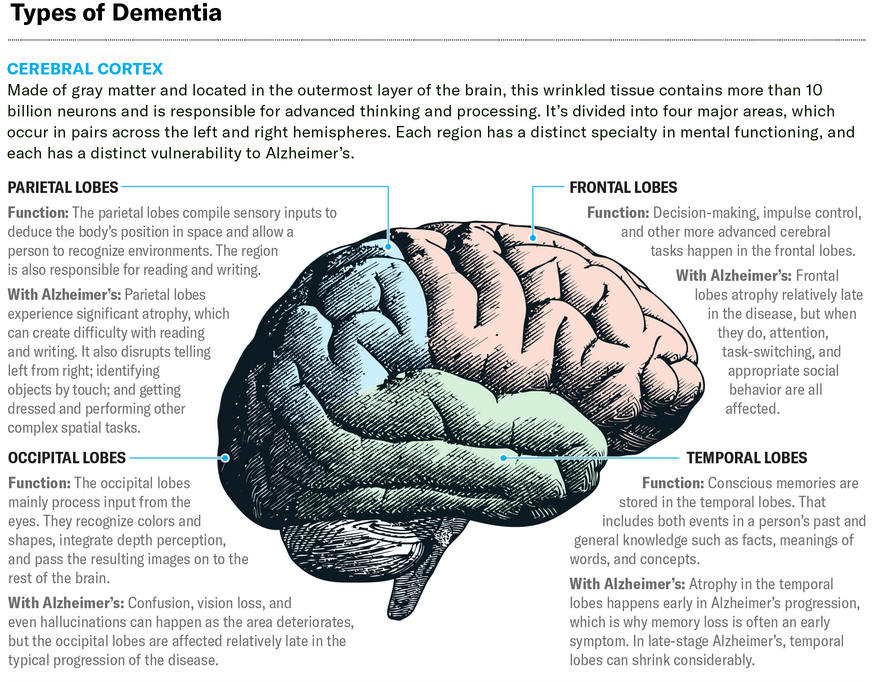
Alzheimer’s disease impairs a patient by destroying neurons, which otherwise live for decades, and by disrupting communication among the remaining brain cells. As neurons die, the areas of the brain they constitute begin to atrophy. A detailed picture of the progression is still under investigation, and the disease follows different tracks in different patients, but researchers have found brains afflicted with Alzheimer’s typically atrophy along the same basic pattern. A better understanding of that pattern may provide the foundation for methods to diagnose the disease earlier, which in turn would give medication and lifestyle changes the best chance of slowing dementia. In broad strokes, here’s how Alzheimer’s tends to change a brain.
.
 Jolygon/iStock
 .
.
.
Click the link below for the article:
.
__________________________________________
July 14, 2024
Mohenjo
Business, Crime, Finance, Food For Thought, Human Interest, Medical, missed News, Political, Science, Technical
amazon, business, Business News, current-events, Future, Hotels, human-rights, medicine, mental-health, research, Science, Science News, technology, Technology News, travel, vacation

.
News You might have missed!
Use your browser or smartphone back arrow (<-) to return to this table for your next selection.
.
__________________________________________
July 11, 2024
Mohenjo
Business, Crime, Food For Thought, Human Interest, Medical, missed News, Political, Science, Technical
amazon, business, Business News, current-events, Future, Hotels, human-rights, medicine, mental-health, research, Science, Science News, technology, Technology News, travel, vacation
.
News You might have missed!
Use your browser or smartphone back arrow (<-) to return to this table for your next selection.
.
__________________________________________
July 10, 2024
Mohenjo
Business, Crime, Food For Thought, Human Interest, Medical, missed News, Political, Science, sports, Technical
amazon, business, Business News, current-events, Future, Hotels, human-rights, medicine, mental-health, research, Science, Science News, technology, Technology News, travel, vacation
.
News You might have missed!
Use your browser or smartphone back arrow (<-) to return to this table for your next selection.
.
__________________________________________
July 8, 2024
Mohenjo
Arts, Food For Thought, Human Interest, Medical, missed News, Political, Science, Technical
amazon, business, Business News, current-events, Future, Hotels, human-rights, medicine, mental-health, research, Science, Science News, technology, Technology News, travel, vacation
.
News You might have missed!
Use your browser or smartphone back arrow (<-) to return to this table for your next selection.
.
__________________________________________
July 2, 2024
Mohenjo
Business, Crime, Food For Thought, Human Interest, Medical, missed News, Political, Science, Technical
amazon, business, Business News, current-events, Future, Hotels, human-rights, medicine, mental-health, research, Science, Science News, technology, Technology News, travel, vacation
Hmmmmm… Maybe incarcerate Donald till all his cases have been litigated!
.
News You might have missed!
Use your browser or smartphone back arrow (<-) to return to this table for your next selection.
.
__________________________________________
June 20, 2024
Mohenjo
Breaking News, Business, Crime, Food For Thought, Human Interest, Medical, missed News, Political, Science, Technical
amazon, business, Business News, current-events, Future, Hotels, human-rights, medicine, mental-health, research, Science, Science News, technology, Technology News, travel, vacation
.
News You might have missed!
Use your browser or smartphone back arrow (<-) to return to this table for your next selection.
.
__________________________________________
June 15, 2024
Mohenjo
Business, Food For Thought, Human Interest, Medical, Political, Science, Technical

Hmmmmm… Another oldie, this one hurts!
Click the link below the picture
.
Fact. Poison ivy, poison oak, and poison sumac grow in wooded or marshy areas throughout North America. The plants aren’t really poisonous. They have a sticky, long-lasting oil called urushiol that causes an itchy, blistering rash after it touches your skin. Even slight contact, like brushing up against the leaves, can leave the oil behind. Poison ivy and poison oak grow as vines or shrubs. Poison sumac is a shrub or tree.
.
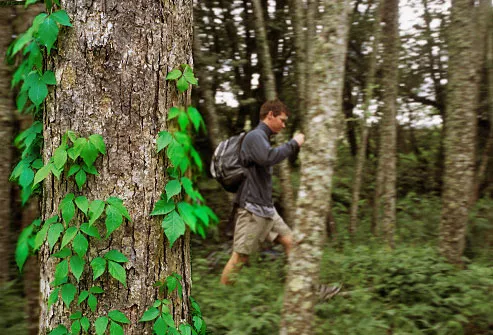 Stupid me! I was pulling it off of my trees by hand!
.
.
Click the link below for article:
.
__________________________________________
Older Entries
Newer Entries
 James' World 2