The cosmos is starting to look a bit weird. For a few years now, cosmologists have been troubled by a discrepancy in how fast the universe is expanding. They know how fast it should be going, based on ancient light from the early universe, but apparently, the modern universe has picked up too much speed — a clue that scientists might have overlooked one of the universe’s fundamental ingredients, or some aspect of how those ingredients stir together.
Now a second crack in the so-called standard model of cosmology may be forming. In late July, scientists announced that the modern universe also looks unexpectedly thin. Galaxies and gas and other matter haven’t clumped together quite as much as they should have. A few earlier studies offered similar hints, but this new analysis of seven years of data represents the cleanest stand-alone indication of the anomaly yet.
“If we were having conferences,” said Michael Hudson, a cosmologist at the University of Waterloo in Canada who is not involved in the research, “all the coffee chatter would be about these results.”
.
Massive objects can distort light from distant galaxies, as seen in this illustration.
“For a small amount of perspective at this moment, imagine you were born in 1900.
When you are 14, World War I starts and ends on your 18th birthday with 22 million people killed. Later in the year, a Spanish Flu epidemic hits the planet and runs until you are 20. Fifty million people die from it in those two years. Yes, 50 million.
When you’re 29, the Great Depression begins. Unemployment hits 25%, global GDP drops 27%. That runs until you are 33. The country nearly collapses along with the world economy.
When you turn 39, World War II starts. You aren’t even over the hill yet. When you’re 41, the United States is fully pulled into WWII. Between your 39th and 45th birthday, 75 million people perish in the war and the Holocaust kills six million.
At 50, the Korean War starts, and five million perish.
At 55 the Vietnam War begins, and it doesn’t end for 20 years. Four million people die in that conflict.
Approaching your 62nd birthday you have the Cuban Missile Crisis, a tipping point in the Cold War. Life on our planet, as we know it, could well have ended. Great leaders prevented that from happening.
As you turn 75, the Vietnam War finally ends. Think of everyone on the planet born in 1900. How do you survive all of that?
A kid in 1985 didn’t think their 85-year-old grandparent understood how hard school was. Yet those grandparents (and now great grandparents) survived through everything listed above. Perspective is an amazing art.”
WHY? Why do men’s clothes have buttons on the right while women’s clothes have buttons on the left? BECAUSE When buttons were invented, they were very expensive and worn primarily by the rich. Since most people are right-handed, it is easier to push buttons on the right through holes on the left. Because wealthy women were dressed by maids, dressmakers put the buttons on the maid’s right! And that’s where women’s buttons have remained since.
2 .. WHY? Why do ships and aircraft use ‘mayday’ as their call for help? BECAUSE This comes from the French word m’aidez – meaning ‘help me’ – and is pronounced, approximately, ‘mayday.’
3 .. WHY? Why are zero scores in tennis called ‘love’? BECAUSE In France , where tennis became popular, the round zero on the scoreboard looked like an egg and was called ‘l’oeuf,’ which is French for ‘the egg.’ When tennis was introduced in the US, Americans (naturally), mispronounced it ‘love.’
4 .. WHY? Why do X’s at the end of a letter signify kisses? BECAUSE In the Middle Ages, when many people were unable to read or write, documents were often signed using an X. Kissing the X represented an oath to fulfill obligations specified in the document. The X and the kiss eventually became synonymous.
5.. WHY? Why is shifting responsibility to someone else called passing the buck’? BECAUSE In card games, it was once customary to pass an item, called a buck, from player to player to indicate whose turn it was to deal. If a player did not wish to assume the responsibility of dealing, he would ‘pass the buck’ to the next player
6 .. WHY? Why do people clink their glasses before drinking a toast? BECAUSE In earlier times it used to be common for someone to try to kill an enemy by offering him a poisoned drink. To prove to a guest that a drink was safe, it became customary for a guest to pour a small amount of his drink into the glass of the host Both men would drink it simultaneously. When a guest trusted his host, he would only touch or clink the host’s glass with his own.
7 limelight’? BECAUSE Invented in 1825, limelight was used in lighthouses and theatres by burning a cylinder of lime which produced a brilliant light. In the theatre, a performer ‘in the limelight’ was the Centre of attention.
8 .. WHY? Why is someone who is feeling great ‘on cloud nine’? BECAUSE Types of clouds are numbered according to the altitudes they attain, with nine being the highest cloud. If someone is said to be on cloud nine, that person is floating well above worldly cares.
9 .. WHY? In golf, where did the term ‘Caddie’ come from? BECAUSE When Mary Queen of Scots went to France as a young girl, Louis, King of France, learned that she loved the Scots game ‘golf.’ He had the first course outside of Scotland built for her enjoyment. To make sure she was properly chaperoned (and guarded) while she played, Louis hired cadets from a military school to accompany her. Mary liked this a lot and when she returned to Scotland (not a very good idea in the long run), she took the practice with her. In French, the word cadet is pronounced ‘ca-day’ and the Scots changed it into caddie.
10 … WHY? Why are many coin collection jar banks shaped like pigs? BECAUSE Long ago, dishes and cookware in Europe were made of dense orange clay called ‘pygg’. When people saved coins in jars made of this clay, the jars became known as ‘pygg banks.’ When an English potter misunderstood the word, he made a container that resembled a pig. And it caught on.
11 BIG CHEEKS Bet you don’t know “Big cheeks. A grandson of slaves, a boy was born in a poor neighborhood of New Orleans known as the “Back of Town.” His father abandoned the family when the child was an infant His mother became a prostitute and the boy and his sister had to live with their grandmother. Early in life he proved to be gifted for music and with three other kids he sang in the streets of New Orleans. His first gains were coins that were thrown to them. A Jewish family, Karnofsky, who had emigrated from Lithuania to the USA, had pity for the 7-year-old boy and brought him into their home. Initially giving ‘work’ in the house, to feed this hungry child. There he remained and slept in this Jewish family’s home where, for the first time in his life, he was treated with kindness and tenderness. When he went to bed, Mrs. Karnovsky sang him a Russian lullaby that he would sing with her. Later, he learned to sing and play several Russian and Jewish songs. Over time, this boy became the adopted son of this family. The Karnofskys gave him money to buy his first musical instrument; as was the custom in the Jewish families. They sincerely admired his musical talent. Later, when he became a professional musician and composer, he used these Jewish melodies in compositions, such as St. James Infirmary and Go Down Moses. The little black boy grew up and wrote a book about this Jewish family who had adopted him in 1907. In memory of this family and until the end of his life, he wore a Star of David and said that in this family, he had learned “how to live real life and determination.” You might recognize his name. This little boy was called: Louis “Satchmo” Armstrong. Louis Armstrong proudly spoke fluent Yiddish! And “Satchmo” is Yiddish for “Big Cheeks”!!!
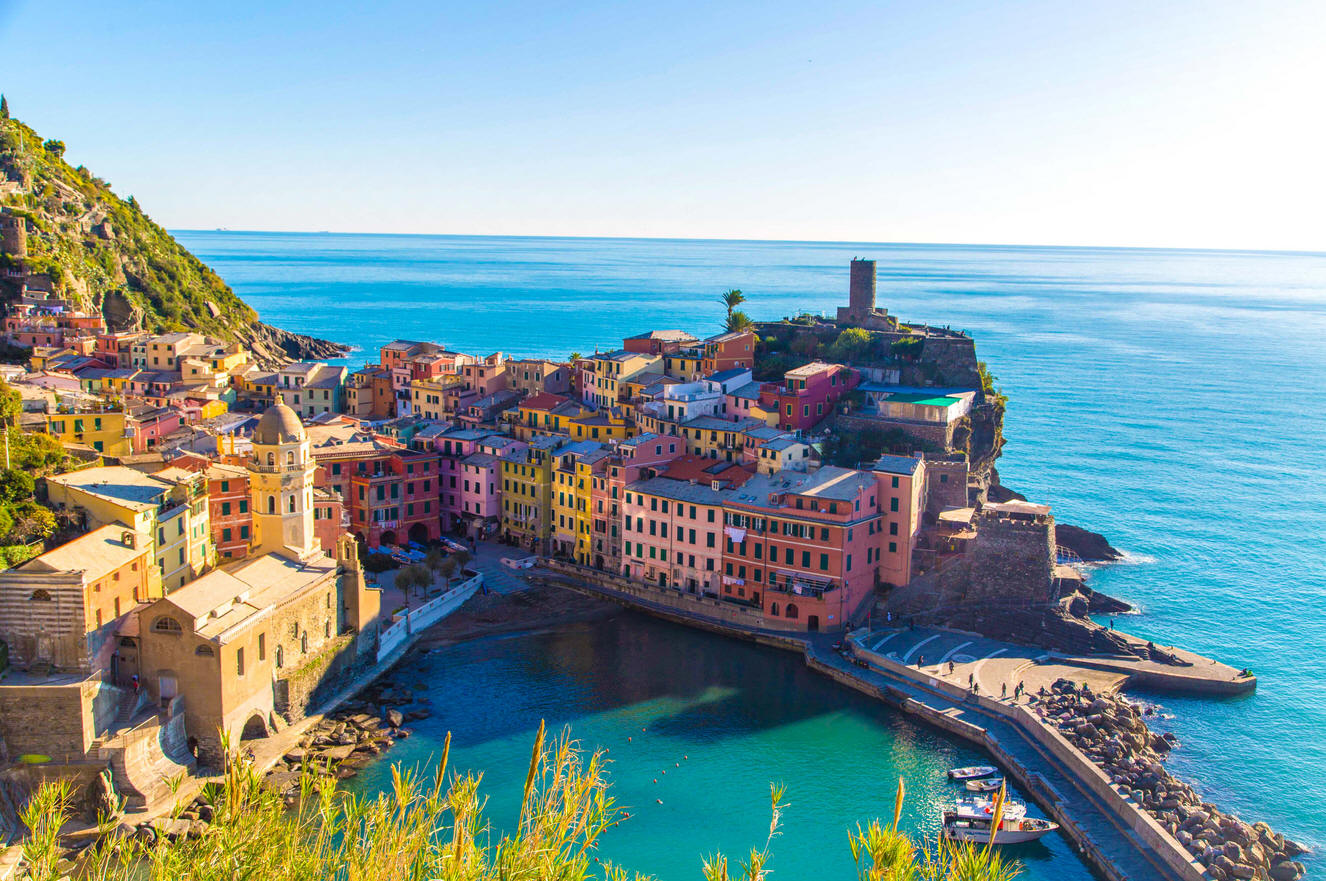
A World Heritage Site is a landmark or area with legal protection by an international convention administered by the United Nations Educational, Scientific, and Cultural Organization (UNESCO).World Heritage Sites are designated by UNESCO for having cultural, historical, scientific, or other forms of significance. The sites are judged to contain “cultural and natural heritage around the world considered to be of outstanding value to humanity”. To be selected, a World Heritage Site must be a somehow unique landmark which is geographically and historically identifiable and has special cultural or physical significance. For example, World Heritage Sites might be ancient ruins or historical structures, buildings, cities, deserts, forests, islands, lakes, monuments, mountains, or wilderness areas. A World Heritage Site may signify a remarkable accomplishment of humanity, and serve as evidence of our intellectual history on the planet, or it might be a place of great natural beauty. As of June 2020, a total of 1,121 World Heritage Sites (869 cultural, 213 natural, and 39 mixed properties) exist across 167 countries; the three countries with most sites are China, Italy (both 55), and Spain (48)
Ronald Reagan pulled up to the curb in a sleek black town car, rolled down his tinted window, and beckoned for Lance Weller, author of the novel Wilderness, to join him. The long-dead president escorted Weller to a comic book shop stocked with every title Weller had ever wanted, but before he could make a purchase, Reagan swiped his wallet and skipped out the door.
Of course, Weller was dreaming. He is one of many people around the world—including more than 600 featured in just one study—who say they are experiencing a new phenomenon: coronavirus pandemic dreams.
Science has long suggested that dream content and emotions are connected to wellbeing while we’re awake. Bizarre dreams laden with symbolism allow some dreamers to overcome intense memories or everyday psychological stressors within the safety of their subconscious. Nightmares, on the other hand, can be warning signs of anxieties that we might not otherwise perceive in our waking lives.
.
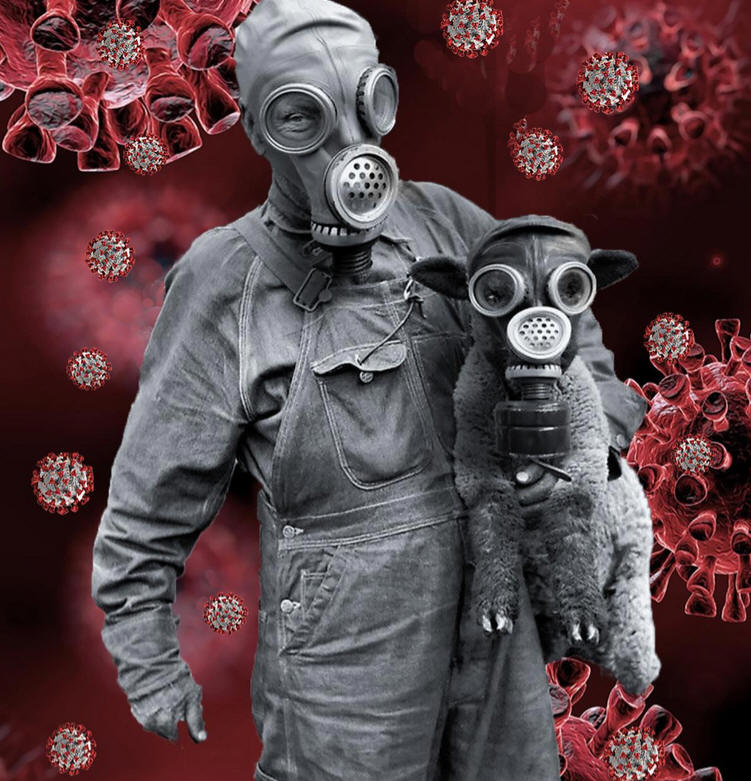
Deirdre Barrett, a professor of psychology at Harvard University who studies dreams, made this photo illustration of a recent COVID-19 dream she had.
Nuwara Eliya is a city in the tea country hills of central Sri Lanka.The naturally landscaped Hakgala Botanical Gardens displays roses and tree ferns, and shelters monkeys and blue magpies. Nearby Seetha Amman Temple, a colorful Hindu shrine, is decorated with religious figures. Densely forested Galway’s Land National Park is a sanctuary for endemic and migratory bird species, including bulbuls and flycatchers.
DAVE ASPREY, founder of the supplement company Bulletproof and one of the many Silicon Valley tech titans obsessed with lengthening their life spans, famously declared he wants to live beyond 180 years. That sounds, frankly, exhausting. Yet who wouldn’t want to take a languorous sip from the gerontological cup, assuming reasonable health and fitness?
Therein lies the catch: A long life is something that’s desired and dreaded in equal measure. My uncle was a rocket scientist at NASA’s Marshall Space Flight Center in Huntsville, Alabama. When I visited him in his final years, I did not recognize this once-dynamic, brilliant man. He was confused, frail, vague. In 2014, Ezekiel Emanuel, a noted oncologist and chair of the Department of Medical Ethics and Health Policy at the University of Pennsylvania, wrote a blunt essay for The Atlantic titled “Why I Hope to Die at 75.” He argued that the “manic desperation to endlessly extend” life siphons resources and “robs us of our creativity and ability to contribute to work, society, the world.” Emanuel stands by it. “You don’t want to wait until the end of your life and live it unconsciously,” he told me recently.
.
Experts say that genetics account for only 20 percent of “health span”—the rest is exercise and lifestyle. Black Scarf, 1996, by Alex Katz.
Film and Writing Festival for Comedy. Showcasing best of comedy short films at the FEEDBACK Film Festival. Plus, showcasing best of comedy novels, short stories, poems, screenplays (TV, short, feature) at the festival performed by professional actors.