
.
News You might have missed!
Use your browser or smartphone back arrow (<-) to return to this table for your next selection.
.
__________________________________________
Assorted human interest posts.
March 4, 2022
Crime, Food For Thought, Human Interest, Medical, missed News, Political, Science, Technical amazon, business, Business News, current-events, Future, Hotels, human-rights, medicine, mental-health, research, Science, Science News, technology, Technology News, travel, vacation Leave a comment
.
.
__________________________________________
March 3, 2022
Business, Enthralling, Human Interest, Photographs amazon, business, Business News, current-events, Future, Hotels, human-rights, medicine, mental-health, research, Science, Science News, technology, Technology News, travel, vacation Leave a comment

Click the link below the picture
.
The Eurasian brown bear is one of the most common subspecies of the brown bear and is found in much of Eurasia. It is also known as the European brown bear, common brown bear, common bear, and colloquially by many other names. The genetic diversity of present-day brown bears (Ursus arctos) has been extensively studied over the years and appears to be geographically structured into five main clades based upon analysis of the mtDNA.
The Eurasian brown bear has brown fur, which ranges from yellowish-brown to dark brown, red-brown, and almost black in some cases; albinism has also been recorded. The fur is dense to varying degrees and the hair can grow up to 10 cm in length. The head normally is quite round in shape and has relatively small rounded ears, a wide skull, and a mouth equipped with 42 teeth, including predatory teeth. It has a powerful bone structure and large paws equipped with claws that can grow up to 10 cm in length. The weight varies depending on habitat and the time of the year. A full-grown male weighs on average between 250 and 300 kilograms (550 and 660 lb) and reaches a maximum weight of 481 kg (1,058 lb) and length of nearly 2.5 m (8.2 ft). Females typically range between 150 and 250 kg (330 and 550 lb). They have a lifespan of 20 to 30 years in the wild.
Brown bears were present in Britain until no later than AD 1000 when they had been exterminated through over-hunting.
Eurasian brown bears were used in Ancient Rome for fighting in arenas. The strongest bears apparently came from Caledonia and Dalmatia. Wikipedia
.
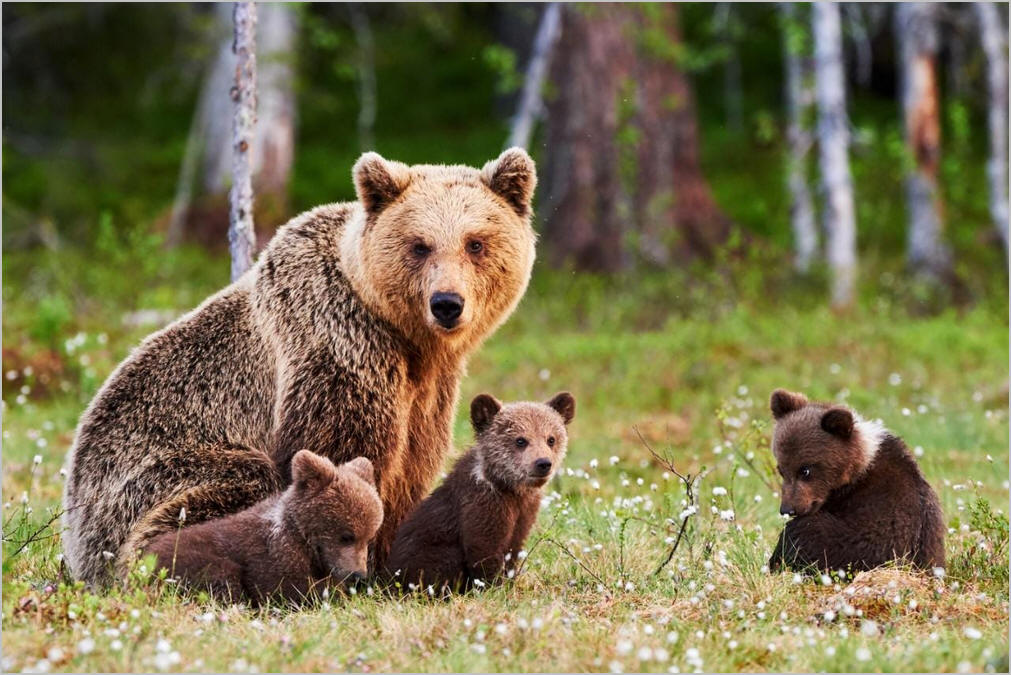 An image of Bears In Finland
.
.
Click the link below for images:
.
__________________________________________
March 3, 2022
Business, Food For Thought, Human Interest, Science, Technical amazon, business, Business News, current-events, Future, Hotels, human-rights, medicine, mental-health, research, Science, Science News, technology, Technology News, travel, vacation Leave a comment

Click the link below the picture
.
My senior dog, Stevie, is one of the best friends I’ve ever had. She’s 13 now and while she’s very spry for her age, I know she’s not going to live forever. If I could do anything to keep her in my life longer, I would. Unfortunately, we haven’t found the fountain of puppy youth, yet, but these pioneering scientists are trying to figure out how to make dogs live longer. And they might learn something about human aging in the process, too.
The Dog Aging Project (DAP) was launched in 2018 in order to examine how aging affects dogs. Today, the interdisciplinary DAP published a report in the science journal, Nature, outlining their plans for the next decade, which is significant because it will be the first long-term dog study of its magnitude. These scientists already have 32,000 dogs of all kinds around the country registered in the study, and they plan to enroll thousands more to sequence their genomes in order to try to figure out what variables make dogs live longer.
Right now, the DAP is still recruiting dogs and puppies from around the U.S. to participate in the study. When a dog enrolls in the study — which the researchers cutely refer to as “joining the pack” — their owners take measurements and cheek swabs for genetic material and agree to participate in yearly surveys for the length of the study (at least ten years), EurekAlert reported. The scientists are trying to decode the biomarkers of canine aging and to determine which lifestyle factors play a role in longevity.
Researchers are hoping to figure out how to help dogs live happy healthy lives, but they’re also planning to use that data to learn more about human aging. “Given that dogs share the human environment and have a sophisticated health care system but are much shorter-lived than people, they offer a unique opportunity to identify the genetic, environmental and lifestyle factors associated with healthy lifespan,” Daniel Promislow, a professor of biology at the University of Washington and an investigator for the National Institute on Aging grant that is funding the DAP, told EurekAlert.
.
 Through the new research, they might also learn more about human aging.
.
.
Click the link below for the article:
.
__________________________________________
March 3, 2022
Business, Food For Thought, Human Interest, Science, Technical amazon, business, Business News, current-events, Future, Hotels, human-rights, medicine, mental-health, research, Science, Science News, technology, Technology News, travel, vacation Leave a comment

Click the link below the picture
.
Small chameleons have a stronger and longer tongue to shoot out faster than those of larger chameleons.
.
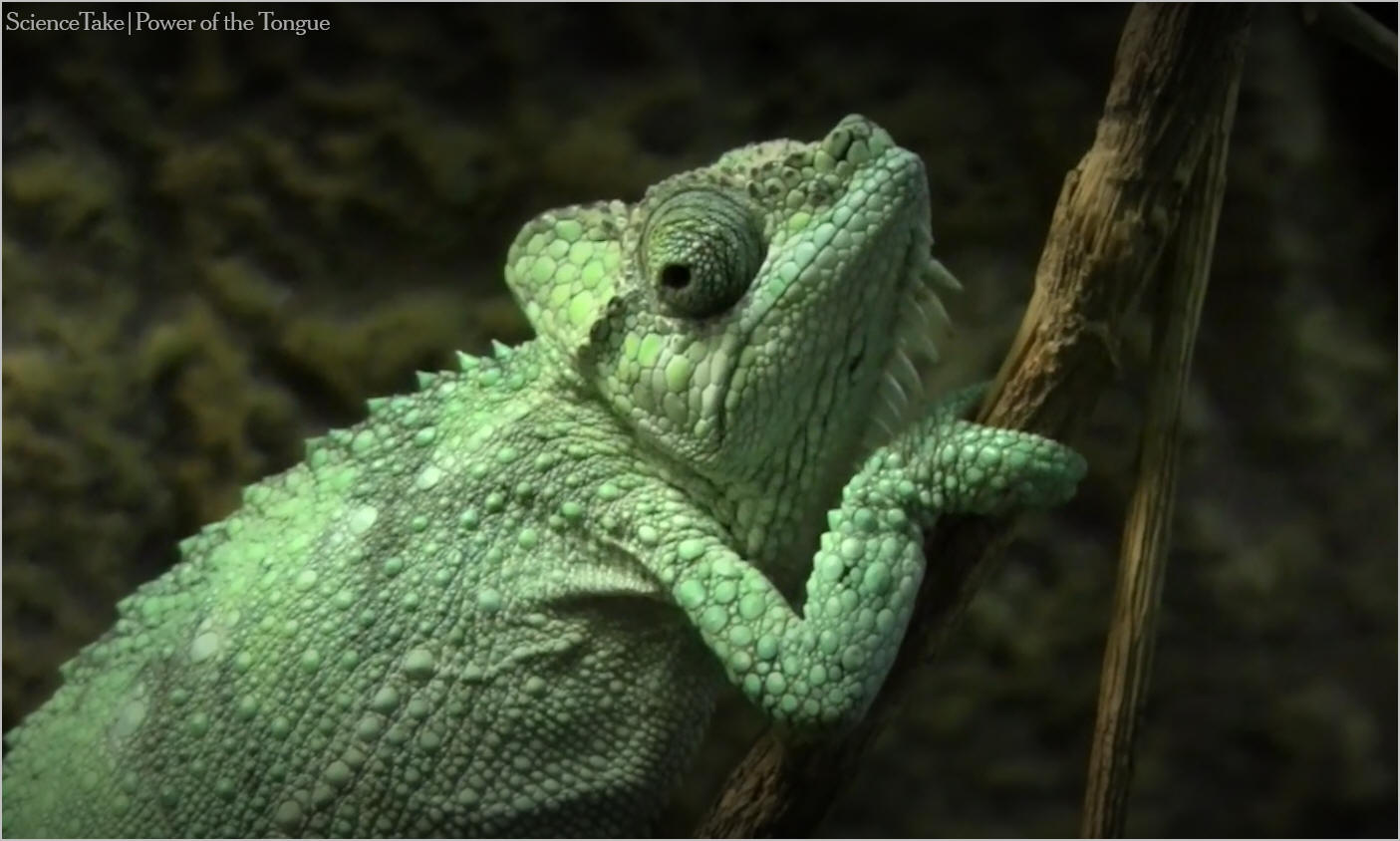 Wow!
Wow!
.
.
Click the link below (Sound on for several videos):
.
__________________________________________
March 3, 2022
Crime, Food For Thought, Human Interest, Medical, missed News, Political, Science, Technical amazon, business, Business News, current-events, Future, Hotels, human-rights, medicine, mental-health, research, Science, Science News, technology, Technology News, travel, vacation Leave a comment
.
.
__________________________________________
March 2, 2022
Business, Enthralling, Human Interest, Photographs amazon, business, Business News, current-events, Future, Hotels, human-rights, medicine, mental-health, research, Science, Science News, technology, Technology News, travel, vacation Leave a comment
Click the link below the picture
.
Thailand, historically known as Siam, officially the Kingdom of Thailand, is a country in Southeast Asia. It is located at the center of the Indochinese Peninsula, spanning 513,120 square kilometers (198,120 sq mi), with a population of almost 70 million people. It is bordered to the north by Myanmar and Laos, to the east by Laos and Cambodia, to the south by the Gulf of Thailand and Malaysia, and to the west by the Andaman Sea and Myanmar. Thailand also shares maritime borders with Vietnam in the Gulf of Thailand to the southeast, and Indonesia and India (Andaman and Nicobar Islands) on the Andaman Sea to the southwest. Nominally, Thailand is a constitutional monarchy and parliamentary democracy; however, in recent history, its government has experienced multiple coups and periods of military dictatorships. Bangkok is the nation’s capital and largest city.
Tai peoples migrated from southwestern China to mainland Southeast Asia from the 11th century; the oldest known mention of their presence in the region by the exonym Siamese dates to the 12th century. Various Indianised kingdoms such as the Mon kingdoms, Khmer Empire, and Malay states ruled the region, competing with Thai states such as the Kingdoms of Ngoenyang, Sukhothai, Lan Na, and Ayutthaya, which also rivaled each other. Documented European contact began in 1511 with a Portuguese diplomatic mission to Ayutthaya, which became a regional power by the end of the 15th century. Ayutthaya reached its peak during cosmopolitan Narai’s reign, gradually declining thereafter until being ultimately destroyed in the 1767 Burmese–Siamese War. Taksin quickly reunified the fragmented territory and established the short-lived Thonburi Kingdom. He was succeeded in 1782 by Buddha Yodfa Chulaloke, the first monarch of the current Chakri dynasty.
Throughout the era of Western imperialism in Asia, Siam remained the only nation in the region to avoid being colonized by foreign powers, although it was often forced to cede both territory and trade concessions in unequal treaties. The Siamese system of government was centralized and transformed into a modern unitary absolute monarchy in the reign of Chulalongkorn. In World War I, Siam sided with the Allies, a political decision made in order to amend the unequal treaties. Following a bloodless revolution in 1932, it became a constitutional monarchy and changed its official name to Thailand, which was an ally of Japan in World War II. In the late 1950s, a military coup under Field Marshal Sarit Thanarat revived the monarchy’s historically influential role in politics. Thailand became a major ally of the United States and played an anti-communist role in the region as a member of the failed SEATO, but since 1975, had sought to improve relations with Communist China and Thailand’s neighbors. Apart from a brief period of parliamentary democracy in the mid-1970s, Thailand has periodically alternated between democracy and military rule. Since the 2000s, it has been caught in a series of bitter political conflict between supporters and opponents of Thaksin Shinawatra, which culminated in two coups, most recently in 2014 and the establishment of its current and 20th constitution and faces the ongoing pro-democracy protests.
Thailand is a middle power in global affairs, and a founding member of ASEAN; ranking high in the Human Development Index. It has the second-largest economy in Southeast Asia, and the 22nd-largest in the world by PPP. Thailand is classified as a newly industrialized economy; manufacturing, agriculture, and tourism are leading sectors of the economy.
Thailand, officially the Kingdom of Thailand, was formerly known as the exonym Siam by outsiders prior to 1949. According to George Cœdès, the word Thai (ไทย) means ‘free man’ in the Thai language, “differentiating the Thai from the natives encompassed in Thai society as serfs”. According to Chit Phumisak, Thai (ไท) simply means ‘people’ or ‘human being’, his investigation shows that some rural areas used the word “Thai” instead of the usual Thai word khon (คน) for people. According to Michel Ferlus, the ethnonyms Thai-Tai (or Thay-Tay) would have evolved from the etymon *k(ə)ri: ‘human being’. Wikipedia
.
 An image from Thailand
.
.
Click the link below for images:
.
__________________________________________
March 2, 2022
Business, Food For Thought, Human Interest, Political, Science, Technical amazon, business, Business News, current-events, Future, Hotels, human-rights, medicine, mental-health, research, Science, Science News, technology, Technology News, travel, vacation Leave a comment
Click the link below the picture
.
You’re not going to believe this, but it turns out Donald Trump wanted to overturn the results of the 2020 presidential election. Have you heard about this?
It’s hard to believe — what, with all of the reporting suggesting that he called for voting to stop during the election, pushed false stories of unverified fraud, asked about deploying the military to overturn the results, and put a crackpot conspiracy theorist in charge of investigating claims of voter fraud. Oh, and then there’s the fact that he straight up said his vice president, Mike Pence, should have simply declared Trump the winner.
So it’s a real shock that, according to the latest report from The New York Times, Trump tried to push the Department of Homeland Security to seize voting machines from several important swing states. Other than fitting in perfectly with Trump’s multi-year campaign to try to baselessly invalidate the election results, it’s pretty out of character!
Per the Times, Trump started to get antsy in December 2020, fearing that all of the evidence — including the initial vote count, recounts, and early audits — all pointed to him losing. Because that simply could not be right, Trump tapped his personal lawyer and vampire who somehow has been allowed out in the daylight, Rudy Giuliani, to call the acting deputy secretary of DHS. Giuliani asked if the agency could take the voting machines from several states, with the goal of auditing the systems and discovering the supposed widespread fraud that resulted in more people voting for Joe Biden.
The plan got shot down pretty quickly. Ken Cuccinelli, the acting deputy homeland security secretary at the time, told Giuliani that the agency didn’t have the authority to impound the machines. Turns out, without any actual evidence to suggest there was fraud, federal agencies aren’t enthused about the idea of overturning election results or casting doubt on the integrity of the country’s electoral process.
.
 The former president’s liaison for the mastermind plan? Rudy Giuliani, of course. Joshua Roberts/Getty Images News/Getty Images
.
.
Click the link below for the article:
.
__________________________________________
March 2, 2022
Business, Food For Thought, Human Interest, Overlooked Past Article, Science, Technical amazon, business, Business News, current-events, Future, Hotels, human-rights, medicine, mental-health, research, Science, Science News, technology, Technology News, travel, vacation Leave a comment

Click the link below the picture
.
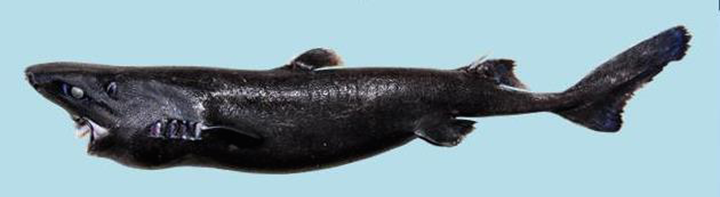
Researcher Victoria Vásquez and her colleagues discovered the previously unidentified shark after recovering its body from storage at the California Academy of Science.
It’s the first lanternshark that’s ever been found in Central American waters. Vásquez said they were able to identify it as a lanternshark based on several characteristics.
“It had photophores (light-emitting organs),” she told The Huffington Post, “two dorsal fins with a spine on each one, and dignathic heterodonty (upper teeth and lower teeth are different).”
Vásquez said ninja lanternsharks live in the deep ocean. They have tiny dots that glow throughout their body, which, unlike most bioluminescent creatures, they use to camouflage themselves within the deep’s limited light and sneak up on their prey.
.
.
.
Click the link below for the article:
.
__________________________________________
March 2, 2022
Arts, Crime, Food For Thought, Human Interest, Medical, missed News, Political, Science, Technical amazon, business, Business News, current-events, Future, Hotels, human-rights, medicine, mental-health, research, Science, Science News, technology, Technology News, travel, vacation Leave a comment
.
.
__________________________________________
March 2, 2022
Business, Food For Thought, Human Interest, Political, Science, Technical amazon, business, Business News, current-events, Future, Hotels, human-rights, medicine, mental-health, research, Science, Science News, technology, Technology News, travel, vacation Leave a comment

Click the link below the picture
.
The Lincoln, Nebraska-based company is often the first choice of law enforcement looking to keep tabs on the communications of criminal suspects. It’s probably best known, if it’s known at all, for its work helping convict Scott Peterson, who murdered his wife Laci and their unborn son in a case that fomented a tabloid frenzy in the early 2000s. Nowadays the company has been helping cops keep tabs on suspected wrongdoing by users of Google, Facebook, and WhatsApp – whatever web tool that law enforcement requests.
With $20 million revenue every year from U.S. government customers such as the Drug Enforcement Administration, the FBI, Immigration Customs Enforcement (ICE), and almost every other law enforcement agency in the federal directory, PenLink enjoys a steady stream of income. That doesn’t include its sales to local and state police, where it also does significant business but for which there are no available revenue figures. Forbes viewed contracts across the U.S., including towns and cities in California, Florida, Illinois, Hawaii, North Carolina, and Nevada.
“PenLink is proud to support law enforcement across the U.S. and internationally in their effort to fight wrongdoing,” the company said. “We do not publicly discuss how our solution is being utilized by our customers.”
Sometimes it takes a spy to get transparency from a surveillance company. Jack Poulson, founder of technology watchdog Tech Inquiry, went incognito at the National Sheriffs’ Association’s winter conference in Washington. He recorded a longtime PenLink employee showing off what the company could do for law enforcement and discussing the scale of its operations. Not only does the recording lift the lid on how deeply involved PenLink is in wiretapping operations across the U.S., it also reveals in granular detail just how tech providers such as Apple, Facebook and Google provide information to police when they’re confronted with a valid warrant or subpoena.
.

PenLink works closely with U.S. government agencies in tapping phones and in collecting data from interceptions of social media giants like Facebook, Google Snapchat, and WhatsApp. (Photo by Muhammed Selim Korkutata/Anadolu Agency/Getty Images) Getty Images
.
.
Click the link below for the article:
.
__________________________________________
Să facem glume, nu război
In the world, human beings are facing various problems. People who are full of greed, anger, and ignorance are seen to be fighting with each other in words and deeds. As the fighting continues, various problems such as civil wars, wars of aggression, and wars of aggression are occurring. As world peace is being destroyed, humans are facing unbearable problems. Innocent children and women are not getting the rights they deserve and deserve. I can't think of one thing every time. What is it? The United Nations. If we look at the responsibilities and duties of the United Nations, I think it is not suitable for solving the problems that are happening in the world today. In fact, the United Nations and the World Security Council, such an organization must rule the world, must be able to give orders, and must have various ways to obey orders. There must be no organization that can influence more than that organization. There should be experts from each country. They can even dominate the superpowers like the US, China, and Britain. Only then will global peace be achieved quickly. Now, if a country with power develops more militarily, economically, or socially than its own country, then powerful countries will jealously seek out enemies and wage war. Or they will attack with fighter jets. In this, innocent people are losing their lives. No one understands the value of a life. You should think about how to achieve global peace by controlling these. If the US continues to be the permanent president of the UN, world peace will never be achieved. If you think carefully, no one sees that they are working for the common good, but for their own benefit, for the benefit of their own country. The permanent president of the UN and the Security Council has rejected this, As a young Rohingya, I have come to realize that only by electing the president and secretary from among the countries in the world through a secret ballot system and governing the world fairly can we achieve global peace. The United Nations and the Security Council are organizations in which any country must govern, give orders, and make them obey their orders. For example, only when a defendant is tried in court can we hold the leaders of the countries in check and control them, can we achieve global peace smoothly. Otherwise, it will not be easy for powerful countries to use various excuses to end this war every year, every year, for the benefit of themselves and their countries. No country's leaders pay any attention to the words of the United Nations and the Security Council. If we look at it in practice, look at the Rohingya issue. Myanmar is a small country. Even that country has been under siege for 8 years. What action can be taken? Why is the UN and the Security Council Powerless? Without such Power, how can the organization bring about global peace? Everyone should think about it. Whether there is a veto or a strong one, all countries in the world can only achieve global peace if they are subject to the UN and the Security Council. Seek peace in the quiet embrace of nature. Peace is an indispensable need of the human race. It is not as if one person can kill another person, and it is as if one country can attack another country, but instead of trying to build peace, we must try to destroy the peace now, and the world is getting hotter and is on the verge of collapse. I especially appeal to all the world experts to urgently try to bring about peace in all parts of the world. Mr, Noor Muhamed Arkhan Rohingya Youth Myanmar
Publicație umoristică dedicată glumeților de pretutindeni
Faith saved us from the savages that we were, losing faith makes us savages again
Where Trends Meet Truth
https://www.tangietwoods
Freelance poetry writing
Zalai Betti
INOVATION BLOG PEOPLE AND NEWS
Németh György
Konsultan Lingkungan Hidup di Lombok - NTB
Lea Krasznai (LeaArt21) – Idezetek (Idézetek) WordPress (Budapest, Hungary)
Appunti, spunti e passioni in liberta'
Gyorgy Nemeth
تعنى بتقديم نصائح للمعلمين المبتدئين، والطلبة الممتحنين، ومشاركة الاخرين تجربة الادخار في المال، بترشيد الاستهلاك المنزلي، وترتيب البيت، والحفاظ على البيئة، وتشجيع السيارات صديقةالبيئة، والسياحة والاسفار، ونماء رؤوس الاموال، والطب البديل وتشجيع التعليم الرقمي والذكاء الاصطناعي، والعناية بالنحل وتربية الاسماك، والاسثمار في رؤوس الاموال، الزراعة العضوية، والعناية باسنان الرضع، و صحة الحوامل، وتفسير القران
apprendre pour évoluer
Thoughts on books, language, meaning, and the culture around it.
Outdoor Recreation & Adventure in the Great Lakes Region
News, Info, Bio, Articles, Reviews, Lyrics, Technology, Science, Inspiration, Motivation, Philosphy and many more...
Christian Lifestyle Blogger
CEO and president of The Mullins Companies
Two Cultures. One Life. Endless Stories
Real Estate Development Specialist
¡Bienvenido de vuelta viajero!
so looking to the sky ¡ sing and from my heart to YOU ¡ bring...
CEO and Founder of Nsight Health
Catholic News, Prayers, HD Images, Rosary, Music, Videos, Holy Mass, Homily, Saints, Lyrics, Novenas, Retreats, Talks, Devotionals and Many More
Decoding Power. Defying Narratives.
A creative collaboration introducing the art of nature and nature's art.
The Home Of Entertainment News, Reviews and Reactions
•Whenever you are confronted with an opponent, conquer him with love.(Gandhi)
Algotrader at TRADING-CLUBS.COM
Film and Writing Festival for Comedy. Showcasing best of comedy short films at the FEEDBACK Film Festival. Plus, showcasing best of comedy novels, short stories, poems, screenplays (TV, short, feature) at the festival performed by professional actors.
Peace. Tranquility. Insanity.
Take a ride on the wild side
Découvre des musiques prometteuses (principalement) dans la sphère musicale française.
No tiene que Ser una Pesadilla.
Life in Kana-text (er... CONtext)
Where feelings meet metaphors and make questionable choices.
Finding hope and peace through writing, art, photography, and faith in Jesus.
Eyasu
Eyasu The Wonderful

