
Home

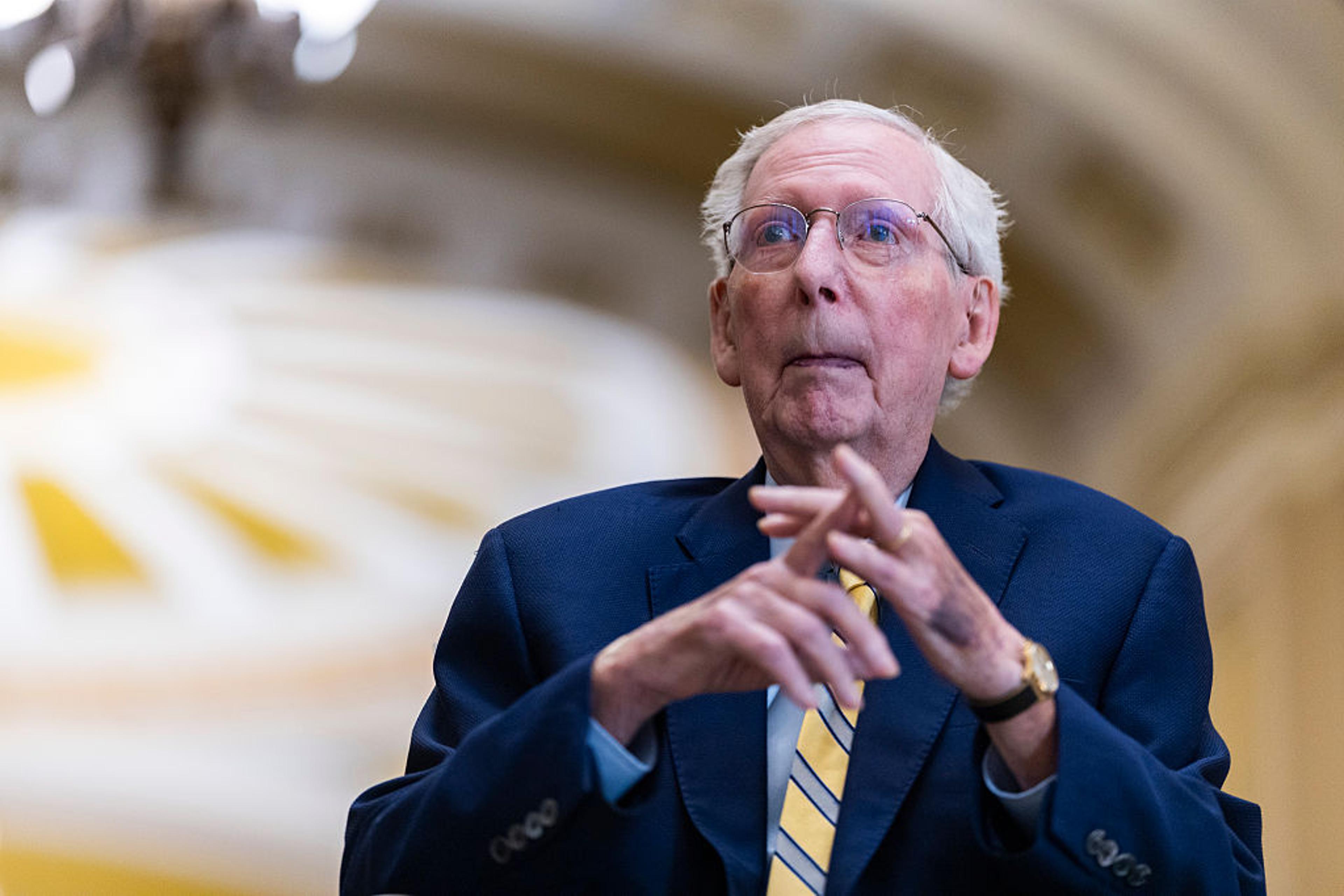
Why Aren’t the Kids Out Protesting Against Trump?

Leave a comment

Click the link below the picture

.

As I was gathering material on the absence of young people at anti-Trump demonstrations, I came across evidence of powerful technological forces weakening persistence and cognitive tenacity across the board.

Most interesting, the most immediate danger posed by artificial intelligence may not be the futuristic moment when A.I. becomes so smart and so independent of human control — in other words, conscious — that it takes over politics, economics, and the social order.

Instead, it may be the current power of A.I. to undermine persistence, curiosity, and personal effort, encouraging in their place growing passivity and indifference, that poses the more proximate threat.

Before we get to that, though, let’s start where I began, with the question of youth inaction on President Trump, and go on from there.

In May 1970, President Richard Nixon’s frustration with the student protests against the Vietnam War reached a boiling point. “You see these bums, you know, blowing up the campuses,” he told a gathering of civilian employees at the Pentagon.

“Listen,” the president said, “the boys that are on the college campuses today are the luckiest people in the world, going to the greatest universities, and here they are burning up the books, storming around about this issue. You name it.”

Today, the United States would appear ripe for a resurgence of student activism, beyond the flourishing of pro-Palestinian demonstrations on campus in 2023 and 2024 in particular.

We have a president who has directly attacked the finances and the intellectual freedom of colleges and universities, is building the technology for a surveillance state, undermines free and fair elections, and took the nation into an unjustified war with no explanation, while causing domestic economic havoc.

But one ingredient is missing: a substantial anti-Trump youth movement.

Dana Fisher, a professor in the School of International Service at American University, tracks the demographics of participants in major anti-Trump demonstrations. In a phone interview, I asked what she had found about the mobilization of students and younger men and women.

She replied, “We’re not seeing them in the streets at No Kings events.”

She provided the following data about the three No Kings protests: “At No Kings 1 (June 14, 2025) the median age was 36, at No Kings 2 (Oct. 18, 2025) the median age was 44, and at No Kings 3 (March 28, 2026) it was 48. Clearly, it’s getting older.”

The participants in the initial No Kings Day demonstrations, Fisher wrote, were “predominantly white, highly educated, female and middle-aged.”

It’s not as if young men and women are indifferent to President Trump.

The Spring 2026 Yale Youth Poll found that “younger voters overwhelmingly disapprove of Trump and plan to vote for Democrats in 2026. Fifty-seven percent of all voters disapprove of Donald Trump’s job performance as president, including 68 percent of voters aged 18 to 22 and 72 percent of voters aged 23 to 29.”

So what’s going on? I asked a wide range of experts for their thoughts. Some pointed to such structural developments as the explosion in social media usage and public access to artificial intelligence, both of which weaken users’ sense of efficacy and agency.

Those adverse effects are most acute for young liberals, especially young liberal women, suggesting that the political costs of social media and A.I. will be borne disproportionately by the Democratic Party.

Richard Braungart, a sociology professor emeritus at Syracuse University’s Maxwell School of Citizenship and Public Affairs and co-editor of “Youth Movements and Generational Politics, 19th-21st Centuries,” argued in an email that over 70 years the United States has undergone a moral and ideological transformation that has created a hostile environment for the liberal activist young:

After the 1960s domination by young people and the political left, the country moved to the political right with the popular presidency of Ronald Reagan, where liberalism (freedom, equality, self-determination, civil society), big government and the public sector were portrayed as “the problem” and the enemy.

America was to be saved, enriched and elevated by big business, the private sector, social Darwinism and economic neoliberalism.

In America, Braungart contended, “We are now living in an autocratic capitalist utopia that won’t allow counter-ideological positions to exist. It is considered unpatriotic in this capitalist utopia to have democratic parties and networks share power.”

Braungart concluded:

There is a widening gap and split between spirituality and materialism in our society today. I grew up in a world of moral and spiritual values (Marshall Plan, U.S.A.I.D., CARE, good government that served the people), which, unlike today, heavily influenced political decisions. Politicians were held accountable for their moral lapses and flagrant violations (Joe McCarthy).

These days, Americans are living in a crumbling moral wasteland, where corruption and raw-power politics rule supreme and are carried out without ethics, morality, personal responsibility, accountability, nor concern for people, the environment and a healthy future for upcoming generations.

.

https://static01.nyt.com/images/2026/04/14/multimedia/14edsall-gtbp/14edsall-gtbp-superJumbo.jpg?quality=75&auto=webpDaniel Ribar for The New York Times

.

.

Click the link below for the complete article:

https://www.nytimes.com

.

__________________________________________

What’s the weirdest planet in the solar system?

Leave a comment

Click the link below the picture

.

Even at a glance, the planets in our solar system are wildly diverse. Huge and small, airless and densely packed with atmosphere, they have a wide range of characteristics distinguishing them. But if I was backed into a corner, which one would I choose as the oddest of them all?

Easy: Venus is the weirdest planet in the solar system.

There’s a reason we call it Earth’s evil twin. For reasons that are still unclear, long ago it suffered a massive runaway greenhouse effect, filling its atmosphere with heat-trapping carbon dioxide. The result is a planet with 90 times the surface pressure of Earth’s, a temperature above 460 degrees Celsius (860 degrees Fahrenheit), and clouds made of sulfuric acid.

Yet in its troposphere at an altitude of about 50 to 60 kilometers, Venus’s pressure and temperature are similar to those of Earth at sea level. The acid clouds and poisonous air would still be a problem, but in theory, it’s possible that humans could someday live in floating habitats high in the Cytherean skies—strange indeed.

Jupiter is the weirdest planet in the solar system. With a width of 11 Earths wide and a mass that is more than 300 times that of our planet, it’s a gas giant—a colossal bag of hydrogen and helium that turns into a bizarre liquid mix lower in its atmosphere and eventually becomes metallic even deeper down. As far as we can tell, Jupiter has a core of metal and rock, but it’s fuzzy and mushy—not at all like the obvious delineated layers we enjoy on our home world. And it has a powerful magnetic field that billows in the solar wind to stretch outward for hundreds of millions of kilometers, making this the largest continuous structure in the solar system after the sun’s heliosphere. If our eyes could see it, Jupiter’s magnetosphere would appear bigger than the full moon in the sky!

Mercury is the weirdest planet in our solar system. Scorched by the sun, it’s locked in a gravitational tug-of-war with our star that, over time, has forced the planet to spin three times for every two times it orbits the sun. Coupled with its elliptical orbit, this has strange effects; there are spots on the surface where, in the morning, you could watch the sun rise for a time, then set and then rise again, all near the same spot in the sky. And despite Mercury’s intense irradiation, there are deep, cold craters near its poles that never see sunlight and harbor water ice. It’s a planet of paradoxes.

Neptune is the weirdest planet in the solar system. The most distant major planet from the sun and the last stop before interstellar space, Neptune is only dimly illuminated by our star, receiving just 0.1 percent as much light as Earth does. It was discovered not by direct observation but with gravitational effect on Uranus, although it was spotted, unrecognized at the time, by Galileo centuries earlier. Its internal heat powers our solar system’s fastest winds, measured at an incredible 2,200 kilometers per hour—faster than the speed of sound. Don’t ever try to fly a kite at Neptune. It’ll tear your arms off.

Mars is the weirdest planet in the solar system. A tenth the mass of Earth, it nonetheless has the solar system’s tallest mountain and grandest canyon. It’s covered in fine-grained dust composed of various kinds of iron oxide: rust. The atmosphere is lousy with the stuff, tinting the air a butterscotch color—except near the sun in the sky, where light scattering creates a blue aura that is best visible at sunset. This makes it the opposite of Earth, with its blue skies and red sunsets.

Uranus is the weirdest planet in the solar system. Eons ago, some catastrophic event knocked the huge ice giant on its side, and it now orbits the sun with an axial tilt of 98 degrees. This gives it extreme seasons, each lasting 21 Earth years. At its north pole, for example, it takes about four decades after sunrise for our star to set again. And for years, at the height of summer, the sun is nearly directly overhead. On top of this, Uranus’s magnetic field axis is offset from the center of the planet by about 8,000 km. This may have the same cause as the world’s tilt; perhaps it was hit by another massive planet not long after it formed, knocking Uranus catawampus. On top of all that, it may also rain diamonds there.

Saturn is the weirdest planet in the solar system. It’s actually lower in density than water; the oldest joke in astronomy is that if you threw Saturn in a bathtub, it would float, but it would leave a ring. Its gorgeous ring system is the most spectacular thing in our planetary neighborhood, yet if you gathered up all the ice ring particles, they would only make a small moon less than 400 km wide—one more satellite to add to Saturn’s horde of known moons, some 285 in all. And as impressive as its rings may be, the planet also boasts an immense hexagonal vortex almost 30,000 km across at its north pole—so huge Earth could comfortably pass through one of its sides. This is actually a natural atmospheric feature that still looks very much like an alien portal into another place in time and space.

.

https://static.scientificamerican.com/dam/asset/cfab4112-4699-48fb-98b2-e0a4275b638d/solar-system-model.jpg?m=1776435961.047&w=900

An illustration of our solar system showing the planets far closer together than they are in reality in order to represent the all of the bodies with some detail. NASA/JPL-Caltech

.

.

Click the link below for the complete article:

https://www.scientificamerican.com/article/whats-the-weirdest-planet-in-the-solar-system/

.

__________________________________________
‘Malcolm in the Middle’ Is Back After 20 Years—and It Feels Like No Time Has Passed

Leave a comment

Click the link below the picture

.

Malcolm in the Middle: Life’s Still Unfair taps into the nostalgia we are all feeling lately, revisiting a lovably chaotic and perfectly relatable sitcom family. The tempers are still short, and the feelings are still messy in this four-part revival, streaming on Hulu and Hulu on Disney+ April 10, 2026. 

The original Malcolm in the Middle, in the early 2000s, starred Frankie Muniz as the analytical, neurotic protagonist narrating his family’s daily misadventures. When your mother shaves your father’s back in the kitchen, and you bond with your brothers over the destruction of property, there’s a lot to unpack.

All About the ‘Malcom in the Middle’ Revival

Cast of "Malcolm in the Middle: Life is Still Unfair" sitting down in a party scene

Photo: Disney/David figure


Now, Malcolm has gone from moody boy genius to happy single dad who is busy running a charity and avoiding his parents and five siblings. The writer and executive producer Linwood Boomer, who also created the original series, makes us feel right at home with this family again. And the majority of the original cast is back.Bryan Cranston and Jane Kaczmarek return as Malcolm’s father and mother, Hal and Lois. Chris Kennedy Masterson is back as the eldest

brother, Francis, Justin Berfield as the next brother, Reese, and Emy Coligado as Francis’ wife, Piama. Erik Per Sullivan, who played Dewey, retired from acting, but the new Dewey, Caleb Ellsworth-Clark, bears an uncanny resemblance. Anthony Timpano appears as Jamie, the little brother born in the show’s fourth season. Hal and Lois have completed their family with Kelly (Vaughan Murrae), who is nonbinary. 

Cranston, Kaczmarek, and Muniz spoke with Parents about this nostalgic revival and what it was like getting the family back together.

“I noticed at the table read in Vancouver before we shot anything, that all of the actors who were on the original show, we slipped back into our characters seamlessly,” Cranston, also an executive producer for the revival, tells Parents. “So it made me think that somewhere in the recesses of our brains, even after a 20-year absence, we were able to pull it back and be these people again. It was astonishing and so gratifying to listen to everyone’s character just rise.” 

Kaczmarek reflects on how good the casting was from the beginning, “Because we kind of had an essence to this character that we didn’t really have to conjure, certainly after 151 episodes. Those voices were still alive in us.” 

Hal and Lois are still madly in love, and Lois is planning a huge soiree to celebrate their 40th wedding anniversary. She finally gets to put her dance lessons from 2002 to good use. 

“First, the dancing is so much fun. We had a great time. That dance at the end, we kind of thought of ourselves as pairs ice skaters,” says Kaczmarek.

In the original show, Hal was often the one planning special surprises for Lois. But not this time. “So I am going to now show you, Hal, how much I love and appreciate you by giving you this anniversary party,” Kaczmarek says of her character. “And of course, he can’t help but still be doing wonderful, wonderful things for Lois.”

“He’s obsessed,” Cranston sweetly adds. 

Dewey is excused from his parents’ anniversary party, given his success as a pianist, but Lois demands that everyone else be present, including Malcolm. Francis and Piama are in town for the celebration, with news of their own, and Reese has met his match in his youngest sibling, Kelly. (Hal once said of teenage Reese, “He has no more sense of right and wrong than a tree frog,” and this isn’t far off in the character’s adulthood.) 

.

https://www.parents.com/thmb/VjZCKXJfXmMIcdTSdGmTkAAI8Rc=/750x0/filters:no_upscale():max_bytes(150000):strip_icc()/Parents-MalcomintheMiddle-5ed048494a3b44c698f65f7cbf63595e.jpg

Photo: Parents/Disney

.

.

Click the link below for the complete article:

https://www.parents.com/malcolm-in-the-middle-is-back-after-20-years-11945609

.

__________________________________________

Hopes for Peace Deal Rise After Iran Says Strait Is Open

2 Comments

Click the link below the bottom picture

.

  • Strait of Hormuz: Iran’s foreign minister said on Friday that the Strait of Hormuz was “completely open” for all commercial ships, but uncertainty remained after President Trump declared the U.S. blockade of Iran’s ports would remain in place.

  • Iranian pushback: Iran’s top negotiator said the strait would close if the United States continued its blockade, adding to the uncertainty.

  • Negotiations: President Trump’s public comments raised hopes that negotiations with Iran were going well enough to sustain the cease-fire as they worked on a long-term peace deal.

Trump extends sanctions exemption on some Russian oil as high gas prices persist.

Treasury Secretary Scott Bessent said on Wednesday that the U.S. government would not renew the sanctions exemption on Russian oil already at sea. Credit…Eric Lee for The New York Times

Just two days after Treasury Secretary Scott Bessent said the United States would not extend a sanctions exemption on the sale of some Russian oil, the Treasury Department did just that on Friday, issuing one for about a month.

The renewed license will be in effect until May 16 and supersede the sanctions waiver on Russia that expired on April 11.

Trump has made numerous exaggerated and unverified claims over the course of the war since it began on Feb. 28. He has long called for zero uranium enrichment in Iran, and asserted at a Turning Point USA event on Friday that Iran would “never have a nuclear weapon.” Iran has previously offered to temporarily suspend uranium enrichment, but has said it could never accept Trump’s zero-enrichment position. Experts have also said that retrieving Iran’s 970 pounds of enriched uranium would be a complex, lengthy process that would likely take longer than the reported 60-day window for American and Iranian negotiators to strike a deal.

Ghalibaf also said in his social media post that President Trump made seven false claims in a single hour. It was not clear which of the president’s claims he was refuting. Trump has been on a media tear all day, including saying that Iran had agreed to never close the Strait of Hormuz again and that the country would coordinate with the United States to send its enriched nuclear stockpile abroad. Both of those claims were denied in statements from Iranian officials. Ghalibaf said that Iranians would not be affected by what he referred to as media warfare and attempts to engineer public opinion.

.

https://static01.nyt.com/images/2026/04/17/multimedia/17israel-iran-header-930am-fzlh/17israel-iran-header-930am-fzlh-jumbo.jpg?quality=75&auto=webpAn anchored tanker off Muscat, Oman, last month, as the Strait of Hormuz was functionally closed by Iran. Credit…Benoit Tessier/Reuters

.

.

Click the link below for the complete article:

https://www.nytimes.com

.

__________________________________________

The hidden cause of heart disease is inflammation

Leave a comment

Click the link below the picture

.

Doctors have been drilled for decades on the four big risks for heart disease, which kills more Americans every year than any other illness. The fearsome foursome: hypertension, smoking, high levels of “bad” LDL cholesterol, and type 2 diabetes. Yet for just as long, cardiologists have seen patients who have none of these problems die from heart ailments. And the heart specialists haven’t had the slightest idea why.

Up to a quarter of the people admitted to hospitals for heart attacks don’t have any of these four risk factors. Mysteriously, these “low-risk” heart disease patients actually have the worst outcomes. A 2023 analysis found that hospitalized acute coronary patients without any of the four hazards were 57 percent more likely to die compared with those who had at least one.

If the big known risk factors miss one in four patients, they still predict trouble as expected for the remaining three. That’s a good record. But it also means that of the roughly 920,000 Americans who die of cardiovascular disease every year, about 230,000 of them will have done so for no understandable reason.

This deadly puzzle has haunted cardiologist Paul Ridker for years. “I remember saying to myself that there must be some other fundamental determinant of heart disease,” says Ridker, who is director of the Center for Cardiovascular Disease Prevention at Brigham and Women’s Hospital in Boston.

Dozens of studies and clinical trials later, Ridker thinks he has found the missing piece. His work, along with that of other researchers, now suggests that chronic inflammation—a prolonged and body-damaging state of immune system activation—may be the hidden factor that accelerates cardiovascular problems to a dangerous and deadly state. When cholesterol builds up in the arteries, it shape-shifts into a sharp and jagged form the body no longer recognizes, provoking the immune system to wage war against it and blood vessels. It is a battle with no winners, and the wreckage it leaves behind ends in heart attacks and strokes.

Initially treated with skepticism, this idea now is becoming widely accepted by other scientists. Heart disease is “a disease of inflammation,” says Kathryn Moore, director of the Cardiovascular Research Center at New York University’s Grossman School of Medicine. And in the fall of 2025, the American College of Cardiology recommended that health-care providers routinely screen patients for inflammatory proteins.

If inflammation drives cardiovascular disease, then calming it might protect the organ beating in our chests.


The concept brings with it renewed hope for heart therapy. If inflammation drives cardiovascular disease, then calming it might protect the organ beating in our chests. In June 2023, the U.S. Food and Drug Administration approved a new use of an inexpensive, inflammation-reducing drug for an old disease—gout—to treat patients with heart disease. In a 2020 clinical trial, researchers showed this drug, colchicine, could reduce the risk of heart attacks, strokes, and other complications by a dramatic 31 percent. And this big decrease was mostly among patients already taking the standard cholesterol-lowering medications: statins.

But this treatment is not without controversy. Some recent studies of colchicine have not found protective effects, and many cardiologists are reluctant to use it. Ridker and other researchers are now testing different anti-inflammatory therapies with more precise modes of action. Although questions remain, many researchers believe this shift—seeing the vascular system not as a series of clogged pipes but as battlefields of inflammation—could transform public health and save millions of lives.

For many decades, the dogma among doctors and scientists was that atherosclerosis—the buildup of fatty substances, including cholesterol, in the arteries—was a passive, almost mechanical process, an inevitable by-product of aging. “We were taught that the plaque buildup in arteries was sort of like rust in a pipe,” says Jean-Claude Tardif, a cardiologist who directs the Research Center at the Montreal Heart Institute.

Yet there had been hints over the centuries that inflammation might play an active role in the process. In the mid-1850s, German pathologist Rudolf Virchow peered through his microscope at diseased blood vessels and saw angry, inflamed tissue within the plaques. In 1913, Russian pathologist Nikolai Anichkov wrote that he fed rabbits a high-cholesterol diet and found their arteries teeming with white blood cells, now known to be key markers of inflammation. For the most part, researchers interpreted these findings as evidence that inflammation might develop in response to atherosclerosis.

But it was also possible that things worked the other way around. Inflammation is a complicated process. It’s the body’s built-in alarm system, activated when the immune system senses that something untoward is happening. The body recruits immune cell soldiers to the scene, which launch an attack against any unwelcome intruders and cells they’ve infected. That’s why your throat gets red and swollen when you have the flu. Sometimes this alarm system becomes overzealous—fighting too hard or too long—and ends up harming the body’s healthy tissues in the process.

.

https://static.scientificamerican.com/dam/asset/9a38dd88-eecb-46e9-b595-aa66ab69b5a4/saw0526Moye01.jpg?m=1775229145.05&w=900Maria Corte

.

.

Click the link below for the complete article:

https://www.scientificamerican.com/article/new-evidence-links-heart-disease-to-inflammation-and-drugs-can-stop-it/

.

__________________________________________

Pope says ‘world is being ravaged by a handful of tyrants’ amid feud with Trump’s White House

Leave a comment

Click the link below the picture

.

Pontiff denounces leaders who invoke religion to justify war, after US bishops offer him support after Vance remarks

Pope Leo XIV has said that the world is being “ravaged by a handful of tyrants” who spend billions on war, in comments that will be seen as another sharp escalation in his almost week-long feud with the White House over the US-Israel war on Iran.

The first American-born pontiff did not mention Donald Trump by name, but used his speech in Cameroon on Thursday to denounce world leaders that invoke religion to justify violence against other nations.

His comments came as US bishops offered their full-throated support to the head of the Catholic church, who has been under fire from Trump for days after speaking out against the Iran war.

“Woe to those who manipulate religion and the very name of God for their own military, economic and political gain, dragging that which is sacred into darkness and filth,” Leo told a gathering at Saint Joseph Cathedral in the western city of Bamenda.

“They turn a blind eye to the fact that billions of dollars are spent on killing and devastation, yet the resources needed for healing, education, and restoration are nowhere to be found.

“The world is being ravaged by a handful of tyrants, yet it is held together by a multitude of supportive brothers and sisters,” said the pontiff, who is on an 11-day tour of Africa.

.

Pope Leo laments world ruled by ‘tyrants’ after Trump attacks 

.

.

Click the link below for the complete article:

https://www.theguardian.com/world/2026/apr/16/pope-leo-xiv-tyrants-trump-spat

.

__________________________________________
Live Updates: Thousands of Lebanese Try to Head Home After Israel-Lebanon Truce

Leave a comment

Click the link below the picture

.

Here’s the latest.

Thousands of displaced families flooded the main highway to southern Lebanon on Friday, hours after a 10-day cease-fire pausing Israel’s military campaign against Hezbollah went into effect.

The fighting between Israeli forces and Hezbollah, an Iran-backed militant group, has threatened the fragile halt in fighting between Iran and the United States until next week. The Lebanon cease-fire removes a major hurdle to ending the U.S.-Iran war because the Iranian government has insisted that the truce extend to Lebanon.

When the war began, Abdullah Raouf Hamzieh, 54, had to leave his home near Bint Jbiel, a town in southern Lebanon where Hezbollah and Israeli forces have clashed in recent days. He recalled feeling ecstatic when the 2024 cease-fire was announced, and said it felt like it was a win for Hezbollah. But as Israeli forces continued to strike Lebanon in the year since, his enthusiasm faded.

“It actually wasn’t a victory; it was a disaster what happened,” Hamzieh said. Now, he hopes that the temporary truce will finally lead to a more lasting peace.

Many Lebanese, especially those displaced by the war, still feel uneasy and uncertain about the days to come. Unlike the cease-fire in 2024, which was indefinite, this one is for only 10 days.

“If we have to leave again, I can’t describe how disappointing it would be; it would be devastating,” said Israa Jaber, 54, as she sat in her car waiting in traffic heading south to her home in the town of Srifa. Jaber’s 9-year-old daughter Lamis, said she missed her teddy bears and her makeup, which she left at home in their rush to flee last month.

In Qasmiyeh, a town on the highway that runs along Lebanon’s coast, Lebanese army soldiers are using excavators to repair a bridge that links the road from the north to the south. The crossing has become the main bottleneck as thousands of people try to return to their homes in southern Lebanon.

Over the past month and a half, Israeli forces bombarded all of the main bridges on the Litani River, which divides northern and southern Lebanon. They hit the bridge in Qasmiyeh again yesterday, hours before the ceasefire was announced.

There have been heavy Israeli airstrikes in Dahiya, the dense area on the southern edge of Beirut. Ahmad Lahham, a Dahiya resident, expressed defiance on Friday and criticized the Lebanese government for trying to end to the fighting.

“I am standing in front of my destroyed house, you think I care? I don’t,” said Lahham, 48. He added: “They want peace with the enemy, and we still have blood on our ground.”

Some in northern Israel criticized the truce after it was announced on Thursday, arguing that it would do little to remove the threat posed by Hezbollah. “This is what it is like to have a government that cares about America’s interest, and not that of its citizens,” David Azoulay, the head of the Israeli border village of Metula, wrote on social media.

The cease-fire has brought relief to many in northern Israel, which faced intense Hezbollah rocket fire in the current round of fighting. These rocket launches continued into the last hour before the cease-fire went into effect at midnight. At least eight people were injured in the city of Nahariya on Thursday, according to the national emergency service.

After the cease-fire went into effect at midnight, thousands of displaced families hoping to return to their homes flooded onto the main highway to southern Lebanon. But since Israeli forces destroyed the two bridges connecting the highway to the south over the Litani River, vehicles have to snake one by one along an ad-hoc dirt crossing. That bottleneck has created four lanes of stand-still traffic that stretches for more than two miles. “We will make it home. Even if we have to walk, we will go home today,” said Ali Roumieh, 41, as he sat in his car.

.

Celebrations broke out in Lebanon after its government agreed to a 10-day cease-fire with Israel. In both Israel and Lebanon, some people remained wary that the truce would hold. Credit Credit…David Guttenfelder/The New York Times

.

.

Click the link below for the complete article:

https://www.nytimes.com

.

__________________________________________

Here’s why blazing hot temperatures have suddenly hit the East Coast

1 Comment

Click the link below the boyyom picture

.

It may be April, but for most of the country, summer feels very much like it’s already here. This week, East Coast states will see unusually hot days, with temperatures in some major cities reaching as high as the 90s Fahrenheit (mid-30s Celsius).

New York City could experience daytime highs in the mid-80s F (around 30 degrees C), according to the National Weather Service (NWS). In Philadelphia and Washington, D.C., meanwhile, it could hit the 90s F. Richmond, Va., is expected to reach 94 degrees F (34 degrees C) on Wednesday.

The scorching temperatures are driven by an area of high pressure across the eastern U.S., with wind flow from the South and not a lot of cloud cover, says Maryland-based NWS meteorologist Frank Pereira. A low chance of storms, which can help break the heat, is also not helping.

Wednesday is expected to be this week’s hottest day in much of the mid-Atlantic. The NWS has warned that parts of North Carolina, Virginia, New Jersey, and Pennsylvania will have a “moderate” risk of heat-related health effects such as heat stress, with pockets of “major” risk around Washington, D.C.

Chart of the mid-Atlantic. Highs are in the 90s F


“This is impressive heat for mid-April, arriving weeks earlier than we typically see in many cities,” said Matt Benz, a senior meteorologist at AccuWeather, in a statement. “Early-season heat can hit harder than people expect because it arrives before routines, clothing, and outdoor plans have adjusted to summerlike conditions.”

In New York City, for instance, April temperatures in Central Park typically fall somewhere in the 40s and 50s F (single digits to mid-10s C), according to data collected by the NWS dating back to the late 1860s. The highest April temperature ever recorded in the park was 96 degrees F (36 degrees C) in 1976 and 2002.

This year has already seen several broken heat records. In March, at least eight states saw the highest temperatures for that month ever recorded. And nine western states experienced their hottest winters in 2025. More records could fall: forecasters are increasingly predicting that an El Niño will return this summer, and it may drive up global temperatures.

More immediately, for the eastern U.S., relief is on the horizon—a “pretty strong” cold front will likely move in this weekend, and the high temperatures will abate, Pereira says.

.

https://static.scientificamerican.com/dam/asset/ab65e1b3-dad1-4751-ba7b-7ef6f08b964f/conus_MaxT1.png?m=1776190039.689&w=900

Daytime high temperatures predicted for April 14. Many East Coast states will see unusually hot days this week, with temperatures in some major cities reaching as high as the 90s Fahrenheit. National Weather Service

.

.

Click the link below for the complete article:

https://www.scientificamerican.com/article/the-east-coast-could-see-blazing-hot-temperatures-this-week-heres-why/

.

__________________________________________

7 Extinction Level Events That Could End Life as We Know It

Leave a comment

Click the link below the bottom picture

.

Key Takeaways

  • An extinction-level event can wipe out most species on Earth due to catastrophic conditions.
  • Potential extinction causes include solar flares, meteor impacts, volcanic eruptions, and human activities.


If you’ve watched the movies “2012” or “Armageddon” or read “On the Beach,” you know about some of the threats that could end life as we know it. The Sun could do something nasty. A meteor could strike. We could nuke ourselves out of existence. These are only a few well-known extinction level events. There are so many more ways to die!

But first, what exactly is an extinction event? An extinction level event or ELE is a catastrophe resulting in the extinction of the majority of species on the planet. It’s not the normal extinction of species that occurs every day. It isn’t necessarily the sterilization of all living organisms. We can identify major extinction events by examining the deposition and chemical composition of rocks, the fossil record, and evidence of major events on moons and other planets.

There are dozens of phenomena capable of causing widespread extinctions, but they can be grouped into a few categories:

01
of 09


The Sun Will Kill Us

If a strong solar flare hit the Earth, the results could be devastating.
If a strong solar flare hit the Earth, the results could be devastating. VICTOR HABBICK VISIONS, Getty Images 

Life as we know it wouldn’t exist without the Sun, but let’s be honest. The Sun has it out for planet Earth. Even if none of the other catastrophes on this list ever happen, the Sun will end us. Stars like the Sun burn brighter over time as they fuse hydrogen into helium. In another billion years, it will be about 10 percent brighter. While this might not seem significant, it will cause more water to evaporate. Water is a greenhouse gas, so it traps heat in the atmosphere, leading to more evaporation. Sunlight will break water into hydrogen and oxygen, so it can bleed away into space. Should any life survive, it will meet a fiery fate when the Sun enters its red giant phase, expanding out to the orbit of Mars. It’s not likely any life will survive inside the Sun.

But, the Sun can kill us any old day it wants via a coronal mass ejection (CME). As you can guess from the name, this is when our favorite star expels charged particles outward from its corona. Since a CME can sent matter any direction, it doesn’t usually shoot directly toward Earth. Sometimes, only a tiny fraction of particles reach us, granting us an aurora or a solar storm. However, it’s possible for a CME to barbecue the planet.

The Sun has pals (and they hate Earth, too). A nearby (within 6000 light years) supernova, nova, or gamma ray burst could irradiate organisms and destroy the ozone layer, leaving life at the mercy of the Sun’s ultraviolet radiation. Scientists think a gamma burst or supernova might have led to the End-Ordovician extinction.

02
of 09


Geomagnetic Reversals May Kill Us

Scientists believe magnetic pole reversals were involved in some past mass extinctions.
Scientists believe magnetic pole reversals were involved in some past mass extinctions. siiixth, Getty Images 

The Earth is a giant magnet that has a love-hate relationship with life. The magnetic field protects us from the worst the Sun throws at us. Every so often, the positions of the north and south magnetic poles flip. How often the reversals occur and how long it takes the magnetic field to get settled is highly variable. Scientists aren’t completely sure what will happen when the poles flip. Maybe nothing. Or maybe the weakened magnetic field will expose the Earth to the solar wind, letting the Sun steal a lot of our oxygen. You know, that gas humans breathe. Scientists say magnetic field reversals aren’t always extinction level events. Just sometimes.

03
of 09


The Big Bad Meteor

A big meteor impact could be an extinction level event.
A big meteor impact could be an extinction level event. Marc Ward/Stocktrek Images, Getty Images 

You may be surprised to learn the impact of an asteroid or meteor has only been connected with certainty to one mass extinction, the Cretaceous-Paleogene extinction event. Other impacts have been contributing factors to extinctions, but not the primary cause.

The good news is that NASA claims about 95 percent of comets and asteroids bigger than 1 kilometer in diameter have been identified. The other good news is that scientists estimate an object needs to be about 100 kilometers (60 miles) across to wipe out all life. The bad news is there are another 5 percent out there and not much we can do about a significant threat with our present technology (no, Bruce Willis cannot detonate a nuke and save us).

Obviously, living things at ground zero for a meteor strike will die. Many more will die from the shock wave, earthquakes, tsunamis, and firestorms. Those that survive the initial impact would have a hard time finding food, as the debris thrown into the atmosphere would change the climate, leading to mass extinctions. You’re probably better off at ground zero for this one.

.

https://www.thoughtco.com/thmb/Ly3Vyf_iZw4It545F1uS7i_JzeQ=/750x0/filters:no_upscale():max_bytes(150000):strip_icc()/GettyImages-724233197-5a834dfc8023b90037be80d3.jpg65 million years ago, a meteor struck the Mexican Yucatan peninsula, throwing tons of dust in the air and contributing to mass extinctions. MARK GARLICK/SCIENCE PHOTO LIBRARY, Getty Images

.

.

Click the link below for the complete article:

https://www.thoughtco.com/extinction-level-events-4158931

.

__________________________________________

Trump’s Blockade Risks Upending an Emerging Détente With China

1 Comment

Click the link below the picture

.

When China declared on Monday that the U.S. blockade of Iranian oil leaving the Strait of Hormuz was “dangerous and irresponsible,” it was a brief window into President Trump’s latest challenge: how to keep the Iran conflict from upending an emerging détente with China.

Mr. Trump is expected to land in Beijing in four weeks, in what was imagined as a carefully planned, highly orchestrated effort to recast the relationship between the world’s two largest economies.

The president has already delayed the trip once, and White House officials insist there is no discussion of putting it off again, even if the United States is still choking off Iranian oil exports. Ninety percent of those exports — more than 1.3 million barrels per day — were purchased by China before the American and Israeli attack began on Feb. 28.

At first, the Chinese were relatively quiet about the military action, knowing that the shipments already at sea and an impressive stockpile of emergency reserves of oil would likely tide them through. They ignored Mr. Trump’s demand that China send warships to keep the strait open. They produced standard-issue calls for both sides to stand down.

But once the blockade began on Monday, and facing the prospect that Chinese-flagged cargo ships, some manned by Chinese crews, could be turned away by the U.S. Navy, the tone shifted.

China’s leader, Xi Jinping, made his first public comments on the war on Tuesday, saying that the world could not risk reverting “to the law of the jungle.” He never mentioned the United States or Mr. Trump. But he did not need to, adding during a meeting with the crown prince of Abu Dhabi that “to maintain the authority of international rule of law, we cannot use it when it suits us and abandon it when it doesn’t.”

It was a clear reference to Mr. Trump, who in January told The New York Times that “I don’t need international law,” adding, “I’m not looking to hurt people.” He made it clear that he would be the arbiter of when international legal constraints applied to his actions.

China’s foreign ministry, playing its accustomed role in signaling between Washington and Beijing, took a tougher line, accusing the United States of a “targeted blockade” that “will only aggravate confrontation, escalate tension, under the already fragile cease-fire, and further jeopardize safe passage thorough the Strait of Hormuz.”

For his part, Mr. Trump has largely refrained from uttering much criticism, even when it became clear last week that U.S. intelligence agencies had obtained information that China might have sent a shipment of shoulder-fired missiles to the Iranians, for use in the conflict. The intelligence was not definitive, and there is no evidence that Chinese missiles have been used against U.S. or Israeli forces.

“I doubt they would do that,” Mr. Trump said. He quickly added that “if we catch them doing that, they get a 50 percent tariff,” employing his go-to threat against any country defying his will. But he has dropped the subject, perhaps recognizing that any threat of new tariffs could derail his hopes of announcing a trade deal, the lowest-hanging fruit in U.S.-China diplomacy.

“President Trump has created the circumstance where two of his biggest goals are in direct conflict,” said Kurt Campbell, a former deputy secretary of state under President Joseph R. Biden Jr. and the chairman of the Asia Group, which he founded.

“One is to monitor and control all cargo coming through the strait, which includes China’s,” he said. “And the other is his desire for a manifestly positive visit to Beijing.”

Mr. Trump’s ambassador to China, David Perdue, was in the Oval Office late on Tuesday, discussing the upcoming visit. National security officials said that before the Iran conflict broke out, Treasury Secretary Scott Bessent had negotiated the outlines of economic initiatives the two countries would announce.

Far less progress has been made on the major security issues, according to U.S. officials, including how to talk about the future of Taiwan, or China’s fast-growing nuclear arsenal, or its military buildup in the South China Sea and the confrontations it has sparked with the Philippines.

With a month to go before Mr. Trump lands in Beijing, it is still unclear how the two leaders will structure a conversation about the blockade — if it is still in force — or about the display of U.S. military power that began with the seizure of Nicolás Maduro of Venezuela, then proceeded with Mr. Trump’s attack on Iran.

But there is considerable evidence the Chinese military is intently focused on how the United States pulled off both attacks. Chinese officials appear concerned about the speed at which the Iranian leadership was decapitated in the opening hours of the war.

“There is a lot of speculation about what can break the U.S.-China détente, and undermine the summit,” said Rush Doshi, an assistant professor at Georgetown University and former adviser to Mr. Biden on China. “It hasn’t been issues like A.I. chips, or even rare earths,” he added, referring to two areas of intense competition between the two nations. “But it could be Iran.”

https://static01.nyt.com/images/2026/04/14/multimedia/14dc-trump-china-qwcp/14dc-trump-china-qwcp-jumbo-v2.jpg?quality=75&auto=webpPresident Trump meeting with China’s leader, Xi Jinping, in South Korea last October. They will meet again next month. Credit…Haiyun Jiang/The New York Times

.

.

Click the link below for the complete article:

https://www.nytimes.com

.

__________________________________________

Older Entries Newer Entries

Joe Mullins Commissioner

CEO and president of The Mullins Companies

The Luttie Board

Two Cultures. One Life. Endless Stories

Charles Maxwell DeCook

Real Estate Development Specialist

MRS. T’S CORNER

https://www.tangietwoods

Amor Entre Estrellas

¡Bienvenido de vuelta viajero!

Heart of Loia `'.,°~

so looking to the sky ¡ will sing and from my heart to YOU ¡ bring...

Michael Ciullo

CEO and Founder of Nsight Health

Nelson MCBS

Catholic News, Prayers, HD Images, Rosary, Music, Videos, Holy Mass, Homily, Saints, Lyrics, Novenas, Retreats, Talks, Devotionals and Many More

Global geopolitics

Decoding Power. Defying Narratives.

Talk Photo

A creative collaboration introducing the art of nature and nature's art.

Movie Burner Entertainment

The Home Of Entertainment News, Reviews and Reactions

Le Notti di Agarthi

Hollow Earth Society

C r i s t i a n a' s Fine Arts ⛄️

•Whenever you are confronted with an opponent, conquer him with love.(Gandhi)

TradingClubsMan

Algotrader at TRADING-CLUBS.COM

Comedy FESTIVAL

Film and Writing Festival for Comedy. Showcasing best of comedy short films at the FEEDBACK Film Festival. Plus, showcasing best of comedy novels, short stories, poems, screenplays (TV, short, feature) at the festival performed by professional actors.

Bonnywood Manor

Peace. Tranquility. Insanity.

Warum ich Rad fahre

Take a ride on the wild side

Madame-Radio

Découvre des musiques prometteuses (principalement) dans la sphère musicale française.

Ir de Compras Online

No tiene que Ser una Pesadilla.

Kana's Chronicles

Life in Kana-text (er... CONtext)

Jam Writes

Where feelings meet metaphors and make questionable choices.

emotionalpeace

Finding hope and peace through writing, art, photography, and faith in Jesus.

...

love each other like you're the lyric to their music

Luca nel laboratorio di Dexter

Comprendere il mondo per cambiarlo.

Tales from a Mid-Lifer

Mid-Life Ponderings

Creative

Travel,Tourism, Life style "Now in hundreds of languages for you."

freedomdailywriting

I speak the honest truth. I share my honest opinions. I share my thoughts. A platform to grow and get surprised.

The Green Stars Project

User-generated ratings for ethical consumerism

Cherryl's Blog

Travel and Lifestyle Blog

Sogni e poesie di una donna qualunque

Questo è un piccolo angolo di poesie, canzoni, immagini, video che raccontano le nostre emozioni

My Awesome Blog

“Log your journey to success.” “Where goals turn into progress.”

pierobarbato.com

scrivo per dare forma ai silenzi e anima alle storie che il mondo dimentica | Sito Gratuito No-Profit

Thinkbigwithbukonla

“Dream deeper. Believe bolder. Live transformed.”

Vichar Darshanam

Vichar, Motivation, Kadwi Baat ( विचार दर्शनम्)

Komfort bad heizung

Traum zur Realität

Chic Bites and Flights

Savor. Style. See the world.

ومضات في تطوير الذات

معا نحو النجاح

Broker True Ratings

Best Forex Broker Ratings & Reviews

Blog by ThE NoThInG DrOnEs

art, writing and music by James McFarlane and other musicians