December 12, 2021
Mohenjo
Business, Food For Thought, Human Interest, Science, Technical
amazon, business, Business News, current-events, Future, Hotels, human-rights, medicine, mental-health, research, Science, Science News, technology, Technology News, travel, vacation

Click the link below the picture
.
The new theory contradicts earlier predictions that these ‘shortcuts’ would instantly collapse.
Wormholes, or portals between black holes, maybe stable after all, a wild new theory suggests.
The findings contradict earlier predictions that these hypothetical shortcuts through space-time would instantly collapse.
The sea change comes because tiny differences in the mathematics of relativity, which is used to describe such wormholes, end up dramatically changing our overall picture of how they behave.
.
 An artist’s impression of the inside of a wormhole. (Image credit: Shutterstock)
.
.
Click the link below for the article:
.
__________________________________________
December 12, 2021
Mohenjo
Business, Food For Thought, Human Interest, Science, Technical
amazon, business, Business News, current-events, Future, Hotels, human-rights, medicine, mental-health, research, Science, Science News, technology, Technology News, travel, vacation

Click the link below the picture
.
On July 9th, 1968, eight white mice were placed into a strange box at the National Institute of Health in Bethesda, Maryland. Maybe “box” isn’t the right word for it; the space was more like a room, known as Universe 25, about the size of a small storage unit. The mice themselves were bright and healthy, hand-picked from the institute’s breeding stock. They were given the run of the place, which had everything they might need: food, water, climate control, hundreds of nesting boxes to choose from, and a lush floor of shredded paper and ground corn cob.
This is a far cry from a wild mouse’s life—no cats, no traps, no long winters. It’s even better than your average lab mouse’s, which is constantly interrupted by white-coated humans with scalpels or syringes. The residents of Universe 25 were mostly left alone, save for one man who would peer at them from above, and his team of similarly interested assistants. They must have thought they were the luckiest mice in the world. They couldn’t have known the truth: that within a few years, they and their descendants would all be dead.
.
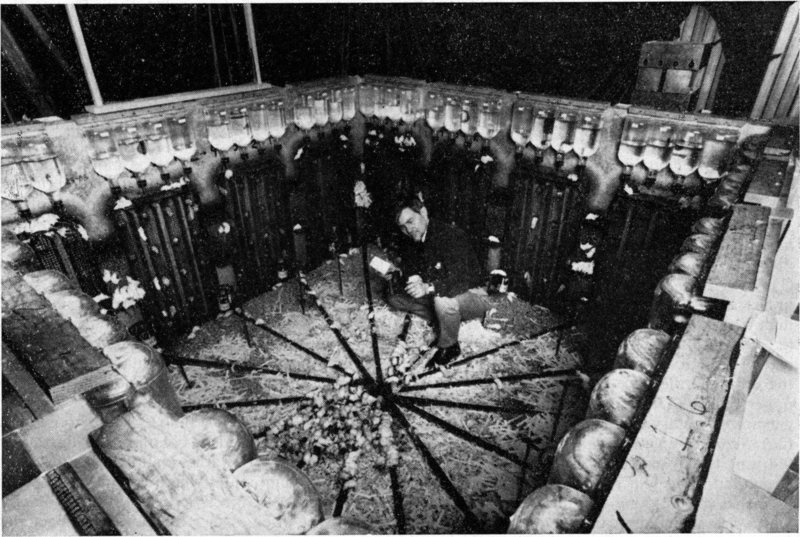 Calhoun inside Universe 25, his biggest, baddest mouse utopia. Photo: Yoichi R. Okamoto/Public Domain .
.
.
Click the link below for the article:
.
__________________________________________
December 11, 2021
Mohenjo
Business, Food For Thought, Human Interest, Science, Technical
amazon, business, Business News, current-events, Future, Hotels, human-rights, medicine, mental-health, research, Science, Science News, technology, Technology News, travel, vacation

Click the link below the picture
.
Think your area has had more rain than usual? You’re probably right.
Think your area has had less rain than usual? Again, you’re probably right.
For our climate change investigation out this week, called Downpour, USA TODAY reporters used 126 years of monthly data from the National Oceanic and Atmospheric Administration to analyze average annual precipitation at 344 climate divisions. They used daily precipitation data from weather stations to measure the change in frequency of extreme rain events across the U.S. from 1951-2020.
“We were hearing a lot about extreme rainfall, stories of flooding, people with sewer backups, people flooded out of their homes, and we wanted to know, is this happening everywhere?” said Dinah Pulver, one of the project’s lead reporters. “How many people, how many places, are contending with this kind of rainfall?
We found more than half of the nation’s 344 climate divisions had their wettest periods on record since 2018. We calculated the same rolling averages for states.
“East of the Rockies, more rain is falling, and it’s coming in more intense bursts,” our report finds. “In the West, people are waiting longer to see any rain at all.
“Taken together, the reporting reveals a stunning shift in the way precipitation falls in America.”
.

.
.
Click the link below for the article:
.
__________________________________________
December 11, 2021
Mohenjo
Business, Food For Thought, Human Interest, Political, Science, Technical
amazon, business, Business News, current-events, Future, Hotels, human-rights, medicine, mental-health, research, Science, Science News, technology, Technology News, travel, vacation

Click the link below the picture
.
On a cold, dry Tuesday in December 1940, Rita Levi-Montalcini rode a train from the station near her home in Turin, Italy, for 80 miles to Milan to buy a microscope. Milan had not seen bombings for months. On her return to the Turin train station, two police officers stopped her and demanded to see inside the cake-sized box that she was carrying. With wartime food rationing, panettone cakes were only available illegally. The officers found her new microscope instead. They let her go. Just a week after her trip, British bombers hit Milan.
Levi-Montalcini was a 31-year-old scientist who had been working at the University of Turin. Despite her father’s disapproval, she had trained in medicine, inspired by seeing a nanny succumb to cancer. In 1938, the Italian dictator Mussolini banned Jews from positions in universities. Levi-Montalcini was not raised in the Jewish religion, but her Jewish ancestry would have been evident from her surname. Mussolini’s ban had pushed Levi-Montalcini to leave Italy for Belgium in 1939, where she did research using fertilized chicken eggs as a source of material for her research topic: the developing nervous systems of vertebrate embryos. Levi-Montalcini also spent time with her older sister Nina, whose family was in Belgium as well. Rita wrote home to her mother of an “infinite desire to embrace you again,” but research at the university in Turin would have been impossible had she returned home. Her passion for research alternated with her frustration with challenges. When Hitler invaded Poland in September, launching war, her worst frustrations were realized. The “whole world was in danger,” Levi-Montalcini later wrote. In December 1939, she returned to Italy.
.
 .
.
.
Click the link below for article:
.
__________________________________________
December 11, 2021
Mohenjo
Food For Thought, Human Interest, Medical, missed News, Political, Science, sports, Technical
amazon, business, Business News, current-events, Future, Hotels, human-rights, medicine, mental-health, research, Science, Science News, technology, Technology News, travel, vacation

.
News You might have missed!
Use your browser or smartphone back arrow (<-) to return to this table for your next selection.
.
__________________________________________
December 10, 2021
Mohenjo
Business, Food For Thought, Human Interest, Science, Technical
amazon, business, Business News, current-events, Future, Hotels, human-rights, medicine, mental-health, research, Science, Science News, technology, Technology News, travel, vacation

Click the link below the picture
.
Leonard’s Comet, expected to be the brightest comet this year, should be the next sky-sighting on your bucket list. The moon has been keeping this comet washed out as it is much brighter than the space rock. There have been conflicting reports on social media over the past few days that the comet might have even disintegrated. Fear not: Leonard’s Comet is still there and was bright enough to be seen on cameras and through telescopes on Thursday, and it should remain bright enough to be seen over the next few weeks. When the solar system formed, not every piece of rock and ice made its way into a planet. These leftover pieces became comets, which now orbit the sun. The celestial rocks range from just a few miles to tens of miles wide. When one of the floating rocks gets close to the sun, it heats up enough that it spews gas and dust, leaving behind that familiar tail in the sky.
What is Leonard’s Comet?
Astronomer Gregory J. Leonard discovered this comet in early 2021, later named for him, at the Mount Lemmon Observatory in the Santa Catalina Mountains, northeast of Tucson, Arizona. When Leonard spotted the comet, it was extremely dim, out near Jupiter, and was just starting to release it’s heated up gas and dust. Leonard’s comet has spent roughly 35,000 years getting closer to our sun and has finally made its way closer to Earth’s neck of the universe. It’s expected to be the brightest comet of the year.
.
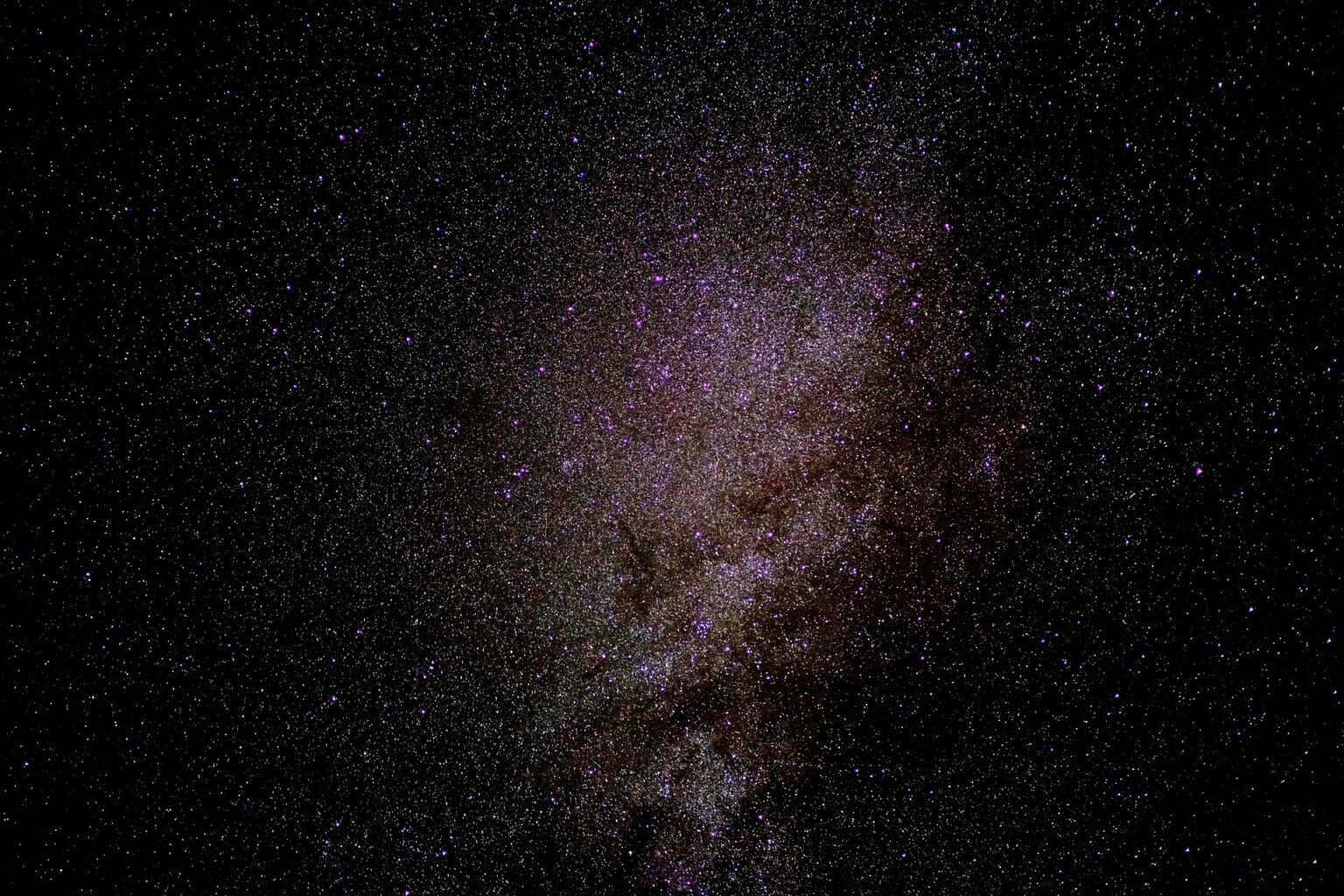 Leonard’s comet, not pictured, has spent roughly 35,000 years getting closer to our sun and has finally made its way closer to Earth’s neck of the universe. It’s expected to be the brightest comet of the year. Hans/Pixabay
.
.
Click the link below for the article:
.
__________________________________________
December 10, 2021
Mohenjo
Business, Food For Thought, Human Interest, Science, Technical
amazon, business, Business News, current-events, Future, Hotels, human-rights, medicine, mental-health, research, Science, Science News, technology, Technology News, travel, vacation

Click the link below the picture
.
About 5,300 years ago, an ancient civilization emerged in the east of China, building a brilliant city the likes of which had perhaps never been seen before in all of Asia – nor possibly even the whole world.
The surviving traces of the Liangzhu culture, which rose up along the banks of the Yangtze River Delta in China’s east, are a testament to what this unique Neolithic society was capable of in the final stretches of the Stone Age.
The archaeological ruins of Liangzhu City demonstrate numerous signs of social, cultural, and technological advancements for the period, especially in agriculture and aquaculture.
Sophisticated architectural features, meanwhile – including clever hydraulic engineering that enabled canals, dams, and water reservoirs – led to allusions of Liangzhu being a Neolithic “Venice of the East”.
None of these marvels would last, however.
.
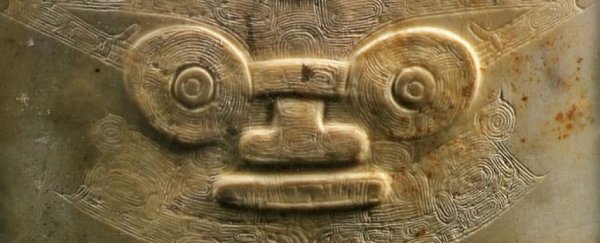 Detail from ancient Liangzhu jade carving. (Liangzhu Archeology Ruins Management Bureau)
.
.
Click the link below for the article:
.
__________________________________________
December 10, 2021
Mohenjo
Arts, Crime, Food For Thought, Human Interest, Medical, missed News, Political, Science, sports, Technical
amazon, business, Business News, current-events, Future, Hotels, human-rights, medicine, mental-health, research, Science, Science News, technology, Technology News, travel, vacation
.
News You might have missed!
Use your browser or smartphone back arrow (<-) to return to this table for your next selection.
.
__________________________________________
December 9, 2021
Mohenjo
Business, Food For Thought, Human Interest, Science, Technical
amazon, business, Business News, current-events, Future, Hotels, human-rights, medicine, mental-health, research, Science, Science News, technology, Technology News, travel, vacation

Click the link below the picture
.
On Sunday morning, Dec. 7, 1941, Mess Attendant 2nd Class Jesus Garcia, stationed aboard the USS Oklahoma, was preparing to go to mass.
Just before 8 a.m., Japanese dive bombers launched their surprise attack on Pearl Harbor and the battleship, crippled by torpedoes, began to capsize. Some crew members jumped into a sea of burning oil to escape or crawled across mooring lines to safety.
In the ensuing hours, rescuers freed others trapped inside by drilling through the hull and hatches. But roughly half the crew of 864 men were entombed, some of the first American casualties of World War II. Among them was Garcia, 21, who had joined the Navy on the U.S. territory of Guam.
It took almost 80 years, but on Oct. 6, Garcia completed his journey.
.

.
.
Click the link below for the article:
.
__________________________________________
December 9, 2021
Mohenjo
Business, Food For Thought, Human Interest, Science, Technical
amazon, business, Business News, current-events, Future, Hotels, human-rights, medicine, mental-health, research, Science, Science News, technology, Technology News, travel, vacation

Click the link below the picture
.
When I first adopted Lucas nine years ago from a cat rescue organization in Washington, D.C., his name was Puck. “Because he’s mischievous,” his foster mother said. Although we changed the name, her analysis proved correct. Unlike his brother Tip, whom I also adopted, a gray cat with white paws and an Eeyore-ish dour doofy sweetness, Lucas was from the start a fierce black fireball, a menace to stray toes or blanket fringes or loose items on tabletops. He was my alarm clock in the morning with his habit of knocking my hairbrush, deodorant, and earrings box off my bureau until I got up to feed him.
Then, almost four years ago, my husband and I had a child. Lucas, no longer the most important small creature in the apartment, retreated to the top shelf of his cat tree, where he would lie all day, staring morosely over the edge. When he did want attention, his solicitations became aggressive. Instead of waiting until 7 a.m. to start knocking things off of the bureau, he started hopping up there at 4 a.m. We closed the bedroom door and were still woken up at 4 every day by Lucas rattling the doorknob or hurling the weight of his 13-pound body against it. At mealtimes, he would gobble down his food and then shove Tip out of the way to eat Tip’s food. He started marking the carpets in our living room and my son’s room, and his play with Tip turned more violent too.
.
 Illustration by Jackie Ferrentino.
.
.
Click the link below for the article:
.
__________________________________________
Older Entries
Newer Entries

