>>>Let Us Act On The Truths Written In The Document This Time Around!
Napoleon Sarony, “The Declaration of Independence,” 1843–1853. Harry T. Peters, “America on Stone.” Lithography Collection. Smithsonian’s National Museum of American History
NASA is lighting the cosmos in red, white and blue in honor of the 250th birthday of the United States—and the show even comes with sound.
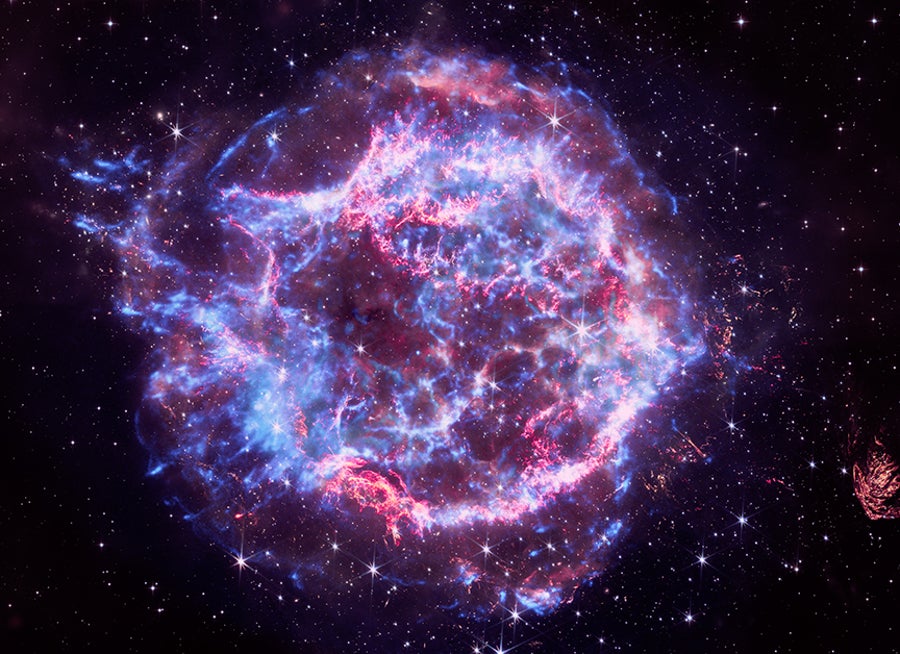
The imagery shows the supernova remnant Cassiopeia A, the dusty nebula NGC 3603, the spiral galaxy Messier 94, and the galaxy cluster ZwCl 0024+1652. Data from the Hubble Space Telescope, the James Webb Space Telescope, the Chandra X-ray Observatory, and ground-based telescopes is portrayed in a patriotic color scheme.
Making this cosmic fireworks display not only visual, but auditory, optical data from three of the images was matched with the sounds of different instruments in a process called sonification.
Cassiopeia A, the only silent image of the new July 4 series, is a supernova remnant 11,000 light-years from Earth. It’s a true cosmic firecracker, a blown-apart star with a blast wave still visible in X-ray emissions. Here, that explosion is shown in blue from Chandra’s observations. Red and white infrared data from the James Webb space telescope shows the expanding stellar material from the explosion in red and white.
Meanwhile, the nebula NGC 3603 looks like a chrysanthemum firework burst in bright red. This star-forming region sits 20,000 light-years away from Earth. NASA scientists sonified the image of NGC 3603 by assigning different elements of the image to a sound. For example, neutron stars and black holes register as piano notes, while Hubble optical imagery becomes the gentle strum of an acoustic guitar. The background hum comes from X-ray emissions detected by Chandra.
In the image of Messier 94, a spiral galaxy that’s also known as NGC 4736, Chandra’s X-ray data becomes a whistling wind while dense features such as neutron stars and stellar-mass black holes ring in crystalline tones from a glass marimba. Piano notes ring out to represent stars and far-off galaxies. This stunning galaxy is 16 million light-years away from Earth, but is so bright that it can be spotted with a good commercial telescope (although not in red, white, and blue, as seen here).
Messier 94’s distance is nothing compared to the trip it would take to get to galaxy cluster ZwCl 0024+1652, which is 5 thousand million light-years from our solar system. This galaxy cluster is known for its unique dark-matter structure, which formed in a collision between two separate galaxy clusters. While dark matter structures often follow the contours of visible matter such as gas and stars, the ring of dark matter at ZwCl 0024+1652 stands apart. Here, it’s seen in Hubble data in brilliant blue. A synthesized sci-fi sound highlights the oddball nature of ZwCl 0024+1652, with the music peaking at the dark-matter ring and again at the cluster’s core of superheated gas. Piano notes highlight background galaxies, while background stars ping as notes on a glockenspiel.NASA’s sonification program began in 2020 to translate astronomical data into frequencies that can be heard by the human ear. It’s part of an attempt to bring outreach to blind and low-vision individuals, but also offers sighted people a chance to explore the universe with a new sense. There’s even a tool allowing anyone to convert space visuals into sound, creating their own song of the cosmos.
.
In Cassiopeia A, X-rays from NASA’s Chandra X-ray Observatory are shown along with an infrared image from NASA’s James Webb Space Telescope. X-ray: NASA/CXC/SAO; IR: NASA/ESA/CSA/STScI; Image Processing: NASA/CXC/SAO/L. Frattare and K. Arcand
Ask most people who they think Indigenous peoples are, and they will most likely say something like “they are natives who lived in America.” But who are they, and how is that determination made? These are questions with no simple or easy answers and the source of ongoing conflict in Indigenous communities, as well as in the halls of Congress and other American government institutions.
The Definition of Indigenous
Dictionary.com defines indigenous as:
“Originating in and characteristic of a particular region or country; native.”
It pertains to plants, animals, and people. A person (or animal or plant) can be born in a region or country, but not be indigenous to it if his or her ancestors did not originate there.
The United Nations Permanent Forum on Indigenous Issues refers to Indigenous peoples as groups who:
Self-identify as Indigenous at the individual level and are accepted by the community as their member.
Have historical continuity with pre-colonial or pre-settler societies.
Have a strong link to territories and surrounding natural resources.
Exhibit distinct social, economic or political systems.
Have a distinct language, culture, and beliefs.
Form non-dominant groups of society.
Resolve to maintain and reproduce their ancestral environments and systems as distinctive peoples and communities.
The term “Indigenous” is often referred to in an international and political sense, but more and more people who self-identify as Native American are adopting the term to describe their “native-ness,” sometimes called their “indigeneity.” While the United Nations recognizes self-identity as one marker of indigeneity, in the United States, this alone is not enough to be considered Native American for official political recognition.
Federal Recognition
When the first European settlers came to the shores of what local tribes called “Turtle Island,” there were thousands of communities and bands of Indigenous peoples. Their numbers were dramatically reduced due to foreign diseases, wars, and other policies of the United States government; many of them that remained formed official relationships with the U.S. through treaties and other mechanisms.
Others continued to exist, but the U.S. refused to recognize them. Today, the United States unilaterally decides who (what tribes) it forms official relationships with through the process of federal recognition. There are currently approximately 566 federally recognized tribes; there are some tribes who have state recognition but no federal recognition, and at any given time there are hundreds of tribes still vying for federal recognition.
Tribal Membership
Federal law affirms that tribes have the authority to determine their membership. They can use whatever means they like to decide who to grant membership to. According to Indigenous scholar Eva Marie Garroutte in her book “Real Indians: Identity and the Survival of Native America,” approximately two-thirds of tribes rely on the blood quantum system, which determines belonging based on the concept of race by measuring how close one is to a “full-blood” Indigenous ancestor. For example, many have a minimum requirement of ¼ or ½ degree of Indigenous blood for tribal membership. Other tribes rely on a system of proof of lineal descent.
Increasingly, the blood quantum system is criticized as being an inadequate and problematic way of determining tribal membership (and thus Indigenous identity). Because Indigenous peoples out-marry more than any other group of Americans, the determination of who is Indigenous based on racial standards will result in what some scholars call “statistical genocide.” They argue that being Indigenous is about more than racial measurements; it is more about identity-based on kinship systems and cultural competence. They also argue that blood quantum was a system imposed on them by the American government and not a method Indigenous peoples themselves used to determine belonging, so abandoning blood quantum would represent a return to traditional ways of inclusion.
Even with tribes’ ability to determine their membership, determining who is legally defined as an Indigenous person is still not clear cut. Garroutte notes that there are no less than 33 different legal definitions. This means that a person can be defined as Indigenous for one purpose but not another.
Indigenous Hawaiians
In the legal sense, Indigenous Hawaiians are not considered Native Americans, but they are nonetheless Indigenous peoples in the United States (their name for themselves is Kanaka Maoli). The illegal overthrow of the Hawaiian monarchy in 1893 left in its wake considerable conflict among the Indigenous Hawaiian population, and the Hawaiian sovereignty movement, which began in the 1970s, is less than cohesive in terms of what it considers the best approach to justice. The Akaka Bill (which has experienced several incarnations in Congress for over 10 years) proposes to give Indigenous people of Hawaiian descent the same standing as Native Americans, effectively turning them into Native Americans in a legal sense by subjecting them to the same system of law.
However, activists and scholars who study Hawaiian indigeneity argue that this is an inappropriate approach for Indigenous Hawaiians because their histories differ significantly from those who identify as Native Americans. They also argue that the bill failed to consult Indigenous Hawaiians about their wishes adequately.
.
Native Americans participate in the inter tribal dance during the 7th Annual Indiana Traditional Powwow, April 7, 2018, at Indiana University in Bloomington, Indiana.Credit: Jeremy Hogan/Getty Images
Celebrations for the 250th anniversary of the United States’ independence kicked into full gear on Saturday, with parades, historical re-enactments and music at events in small towns and big cities from coast-to-coast.
Though it was muggy and miserably hot in many parts of the country, the day was marked with the usual American exuberance, with fighter jets, tall ships, parachutists and flag-festooned pick-up trucks.
The U.S. Secret Service said in a statement that it has suspended checkpoint operations on the National Mall because of rapidly deteriorating weather conditions. People already within the secure area are being directed to shelter locations by Secret Service agents and the U.S. Park Police, the statement said. “No one is being admitted at this time,” it said. “This action was taken solely in the interest of public safety, and we have no estimate for when screening may resume.”Fearing severe weather, federal and local officials are scrambling to safely evacuate thousands of people from the National Mall and into nearby Smithsonian museums and federal buildings, according to multiple officials.
It is a chaotic scene on the National Mall, as several hundred people refuse to leave despite an order to evacuate because of severe storms approaching. Some are even arguing with Secret Service agents. An officer is sternly repeating the evacuation order over a bullhorn, and the crowd is booing. Many have begun chanting “U.S.A., U.S.A.” One man blamed the situation on “liberals in the weather service,” adding, “I think this is baloney.”
The air show at the National Mall has not stopped amid evacuation orders. Air Force One just flew over, followed by two B-2 stealth bombers.
Crowds were standing still and cheering as they passed. Now, Secret Service officers are making their way down the mall, yelling at people to make their way out.
“A lot of my family are veterans, and many lost their lives for this country. I’m trying to celebrate this 250 like they’re still here.”
.
There is plenty of of confusion on Constitution Avenue and 9th Street here in Washington, D.C. because of the threat of inclement weather: Just after 7 p.m., law enforcement officials on hand forcefully — and without further explanation — began imploring people to walk north toward Pennsylvania Avenue away from the National Mall, where scores have been waiting in the hot sun all afternoon for the president’s speech and a promised fireworks show. Families searched for answers as children wondered aloud if the fireworks had been cancelled.
.
Celebrations for the 250th anniversary of the United States
It used to be easy to tell when a face was generated with artificial intelligence (AI). Whether it was a distinctive uncanny sheen, impossibly smooth skin, eyes that didn’t quite make sense, or a conspicuous third ear, older AI models’ facsimiles of human faces were simple to spot and easy to dismiss. That’s just not true anymore.
Now, AI image generators can produce portraits so convincing that even careful observers struggle to distinguish fact from figment. That’s why apps such as Zoom and Tinder allow their users to submit biometric identification, such as retinal scans, to help prove that a real person exists behind a profile picture. But a new study suggests you can train your brain to get better at spotting fakes.
Past attempts to teach people to spot AI faces have focused on training viewers to look for visual glitches or statistical fingerprints left behind by a particular image generator, such as a wonky ear or an eye with two pupils. The problem is that those clues can disappear with a software update or by simply using a different prompt. “The AI is getting too good,” said Amy Dawel, an associate professor at Australian National University and the lead author on the study, in a press release. “And fraudsters may avoid using pictures with obvious flaws anyway.” The result is an endless technological arms race humanity seems destined to lose.
Instead, the researchers taught the participants how to recognize broader patterns in how AI systems generate images. “Our training directs people’s attention to global qualities that differ between AI and human faces,” Dawel said.
Current AI image generators are themselves trained on datasets composed of millions of images. When prompted to generate a face, they don’t copy specific faces, but instead compose a new face that is based in part on the mathematical patterns shared across the faces in that data set—these allow the AI to construct a “typical” human face.
The result is that AI-generated faces often drift toward statistical averages. They’re not overly unrealistic, so much as a little too balanced, a little too generic, and a little too conventional. Individually, none of these traits are necessarily suspicious. But together, the whole is blander than the sum of its parts—a subtle banality humans can often implicitly sense.
“Even relatively short training sessions helped participants improve their accuracy,” says Tanya George, a student researcher at Australian National University who trained the study’s participants. “Research like this can help people navigate increasingly complex online environments.”
Compared with real faces, AI-generated faces tend to be more symmetrical, more proportional, and more attractive—while also being less expressive, less distinctive and significantly less memorable. When the researchers trained participants to look for these six markers instead of fleeting artifacts like malformed ears or mismatched jewelry, their ability to spot the AI face almost doubled.
In other words, AI gravitates to the center. Real people do not. Our faces are shaped by countless small deviations from the norm—our subtle asymmetries, distinctive features, and expressions make us memorable. Those imperfections are not flaws. They are our signature.
.
SEBASTIAN KAULITZKI/SCIENCE PHOTO LIBRARY via Getty Images
Jessica Pettway / Food Styling by Micah Morton / Prop Styling by Paola Andrea
Cookbook author Nicole A. Taylor takes inspiration from a perfectly grilled watermelon she had in Texas. The juices of the watermelon caramelize beautifully on the grill, which are enhanced by a spice blend of chamomile, cocoa, fennel, and more.
Click the link below the picture!
.
Credit: Food & Wine / Photo by Robby Lozano / Food Styling by Chelsea Zimmer / Prop Styling by Phoebe Hauser
.
.
Click the link below for the complete article (click the link below for all recipes):
Four months before tough midterm elections, President Trump used the backdrop of Mount Rushmore one night before the nation’s 250th birthday to characterize his political opponents as “godless,” “evil” communists.
“We can only lose the midterms if we allow ourselves to lose the midterms, if we are foolish, stupid and unwise,” he said on Friday, demanding that Congress pass his so-called SAVE America Act, which would impose stricter voter ID rules that would make it harder to vote. He called for terminating the filibuster.
The larger purpose of the speech wasn’t hard to miss. He was sharpening a line of attack that the White House has started to use to head off a newly insurgent progressive wing of the Democratic Party that appears to be resonating with liberal voters.
Mr. Trump read from an apocalyptic script as the stony faces of Washington, Jefferson, Roosevelt, and Lincoln looked on. He said the word “communism” so many times, you might’ve thought the Cold War was still on.
He was not subtle. Communism, he said, “is the enemy of July 4, 1776.” He called it a bigger threat than Pearl Harbor and even 9/11. He name-checked Karl Marx.
The speech began on an upbeat note. The president painted a proud and optimistic portrait of the United States, describing it as nothing short of the greatest society in the history of civilization. The whole first half of his speech boiled down to this line: “You live in a very special place — congratulations, everybody.” The crowd ate it up.
He soon began to pivot. There were people out there who didn’t want English to be the dominant language of the United States, he warned. There were people out there who wanted to take away everyone’s guns, he warned. He promised never to let that happen.
He warned of “newcomers to our country who embrace ideas totally opposed to our way of life and our great success.”
It was not the first time he’d used this backdrop to make a speech like this. Six years ago to the day, he spoke here at the end of his first term, when he was campaigning unsuccessfully for a second. Back then, the country was in the throes of the pandemic and gripped by civil unrest after the death of George Floyd, which inspired a national debate about statues and historical figures. Mr. Trump used his speech that night to warn of a “new far-left fascism” creeping up.
He switched ideologies in his second Rushmore speech on Friday.
“Communism is the exact opposite of life, liberty and the pursuit of happiness,” he declared. “It’s death, tyranny and the pursuit of evil.”
This massive and most American of monuments made for quite the stage for this speech. This president loves a production, and he made the most of it. Military helicopters flew back and forth in front of the mountain while AC/DC and Lynyrd Skynyrd blared (“Free Bird,” naturally), followed by a B52 bomber. As the sun dipped below the horizon, big bright spotlights flashed on the fine granite faces of the four presidents, illuminating every contour that had been dynamited into shape almost a hundred years ago.
.
President Trump at Mount Rushmore in 2020. Credit…Anna Moneymaker for The New York Times
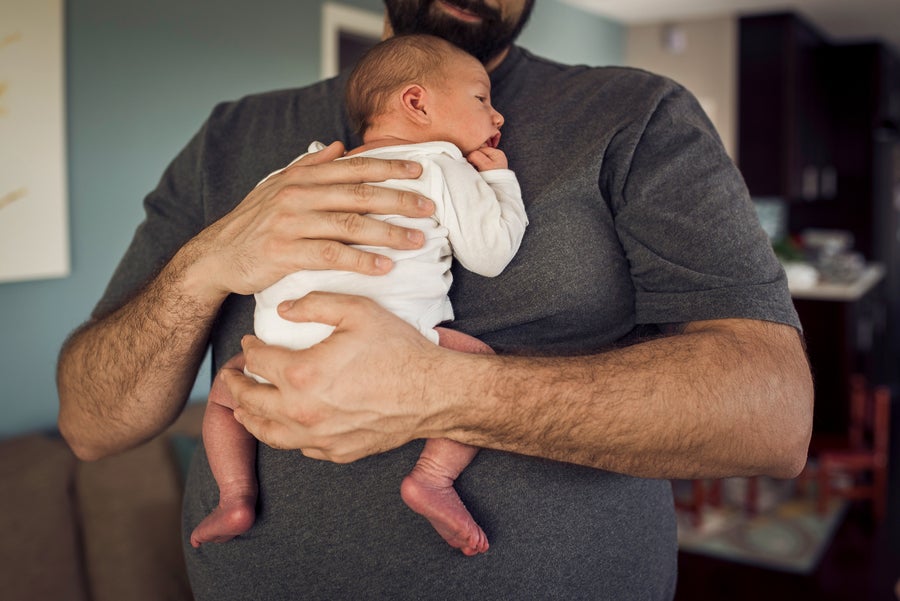
Father’s Day is an opportunity to recognize the efforts of dads everywhere. But becoming a father is more than just a lifestyle change—it alters one’s brain, too.
Scientific American spoke with Devika Bhushan, a public health physician and adjunct faculty member at Stanford University School of Medicine, who studies gender norms, about the ways in which fatherhood affects men’s brains and the mental health struggles dads face. Bhushan also served as acting surgeon general of California in 2022.
The following article is based on our conversation with Bhushan.
“Dad brain” is real
Most of the research on parental brain changes focus on those that occur during pregnancy and early motherhood. Much less attention has been given to the neurological and mental changes that occur in fatherhood, Bhushan says.
A 2014 study compared the brains of heterosexual, primary caregiver mothers, heterosexual, secondary caregiver fathers and gay primary caregiver fathers. All three groups showed brain changes in a “parental caregiving network” comprising a part of the brain’s cortex called the mentalizing network, which plays a role in visual processing and empathy, and a subcortical emotional processing network, which involves vigilance and reward processing. The mothers showed greater activation of the emotional network, whereas the heterosexual, secondary caregiver fathers had more activation of the mentalizing network. Gay, primary caregiver fathers displayed some changes in the emotional network that resembled those seen in heterosexual mothers, but they also showed some similarities to the brain changes seen in heterosexual fathers.
A more recent study in 2023 of men in Spain and California showed that they experienced reductions in gray matter after they became fathers—much like studies have shown in first-time mothers. This shrinking likely doesn’t represent a decline in brain function but rather a “pruning” of connections that could make the brain more efficient for the demands of caregiving.
Taken together, these studies suggest that at least some of the brain changes seen in new parents result from caregiving itself, not from the biological changes associated with pregnancy, birth, and breastfeeding, Bhushan notes.
Given that people of all genders experience brain changes when they become parents, perhaps it’s not surprising that, just as mothers are vulnerable to postpartum depression and anxiety, fathers, too, can have similar mental health struggles.
Fathers can get postnatal depression, too
As many as one in 10 men will experience paternal postnatal depression or anxiety. The symptoms often look different in dads—anger or sudden outbursts, irritability and substance misuse, for example. Such postnatal depression can affect not only the father’s well-being but also the mother’s, as well as their child’s development, Bhushan says.
The American Academy of Pediatrics recommends screening mothers for postpartum depression at every doctor’s visit for their infants through the first six months. Mothers are typically screened using the Edinburgh Postnatal Depression Scale, but this is not validated for use in nonbirthing parents. Men also tend to have fewer social networks than women do, so they could have less support from friends or family to help them deal with mental health struggles.
Postnatal depression and anxiety tend to peak later in fathers than in mothers—closer to three to six months after the birth of a child. This may be because most fathers in the U.S. go back to work within two weeks of having a child, whereas mothers tend to stay home longer. As a result, mothers typically bear the brunt of the caregiving burden in the earliest weeks and months, whereas fathers may take on more responsibility later, around the time many mothers go back to work.
In the U.S., fathers have taken on an increasingly larger share of childcare responsibilities in recent years—and with it, an increased share of the stresses and burdens. Bhushan says maternal support systems should be restructured to parental systems that cater to both mothers and fathers.
After a day defined by scrutiny of the president’s finances, Donald Trump next heads to Mount Rushmore on Friday for another round of 250th-anniversary celebrations.
In the Black Hills, South Dakota Gov. Larry Rhoden will welcome the president, who will also be joined by Interior Secretary Doug Burgum.
Together, they will take in a fireworks show above the iconic landmark, an event environmentalists fear could risk sparking wildfires.
Throughout Thursday, Trump spent the day defending his ethics record, after financial disclosures showed he earned more than $1 billion from his family’s crypto businesses last year.
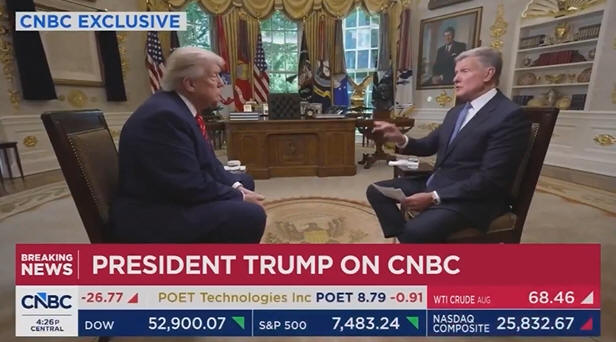
The Republican told CNBC he has been uninvolved with the effort, as well as his other businesses, since taking office.
“I could know about it,” Trump said. “I didn’t. There’s nothing illegal.”
Democratic lawmakers, meanwhile, are accusing Trump of capitalizing on America’s 250th anniversary by misleading donors into giving money to Freedom 250, an administration-backed planning group, rather than America250, the congressionally-backed effort to organize the historic celebrations.
“Donald Trump hijacked what was supposed to be a unifying, non-political celebration of our country’s 250th birthday and made it all about him,” Democrats on the House Natural Resources Committee said in a report released Thursday.
Key Points
Donors were misled into giving to a Trump-backed group instead of bipartisan America 250 team: report
Trump claims he didn’t know about crypto moves, which made him more than $1 billion last year
Donald Trump calls for gas price drop for Fourth of July weekend
Hegseth honors members of National Guard in DC to the sound of protesters
President ‘livid’ over crowd size at National Mall state fair
US economy added 57,000 jobs in June – underperforming expectations
Trump claims US achieved ‘regime change’ in Iran
ICYMI: Trump allegedly has staff furiously deleting social media photos about failing State Fair
President Donald Trump became so upset over photos showing less-than-enthusiastic turnout at his Great American State Fair kickoff speech that White House staff scrambled to delete the images from social media after he melted down at them.
The president was “livid” over an aerial image of his MAGA rally-style remarks to mark the opening of the shambolic event last week, which NBC News later reported as having drawn “nowhere near” the 45,000-strong crowd he boasted about on Truth Social, CNN reported.
The network reported that his angry reaction prompted his own staff to scrub photos of the small crowds from official and personal social media channels in a vain attempt to memory-hole the poor turnout.
Trump had turned the launch event for his Freedom 250 project into a celebration of himself as much as America’s 250th birthday after a group of artists booked to perform backed out because they’d been led to believe it had been organized by America 250, the bipartisan, Congressionally chartered group celebrating America’s 250th anniversary that has been sidelined by the MAGA-aligned Freedom 250 organization.
President Trump’s $2.2 billion in personal earnings during his presidency has been met largely with silence from his MAGA base, which has been increasingly willing to revolt against policies they view as an abandonment of his promises to put everyday Americans first.
Far-right members of Congress, prominent media pundits and grass-roots activists have criticized Mr. Trump’s war with Iran and openly broken ranks to demand the release of the Jeffrey Epstein files. They have accused him of prioritizing his own interests over the needs of the voters who elected him to office.
But few far-right voices aligned with Mr. Trump have criticized him over the scale of his personal haul, reported this week, or the conflict inherent in his status as a major cryptocurrency industry operator and its top policymaker.
Some described his earnings as a validation of the business acumen they have long admired in him.
“Nobody who voted for Donald Trump — a guy with skyscrapers with his name on it, with a plane that has his name on it — is suspect of him making money,” Joe Borelli, the former New York City Council Republican leader and managing director of Chartwell Strategy Group, a lobbying firm, told CNN. “He made his whole career talking about how much money he makes.”
Mr. Trump earned about $1.4 billion from his family’s cryptocurrency businesses, new mandatory financial disclosures show. A significant portion of that came in 2025, when an investment firm tied to the United Arab Emirates bought nearly half of the Trump family’s main crypto company, World Liberty Financial. He also collected hundreds of millions of dollars from sales of his $TRUMP memecoin and World Liberty’s sale of its own digital tokens.
Mr. Trump both benefits from the crypto industry and dictates policy that shapes it. He has insisted he does not direct the people who run his private enterprises.
Kelley Koch, chair of an Iowa group called MAGA Nation, said Mr. Trump’s earnings were proof of his ability to navigate the complicated new frontier of digital finance.
“We live in a free country — capitalism,” Ms. Koch said. “He’s extremely smart. He’s a businessman. My kids follow Bitcoin, Polymarket, Kalshi, all of this new tech stuff. If you don’t, you’re going to be left behind.”
Democrats, however, seized on the financial disclosures to start a campaign accusing Mr. Trump of corruption, looking to draw contrast between his wealth and the economic reality experienced by most Americans.
“Donald Trump stands with the billionaire class,” Representative Haley Stevens of Michigan, who is in a competitive Democratic Senate primary, said on X. “He has no idea what it’s like to live on a Social Security check, and he’s shown he doesn’t care.”
Gov. Gavin Newsom of California, widely thought to be a 2028 presidential contender, wrote on social media that “Donald Trump is the most corrupt president in America history.”
While most Republican officials remained silent on the topic on Thursday, Republicans who have become alienated from Mr. Trump said the revelations from his financial gains validated their belief that he had abandoned his populist platform.
Former Representative Marjorie Taylor Greene, who has formally broken with the Republican Party, said Mr. Trump’s personal enrichment was further proof that MAGA voters needed to abandon the G.O.P.
“The GOP is a disaster,” she wrote on X. “The Republican Party hijacked MAGA, pretended to be America First and MAHA, and then sold us all out. Then Trump rubber-stamped the entire con job while taking checks from literally everyone.”
Ms. Koch said the president’s personal enrichment had not been a topic of conversation among her friends in Iowa, who love Mr. Trump but are also willing to disagree with him. Most recently, they have been frustrated by his decision to sign an executive order that protects production of glyphosate, a pesticide that they believe is causing soaring cancer rates in the state.
But Mr. Trump’s billions of dollars in profit did not inspire any outrage — especially not during this time of the year, she said.
“Let’s just be honest, people are checked out right now,” Ms. Koch said. “It’s the Fourth; schools are out, and it’s hot here in Iowa.”
U.S. Politics: News and Analysis
Here’s a look at the political landscape across America.
Trans Athletes Ruling: While Republicans celebrated the Supreme Court ruling, many Democrats stayed quiet on an issue that had proved divisive in the last election.
Colorado Governor Fires Officials: Gov. Jared Polis fired two members of his clemency board after they spoke out against his decision to commute the sentence of Tina Peters, who tampered with voting machines in an attempt to show that the 2020 election had been rigged against President Trump.
Prosecuting Women Who Get Abortions: More abortions are happening now than when Roe v. Wade fell and a growing number of conservative leaders are starting to argue that the only way to stop women from ending their pregnancies could be to arrest them.
Gay Marriage Is Dividing Republicans, Again: A look at the backlash to same-sex marriage — its strength, seriousness and the reasons behind it.
Rise of Democratic Socialists: Harnessing generational frustration over affordability, left-wing politicians are leading New York City and Seattle, and are knocking on the door in Los Angeles and Washington.
.
Some supporters of President Trump described his earnings as a validation of the business acumen they have long admired in him. Credit…Pete Marovich for The New York Times
In the world, human beings are facing various problems. People who are full of greed, anger, and ignorance are seen to be fighting with each other in words and deeds. As the fighting continues, various problems such as civil wars, wars of aggression, and wars of aggression are occurring. As world peace is being destroyed, humans are facing unbearable problems. Innocent children and women are not getting the rights they deserve and deserve. I can't think of one thing every time. What is it? The United Nations. If we look at the responsibilities and duties of the United Nations, I think it is not suitable for solving the problems that are happening in the world today. In fact, the United Nations and the World Security Council, such an organization must rule the world, must be able to give orders, and must have various ways to obey orders. There must be no organization that can influence more than that organization. There should be experts from each country. They can even dominate the superpowers like the US, China, and Britain. Only then will global peace be achieved quickly. Now, if a country with power develops more militarily, economically, or socially than its own country, then powerful countries will jealously seek out enemies and wage war. Or they will attack with fighter jets. In this, innocent people are losing their lives. No one understands the value of a life. You should think about how to achieve global peace by controlling these. If the US continues to be the permanent president of the UN, world peace will never be achieved. If you think carefully, no one sees that they are working for the common good, but for their own benefit, for the benefit of their own country. The permanent president of the UN and the Security Council has rejected this, As a young Rohingya, I have come to realize that only by electing the president and secretary from among the countries in the world through a secret ballot system and governing the world fairly can we achieve global peace. The United Nations and the Security Council are organizations in which any country must govern, give orders, and make them obey their orders. For example, only when a defendant is tried in court can we hold the leaders of the countries in check and control them, can we achieve global peace smoothly. Otherwise, it will not be easy for powerful countries to use various excuses to end this war every year, every year, for the benefit of themselves and their countries. No country's leaders pay any attention to the words of the United Nations and the Security Council. If we look at it in practice, look at the Rohingya issue. Myanmar is a small country. Even that country has been under siege for 8 years. What action can be taken? Why is the UN and the Security Council Powerless? Without such Power, how can the organization bring about global peace? Everyone should think about it. Whether there is a veto or a strong one, all countries in the world can only achieve global peace if they are subject to the UN and the Security Council. Seek peace in the quiet embrace of nature. Peace is an indispensable need of the human race. It is not as if one person can kill another person, and it is as if one country can attack another country, but instead of trying to build peace, we must try to destroy the peace now, and the world is getting hotter and is on the verge of collapse. I especially appeal to all the world experts to urgently try to bring about peace in all parts of the world. Mr, Noor Muhamed Arkhan Rohingya Youth Myanmar
Film and Writing Festival for Comedy. Showcasing best of comedy short films at the FEEDBACK Film Festival. Plus, showcasing best of comedy novels, short stories, poems, screenplays (TV, short, feature) at the festival performed by professional actors.
 Be Safe
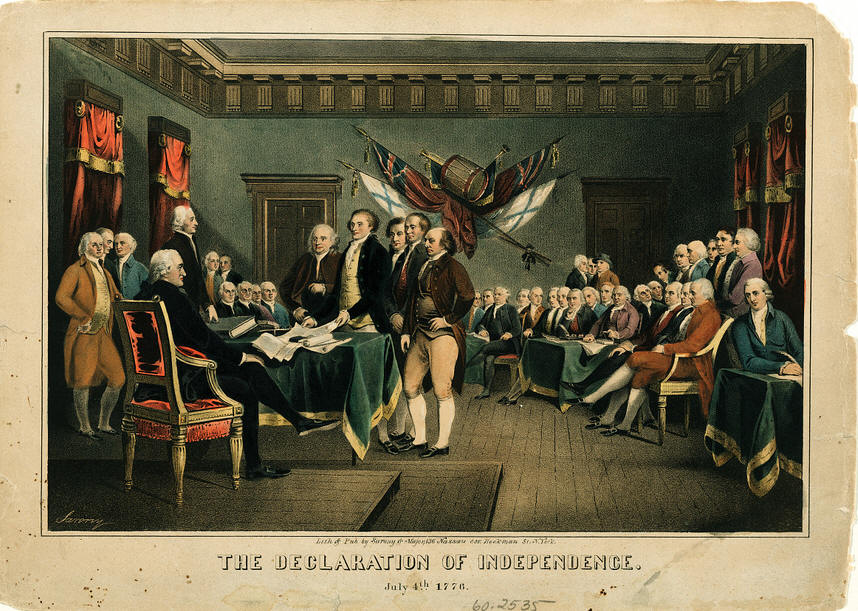 Napoleon Sarony, “The Declaration of Independence,” 1843–1853. Harry T. Peters, “America on Stone.” Lithography Collection. Smithsonian’s National Museum of American History

:max_bytes(150000):strip_icc()/GettyImages-946961392-5c77ec8746e0fb0001a5efc1.jpg)

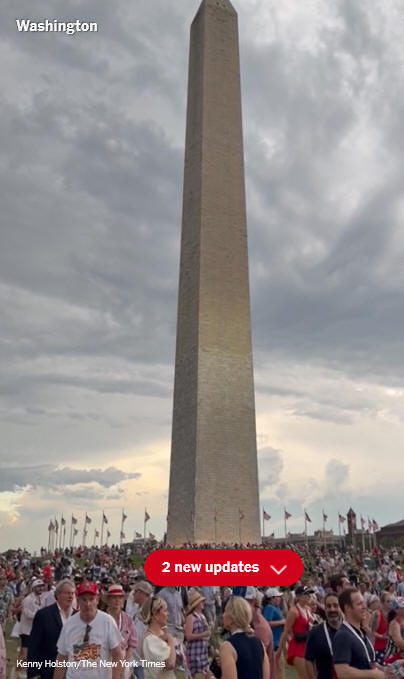 Celebrations for the 250th anniversary of the United States
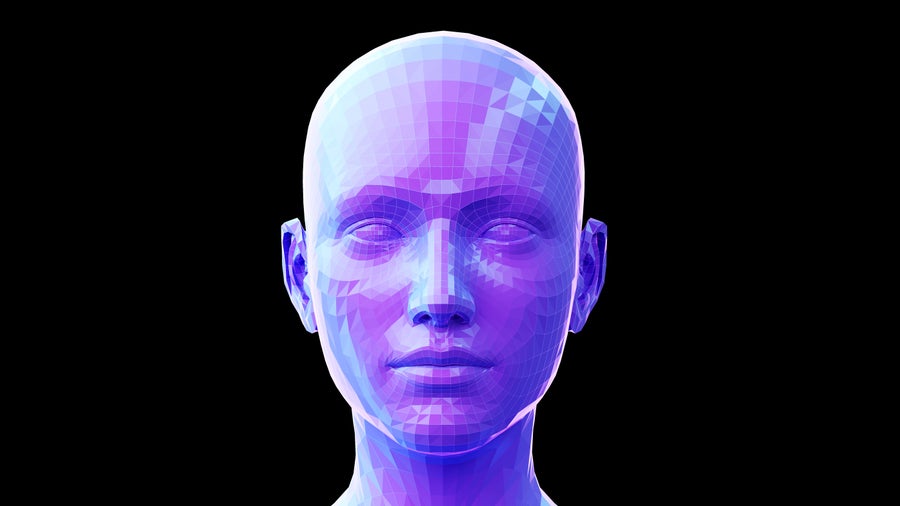 SEBASTIAN KAULITZKI/SCIENCE PHOTO LIBRARY via Getty Images
:max_bytes(150000):strip_icc()/grilled-watermelon-with-chamomile-cocoa-salt-FT-RECIPE0621-1364bd3c64644897913e8be44246f37e.jpg)
:max_bytes(150000):strip_icc()/Hawaiian-Hot-Dog-FT-RECIPE0724-8b45189237284cf5bf8efb1e8ea9626c.jpeg)


 Cavan Images/Getty Images
 President defends massive crypto windfall

