April 25, 2022
Mohenjo
Business, Enthralling, Human Interest, Photographs
amazon, business, Business News, current-events, Future, Hotels, human-rights, medicine, mental-health, research, Science, Science News, technology, Technology News, travel, vacation

Click the link below the picture
.
South Africa, officially the Republic of South Africa (RSA), is the southernmost country in Africa. With over 60 million people, the country is the world’s 23rd-most populous nation and covers an area of 1,221,037 square kilometers (471,445 square miles). South Africa has three capital cities, with the executive, judicial and legislative branches of government based in Pretoria, Bloemfontein, and Cape Town respectively. The largest city is Johannesburg. About 80% of the population are Black South Africans. The remaining population consists of Africa’s largest communities of European (White South Africans), Asian (Indian South Africans and Chinese South Africans), and Multiracial (Coloured South Africans) ancestry.
South Africa is bounded to the south by 2,798 kilometers (1,739 mi) of coastline that stretch along the South Atlantic and Indian Oceans; to the north by the neighboring countries of Namibia, Botswana, and Zimbabwe; and to the east and northeast by Mozambique and Eswatini and it surrounds the enclaved country of Lesotho. It is the southernmost country on the mainland of the Old World, and the most populous country located entirely south of the equator. South Africa is a biodiversity hotspot, with a diversity of unique biomes and plant and animal life.
South Africa is a multiethnic society encompassing a wide variety of cultures, languages, and religions. Its pluralistic makeup is reflected in the constitution’s recognition of 11 official languages, the fourth-highest number in the world. According to the 2011 census, the two most spoken first languages are Zulu (22.7%) and Xhosa (16.0%). The two next ones are of European origin: Afrikaans (13.5%) developed from Dutch and serves as the first language of most Coloured and White South Africans; English (9.6%) reflects the legacy of British colonialism and is commonly used in public and commercial life. The country is one of the few in Africa never to have had a coup d’état, and regular elections have been held for almost a century. However, the vast majority of black South Africans were not enfranchised until 1994.
During the 20th century, the black majority sought to claim more rights from the dominant white minority, which played a large role in the country’s recent history and politics. The National Party imposed apartheid in 1948, institutionalizing previous racial segregation. After a long and sometimes violent struggle by the African National Congress (ANC) and other anti-apartheid activists both inside and outside the country, the repeal of discriminatory laws began in the mid-1980s. Since 1994, all ethnic and linguistic groups have held political representation in the country’s liberal democracy, which comprises a parliamentary republic and nine provinces. South Africa is often referred to as the “rainbow nation” to describe the country’s multicultural diversity, especially in the wake of apartheid.
South Africa is an upper-middle power in international affairs; it maintains significant regional influence and is a member of both the Commonwealth of Nations and G20. It is a developing country, ranking 114th on the Human Development Index. It has been classified by the World Bank as a newly industrialized country, with the second-largest economy in Africa, and the 33rd-largest in the world. South Africa also has the most UNESCO World Heritage Sites in Africa. Since the end of apartheid, government accountability and quality of life have substantially improved in South Africa. However, crime, poverty, and inequality remain widespread, with about a quarter of the population unemployed and living on less than US$1.25 a day as of 2008. Wikipedia
.
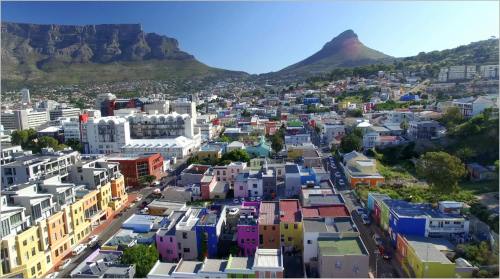 An image of Cape Town South Africa
.
.
Click the link below for images:
.
__________________________________________
April 23, 2022
Mohenjo
Business, Enthralling, Human Interest, Photographs
amazon, business, Business News, current-events, Future, Hotels, human-rights, medicine, mental-health, research, Science, Science News, technology, Technology News, travel, vacation

Click the link below the picture
.
In botany, a tree is a perennial plant with an elongated stem, or trunk, usually supporting branches and leaves. In some usages, the definition of a tree may be narrower, including only woody plants with secondary growth, plants that are usable as lumber or plants above a specified height. In wider definitions, the taller palms, tree ferns, bananas, and bamboos are also trees. Trees are not a taxonomic group but include a variety of plant species that have independently evolved a trunk and branches as a way to tower above other plants to compete for sunlight. The majority of tree species are angiosperms or hardwoods; of the rest, many are gymnosperms or softwoods. Trees tend to be long-lived, some reaching several thousand years old. Trees have been in existence for 370 million years. It is estimated that there are some three trillion mature trees in the world.
A tree typically has many secondary branches supported clear of the ground by the trunk. This trunk typically contains woody tissue for strength, and vascular tissue to carry materials from one part of the tree to another. For most trees, it is surrounded by a layer of bark which serves as a protective barrier. Below the ground, the roots branch and spread out widely; they serve to anchor the tree and extract moisture and nutrients from the soil. Above ground, the branches divide into smaller branches and shoots. The shoots typically bear leaves, which capture light energy and convert it into sugars by photosynthesis, providing the food for the tree’s growth and development.
Trees usually reproduce using seeds. Flowers and fruit may be present, but some trees, such as conifers, instead have pollen cones and seed cones. Palms, bananas, and bamboos also produce seeds, but tree ferns produce spores instead.
Trees play a significant role in reducing erosion and moderating the climate. They remove carbon dioxide from the atmosphere and store large quantities of carbon in their tissues. Trees and forests provide a habitat for many species of animals and plants. Tropical rainforests are among the most biodiverse habitats in the world. Trees provide shade and shelter, timber for construction, fuel for cooking and heating, and fruit for food as well as having many other uses. In parts of the world, forests are shrinking as trees are cleared to increase the amount of land available for agriculture. Because of their longevity and usefulness, trees have always been revered, with sacred groves in various cultures, and they play a role in many of the world’s mythologies.
Although “tree” is a term of common parlance, there is no universally recognized precise definition of what a tree is, either botanically or in common language. In its broadest sense, a tree is any plant with the general form of an elongated stem, or trunk, which supports the photosynthetic leaves or branches at some distance above the ground. Trees are also typically defined by height, with smaller plants from 0.5 to 10 m (1.6 to 32.8 ft) being called shrubs, so the minimum height of a tree is only loosely defined. Large herbaceous plants such as papaya and bananas are trees in this broad sense. Wikipedia
.
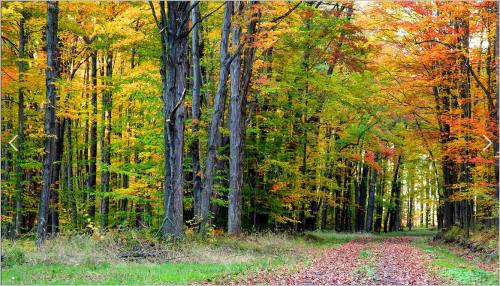 An image of Forest Trees
.
.
Click the link below images:
.
__________________________________________
April 22, 2022
Mohenjo
Business, Enthralling, Human Interest, Photographs
amazon, business, Business News, current-events, Future, Hotels, human-rights, medicine, mental-health, research, Science, Science News, technology, Technology News, travel, vacation
Click the link below the picture
.
Bangladesh officially the People’s Republic of Bangladesh is a country in South Asia. It is the eighth-most populous country in the world, with a population exceeding 163 million people in an area of either 148,460 square kilometers (57,320 sq mi) or 147,570 square kilometers (56,980 sq mi), making it one of the most densely populated countries in the world. Bangladesh shares land borders with India to the west, north, and east, and Myanmar to the southeast; to the south, it has a coastline along the Bay of Bengal. It is narrowly separated from Nepal and Bhutan by the Siliguri Corridor, and from China by 100 km of the Indian state of Sikkim in the north. Dhaka, the capital and largest city, is the nation’s economic, political, and cultural hub. Chittagong, the largest seaport, is the second-largest city. The official language is Bengali, one of the most eastern branches of the Indo-European language family.
Bangladesh forms the sovereign part of the historic and ethnolinguistic region of Bengal, which was divided during the Partition of British India in 1947. The country has a Bengali Muslim majority. Ancient Bengal was an important cultural center in the Indian subcontinent as the home of the states of Vanga, Pundra, Gangaridai, Gauda, Samatata, and Harikela. The Mauryan, Gupta, Pala, Sena, Chandra, and Deva dynasties were the last pre-Islamic rulers of Bengal. The Muslim conquest of Bengal began in 1204 when Bakhtiar Khalji overran northern Bengal and invaded Tibet. Becoming part of the Delhi Sultanate, three city-states emerged in the 14th century with much of eastern Bengal being ruled from Sonargaon. Sufi missionary leaders like Sultan Balkhi, Shah Jalal, and Shah Makhdum Rupos helped in spreading Muslim rule. The region was unified into an independent, unitary Bengal Sultanate. Under Mughal rule, eastern Bengal continued to prosper as the melting pot of Muslims in the eastern subcontinent and attracted traders from around the world. Mughal Bengal became increasingly assertive and independent under the Nawabs of Bengal in the 18th century. In 1757, the betrayal of Mir Jafar resulted in the defeat of Nawab Siraj-ud-Daulah to the British East India Company and eventual British dominance across South Asia. The Bengal Presidency grew into the largest administrative unit in British India. The creation of Eastern Bengal and Assam in 1905 set a precedent for the emergence of Bangladesh. In 1940, the first Prime Minister of Bengal supported the Lahore Resolution with the hope of creating a state in eastern South Asia. Prior to the partition of Bengal, the Prime Minister of Bengal proposed a Bengali sovereign state. A referendum and the announcement of the Radcliffe Line established the present-day territorial boundary of Bangladesh.
In 1947, East Bengal became the most populous province in the Dominion of Pakistan. It was renamed as East Pakistan with Dhaka becoming the country’s legislative capital. The Bengali Language Movement in 1952; the East Bengali legislative election, 1954; the 1958 Pakistani coup d’état; the Six point movement of 1966; and the 1970 Pakistani general election resulted in the rise of Bengali nationalism and pro-democracy movements in East Pakistan. The refusal of the Pakistani military junta to transfer power to the Awami League led by Sheikh Mujibur Rahman led to the Bangladesh Liberation War in 1971, in which the Mukti Bahini aided by India waged a successful armed revolution. The conflict saw the 1971 Bangladesh genocide and the massacre of pro-independence Bengali civilians, including intellectuals. The new state of Bangladesh became the first constitutionally secular state in South Asia in 1972. Islam was declared the state religion in 1988. In 2010, the Bangladesh Supreme Court reaffirmed secular principles in the constitution.
Bangladesh is a unitary parliamentary constitutional republic based on the Westminster system. Bengalis make up 98% of the total population of Bangladesh,[4] and the large Muslim population of Bangladesh makes it the third-largest Muslim-majority country. The country consists of eight divisions, 64 districts, and 495 subdistricts. It maintains the third-largest military in South Asia after India and Pakistan; and has been a major contributor to UN peacekeeping operations. A middle power in the Indo-Pacific, Bangladesh is an emerging economy ranked as the 33rd-largest in the world by nominal GDP, and the 29th-largest by PPP. It hosts one of the largest refugee populations in the world due to the Rohingya genocide. Bangladesh faces many challenges, including the adverse effects of climate change, poverty, illiteracy, corruption, authoritarianism, and human rights abuses. However, the poverty rate has halved since 2011 and the country is expected to become a middle-income country in this decade. Once a historic center of the muslin cloth trade, Bangladesh is now one of the world’s largest modern garment exporters. Wikipedia
.
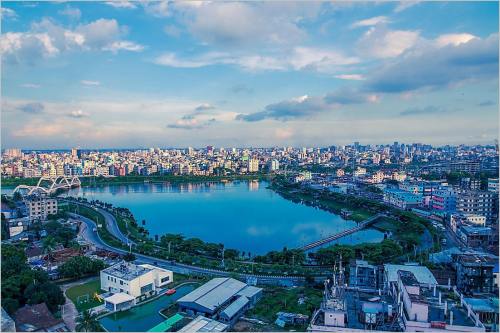 An image from Bangladesh
.
.
Click the link below for images:
.
__________________________________________
April 22, 2022
Mohenjo
Business, Enthralling, Food For Thought, Human Interest, Science, Technical
amazon, business, Business News, current-events, Future, Hotels, human-rights, medicine, mental-health, research, Science, Science News, technology, Technology News, travel, vacation

Click the link below the picture
.
The annual Lyrid meteor shower has been putting on a dazzling display for 2,700 years, and another impressive show is about to unfold in the night sky.
Seeing a shooting star dash across the night sky can be a breathtaking sight, and later this week, a flurry of meteors will give people plenty of opportunities to spot these celestial fireworks.
The Lyrid meteor shower peaks on Thursday night into Friday morning. This is one of the oldest meteor showers in history with records of the Lyrids going back 2,700 years, according to EarthSky.
Spending time outside to view the Lyrids can be a great early Earth Day festivity for people of all ages before the annual event on Friday. Nearby parks that are open after sunset can be great spots for stargazing as they tend to have less light pollution than from a neighborhood where there are many sources of light.
.
 After a three-month hiatus, shooting stars will finally return to the night sky on April 21-22, during the peak of the Lyrid meteor shower.
.
.
Click the link below for the article:
.
__________________________________________
April 21, 2022
Mohenjo
Business, Enthralling, Human Interest, Photographs
amazon, business, Business News, current-events, Future, Hotels, human-rights, medicine, mental-health, research, Science, Science News, technology, Technology News, travel, vacation
Click the link below the picture
.
The reddish egret is a medium-sized heron. It is a resident breeder in Central America, The Bahamas, the Caribbean, the Gulf Coast of the United States, and Mexico. There is post-breeding dispersal to well north of the nesting range. In the past, this bird was a victim of the plume trade.
According to the Texas Parks and Wildlife Department, there are only 1,500 to 2,000 nesting pairs of reddish egrets in the United States — and most of these are in Texas. They are classified as “threatened” in Texas and receive special protection.
This species reaches 68–82 cm (27–32 in) in length, with a 116–125 cm (46–49 in) wingspan.Body mass in this species can range from 364–870 g (0.802–1.918 lb). Among standard linear measurements, the wing chord is 29–34.3 cm (11.4–13.5 in), the tail is 8.8–13 cm (3.5–5.1 in), the bill is 7.3–9.2 cm (2.9–3.6 in) and the tarsus is 11.7–14.7 cm (4.6–5.8 in). It is a medium-sized, long-legged, long-necked heron with a long pointed pinkish bill with a black tip. It is distinctly larger than other co-existing members of the genus Egretta but smaller than the great blue heron and great egret. The legs and feet are bluish-black. While the sexes are similar, there are two distinct color morphs. The adult dark morph has a slate blue body and reddish head and neck with shaggy plumes. The adult white morph has entirely white body plumage. Young birds have a brown body, head, and neck. During mating, the male’s plumage stands out in a ruff on its head, neck, and back. The reddish egret is considered one of the most active herons and is often seen on the move. It stalks its prey visually in shallow water far more actively than other herons and egrets, frequently running energetically and using the shadow of its wings to reduce glare on the water once it is in position to spear a fish; the result is a fascinating dance. Due to its bold, rapacious yet graceful feeding behavior, author Pete Dunne nicknamed the reddish egret “the Tyrannosaurus rex of the Flats”. It eats fish, frogs, crustaceans, and insects. The bird’s usual cry is a low, guttural croak. Wikipedia
.
 An image of a Reddish Egret RDR2
.
.
Click the link below for images:
.
__________________________________________
April 20, 2022
Mohenjo
Business, Enthralling, Human Interest, Photographs
amazon, business, Business News, current-events, Future, Hotels, human-rights, medicine, mental-health, research, Science, Science News, technology, Technology News, travel, vacation
Click the link below the picture
.
Montreal officially Montréal, is the second-most populous city in Canada and most populous city in the Canadian province of Quebec. Founded in 1642 as Ville-Marie, or “City of Mary” it is named after Mount Royal, the triple-peaked hill around which the early city of Ville-Marie is built. The city is centered on the Island of Montreal, which obtained its name from the same origin as the city, and a few much smaller peripheral islands, the largest of which is Île Bizard. The city is situated 196 km (122 mi) east of the national capital Ottawa, and 258 km (160 mi) southwest of the provincial capital, Quebec City.
As of 2021, the city had a population of 1,762,949, and a metropolitan population of 4,291,732, making it the second-largest city, and second-largest metropolitan area in Canada. French is the city’s official language and in 2016 was the only home language of 53.7% of the population, while 18.2% spoke only English and 18.7% spoke neither French nor English at home. 9.4% spoke a mix of French, English, and a foreign language at home. In the larger Montreal Census Metropolitan Area, 71.2% of the population spoke at least French at home, compared to 19.0% who spoke English. Still, in 2016, 87.4% of the population of the city of Montreal considered themselves fluent in French while 91.4% could speak it in the metropolitan area. Montreal is one of the most bilingual cities in Quebec and Canada, with 57.4% of the population able to speak both English and French. Montreal is the second-largest primarily French-speaking city in the developed world, after Paris.
Historically the commercial capital of Canada, Montreal was surpassed in population and in economic strength by Toronto in the 1970s. It remains an important center of commerce, aerospace, transport, finance, pharmaceuticals, technology, design, education, art, culture, tourism, food, fashion, video game development, film, and world affairs. Montreal has the second-highest number of consulates in North America, serves as the location of the headquarters of the International Civil Aviation Organization, and was named a UNESCO City of Design in 2006. In 2017, Montreal was ranked the 12th-most liveable city in the world by the Economist Intelligence Unit in its annual Global Liveability Ranking, although it slipped to rank 40 in the 2021 index, primarily due to stress on the healthcare system from the COVID-19 pandemic. It is regularly ranked as a top ten city in the world to be a university student in the QS World University Rankings.
Montreal has hosted multiple international conferences and events, including the 1967 International and Universal Exposition and the 1976 Summer Olympics. It is the only Canadian city to have held the Summer Olympics. In 2018, Montreal was ranked as a global city. The city hosts the Canadian Grand Prix of Formula One since 1978, as well as the Montreal International Jazz Festival, the largest jazz festival in the world, the Just for Laughs festival, the largest comedy festival in the world, and Les Francos de Montréal, which is the largest event devoted exclusively to French-language music anywhere in the world. It is also home to ice hockey team Montreal Canadiens, the franchise with the most Stanley Cup wins. Wikipedia
.
 An image from Montreal Quebec Canada
.
.
Click the link below for images:
.
__________________________________________
April 19, 2022
Mohenjo
Business, Enthralling, Human Interest, Photographs
amazon, business, Business News, current-events, Future, Hotels, human-rights, medicine, mental-health, research, Science, Science News, technology, Technology News, travel, vacation
Click the link below the picture
.
Mount Rainier National Park is an American national park located in southeast Pierce County and northeast Lewis County in Washington state. The park was established on March 2, 1899, as the fourth national park in the United States, preserving 236,381 acres (369.3 sq mi; 956.6 km2) including all of Mount Rainier, a 14,410-foot (4,390 m) stratovolcano. The mountain rises abruptly from the surrounding land with elevations in the park ranging from 1,600 feet to over 14,000 feet (490–4,300 m). The highest point in the Cascade Range, Mount Rainier is surrounded by valleys, waterfalls, subalpine meadows, and 91,000 acres (142.2 sq mi; 368.3 km2) of old-growth forest. More than 25 glaciers descend the flanks of the volcano, which is often shrouded in clouds that dump enormous amounts of rain and snow.
Mount Rainier is circled by the Wonderland Trail and is covered by glaciers and snowfields totaling about 35 square miles (91 km2). Carbon Glacier is the largest glacier by volume in the contiguous United States, while Emmons Glacier is the largest glacier by area. Mount Rainier is a popular peak for mountaineering with some 10,000 attempts per year with approximately 50% making it to the summit.
The purpose of Mount Rainier National Park is to protect and preserve unimpaired the majestic icon of Mount Rainier, a glaciated volcano, along with its natural and cultural resources, values, and dynamic processes. The park provides opportunities for people to experience, understand, and care for the park environment, and also provides for wilderness experiences and sustains wilderness values. Ninety-seven percent of the park is preserved as wilderness under the National Wilderness Preservation System as Mount Rainier Wilderness, a designation it received in 1988. It is abutted by the Tatoosh, Clearwater, Glacier View, and William O. Douglas Wildernesses. The park was designated a National Historic Landmark on February 18, 1997, as a showcase for the National Park Service Rustic style architecture of the 1920s and 1930s, exemplified by the Paradise Inn and a masterpiece of early NPS master planning. As a Historic Landmark district, the park was administratively listed on the National Register of Historic Places. Wikipedia
.
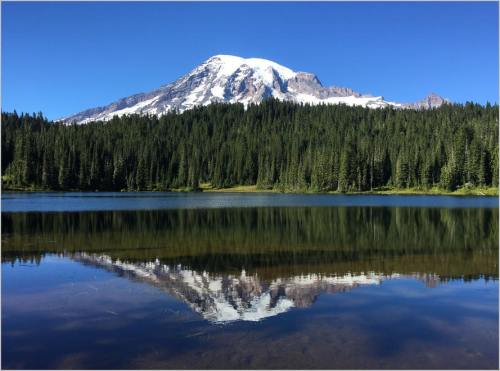 An image from Mount rainier national park washington state
.
.
Click the link below for article:
.
__________________________________________
April 18, 2022
Mohenjo
Business, Enthralling, Human Interest, Photographs
amazon, business, Business News, current-events, Future, Hotels, human-rights, medicine, mental-health, research, Science, Science News, technology, Technology News, travel, vacation
Click the link below the picture
.
Slovakia, officially the Slovak Republic, is a landlocked country in Central Europe. It is bordered by Poland to the north, Ukraine to the east, Hungary to the south, Austria to the southwest, and the Czech Republic to the northwest. Slovakia’s mostly mountainous territory spans about 49,000 square kilometers (19,000 sq mi), with a population of over 5.4 million. The capital and largest city is Bratislava, while the second-largest city is Košice.
The Slavs arrived in the territory of present-day Slovakia in the fifth and sixth centuries. In the seventh century, they played a significant role in the creation of Samo’s Empire. In the ninth century, they established the Principality of Nitra, which was later conquered by the Principality of Moravia to establish Great Moravia. In the tenth century, after the dissolution of Great Moravia, the territory was integrated into the Principality of Hungary, which would then become the Kingdom of Hungary in 1000. In 1241 and 1242, after the Mongol invasion of Europe, much of the territory was destroyed. The area was recovered largely thanks to Béla IV of Hungary, who also settled Germans, leading them to become an important ethnic group in the area, especially in what are today parts of central and eastern Slovakia.
After World War, I and the dissolution of the Austro-Hungarian Empire, the state of Czechoslovakia was established. It was the only country in central and eastern Europe to remain a democracy during the interwar period. Nevertheless, local fascist parties gradually came to power in the Slovak lands, and the first Slovak Republic existed during World War II as a partially-recognized client state of Nazi Germany. At the end of World War II, Czechoslovakia was re-established as an independent country. After a coup in 1948, Czechoslovakia came under communist administration and became a part of the Soviet-led Eastern Bloc. Attempts to liberalize communism in Czechoslovakia culminated in the Prague Spring, which was crushed by the Warsaw Pact invasion of Czechoslovakia in August 1968. In 1989, the Velvet Revolution peacefully ended the Communist rule in Czechoslovakia. Slovakia became an independent state on 1 January 1993 after the peaceful dissolution of Czechoslovakia, sometimes known as the Velvet Divorce.
Slovakia is a developed country with an advanced high-income economy, ranking very high in the Human Development Index. It also performs favorably in measurements of civil liberties, press freedom, internet freedom, democratic governance, and peacefulness. The country maintains a combination of a market economy with a comprehensive social security system, providing citizens with a universal health care, free education, and one of the longest paid parental leaves in the OECD. Slovakia is a member of the European Union, the Eurozone, the Schengen Area, the United Nations, NATO, CERN, the OECD, the WTO, the Council of Europe, the Visegrád Group, and the OSCE. Slovakia is also home to eight UNESCO World Heritage Sites. It is the world’s largest per-capita car producer; it manufactured a total of 1.1 million cars in 2019, representing 43% of its total industrial output. Wikipedia
.
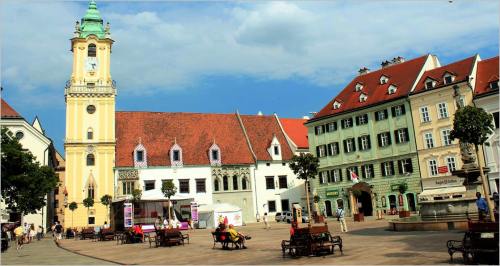 An image from Slovakia Country
.
.
Click the link below for images:
.
__________________________________________
April 18, 2022
Mohenjo
Business, Enthralling, Food For Thought, Human Interest, Political, Science, Technical
amazon, business, Business News, current-events, Future, Hotels, human-rights, medicine, mental-health, research, Science, Science News, technology, Technology News, travel, vacation

Click the link below the picture
.
The James Webb Space Telescope (Webb) has released its first sharp image and it is a doozy — a spectacular view of a twinkling orange star that is focused with such sharpness that it pushes the limits of the laws of physics.
The image shows that the telescope’s 18 separate mirrors are now accurately aligned and acting as one, and the photo is even better than scientists hoped it would be, NASA officials said in a statement.
The Webb team released the photograph of the Milky Way star, designated 2MASS J17554042+6551277, and located roughly 2,000 light-years away, Wednesday (March 16). It was taken with a red filter to maximize the visual contrast between the star and the blackness of space, while dozens of other stars and distant galaxies can be seen in the background.
According to BBC News, the image shows that the optical systems of the new space telescope are now working better than the scientists and engineers had hoped.
“You not only see the star and the spikes from the diffraction of the star, but you see other stars in the field that are tightly focused, just like we expect, and all sorts of other interesting structure in the background,” Webb engineer Lee Feinberg told reporters at the NASA news conference Wednesday. “We’ve actually done very detailed analysis of the images we’re getting, and so far, what we’re finding is that the performance is as good [as], if not better than, our most optimistic prediction.”
The image is the result of the “fine phasing” stage of the mirror alignments, in which every optical parameter is checked to verify that the telescope can successfully gather light from distant objects, NASA said in the statement.
.
 An image taken by the James Webb Space Telescope during its alignment process shows galaxies and stars in the background. (Image credit: NASA/STScI)
.
.
Click the link below for the article:
.
__________________________________________
April 16, 2022
Mohenjo
Business, Enthralling, Human Interest, Photographs
amazon, business, Business News, current-events, Future, Hotels, human-rights, medicine, mental-health, research, Science, Science News, technology, Technology News, travel, vacation
Click the link below the picture
.
Sardinia is the second-largest island in the Mediterranean Sea, after Sicily, and one of the 20 regions of Italy. It is located west of the Italian Peninsula, north of Tunisia, and immediately south of the French island of Corsica.
It is one of the five Italian regions with some degree of domestic autonomy being granted by a special statute. Its official name, Autonomous Region of Sardinia, is bilingual in Italian and Sardinian. It is divided into four provinces and a metropolitan city. The capital of the region of Sardinia — and its largest city — is Cagliari.
Sardinia’s indigenous language and Algherese Catalan are referred to by both the regional and national law as two of Italy’s twelve officially recognized linguistic minorities, albeit gravely endangered, while the regional law provides some measures to recognize and protect the aforementioned as well as the island’s other minority languages (the Corsican-influenced Sassarese and Gallurese, and finally Tabarchino Ligurian).
Owing to the variety of Sardinia’s ecosystems, which include mountains, woods, plains, stretches of largely uninhabited territory, streams, rocky coasts, and long sandy beaches, Sardinia has been metaphorically described as a micro-continent. In the modern era, many travelers and writers have extolled the beauty of its long-untouched landscapes, which retain vestiges of the Nuragic civilization.
The name Sardinia has pre-Latin roots. It comes from the pre-Roman ethnonym *s(a)rd-, later romanised as sardus (feminine sarda). It makes its first appearance on the Nora Stone, where the word ŠRDN, or *Šardana, testifies to the name’s existence when the Phoenician merchants first arrived.
According to Timaeus, one of Plato’s dialogues, Sardinia (referred to by most ancient Greek authors as Sardṓ, Σαρδώ) and its people as well might have been named after a legendary woman going by Sardṓ (Σαρδώ), born in Sardis (Σάρδεις), capital of the ancient Kingdom of Lydia. There has also been speculation that identifies the ancient Nuragic Sards with the Sherden, one of the Sea Peoples. It is suggested that the name had a religious connotation from its use also as the adjective for the ancient Sardinian mythological hero-god Sardus Pater (“Sardinian Father” or “Father of the Sardinians”), as well as being the stem of the adjective “sardonic”. Wikipedia
.
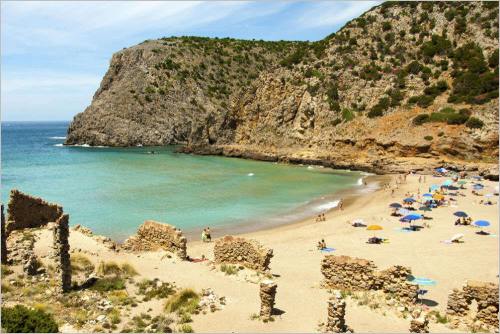 An image from Punta Molentis Sardinia
.
.
Click the link below for images:
.
__________________________________________
Older Entries
Newer Entries
 James' World 2