In art, a cloudscape is the depiction of a view of clouds or the sky. Usually, as in the examples seen here, the clouds are depicted as viewed from the earth, often including just enough of a landscape to suggest scale, orientation, weather conditions, and distance (through the application of the technique of aerial perspective). The terms cloudscape and skyscape are sometimes used interchangeably, although a skyscape does not necessarily include a view of clouds.
A highly complex cloudscape—as in some works of J. M. W. Turner, for example—within an otherwise conventional landscape painting, can sometimes seem like an abstract painting-within-a-painting, nearly obliterating the realistic setting with a grand display of gestural force. Some critics have explicitly cited 19th century cloudscapes and seascapes as precursors of the work of abstract-expressionist artists such as Helen Frankenthaler.
A couple of years before he was convicted of securities fraud, Martin Shkreli was the chief executive of a pharmaceutical company that acquired the rights to Daraprim, a lifesaving antiparasitic drug. Previously the drug cost $13.50 a pill, but in Shkreli’s hands, the price quickly increased by a factor of 56, to $750 a pill. At a health care conference, Shkreli told the audience that he should have raised the price even higher. “No one wants to say it, no one’s proud of it,” he explained. “But this is a capitalist society, a capitalist system and capitalist rules.”
This is a capitalist society. It’s a fatalistic mantra that seems to get repeated to anyone who questions why America can’t be more fair or equal. But around the world, there are many types of capitalist societies, ranging from liberating to exploitative, protective to abusive, democratic to unregulated. When Americans declare that “we live in a capitalist society” — as a real estate mogul told The Miami Herald last year when explaining his feelings about small-business owners being evicted from their Little Haiti storefronts — what they’re often defending is our nation’s peculiarly brutal economy. “Low-road capitalism,” the University of Wisconsin-Madison sociologist Joel Rogers has called it. In a capitalist society that goes low, wages are depressed as businesses compete over the price, not the quality, of goods; so-called unskilled workers are typically incentivized through punishments, not promotions; inequality reigns and poverty spreads. In the United States, the richest 1 percent of Americans own 40 percent of the country’s wealth, while a larger share of working-age people (18-65) live in poverty than in any other nation belonging to the Organization for Economic Cooperation and Development (O.E.C.D.).
Pete Alonso hit his 40th home run to break the National League rookie record, capping a late outburst by the New York Mets in their 11-5 victory over the Kansas City Royals on Sunday.
Michael Conforto hit a long homer in the first inning and drove in four runs. Amed Rosario put the Mets ahead 6-4 with a two-run single in the seventh, and Alonso went deep in the ninth on an 0-2 pitch. He snapped a tie with Cody Bellinger, who launched 39 long balls for the Dodgers in 2017 on the way to winning Rookie of the Year honors.
Back in the thick of a crowded NL wild-card race thanks to a second-half surge, New York completed a 3-3 road trip and improved to 24-10 since the All-Star break.
Alonso also had an RBI double and scored three times during his second consecutive three-hit game. Rosario had three hits and three RBIs in the leadoff spot, and Joe Panik added three hits as the top four batters in the Mets’ lineup combined to go 11 for 18 with nine RBIs and seven runs.
.
New York Mets relief pitcher Edwin Diaz (39) shakes hands with catcher Tomas Nido (3) following a baseball game against the Kansas City Royals at Kauffman Stadium in Kansas City, Mo., Sunday, Aug. 18, 2019. The Mets defeated the Royals 11-5. (AP Photo/Orlin Wagner)
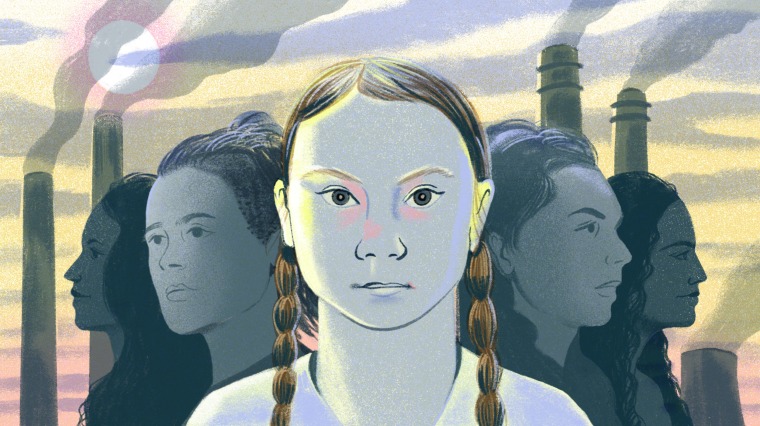
Staring through a swarm of photographers and television crews, self-described introvert Greta Thunberg took the stage at a Swiss university last week to pointedly reiterate a message that has captured the attention of leaders and like-minded young women around the globe: The world must take drastic action now to avert ecological and civilizational collapse.
“We know that our future is at risk,” the small, soft-spoken 16-year-old Swede tells journalists at the start of a weeklong youth summit at the University of Lausanne. “We would love to go back to school and continue with our everyday lives, but as crucial as this situation is, as serious as this situation is, we feel like we must do something about this now.”
Thunberg — whose central point is that humanity must immediately reduce greenhouse gas emissions that have unrelentingly increased since the start of the industrial revolution, resulting in global warming — is the driving force behind a movement that has seen more than 2 million teens around the world take part in Fridays for Future school strikes against climate change.
.
Greta Thunberg is the driving force behind a movement that has seen more than 2 million teens around the world take part in school strikes against climate change.Eleanor Taylor / for NBC News
It was only two months ago that Josh McCown decided to call it a career.
After 16 NFL seasons with eight different teams, the 40-year-old quarterback decided it was time to retire. And so, he hung up his helmet and began working for ESPN as analyst this offseason. One chapter of McCown’s life was over, but another was just beginning.
Or so it seemed.
McCown changed his mind about retirement on Saturday, signing a one-year deal with the Philadelphia Eagles. The contract will pay him a base salary of $2 million, fully guaranteed, with a max value of $5.4 million, according to NFL Network’s Ian Rapoport. Then, after the 2019 season, the plan is for the journeyman to resume retirement and his second career at ESPN.
It’s easy to see why McCown had a change of heart regarding retirement — and why the Eagles would try to talk him out of it.
.
NASHVILLE, TN – DECEMBER 2: Josh McCown #15 of the New York Jets walks off the field after losing to the Tennessee Titans at Nissan Stadium on December 2, 2018 in Nashville, Tennessee. (Photo by Frederick Breedon/Getty Images
Zhangye, formerly romanized as Changyeh or known as Kanchow, is a prefecture-level city in central Gansu Province in the People’s Republic of China.It borders Inner Mongolia on the north and Qinghai on the south.
Nothing prepares you for the view. From space, Earth is alive. The greenest greens and bluest blues, auroras dancing at the poles, lightning storms flashing like fireflies. Landmasses defined more by ancient, tectonic textures than any arbitrarily imposed border. The impossibly thin atmosphere protecting 7 billion people from the dark, unforgiving void beyond.
All seen while floating weightlessly.
Weightlessness — the experience is surreal, at least at first. Rookie astronauts bumble about like babies learning to walk and delight in sleeping on the ceiling. Arms come to rest in the zombie position. Hair stands on end as if electrocuted. Everything not pinned down floats away — glasses, tools, grains of rice scattering into a cloud of debris, while fugitive sauces paint stains on walls.
Fuji Five Lakes is a region at the base of Mount Fuji, Japan.It comprises Yamanaka, Kawaguchi, Saiko, Shōji and Motosu lakes. At its heart is Fujiyoshida city, with its Yoshida Trail up Mount Fuji, Fuji-Q Highland amusement park and the Fujiyama Onsen hot springs with wooden bathhouses. Nearby Lake Kawaguchi is known for its resorts and museums. Just west, Lake Saiko is famed for its trout and Aokigahara forest.
My dad always flew an American flag in our front yard. The blue paint on our two-story house was perennially chipping; the fence, or the rail by the stairs, or the front door, existed in a perpetual state of disrepair, but that flag always flew pristine. Our corner lot, which had been redlined by the federal government, was along the river that divided the black side from the white side of our Iowa town. At the edge of our lawn, high on an aluminum pole, soared the flag, which my dad would replace as soon as it showed the slightest tatter.
My dad was born into a family of sharecroppers on a white plantation in Greenwood, Miss., where black people bent over cotton from can’t-see-in-the-morning to can’t-see-at-night, just as their enslaved ancestors had done not long before. The Mississippi of my dad’s youth was an apartheid state that subjugated its near-majority black population through breathtaking acts of violence. White residents in Mississippi lynched more black people than those in any other state in the country, and the white people in my dad’s home county lynched more black residents than those in any other county in Mississippi, often for such “crimes” as entering a room occupied by white women, bumping into a white girl or trying to start a sharecroppers union. My dad’s mother, like all the black people in Greenwood, could not vote, use the public library or find work other than toiling in the cotton fields or toiling in white people’s houses. So in the 1940s, she packed up her few belongings and her three small children and joined the flood of black Southerners fleeing North. She got off the Illinois Central Railroad in Waterloo, Iowa, only to have her hopes of the mythical Promised Land shattered when she learned that Jim Crow did not end at the Mason-Dixon line. tangie
.
A demonstrator at the 1965 march from Selma to Montgomery, led by the Rev. Dr. Martin Luther King Jr. to fight for black suffrage.Bruce Davidson/Magnum Photos
Film and Writing Festival for Comedy. Showcasing best of comedy short films at the FEEDBACK Film Festival. Plus, showcasing best of comedy novels, short stories, poems, screenplays (TV, short, feature) at the festival performed by professional actors.

 An image of Amazing Cloud Photography





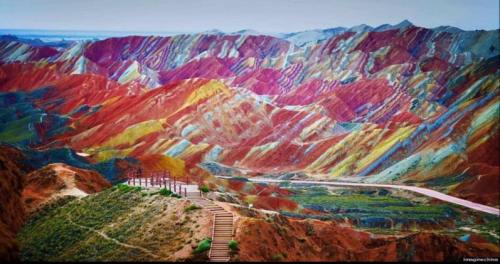 An image of Zhangye China
 Bewilder for The Washington Post
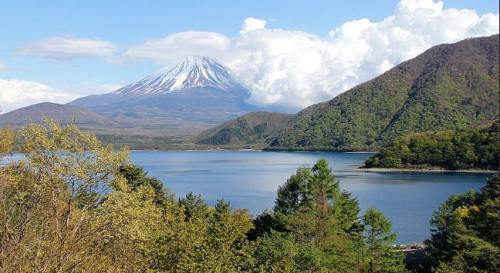 An image of Fuji Five Lakes Japan


 James' World 2