July 8, 2025
Mohenjo
Business, Food For Thought, Human Interest, Political, Science, Technical
amazon, business, Business News, current-events, Future, Hotels, human-rights, medicine, mental-health, research, Science, Science News, technology, Technology News, travel, vacation

Click the link below the picture
.
You want your kids to feel loved—and to be happy, healthy, and reasonably well-behaved. Nothing is more important. Advice about how to achieve this comes at you from every corner: playground moms, media, your in-laws. You may be one of those people who demand perfection from yourself in everything you do, especially this. Or you may be someone who fixates on the gap between what your ideal of parenting is and what you can actually achieve. The sad irony is that the harder you work at and worry about being perfect, the more miserable you can make yourself—and the likelier you are to raise kids who are anxious or down on themselves, psychological research has shown.
“If you are a perfectionistic parent, know you are not alone!” says clinical psychologist Erica Lee of Boston Children’s Hospital. As cultural changes in Western countries emphasize competitive individualism, younger men and women increasingly feel that others demand perfection from them, and they demand it of themselves, including when they parent. Studies consistently
reveal perfectionism’s links to anxiety, depression, and other ills. “Holding yourself to an ‘all or nothing’ standard can induce feelings of anxiety, overwhelm, and shame [you], make you more critical and rigid, subtract from your joy and fulfillment as a parent,” Lee says.
Mounting research shows that, when people are perfectionistic about their parenting, their children are also at risk of these emotional problems. “Perfectionistic parents tend to raise perfectionistic kids, which can increase [kids’] risk for depression, anxiety, self-criticism and self-harm,” Lee says. Recently, scientists have identified which perfectionistic parents are most at risk of suffering serious emotional consequences, and also when setting superhigh standards might benefit parents and kids.
Psychologists define perfectionism as a personality trait that is generally stable over time, although circumstances can inflame or calm it. They have also found that perfectionism is embedded in two core personality traits: high conscientiousness and high neuroticism. These traits, in turn, are linked to the two facets of perfectionism: “strivings” for high standards and “concerns” over perceived failures. Highly conscientious “strivers” tend to seek excellence in everything. They set up unachievable goals and try to meet them. On the other hand, people high in the trait of neuroticism, who focus more on their concerns—let’s call them simply “worriers”—are likely to have anxiety or self-esteem issues. They ruminate more on the gap between their ideals and the nitty-gritty of daily parenting, berating themselves for making mistakes.
Recently, psychologists set out to understand how strivings versus concerns influence mothers’ and fathers’ identities as parents. In a study of 1,275 Polish parents aged 18 to 30, participants were asked to answer questions about how they felt about themselves as parents three times over the course of a year. They noted how much they agreed with statements such as “It is important to me that I be thoroughly competent in everything I do” or “If I fail at work/school, I am a failure as a person.”
The parents with most concerns about their performance felt the worst about themselves as parents. “Such parents experience greater uncertainty, dissatisfaction, and even regret about their decision to become parents,” says psychologist Konrad Piotrowski, lead author of the study, who works at SWPS University in Poland. Parents who were primarily strivers with fewer concerns, on the other hand, felt better about themselves than those who ranked higher in concerns, as measured by perfectionism scales.
But it was rare even for strivers to have no worries. Strivings and concerns are two sides of the same coin; in most people, they co-occur. “Only a relatively small subset of parents—those who maintain high personal standards while experiencing minimal concerns or self-doubt—benefit from their trying to be the best,” Piotrowski says. “For most, perfectionism can ultimately lead to impaired functioning, increased stress, and reduced satisfaction with parenting.”
Those are symptoms of burnout. A study of mothers of babies in Finland showed that two factors contributed most to burnout: outside social pressures to be a flawless parent and low self-esteem. Moms already suffering from low self-confidence were hit hardest by burnout, while more self-confident mothers experienced it less. (Generally, research finds that although perfectionist fathers can feel disappointed in themselves, cultural expectations of mothers as the primary caregiver leads them to hold themselves to much higher standards than fathers.)
.
 PixelsEffect/Getty Images
.
.
Click the link below for the complete article:
.
__________________________________________
July 8, 2025
Mohenjo
Business, Food For Thought, Human Interest, Political, Science, Technical
amazon, business, Business News, current-events, Future, Hotels, human-rights, medicine, mental-health, research, Science, Science News, technology, Technology News, travel, vacation

Click the link below the picture
.
Keiko Ogura was just 8 years old when the atoms in the Hiroshima bomb started splitting. When we met in January, some 300 feet from where the bomb struck, Ogura was 87. She stands about five feet tall in heels, and although she has slowed down some in her old age, she moves confidently, in tiny, shuffling steps. She twice waved away my offered arm as we walked the uneven surfaces of the Hiroshima Peace Memorial Park, first neutrally and then with some irritation.
Ogura can still remember that terrible morning in August, 80 years ago. Her older brother, who later died of cancer from radiation, was on a hilltop north of the city when the Enola Gay made its approach. He saw it shining small and silver in the clear blue sky.
Ogura was playing on a road near her house; her father had kept her home from school. “He had a sense of foreboding,” she told me. She remembers the intensity of the bomb’s white flash, the “demon light,” in the words of one survivor. The shock wave that followed had the force of a typhoon, Ogura said. It threw her to the ground, and she lost consciousness—for how long, she still doesn’t know.
Like many people who felt the bomb’s power that day, Ogura assumed that it must have been dropped directly on top of her. In fact, she was a mile and a half away from the explosion’s center. Tens of thousands of people were closer. The great waves of heat and infrared light that roared outward killed hundreds of Ogura’s classmates immediately. More than 20,000 children were killed by the bomb.
Ogura told me that after the initial explosion, fires had raged through the city for many hours. Survivors compared the flame-filled streets to medieval Buddhist scroll paintings of hell. When Ogura awoke on the road, the smoke overhead was so thick that she thought night had fallen. She stumbled back to her house and found it half-destroyed, but still standing. People with skin peeling off their bodies were limping toward her from the city center. Ogura’s family well was still functional, and so she began handing out glasses of water. Two people died while drinking it, right in front of her. A black rain began to fall. Each of its droplets was shot through with radiation, having traveled down through the mushroom cloud’s remnants. It stained Ogura’s skin charcoal gray.
In the days following the bombing, Ogura’s father cremated hundreds of people at a nearby park. The city itself seemed to have disappeared, she said. In aerial shots, downtown Hiroshima’s grid was reduced to a pale outline. More than 60,000 structures had been destroyed. One of the few that remained upright was a domed building made of stone. It still stands today, not far from where Ogura and I met. The government has reinforced its skeletal structure, in a bid to preserve it forever. Circling the building, I could see in through the bomb-blasted walls, to piles of rubble inside.
Ogura and I walked to a monumental arch at the center of the Peace Memorial Park, where a stone chest holds a register of every person who is known to have been killed by the Hiroshima bomb. To date, it contains more than 340,000 names. Only a portion of them died in the blast’s immediate aftermath. Tens of thousands of others perished from radiation sickness in the following months, or from rare cancers years later. Every generation alive at the time was affected, even the newest: Babies who were still in their mothers’ wombs when the bomb hit developed microcephaly. For decades, whenever one of Ogura’s relatives took ill, she worried that a radiation-related disease had finally come for them, and often, one had.
.
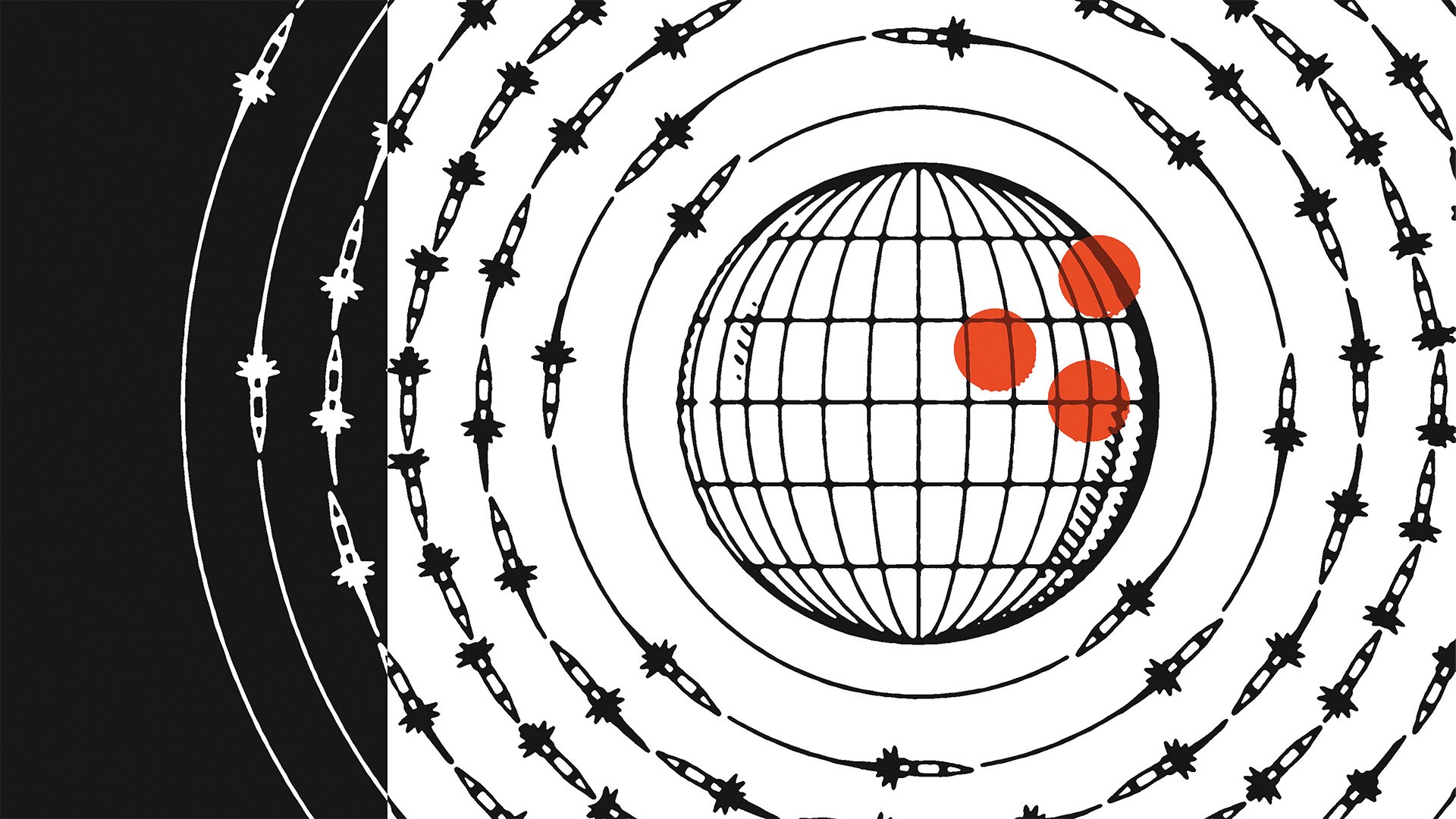 Nuclear club
.
.
Click the link below for the complete article:
.
__________________________________________
July 8, 2025
Mohenjo
Business, Food For Thought, Human Interest, Political, Science, Technical
amazon, business, Business News, current-events, Future, Hotels, human-rights, medicine, mental-health, research, Science, Science News, technology, Technology News, travel, vacation
From

Click the link below the picture
.
Donating is the best way to help needy people in your community and clear out space in your closet simultaneously. But since many places accept old clothes, you might be wondering, “Where can I donate clothes that won’t be sold and put them to the best use?”
Below, we will look at various local organizations that take clothing donations, their differences, and the benefits of donating your clothes.
Benefits of Donating Your Old Clothes
There are several benefits that clothing donations provide to you and your community, each of them making the extra step of finding a worthwhile place to donate worth the hassle.
Helping Your Community
Just because you don’t need old clothing items doesn’t mean someone nearby can’t put them to good use. Every clothing donation you make contributes to the well-being of your community, giving people without the means to buy brand new apparel a chance to keep themselves and their families clothed.
Organizing Clutter
It’s easy to convince yourself that you need a new outfit or accessory, but it’s harder to muster the strength to get rid of your old attire when you buy new clothes. As a result, old clothing will pile up in closets and take up more space than you can afford.
Not only do your clothing donations assist your community, but they also help you organize your home and create more storage space in your closet.
Positive Environmental Impact
When you throw your clothes away rather than donating them, they will sit in a landfill and slowly break down, releasing harmful methane and carbon dioxide that pollute the air. When you don’t donate, your items are not being put to good use and actively harm the environment.
Donating your clothes will ensure they still get used and won’t decompose. This will prevent them from harming the environment from a landfill and lower the demand for new clothing production, creating a negative environmental impact.
Improved Health and Wellness
When you donate your clothes, you’re creating a positive impact on yourself and your community. Giving to people in need doesn’t just feel good. It also has small health and wellness boosts.
Donating has been proven to lower stress levels and blood pressure and increase individual satisfaction. So, with all the benefits a small donation can provide, from health boosts to environmental aid, there’s no reason to put off finding a place to donate any longer.
.

.
.
Click the link below for the complete article:
.
__________________________________________
July 8, 2025
Mohenjo
Business, Food For Thought, Human Interest, Political, Science, Technical
amazon, business, Business News, current-events, Future, Hotels, human-rights, medicine, mental-health, research, Science, Science News, technology, Technology News, travel, vacation

Click the link below the picture
.
Imagine a world where homes, clothing, and electronics are grown instead of manufactured. Mycelium, the root structure of fungi, is transforming industries through innovative applications such as sustainable construction and meat alternatives. This mushroom-based material is used for building insulation and compostable packaging, while luxury brands explore fungal threads as a leather substitute. Furthermore, mycelium is being integrated into robotics, replacing traditional electrical sensors with the living pulses of fungi. How long until mycelium becomes as commonplace as wood, metal, and plastic?
.
 Everything is made from mushrooms
.
.
Click the link below for the complete video (sound on):
.
__________________________________________
July 7, 2025
Mohenjo
Business, Food For Thought, Human Interest, Political, Science, Technical
amazon, business, Business News, current-events, Future, Hotels, human-rights, medicine, mental-health, research, Science, Science News, technology, Technology News, travel, vacation
Click the link below the picture
.
In 2021, a multidisciplinary team of researchers claimed that a Tunguska-sized airburst, larger than any such airburst in human history, destroyed a Bronze Age city near the Dead Sea. The story went viral. This alleged destruction of Tall el-Hammam around 1650 BCE, with reports of melted pottery and mudbricks, pointed to the Bible, the team concluded in Scientific Reports, noting “what could be construed as the destruction of a city by an airburst/impact event.”
News outlets from Smithsonian to the Times in Britain covered the report. It had all the ingredients—with authors touting its connection to the biblical cities of Sodom and Gomorrah—to make it pure clickbait gold. On the day it was published, one of the co-authors posted links on his blog to their three press releases. A week later, he asserted that it was “the most read scientific paper on Earth” based on 250,000 article accesses.
Science, however, is not a popularity contest, and the “cosmic outburst” story indeed holds a different lesson than the one first supposed, about how the public should hear incredible claims. In April, just before the study passed the 666,000 mark, Scientific Reports retracted the finding, writing that “claims that an airburst event destroyed the Middle Bronze Age city of Tall el-Hammam appear to not be sufficiently supported by the data in the Article,” and that “the Editors no longer have confidence that the conclusions presented are reliable.” Independent scientists (I was one of them) had alerted them to faulty methodology, errors of fact, and inappropriate manipulation of digital image data. One study co-author responded to the retraction in an online post with claims that the editor had caved to harassment by skeptics, concluding that the “court of public opinion is much more powerful than a shadowy hatchetman spamming a corrupt editor’s inbox.”
Public opinion does influence policy decisions and funding priorities in science. People are interested in new medical cures and new starry discoveries, which helps explain why we have a NASA and an NIH. That’s why it is important for the public to be scientifically literate and well informed. But scientific facts are determined by the scientific method, logic, and evidence, all presented in peer-reviewed publications that require reproducible results. Scientists don’t vote on findings, but they do achieve consensus by convergence on understandings based on multiple studies across many fields.
The Sodom airburst paper instead represented the nadir of “science by press release,” in which sensational but thinly supported claims were pitched directly to the media and the public. Press releases, rife with references to Sodom and biblical implications, appeared to be focused as much on titillation as on science.
A meme, in its original definition, is a self-propagating unit of cultural information that is highly fit in the evolutionary sense. Like genes, memes can be engineered. Science by press release can be an effective first step in the creation and laundering of such memes into the public’s collective consciousness. The authors of the Sodom airburst paper did this well. Their press releases were quickly picked up and repeated by both online clickbait media and mainstream media.
The Sodom airburst meme was so successful that it achieved pop culture status and public acceptance within a year of the paper’s publication, in this “Final Jeopardy!” question: “A 2021 study suggested that an asteroid that struck the Jordan Valley c. 1650 B.C, gave rise to the story of this city in Genesis 19.” (Winning answer: “What is Sodom?”)
.

The Destruction Of Sodom and Gomorrah, painting by John Martin, 1852. incamerastock/Alamy Stock Photo
.
.
Click the link below for the complete article:
.
__________________________________________
July 7, 2025
Mohenjo
Business, Food For Thought, Human Interest, Political, Science, Technical
amazon, business, Business News, current-events, Future, Hotels, human-rights, medicine, mental-health, research, Science, Science News, technology, Technology News, travel, vacation
From

Click the link below the picture
.
If you’re ready to try the hottest pepper in town, then scoop up some Jimmy Nardellos at your next trip to the farmers market. But be warned, they are not spicy-hot — far from it. In fact, they are prized for being the exact opposite. They’re exceptionally sweet and versatile without a touch of heat. Though the peppers were brought to the U.S. by Angella Nardello from Italy’s Basilicata region, it’s her son Jimmy who cultivated them and eventually donated his seed wealth to the Seed Savers Exchange before his passing in 1983. Here, we treat them simply by grilling them with oil, salt, and pepper. Enjoy them on their own or layer onto sandwiches, toss into pastas, or chop into a sauce for chicken or fish.
Can you cook Jimmy Nardello peppers on the stove or in the oven?
Yes, you can easily cook Jimmy Nardello peppers on the stovetop or in the oven. To cook on the stove, opt for a wok or large cast-iron skillet, and heat over high. Stir-fry the peppers in oil, tossing constantly, until blistered and softened in spots, about the same amount of time as to grill. To cook in the oven, line a large rimmed baking sheet with foil, and broil on high about six inches from the heating element.
Can you eat Jimmy Nardello peppers when they’re green?
Yes, just like green and red bell peppers, green Jimmy Nardello peppers are simply less ripe than red Jimmy Nardello peppers. They are slightly less sweet and have a more vegetal flavor, but they would work equally well in this recipe.
Notes from the Food & Wine Test Kitchen
Look for Jimmy Nardello peppers at farmers markets or in well-stocked co-ops. Or trying growing your own from seeds from Seed Savers Exchange.
.
:max_bytes(150000):strip_icc()/Grilled-Jimmy-Nardello-Peppers-FT-MAG-RECIPE-0825-9baa35a43cfc4d0fb28c010c7a6205e7.jpg) Credit: EVA KOLENKO / FOOD STYLING by NATALIE DROBNY / PROP STYLING by GENESIS VALLEJO
Credit: EVA KOLENKO / FOOD STYLING by NATALIE DROBNY / PROP STYLING by GENESIS VALLEJO
.
.
Click the link below for the complete article:
.
__________________________________________
July 7, 2025
Mohenjo
Business, Food For Thought, Human Interest, Political, Science, Technical
amazon, business, Business News, current-events, Future, Hotels, human-rights, medicine, mental-health, research, Science, Science News, technology, Technology News, travel, vacation
Click the link below the picture
.
The universe has two kinds of matter. There is invisible dark matter, known only because of its gravitational effects on a grand scale. And there is ordinary matter such as gas, dust, stars, planets, and earthly things like cookie dough and canoes.
Scientists estimate that ordinary matter makes up only about 15% of all matter, but have long struggled to document where all of it is located, with about half unaccounted for. With the help of powerful bursts of radio waves emanating from 69 locations in the cosmos, researchers now have found the “missing” matter.
It was hiding primarily as thinly distributed gas spread out in the vast expanses between galaxies and was detected thanks to the effect the matter has on the radio waves traveling through space, the researchers said. This tenuous gas comprises the intergalactic medium, sort of a fog between galaxies.
Scientists previously had determined the total amount of ordinary matter using a calculation involving light observed that was left over from the Big Bang event roughly 13.8 billion years ago that initiated the universe. But they could not actually find half of this matter.
“So the question we’ve been grappling with was: Where is it hiding? The answer appears to be: in a diffuse, wispy cosmic web, well away from galaxies,” said Harvard University astronomy professor Liam Connor, lead author of the study published on Monday in the journal Nature Astronomy.
Ordinary matter is composed of baryons, which are the subatomic particles, protons and neutrons needed to build atoms.
“People, planets, and stars are made of baryons. Dark matter, on the other hand, is a mysterious substance that makes up the bulk of the matter in the universe. We do not know what new particle or substance makes up dark matter. We know exactly what the ordinary matter is, we just didn’t know where it was,” Connor said.
So, how did so much ordinary matter end up in the middle of nowhere? Vast amounts of gas are ejected from galaxies when massive stars explode in supernovas or when supermassive black holes inside galaxies “burp,” expelling material after consuming stars or gas.
“If the universe were a more boring place, or the laws of physics were different, you might find that ordinary matter would all fall into galaxies, cool down, form stars, until every proton and neutron were a part of a star. But that’s not what happens,” Connor said.
Thus, these violent physical processes are sloshing ordinary matter around across immense distances and consigning it to the cosmic wilderness. This gas is not in its usual state but rather in the form of plasma, with its electrons and protons separated.
The mechanism used to detect and measure the missing ordinary matter involved phenomena called fast radio bursts, or FRBs – powerful pulses of radio waves emanating from faraway points in the universe. While their exact cause remains mysterious, a leading hypothesis is that they are produced by highly magnetized neutron stars, compact stellar embers left over after a massive star dies in a supernova explosion.
As light in radio wave frequencies travels from the source of the FRBs to Earth, it becomes dispersed into different wavelengths, just as a prism turns sunlight into a rainbow. The degree of this dispersion depends on how much matter is in the light’s path, providing the mechanism for pinpointing and measuring matter where it otherwise would remain unfound.
Scientists used radio waves traveling from 69 FRBs, 39 of which were discovered using a network of 110 telescopes located at Caltech’s Owens Valley Radio Observatory near Bishop, California, called the Deep Synoptic Array. The remaining 30 were discovered using other telescopes.
The FRBs were located at distances up to 9.1 billion light-years from Earth, the farthest of these on record. A light-year is the distance light travels in a year, 5.9 trillion miles (9.5 trillion km).
With all the ordinary matter now accounted for, the researchers were able to determine its distribution. About 76% resides in intergalactic space, about 15% in galaxy halos, and the remaining 9% concentrated within galaxies, primarily as stars or gas.
“We can now move on to even more important mysteries regarding the ordinary matter in the universe,” Connor said. “And beyond that: what is the nature of dark matter and why is it so difficult to measure directly?”
.

The Deep Synoptic Array (DSA), a network of 110 radio telescopes, point to the sky at Caltech’s Owen Valley Radio Observatory near Bishop, California, U.S., in this undated photograph released on June 16, 2025. Vikram Ravi/Caltech/OVRO/Handout via REUTERS © Thomson Reuters
.
.
Click the link below for the complete article:
.
__________________________________________
July 6, 2025
Mohenjo
Business, Food For Thought, Human Interest, Political, Science, Technical
amazon, business, Business News, current-events, Future, Hotels, human-rights, medicine, mental-health, research, Science, Science News, technology, Technology News, travel, vacation
Click the link below the picture
.
The brains of people writing an essay with ChatGPT are less engaged than those of people blocked from using any online tools for the task, a study finds. The investigation is part of a broader movement to assess whether artificial intelligence (AI) is making us cognitively lazy.
Computer scientist Nataliya Kosmyna at the MIT Media Lab in Cambridge, Massachusetts, and her colleagues measured brain-wave activity in university students as they wrote essays either using a chatbot or an Internet search tool, or without any Internet at all. Although the main result is unsurprising, some of the study’s findings are more intriguing: for instance, the team saw hints that relying on a chatbot for initial tasks might lead to relatively low levels of brain engagement even when the tool is later taken away.
Echoing some posts about the study on online platforms, Kosmyna is careful to say that the results shouldn’t be overinterpreted. This study cannot and did not show “dumbness in the brain, no stupidity, no brain on vacation,” Kosmyna laughs. It involved only a few dozen participants over a short time and cannot address whether habitual chatbot use reshapes our thinking in the long-term, or how the brain might respond during other AI-assisted tasks. “We don’t have any of these answers in this paper,” Kosmyna says. The work was posted ahead of peer review on the preprint server arXiv on 10 June.
Easy essays
Kosmyna’s team recruited 60 students, aged 18 to 39, from five universities around the city of Boston, Massachusetts. The researchers asked them to spend 20 minutes crafting a short essay answering questions, such as “should we always think before we speak?”, that appear on Scholastic Assessment Tests, or SATs.
The participants were divided into three groups: one used ChatGPT, powered by OpenAI’s large language model GPT-4o, as the sole source of information for their essays; another used Google to search for material (without any AI-assisted answers); and the third was forbidden to go online at all. In the end, 54 participants wrote essays answering three questions while in their assigned group, and then 18 were reassigned to a new group to write a fourth essay, on one of the topics that they had tackled previously.
Each student wore a commercial electrode-covered cap, which collected electroencephalography (EEG) readings as they wrote. These headsets measure tiny voltage changes from brain activity and can show which broad regions of the brain are ‘talking’ to each other.
The students who wrote essays using only their brains showed the strongest, widest-ranging connectivity among brain regions, and had more activity going from the back of their brains to the front, decision-making area. They were also, unsurprisingly, better able to quote from their own essays when questioned by the researchers afterwards.
The Google group, by comparison, had stronger activations in areas known to be involved with visual processing and memory. And the chatbot group displayed the least brain connectivity during the task.
More brain connectivity isn’t necessarily good or bad, Kosmyna says. In general, more brain activity might be a sign that someone is engaging more deeply with a task, or it might be a sign of inefficiency in thinking, or an indication that the person is overwhelmed by ‘cognitive overload’.
.
 Thai Liang Lim/Getty Images
.
.
Click the link below for the complete article:
.
__________________________________________
July 6, 2025
Mohenjo
Business, Food For Thought, Human Interest, Political, Science, Technical
amazon, business, Business News, current-events, Future, Hotels, human-rights, medicine, mental-health, research, Science, Science News, technology, Technology News, travel, vacation
Click the link below the picture
.
Theoretically, it’s illegal for the president to accept or solicit bribes. The plain language of the statute is perfectly clear: It is a crime for a public official to seek or receive “anything of value” in return for “being influenced in the performance of any official act.” The prohibition applies whether the public official seeks or receives the bribe personally or on behalf of “any other person or entity.”
As I said: theoretically. On Tuesday, the media-and-entertainment conglomerate Paramount announced a $16 million payment to President Donald Trump’s future presidential library. The payment settled a lawsuit that Trump had filed against the Paramount-owned broadcaster CBS because he was unhappy with the way the network had edited an election-season interview with then–Vice President Kamala Harris.
.

Illustration by The Atlantic. Source: Getty.
.
.
Click the link below for the complete article:
.
__________________________________________
July 6, 2025
Mohenjo
Business, Food For Thought, Human Interest, Political, Science, Technical
amazon, business, Business News, current-events, Future, Hotels, human-rights, medicine, mental-health, research, Science, Science News, technology, Technology News, travel, vacation

Click the link below the picture
.
A new FDA-approved device, called a DBS device, claims to use adaptive deep brain stimulation to treat some with Parkinson’s disease.
.

.
.
Click the link below for the complete video (sound on):
.
__________________________________________
Older Entries
Newer Entries
 James' World 2