Lesotho, officially the Kingdom of Lesotho, is an enclaved country within the border of South Africa.It is by far the largest of the world’s three independent states completely surrounded by the territory of another country; with Vatican City and San Marino being the other two. Additionally, it is the only such state outside the Italian peninsula, and the only one that is not a microstate. Lesotho is just over 30,000 km2 (11,583 sq mi) and has a population of around 2 million. Its capital and largest city is Maseru. The official language is Sesotho.
DespiteDespite being an Oscar winner, the costar of an iconic J.Lo video, and also Batman, Ben Affleck is arguably most famous for his frequent displays of facial anguish. Not since Michael Jordan—who produced The Last Dance so people would stop posting memes of him crying (my story and I’m sticking to it)—has a celebrity with a thriving career become so thoroughly identified with their own emotional distress. Affleck’s various real-life winces, grimaces, and thousand-yard stares have become as familiar to us as his on-screen exploits thanks to paparazzi photographers; his on-screen performances have been eclipsed by the moments in which his real human feelings are impossible to disguise. He is equally recognizable for acting and doing the literal opposite of acting.
Since his messy and public divorce from Jennifer Garner, Affleck has been something of a tabloid Prometheus, seeming to exist in a state of constant psychic torment as penance for his sins. Naomi Fry wrote about his well-chronicled sadness for TheNew Yorker nearly three years ago, and the phenomenon has not abated. Last year, he was photographed smoking a cigarette while “wearing” a protective face covering across his nose, like the Lone Ranger taking a 15-minute cowboy-union-mandated break. You can almost hear him calling out to anyone present: “I’ll be back in a second. I’m going outside to rip a butt real quick.” With actual sincere apologies to Pete Davidson’s bleary, heartbroken eyes and Jon Hamm’s linen-pants-clad penis, Ben Affleck is the reigning king of male discomfort captured without the subject’s consent.
The Sehlabathebe National Park is located in the Maloti Mountains in Qacha’s Nek District, Lesotho, and is part of the larger Maloti-Drakensberg World Heritage Site.Home to both striking biological diversity as well as important cultural heritage, the park was first established on May 8, 1969. The landscape is dominated by a grassland of various types. The larger ecosystem as a whole performs invaluable functions including providing freshwater to Lesotho, South Africa, and Namibia.
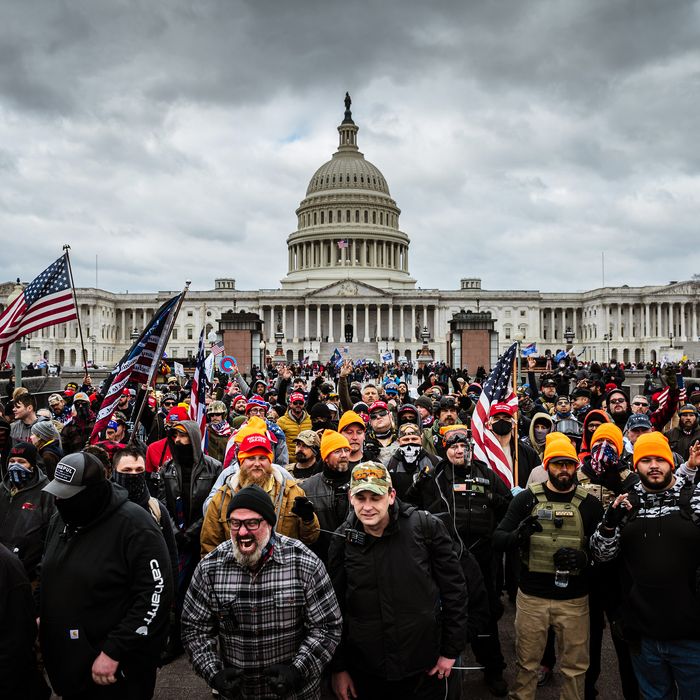
In the aftermath of the violent insurrection at the Capitol on January 6, I have watched as Republicans and some Democrats expressed their shock and horror at what happened: Unthinkable, unprecedented, appalling, and unbelievable, they’ve said. Of course, I understand that jolt of fear and surprise; it is human, and correct, to feel destabilized by the reality of chilling, violent revolt, and democratic upheaval. But none of this was unpredictable. Part of what I have marveled at most, over the past week, is how explicit, loud, and public a strain of the American right has been in broadcasting its violent political agenda — even before the election of Donald Trump.
What happened last week should not have been a shock to any of us. It has been years that hard right-wingers — including but most definitely not limited to the man who is still president of the United States — have been openly threatening violence grounded in racist and misogynistic resentments. For years, they’ve made it clear that they see their only path to victory as being through bloodshed. What’s interesting is how those threats have been heard, and by whom they have been taken seriously before now.
Before the 2016 election, Trump friend and Republican operative Roger Stone went on Milo Yiannopoulos’s podcast and predicted that there would be voter fraud leading to a Hillary Clinton victory. “This election will be illegitimate,” Stone said. “The winner will be illegitimate. We will have a constitutional crisis. We will have widespread civil disobedience … It will be a bloodbath.”
Cotopaxi National Park is a protected area in Ecuador situated in the Cotopaxi Province, Napo Province, and Pichincha Province, roughly 50 km (31 mi) south of Quito.The Cotopaxi volcano (meaning “smooth neck of the moon” in Quechua) that lends its name to the park is located within its boundaries, together with two others: the dormant Rumiñawi volcano to its north-west and the historical Sincholagua volcano (last major eruption: 1877) to the southeast. Cotopaxi is among the highest active volcanoes in the world; its last significant eruption took place in 1904.
“Are your goals too high? When you explained your job to me…” the psychologist trailed off. I knew where this was going. I was here after six visits to the GP in two years, all for unexplained exhaustion. Burnout, I guessed. Whatever that means.
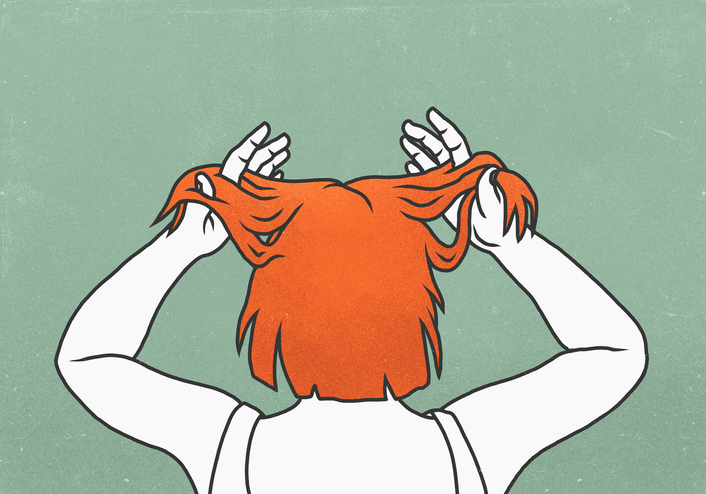
It felt like my brain had been tossed into a washing machine, and all of the delicate bits that made it sparkle had dissolved. Everything took three times longer than it should have. Somehow, over the past few years, my already-frayed cognitive controls had just … evaporated. “I can’t keep it up anymore,” I said wearily. “It” being life. I wasn’t suicidal; I was chronically overwhelmed.
The psychologist tightened her lips. “You know many women in your industry put pressure on themselves to be perfect.”
.
‘Neurodivergent women often slip through the cracks of ADHD diagnosis because they can appear smart or gifted.’ Photograph: Malte Mueller/Getty Images
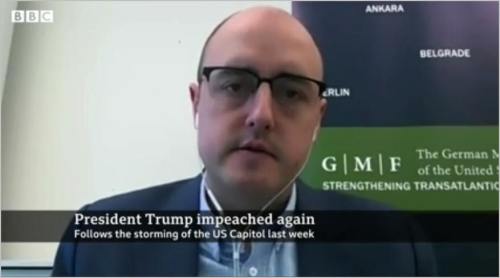
After riots at the U.S. Capitol by President Donald Trump’s supporters, the Republican Party is facing defections from two camps of voters it can’t afford to lose: those saying Trump and his allies went too far in contesting the election of Democrat Joe Biden – and those saying they didn’t go far enough, according to new polling and interviews with two dozen voters.
Paul Foster – a 65-year-old house painter in Ellsworth, Maine – is furious at party leaders for refusing to back the president’s claims that the election was stolen with millions of fraudulent votes. “The party is going to be totally broken” if it abandons Trump, Foster says, predicting Trump loyalists will spin off into a new third party.
Marc Cupelo – a retired business consultant in Syracuse, New York – couldn’t feel more differently. A lifelong Republican, he regretted voting for Trump as he watched the president’s backers storm the Capitol last Wednesday, inspired by Trump’s fiery rhetoric and false election-fraud claims. Now he wants the party to banish Trump and carve out a less-divisive future, free of the “twisted values” held by some of his supporters.
Dozens of people on a terrorist watch list were in Washington for pro-Trump events Jan. 6, a day that ended in a chaotic crime rampage when a violent mob stormed the U.S. Capitol, according to people familiar with evidence gathered in the FBI’s investigation.
The majority of the watch-listed individuals in Washington that day are suspected white supremacists whose past conduct so alarmed investigators that their names had been previously entered into the national Terrorist Screening Database, or TSDB, a massive set of names flagged as potential security risks, these people said. The watch list is larger and separate from the “no-fly” list the government maintains to prevent terrorism suspects from boarding airplanes, and those listed are not automatically barred from any public or commercial spaces, current and former officials said.
The presence of so many watch-listed individuals in one place — without more robust security measures to protect the public — is another example of the intelligence failures preceding last week’s fatal assault that sent lawmakers running for their lives, some current and former law enforcement officials argued. The revelation follows a Washington Post report earlier this week detailing the FBI’s failure to act aggressively on an internal intelligence report of Internet discussions about plans to attack Congress, smash windows, break down doors and “get violent . . . go there ready for war.”
The spectacle of a pro-Trump mob sacking the Capitol in an attempt to cancel the election result was so revolting that even the president’s most devoted sycophants felt compelled to denounce it. And yet the continued gravitational pull of the Trump cult requires them to construct justifications for supporting Trump anyway.
The cleverest rationales have sprung from the party’s most elite-trained sophists. Senator Josh Hawley argued yesterday that endorsing Trump’s attempt to reverse the election was actually a way to stand up to the mob. Ben Shapiro, guest-authoring today’s Playbook, has exceeded Hawley and produced an even more breathtaking rationale. After talking to numerous Republicans in Congress, Shapiro reports that they oppose impeachment because it is a ploy “to cudgel them collectively by lumping them in with the Capitol rioters thanks to their support for Trump.” Here’s his full passage:
Many in the media seem bewildered that House Republicans didn’t unanimously join Democrats in supporting impeachment (looking at you, Playbook readers in the media) — after all, Republicans were in the building when rioters broke through, seeking to do them grievous physical harm. My Republican sources tell me that opposition to impeachment doesn’t spring from generalized sanguinity over Trump’s behavior: I’ve been receiving calls and texts for more than a week from elected Republicans heartsick over what they saw in the Capitol.
Opposition to impeachment comes from a deep and abiding conservative belief that members of the opposing political tribe want their destruction, not simply to punish Trump for his behavior. Republicans believe that Democrats and the overwhelmingly liberal media see impeachment as an attempt to cudgel them collectively by lumping them in with the Capitol rioters thanks to their support for Trump.
.
Photo: Mostafa Bassim/Anadolu Agency via Getty Images
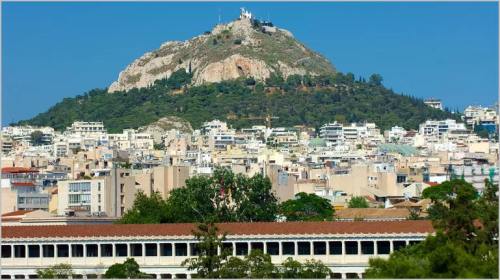
Mount Lycabettus, also known as Lycabettos, Lykabettos, or Lykavittos, a Cretaceous limestone hill in the Greek capital Athens. At 300 meters (908 feet) above sea level, its summit is the highest point in Athens, and pine trees cover its base. The name also refers to the residential neighborhood immediately below the east of the hill.
In the world, human beings are facing various problems. People who are full of greed, anger, and ignorance are seen to be fighting with each other in words and deeds. As the fighting continues, various problems such as civil wars, wars of aggression, and wars of aggression are occurring. As world peace is being destroyed, humans are facing unbearable problems. Innocent children and women are not getting the rights they deserve and deserve. I can't think of one thing every time. What is it? The United Nations. If we look at the responsibilities and duties of the United Nations, I think it is not suitable for solving the problems that are happening in the world today. In fact, the United Nations and the World Security Council, such an organization must rule the world, must be able to give orders, and must have various ways to obey orders. There must be no organization that can influence more than that organization. There should be experts from each country. They can even dominate the superpowers like the US, China, and Britain. Only then will global peace be achieved quickly. Now, if a country with power develops more militarily, economically, or socially than its own country, then powerful countries will jealously seek out enemies and wage war. Or they will attack with fighter jets. In this, innocent people are losing their lives. No one understands the value of a life. You should think about how to achieve global peace by controlling these. If the US continues to be the permanent president of the UN, world peace will never be achieved. If you think carefully, no one sees that they are working for the common good, but for their own benefit, for the benefit of their own country. The permanent president of the UN and the Security Council has rejected this, As a young Rohingya, I have come to realize that only by electing the president and secretary from among the countries in the world through a secret ballot system and governing the world fairly can we achieve global peace. The United Nations and the Security Council are organizations in which any country must govern, give orders, and make them obey their orders. For example, only when a defendant is tried in court can we hold the leaders of the countries in check and control them, can we achieve global peace smoothly. Otherwise, it will not be easy for powerful countries to use various excuses to end this war every year, every year, for the benefit of themselves and their countries. No country's leaders pay any attention to the words of the United Nations and the Security Council. If we look at it in practice, look at the Rohingya issue. Myanmar is a small country. Even that country has been under siege for 8 years. What action can be taken? Why is the UN and the Security Council Powerless? Without such Power, how can the organization bring about global peace? Everyone should think about it. Whether there is a veto or a strong one, all countries in the world can only achieve global peace if they are subject to the UN and the Security Council. Seek peace in the quiet embrace of nature. Peace is an indispensable need of the human race. It is not as if one person can kill another person, and it is as if one country can attack another country, but instead of trying to build peace, we must try to destroy the peace now, and the world is getting hotter and is on the verge of collapse. I especially appeal to all the world experts to urgently try to bring about peace in all parts of the world. Mr, Noor Muhamed Arkhan Rohingya Youth Myanmar
Film and Writing Festival for Comedy. Showcasing best of comedy short films at the FEEDBACK Film Festival. Plus, showcasing best of comedy novels, short stories, poems, screenplays (TV, short, feature) at the festival performed by professional actors.

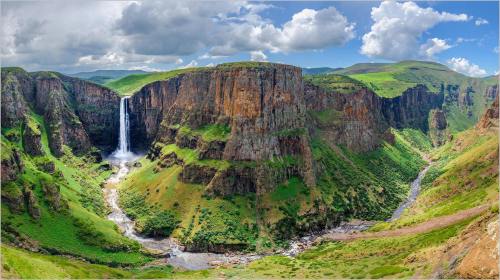 An image from Lesotho
/cdn.vox-cdn.com/uploads/chorus_image/image/68626613/gondelman_affleck_ringer.0.jpg)




 .
.