Northwest of Beijing’s Forbidden City, outside the Third Ring Road, the Chinese Academy of Sciences has spent seven decades building a campus of national laboratories. Near its center is the Institute of Automation, a sleek silvery-blue building surrounded by camera-studded poles. The institute is a basic research facility. Its computer scientists inquire into artificial intelligence’s fundamental mysteries. Their more practical innovations—iris recognition, cloud-based speech synthesis—are spun off to Chinese tech giants, AI start-ups, and, in some cases, the People’s Liberation Army.
I visited the institute on a rainy morning in the summer of 2019. China’s best and brightest were still shuffling in post-commute, dressed casually in basketball shorts or yoga pants, AirPods nestled in their ears. In my pocket, I had a burner phone; in my backpack, a computer wiped free of data—standard precautions for Western journalists in China. To visit China on sensitive business is to risk being barraged with cyberattacks and malware. In 2019, Belgian officials on a trade mission noticed that their mobile data were being intercepted by pop-up antennae outside their Beijing hotel.
.
Xi Jinping is using artificial intelligence to enhance his government’s totalitarian control—and he’s exporting this technology to regimes around the globe.
July 15 was, at first, just another day for Parag Agrawal, the chief technology officer of Twitter. Everything seemed normal on the service: T-Pain’s fans were defending him in a spat with Travis Scott; people were upset that the London Underground had removed artwork by Banksy. Agrawal set up in his home office in the Bay Area, in a room that he shares with his young son. He started to hammer away at his regular tasks—integrating deep learning into Twitter’s core algorithms, keeping everything running, and countering the constant streams of mis-, dis-, and malinformation on the platform.
But by mid-morning on the West Coast, distress signals were starting to filter through the organization. Someone was trying to phish employee credentials, and they were good at it. They were calling up consumer service and tech support personnel, instructing them to reset their passwords. Many employees passed the messages onto the security team and went back to business. But a few gullible ones—maybe four, maybe six, maybe eight—were more accommodating. They went to a dummy site controlled by the hackers and entered their credentials in a way that served up their usernames and passwords as well as multifactor authentication codes.
Shortly thereafter, several Twitter accounts with short handles—@drug, @xx, @vampire, and more—became compromised. So-called OG user names are valued among certain hacker communities the way that impressionist artwork is valued on the Upper East Side. Twitter knows this and views them internally as a high priority. Still, the problem didn’t filter up to Agrawal just yet. Twitter has a dedicated Detection and Response Team that triages security incidents. DART had detected suspicious activity, but the needed response was limited. When you run a sprawling social network, with hundreds of millions of users, ranging from obscure bots to the leader of the free world, this kind of thing happens all the time. You don’t need to constantly harangue the CTO.
.
The company says it has implemented new safeguards since the July 15 attack, but the upcoming election may challenge it like never before. Photographer: Jens Gyarmaty/Redux
Newport is a town, parish, community, electoral ward, and ancient port of Parrog, on the Pembrokeshire coast in West Wales at the mouth of the River Nevern (Welsh: Afon Nyfer) in the Pembrokeshire Coast National Park.
A popular tourist destination, Newport town straddles the Fishguard to Cardigan (A487) road, while the old port area hosts beach, water, and other activities.
The tell-tale signs may not jump out at you, but to Hany Farid, the image is littered with evidence – one of the reflections in the window is misaligned and the shadows do not line up.
This photograph is fake. One of the men was not there at all.
Research suggests that regardless of what you might think about your own abilities to spot a hoax, most of us are pretty bad at it. Farid, however, looks at photographs in a different way to most people. As a leading expert in digital forensics and image analysis, he scrutinizes them for the almost imperceptible signs that suggest an image has been manipulated.
One trick he has picked up over time is to check the points of light in people’s eyes. “If you have two people standing next to each other in a photograph, then we will often see the reflection of the light source (such as the Sun or a camera flash) in their eyes,” he explains. “The location, size, and color of this reflection tells us about the location, size, and color of the light source. If these properties of the light source are not consistent, then the photo may be a composite.”
Artificial intelligence owes a lot of its smarts to Judea Pearl. In the 1980s he led efforts that allowed machines to reason probabilistically. Now he’s one of the field’s sharpest critics. In his 2018 book, “The Book of Why: The New Science of Cause and Effect,” he argues that artificial intelligence has been handicapped by an incomplete understanding of what intelligence really is.
Three decades ago, a prime challenge in artificial intelligence research was to program machines to associate a potential cause to a set of observable conditions. Pearl figured out how to do that using a scheme called Bayesian networks. Bayesian networks made it practical for machines to say that, given a patient who returned from Africa with a fever and body aches, the most likely explanation was malaria. In 2011 Pearl won the Turing Award, computer science’s highest honor, in large part for this work.
But as Pearl sees it, the field of AI got mired in probabilistic associations. These days, headlines tout the latest breakthroughs in machine learning and neural networks. We read about computers that can master ancient games and drive cars. Pearl is underwhelmed. As he sees it, the state of the art in artificial intelligence today is merely a souped-up version of what machines could already do a generation ago: find hidden regularities in a large set of data. “All the impressive achievements of deep learning amount to just curve fitting,” he said recently.
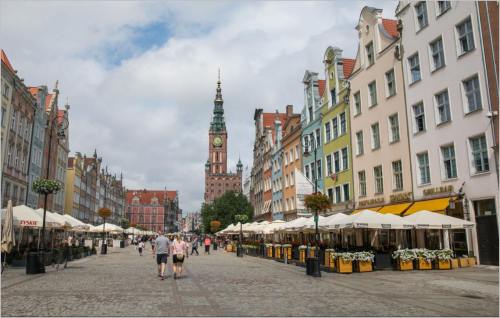
Gdańsk is a city on the Baltic coast of northern Poland. With a population of 470,907, Gdańsk is the capital and largest city of the Pomeranian Voivodeship and one of the most prominent cities within the cultural and geographical region of Kashubia. It is Poland’s principal seaport and the center of the country’s fourth-largest metropolitan area.
The city is situated on the southern edge of Gdańsk Bay on the Baltic Sea, in a conurbation with the city of Gdynia, the resort town of Sopot, and suburban communities; these form a metropolitan area called the Tricity (Trójmiasto), with a population approaching 1.4 million. Gdańsk lies at the mouth of the Motława River, connected to the Leniwka, a branch in the delta of the nearby Vistula River, which drains 60 percent of Poland and connects Gdańsk with the Polish capital, Warsaw. Together with the nearby port of Gdynia, Gdańsk is also a notable industrial center.
On Nov 4, 2016, the neo-Nazi National Socialist Movement published a statement on their website, announcing that they would be replacing the swastika with the odal rune to enter mainstream politics.Four years and an attempted fascist putsch later, it’s the stage at CPAC.
.
“The Odal rune symbolized several values which were of central importance to Nazi ideology.”
Vernon Jordan, the civil rights lawyer who built a career as a power broker in politics and business, has died at age 85.
Jordan “passed away peacefully last evening surrounded by loved ones,” his daughter, Vickee Jordan, said in a statement sent to NPR. “We appreciate all of the outpourings of love and affection.”
A native of Atlanta, Jordan attended DePauw University before earning his law degree at Howard University. Soon after graduating, he devoted himself to ending discrimination against Black Americans in the fight for equal rights. In 1992-93, he chaired President Bill Clinton’s transition team, and for decades he remained a friend and adviser to Bill and Hillary Clinton.
Jordan played an important role in desegregating education in the South, particularly at the college level. In the early 1960s, he became the Georgia field director for the National Association for the Advancement of Colored People, and he famously helped escort Charlayne Hunter through a crowd of white protesters at the University of Georgia in 1961.
.
Vernon Jordan has died at 85. He’s seen here in November of 1992 when he led then-President-elect Bill Clinton’s transition team.
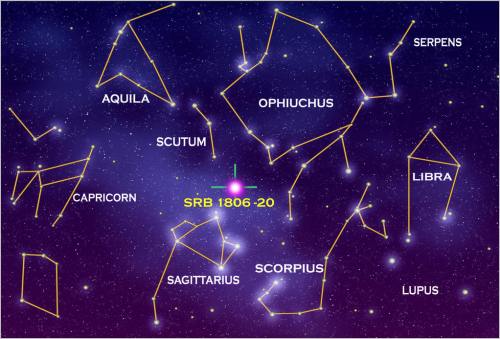
A constellation is an area on the celestial sphere in which a group of visible stars forms a perceived outline or pattern, typically representing an animal, mythological person or creature, or an inanimate object.
The origins of the earliest constellations likely go back to prehistory. People used them to relate stories of their beliefs, experiences, creation, or mythology. Different cultures and countries adopted their own constellations, some of which lasted into the early 20th century before today’s constellations were internationally recognized. The recognition of constellations has changed significantly over time. Many changed in size or shape. Some became popular, only to drop into obscurity. Some were limited to a single culture or nation.
Chess has a reputation for cold logic, but Vladimir Kramnik loves the game for its beauty.
“It’s a kind of creation,” he says. His passion for the artistry of minds clashing over the board, trading complex but elegant provocations and counters, helped him dethrone Garry Kasparov in 2000 and spend several years as world champion.
Yet Kramnik, who retired from competitive chess last year, also believes his beloved game has grown less creative. He partly blames computers, whose soulless calculations have produced a vast library of openings and defenses that top-flight players know by rote. “For quite a number of games on the highest level, half of the game—sometimes a full game—is played out of memory,” Kramnik says. “You don’t even play your own preparation; you play your computer’s preparation.”
Wednesday, Kramnik presented some ideas for how to restore some of the human art to chess, with help from a counterintuitive source—the world’s most powerful chess computer. He teamed up with Alphabet artificial intelligence lab DeepMind, whose researchers challenged their superhuman game-playing software AlphaZero to learn nine variants of chess chosen to jolt players into creative new patterns.
In 2017, AlphaZero showed it could teach itself to roundly beat the best computer players at either chess, Go, or the Japanese game shogi. Kramnik says its latest results reveal beguiling new vistas of chess to be explored if people are willing to adopt some small changes to the established rules.
In the world, human beings are facing various problems. People who are full of greed, anger, and ignorance are seen to be fighting with each other in words and deeds. As the fighting continues, various problems such as civil wars, wars of aggression, and wars of aggression are occurring. As world peace is being destroyed, humans are facing unbearable problems. Innocent children and women are not getting the rights they deserve and deserve. I can't think of one thing every time. What is it? The United Nations. If we look at the responsibilities and duties of the United Nations, I think it is not suitable for solving the problems that are happening in the world today. In fact, the United Nations and the World Security Council, such an organization must rule the world, must be able to give orders, and must have various ways to obey orders. There must be no organization that can influence more than that organization. There should be experts from each country. They can even dominate the superpowers like the US, China, and Britain. Only then will global peace be achieved quickly. Now, if a country with power develops more militarily, economically, or socially than its own country, then powerful countries will jealously seek out enemies and wage war. Or they will attack with fighter jets. In this, innocent people are losing their lives. No one understands the value of a life. You should think about how to achieve global peace by controlling these. If the US continues to be the permanent president of the UN, world peace will never be achieved. If you think carefully, no one sees that they are working for the common good, but for their own benefit, for the benefit of their own country. The permanent president of the UN and the Security Council has rejected this, As a young Rohingya, I have come to realize that only by electing the president and secretary from among the countries in the world through a secret ballot system and governing the world fairly can we achieve global peace. The United Nations and the Security Council are organizations in which any country must govern, give orders, and make them obey their orders. For example, only when a defendant is tried in court can we hold the leaders of the countries in check and control them, can we achieve global peace smoothly. Otherwise, it will not be easy for powerful countries to use various excuses to end this war every year, every year, for the benefit of themselves and their countries. No country's leaders pay any attention to the words of the United Nations and the Security Council. If we look at it in practice, look at the Rohingya issue. Myanmar is a small country. Even that country has been under siege for 8 years. What action can be taken? Why is the UN and the Security Council Powerless? Without such Power, how can the organization bring about global peace? Everyone should think about it. Whether there is a veto or a strong one, all countries in the world can only achieve global peace if they are subject to the UN and the Security Council. Seek peace in the quiet embrace of nature. Peace is an indispensable need of the human race. It is not as if one person can kill another person, and it is as if one country can attack another country, but instead of trying to build peace, we must try to destroy the peace now, and the world is getting hotter and is on the verge of collapse. I especially appeal to all the world experts to urgently try to bring about peace in all parts of the world. Mr, Noor Muhamed Arkhan Rohingya Youth Myanmar
Film and Writing Festival for Comedy. Showcasing best of comedy short films at the FEEDBACK Film Festival. Plus, showcasing best of comedy novels, short stories, poems, screenplays (TV, short, feature) at the festival performed by professional actors.

 Xi Jinping is using artificial intelligence to enhance his government’s totalitarian control—and he’s exporting this technology to regimes around the globe.




 What’s fake?





 Dimitri Otis | Getty Images
