April 3, 2022
Mohenjo
Business, Food For Thought, Human Interest, Science, Technical
amazon, business, Business News, current-events, Future, Hotels, human-rights, medicine, mental-health, research, Science, Science News, technology, Technology News, travel, vacation

Click the link below the picture
.
We’ve all been on the receiving end of a half-hearted compliment, whether it was a generic “nice work” from a colleague or a chirpy “you look nice” from someone who couldn’t pick out our outfit from a police lineup. And being human, we’ve probably handed out our own fair share of faint praise.
But what if we all made a collective vow today and said “No more bland compliments!”
It takes only a tiny bit more effort to turn a vague comment into the kind of praise that will make someone’s day, says Winnipeg, Canada, high school music educator Cheryl Ferguson. Here are the three basic components of an effective compliment.
.
 Illustration by Raúl Soria
.
.
Click the link below for the article:
.
__________________________________________
April 3, 2022
Mohenjo
Business, Food For Thought, Human Interest, Overlooked Past Article, Science, Technical
amazon, business, Business News, current-events, Future, Hotels, human-rights, medicine, mental-health, research, Science, Science News, technology, Technology News, travel, vacation
Some content on this page was disabled on April 15, 2025 as a result of a DMCA takedown notice from Guardian Media Group. You can learn more about the DMCA here:
https://wordpress.com/support/copyright-and-the-dmca/
April 2, 2022
Mohenjo
Business, Enthralling, Human Interest, Photographs
amazon, business, Business News, current-events, Future, Hotels, human-rights, medicine, mental-health, research, Science, Science News, technology, Technology News, travel, vacation

Click the link below the picture
.
Lake Garda is the largest lake in Italy. It is a popular holiday location in northern Italy, about halfway between Brescia and Verona, and between Venice and Milan on the edge of the Dolomites. Glaciers formed this alpine region at the end of the last ice age. The lake and its shoreline are divided between the provinces of Verona (to the south-east), Brescia (south-west), and Trentino (north). The name Garda, which the lake has been referred to in documents dating to the 8th century, comes from the town of the same name. It is evolved from the Germanic word warda, meaning “place of guard”, “place of observation” or “place of safety”.
The northern part of the lake is narrower, surrounded by mountains, the majority of which belong to the Gruppo del Baldo. The shape is typical of a moraine valley, probably having been formed under the action of a Paleolithic glacier. Although traces of the glacier’s actions are evident today, in more recent years it has been hypothesized that the glacier occupied a previously existing depression, created by stream erosion 5 to 6 million years ago.
The lake has numerous small islands and five main ones, the largest being Isola del Garda, where, in 1220 St. Francis of Assisi founded a monastery. In its place now stands a 19th-century building in the Venetian Gothic style. Nearby to the south is Isola San Biagio, also known as the Isola dei Conigli (“Island of the Rabbits”). Both are offshore of San Felice del Benaco, on the lake’s western side. The three other main islands are Isola dell’Olivo, Isola di Sogno, and Isola di Trimelone, all farther north near the eastern side. The main tributary is the Sarca River, others include the Ponale River (fed by Lago di Ledro), the Varone/Magnone River (via the Cascate del Varone), and various streams from both mountainsides, while the only outlet is the Mincio River (79 meters (259 ft), at Peschiera). The subdivision is created by the presence of a fault submerged between Sirmione and Punta San Vigilio which is almost a natural barrier that hampers the homogenization between the water of the two zones.
If the water level of the Adige river is excessive, water is diverted to the lake through the Mori-Torbole tunnel. Wikipedia
.
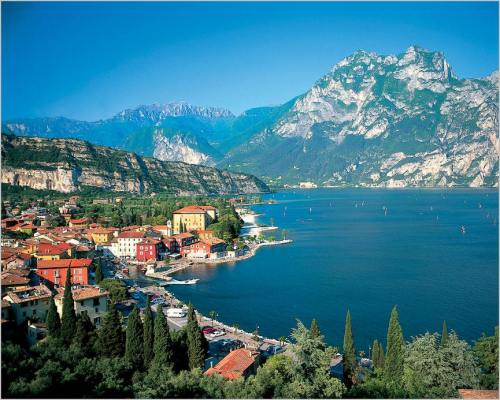 An image of Garda Lake, Italy
.
.
Click the link below for images:
.
__________________________________________
April 2, 2022
Mohenjo
Business, Human Interest
amazon, business, Business News, current-events, Future, Hotels, human-rights, medicine, mental-health, research, Science, Science News, technology, Technology News, travel, vacation

Click the link below the picture
.
In Greek mythology, Eros and Psyche gave birth to a daughter named Hedone. A daemon, or minor deity, she has no myths attached to her, but is known for her one gift to humankind: pleasure. Her gift, however, was also a curse. In Rome, where Hedone was called Voluptas, the statesman and philosopher Cicero saw her deification as “vicious and unnatural,” insofar as she “overpowers natural instinct.”
That’s not so far from how we see things today. Pleasure can be a boon or a burden, depending on our relationship to it. It can leaven laborious days or lead us to waste them. The pleasures of a mild stimulant such as caffeine can be harmless or even beneficial, but the pleasures of amphetamines can be deadly.
This creates a puzzle for the happiness seeker, who must navigate between the twin perils of puritanism and indulgence, leading to the much-dreaded rule of moderation, which is more or less the philosophy of leaving any party as soon as it gets really good. Fortunately, there is a better way to solve the puzzle: To stay at the party without letting it get out of control, choose enjoyment instead.
Enjoyment and pleasure are terms often used interchangeably, but they are not the same thing. Pleasure happens to you; enjoyment is something that you create through your own effort. Pleasure is the lightheadedness you get from a bit of grain alcohol; enjoyment is the satisfaction of a good wine, properly understood. Pleasure is addictive and animal; enjoyment is elective and human.
.
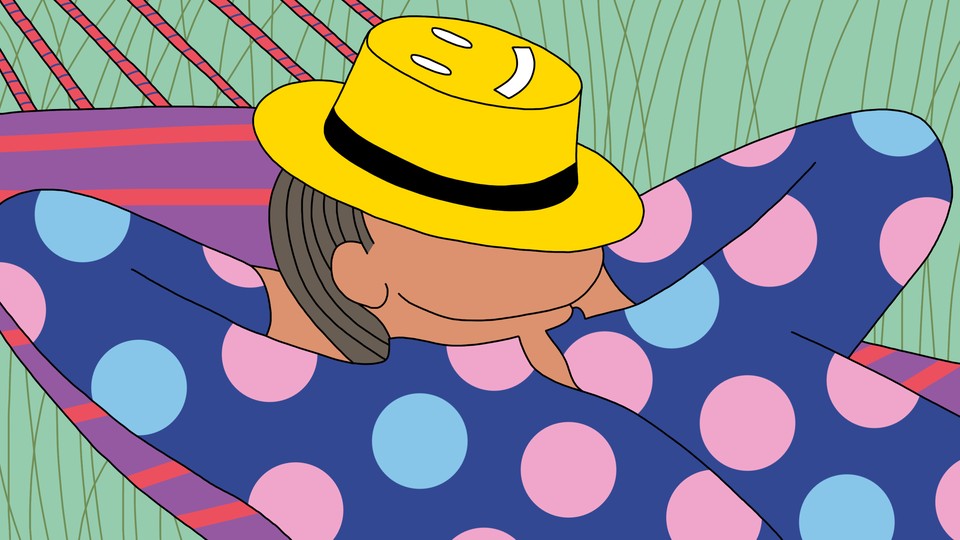 Jan Buchczik
.
.
Click the link below for the article:
.
__________________________________________
April 2, 2022
Mohenjo
Business, Food For Thought, Human Interest, Overlooked Past Article, Science, Technical
amazon, business, Business News, current-events, Future, Hotels, human-rights, medicine, mental-health, research, Science, Science News, technology, Technology News, travel, vacation

Click the link below the picture
.
After scanning the vast reaches of the cosmos for Earth-like planets where life might exist, astronomers have found one right next door.
A planet that is rocky like Earth and only slightly bigger has been discovered orbiting Proxima Centauri , the nearest star to our solar system, scientists reported Wednesday. It is probably in the not-too-hot, not-too-cold ‘Goldilocks Zone’ where liquid water — a key to life — is possible if the planet has an atmosphere. And it is a mere 4.22 light-years from Earth or 25 trillion miles.
It is easily the closest potentially habitable planet ever detected outside our solar system – and one that could be reachable by tiny, uncrewed space probes before the end of the century, in time for some people alive today to witness it.
An overlooked past article
.
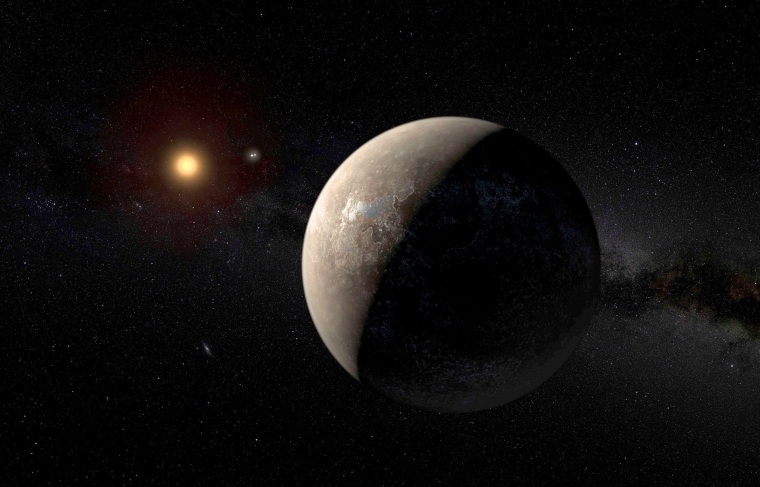 The planet Proxima b orbiting the red dwarf star Proxima Centauri, the closest star to our Solar System, is seen in an undated artist’s impression released by the European Southern Observatory August 24, 2016.ESO | M. Kornmesser / via Reuters
.
.
Click the link below for the article:
.
__________________________________________
April 1, 2022
Mohenjo
Business, Enthralling, Human Interest, Photographs
amazon, business, Business News, current-events, Future, Hotels, human-rights, medicine, mental-health, research, Science, Science News, technology, Technology News, travel, vacation
Click the link below the picture
.
The Czech Republic, also known as Czechia and historically known as Bohemia, is a landlocked country in Central Europe. It is bordered by Austria to the south, Germany to the west, Poland to the northeast, and Slovakia to the southeast. The Czech Republic has a hilly landscape that covers an area of 78,871 square kilometers (30,452 sq mi) with a mostly temperate continental and oceanic climate. The capital and largest city is Prague; other major cities and urban areas include Brno, Ostrava, Plzeň, and Liberec.
The Duchy of Bohemia was founded in the late 9th century under Great Moravia. It was formally recognized as an Imperial State of the Holy Roman Empire in 1002 and became a kingdom in 1198. Following the Battle of Mohács in 1526, the whole Crown of Bohemia was gradually integrated into the Habsburg Monarchy. The Protestant Bohemian Revolt led to the Thirty Years’ War. After the Battle of the White Mountain, the Habsburgs consolidated their rule. With the dissolution of the Holy Empire in 1806, the Crown lands became part of the Austrian Empire.
In the 19th century, the Czech lands became more industrialized, and in 1918 most of it became part of the First Czechoslovak Republic following the collapse of Austria-Hungary after World War I. Czechoslovakia was the only country in Central and Eastern Europe to remain a parliamentary democracy during the entirety of the interwar period. After the Munich Agreement in 1938, Nazi Germany systematically took control over the Czech lands. Czechoslovakia was restored in 1945 and became an Eastern Bloc communist state following a coup d’état in 1948. Attempts at a liberalization of the government and economy were suppressed by a Soviet-led invasion of the country during the Prague Spring in 1968. In November 1989, the Velvet Revolution ended Communist rule in the country, and on 1 January 1993, Czechoslovakia was dissolved, with its constituent states becoming the independent states of the Czech Republic and Slovakia.
The Czech Republic is a unitary parliamentary republic and developed country with an advanced, high-income social market economy. It is a welfare state with a European social model, universal health care, and tuition-free university education. It ranks 12th in the UN inequality-adjusted human development and 24th in the World Bank Human Capital Index. It ranks as the 9th safest and most peaceful country and 31st in democratic governance. The Czech Republic is a member of NATO, the European Union, OECD, OSCE, and the Council of Europe. Wikipedia
.
 An image from Czech Republic
.
.
Click the link below for images:
.
__________________________________________
April 1, 2022
Mohenjo
Business, Food For Thought, Human Interest, Science, Technical
amazon, business, Business News, current-events, Future, Hotels, human-rights, medicine, mental-health, research, Science, Science News, technology, Technology News, travel, vacation

Click the link below the picture
.
Life seems full of ever-increasing piles of paperwork – bills to pay, appointments to make, forms to sign, carpools to organize – so much tedious, time-consuming, unpaid labor. Call it the homework of adulthood, and many of us are earning a failing grade.
Columbia Law School professor Elizabeth Emens calls this work “life admin,” and wrote a book about it by the same name.
“Life admin is all the invisible office work that steals our time,” Emens explains. “It’s the kind of work that managers and secretaries get paid in an office to do but that we all do invisibly, and for free, in our own lives.”
.
 Hero Images/Getty Images/Hero Images
.
.
Click the link below for the article:
.
__________________________________________
April 1, 2022
Mohenjo
Business, Food For Thought, Human Interest, sports, Technical
amazon, business, Business News, current-events, Future, Hotels, human-rights, medicine, mental-health, research, Science, Science News, technology, Technology News, travel, vacation

Click the link below the picture
.
You couldn’t write a much better script for the Final Four of the NCAA women’s tournament. There’s defending champion Stanford. There’s 11-time champion Connecticut hoping to end a six-year drought between titles. There’s South Carolina, which has been ranked No. 1 all season. And there’s No. 1 seed Louisville making its fourth appearance in search of its first national championship.
There’s plenty of star power on the court with South Carolina’s Aliyah Boston, Stanford’s Haley Jones, Connecticut’s Paige Bueckers and Louisville’s Hailey Van Lith. And the coaches – Dawn Staley, Tara VanDerveer, Geno Auriemma and Jeff Walz – are royalty of the sport.
It sets up for a dramatic finish to the season in Minneapolis. Our experts make their picks for Friday’s national semifinals and who will win it all on Sunday.
.
 Haley Jones looks to guide Stanford to a second consecutive national championship.
.
.
Click the link below for the article:
.
__________________________________________
March 31, 2022
Mohenjo
Business, Enthralling, Human Interest, Photographs
amazon, business, Business News, current-events, Future, Hotels, human-rights, medicine, mental-health, research, Science, Science News, technology, Technology News, travel, vacation
Click the link below the picture
.
Villasimius is a comune (municipality) in the Province of South Sardinia in the Italian region of Sardinia, located about 35 kilometers (22 mi) east of Cagliari.
Due to its strategically important site, Villasimius’ territory was inhabited since prehistoric times, as testified by nuraghe (19th-6th centuries BC), Phoenician-Carthaginian (7th-2nd centuries BC), and Roman (3rd-century BC-6th century AD) remains.
During the giudicati (Sardinian kingdoms), Aragonese and Spanish reigns, the territory suffered numerous pirate raids and became increasingly depopulated. The village name was, at least from the 13th century, Carbonara; this was repopulated from the early 19th century, when it was under the Kingdom of Sardinia-Piedmont, becoming a commune in 1838. Villasimius’ economy was traditionally based on agriculture and shepherding and, from 1875 to the extraction of granite. Its tourism industry began in the late 1960s and is now Villasimius’ main economic activity.
In 1998 the Capo Carbonara National Marine Park was created. It encompasses all the waters surrounding the headlands in the eastern Gulf of Cagliari, from Villasimius’ western border with Solanas to its northern border with Castiadas.
Most important beaches [1] of the area are Cala Burroni, Cala Caterina, Campus, Piscadeddus, Porto Giunco, Porto Sa Ruxi, Punta Molentis, Simius, Spiaggia del Riso, Timi Ama. Wikipedia
.
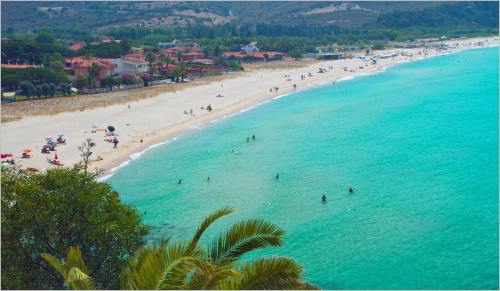 An image from Villasimius
.
.
Click the link below for images:
.
__________________________________________
March 31, 2022
Mohenjo
Business, Food For Thought, Human Interest, Science, Technical
amazon, business, Business News, current-events, Future, Hotels, human-rights, medicine, mental-health, research, Science, Science News, technology, Technology News, travel, vacation

Click the link below the picture
.
Not too long ago, a colleague and I were lamenting the process of growing older and the inevitable increasing difficulty of remembering things we want to remember. That becomes particularly annoying when you attend a conference or a learning seminar and find yourself forgetting the entire session just days later.
But then my colleague told me about the Ebbinghaus Forgetting Curve, a 100-year-old formula developed by German psychologist Hermann Ebbinghaus, who pioneered the experimental study of memory. The psychologist’s work has resurfaced and has been making its way around college campuses as a tool to help students remember lecture material. For example, the University of Waterloo explains the curve and how to use it on the Campus Wellness website. I teach at Indiana University and a student mentioned it to me in class as a study aid he uses. Intrigued, I tried it out too–more on that in a moment.
The Forgetting Curve describes how we retain or lose information that we take in, using a one-hour lecture as the basis of the model. The curve is at its highest point (the most information retained) right after the one-hour lecture. One day after the lecture, if you’ve done nothing with the material, you’ll have lost between 50 and 80 percent of it from your memory.
.
 Photo by Getty Images
.
.
Click the link below for the article:
.
__________________________________________
Older Entries
Newer Entries

