October 22, 2022
Mohenjo
Business, Food For Thought, Human Interest, Political, Science, Technical
amazon, business, Business News, current-events, Future, Hotels, human-rights, medicine, mental-health, research, Science, Science News, technology, Technology News, travel, vacation
Click the link below the picture
.
When people strive for self-improvement, a common mistake is to shoot too high. We make promises to be healthier, more mindful, more patient. But such lofty goals often go unmet. They’re just too vague, or too hard to track. (There’s a reason why 80 percent of New Year’s Resolutions are cast aside by February.) Even when a goal is more concrete (“I want to run a half marathon”; “I want to yell less”) it’s difficult to stay the course, especially when you have kids because time is tight, progress requires consistency, and it feels unnatural to break tasks into very small chunks.
A different approach? Start smaller — much smaller — and instead strive to develop micro habits. Micro habits are simple daily actions that are easy to implement into your established routine and only require a few minutes of your time (if that). Drinking a cup of water in the morning before your coffee so you stay hydrated. Performing a minute of breathing exercises to help manage anger. Reading just one paragraph of a book that seems daunting.
While they sound insignificant, micro habits are much more achievable than traditional goals and resolutions — and often contain aspects of them broken down into smaller chunks. And, because stacking up small victories creates a snowball effect that encourages you to undertake more, and more ambitious, changes, micro habits may be more likely to lead to lasting change.
.
 danm/Getty
.
.
Click the link below for the article:
.
__________________________________________
October 21, 2022
Mohenjo
Business, Enthralling, Human Interest, Photographs
amazon, business, Business News, current-events, Future, Hotels, human-rights, medicine, mental-health, research, Science, Science News, technology, Technology News, travel, vacation

Click the link below the picture
.
Vestvågøy is a municipality in Nordland county, Norway. It is part of the traditional district of Lofoten. The administrative center of the municipality is the town of Leknes. Some of the villages in the municipality include Ballstad, Borg, Bøstad, Gravdal, Knutstad, Stamsund, and Tangstad. With over 11,300 inhabitants, Vestvågøy is the most populous municipality in all of the Lofoten and Vesterålen regions in Nordland county.
The Lofotr museum in Borg shows a reconstructed Iron Age Viking chieftain’s residence, with a house measuring 80 meters (262 ft), built of stone and turf.
The 424-square-kilometer (164 sq mi) municipality is the 232nd largest by area out of the 356 municipalities in Norway. Vestvågøy is the 98th most populous municipality in Norway with a population of 11,566. The municipality’s population density is 28.4 inhabitants per square kilometer (74/sq mi) and its population has increased by 6.6% over the previous 10-year period.
The municipality of Vestvågøy was created on 1 January 1963 when the four municipalities on the island of Vestvågøya were merged into one municipality for the whole island. The old municipalities on the island were Borge (population: 4,056), Buksnes (population: 4,416), Hol (population: 3,154), and Valberg (population: 662). Initially, Vestvågøy had 12,288 residents. The borders have not changed since.
The municipality is named after the island of Vestvågøya. The Old Norse name of the island was Lófót (see Lofoten) – but when Lofoten became the name of the whole archipelago, the old name was replaced with Vestvågøy. Vestvågøy can be broken down into three parts: vest-våg-øy which can be roughly translated as west-bay-island. The coat of arms was granted on 7 September 1984. The arms show two dried codfish in white on a blue background. This was chosen since the municipality is one of the main Norwegian exporters of (dried) cod or stockfish and has been since the Middle Ages.
The Church of Norway has five parishes (sokn) within the municipality of Vestvågøy. It is part of the Lofoten prosti (deanery) in the Diocese of Sør-Hålogaland. Wikipedia
.
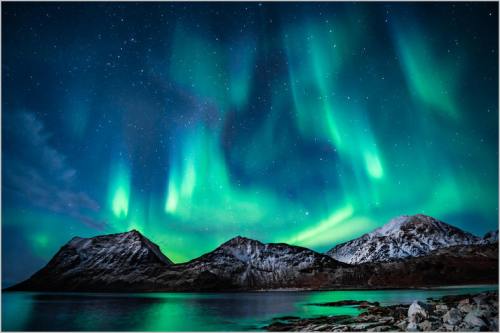 An image of Aurora borealis over Uttakleiv Beach in Vestvågøy, Norway
.
.
Click the link below for article:
.
__________________________________________
October 21, 2022
Mohenjo
Business, Food For Thought, Human Interest, Political, Science, Technical
amazon, business, Business News, current-events, Future, Hotels, human-rights, medicine, mental-health, research, Science, Science News, technology, Technology News, travel, vacation

Click the link below the picture
.
Journalists visiting Detroit on September 14th and 15th were given two quite different views of its future. On the 14th, the opening day of the first North American International Auto Show to be hosted in Detroit since 2019, they watched through a window as Joe Biden clambered into a new bright-orange petrol-powered Chevrolet Corvette, and later drove an electric Cadillac Suv across the floor. In a speech that followed, the president, a self-professed “car guy”, drew a direct link between cars and prosperity. “American manufacturing is back. Detroit is back. America’s back,” he declared.
.
 .
.
.
Click the link below for the article:
.
__________________________________________
October 21, 2022
Mohenjo
Business, Food For Thought, Human Interest, Political, Science, Technical
amazon, business, Business News, current-events, Future, Hotels, human-rights, medicine, mental-health, research, Science, Science News, technology, Technology News, travel, vacation

Click the link below the picture
.
We tend to think of January as the month for new beginnings, but science disagrees. According to many experts, September is actually the best month to kick off new habits or start reimagining your life. Thanks to at least a decade of training as kids, most of us still have a gut sense that the back-to-school month is a time for fresh starts. Plus September lacks the winter gloom, holiday comedown, and credit card bills of January.
If you’re up for taking the experts’ advice and looking to get yourself on a new track this month, what’s the best way to approach making deep and lasting changes to your life? Changing your habits is never easy, but one blogger insists he’s stumbled on an effective shortcut.
If you want to really change the momentum in your life, set aside a week or two to limit distractions and dive deep into your new commitment by going into “Monk Mode.”
Monk Mode = a challenge + a detox
On his blog Raptitude recently, writer David Cain is clear that he didn’t invent the concept of Monk Mode.
“During the late 2000s, around when I started this blog, there was a trend among young male entrepreneurs called Monk Mode. Everyone had a different idea of what that term meant, but generally, it referred to taking a definite period of time–a week to three months or more–to focus with unusual intensity on certain important and fruitful pursuits, while abstaining from certain distracting or self-defeating activities,” he explains.
.
 Photo: Getty Images
.
.
Click the link below for the article:
.
__________________________________________
October 20, 2022
Mohenjo
Business, Enthralling, Human Interest, Photographs
amazon, business, Business News, current-events, Future, Hotels, human-rights, medicine, mental-health, research, Science, Science News, technology, Technology News, travel, vacation
Click the link below the picture
.
A Wild Hare is a 1940 Warner Bros. Merrie Melodies cartoon directed by Tex Avery. The short subject features Elmer Fudd and Bugs Bunny, the latter making what is considered his first official appearance.
The title is a play on “wild hair”, the first of many puns between “hare” and “hair” that would appear in Bugs Bunny titles. The pun is carried further by a bar of “I’m Just Wild About Harry” playing in the underscore of the opening credits. Various directors at the Warner Bros. cartoon studio had been experimenting with cartoons focused on a hunter pursuing a rabbit since 1938, with varied approaches to the characters of both rabbit and hunter.
The cartoon begins with Elmer tiptoeing around and telling the viewer his famous line, “Shh. Be vewy, vewy quiet. I’m hunting wabbits.” Elmer then approaches one of Bugs’ warrens, puts down a carrot, and hides behind a tree. Bugs’ arm reaches out of the hole, feels around, and snatches the carrot. He reaches out again and finds Elmer’s double-barreled shotgun. His arm quickly pops back into the hole before returning to drop the eaten stub of Elmer’s carrot and apologetically caress the end of the barrel. Elmer shoves his gun into Bugs’ burrow, and thus causes a struggle in which the barrel is bent into a bow.
Elmer frantically digs into the hole while Bugs emerges from a nearby opening with another carrot in his hand, lifts Fudd’s hat, and taps the top of his head until Elmer notices; then chews his carrot and delivers his definitive line, “What’s up Doc?”. When Elmer replies that “[he’s] hunting ‘wabbits'”, Bugs chews his carrot and asks what a rabbit is; then teases Elmer by displaying every aspect of Fudd’s description until Elmer suspects that Bugs is a rabbit. Bugs confirms this, hides behind a tree, sneaks behind Elmer, covers his eyes, and asks “Guess who?”.
Elmer tries the names of contemporary screen beauties whose names exploited his speech impediment before he guesses the rabbit. Bugs responds “Hmm….. Could be!”, kisses Elmer, and dives into his burrow. Elmer sticks his head into the hole and gets another kiss from Bugs; whereafter he wipes his mouth and decides to set a trap. When Bugs puts a skunk in the trap, Fudd blindly grabs the skunk and carries it over to the watching Bugs to brag; and when Elmer sees his mistake, Bugs gives him a kiss on the nose, whereupon Fudd looks at the skunk, who winks and nudges Elmer. Fudd winces and gingerly sends the skunk on his way.
Bugs then offers a free shot at himself; fakes an elaborate death; and plays dead, leaving Elmer suffering with remorse; but survives the shot and sneaks up behind the distraught Fudd, kicks him in his rear, shoves a cigar into his mouth, and tiptoes away, ballet-style. Finally, the defeated Elmer walks away sobbing about “wabbits, cawwots, guns”, etc. Bugs then remarks, “Can ya imagine anybody acting like that? Ya know, I think the poor guy’s screwy”, and begins to play his carrot like a fife, playing the tune The Girl I Left Behind Me, and marches with one stiff leg towards his rabbit hole (recalling The Spirit of ’76).
Hares and jackrabbits are mammals belonging to the genus Lepus. They are herbivores, and live solitarily or in pairs. They nest in slight depressions called forms, and their young are able to fend for themselves shortly after birth. The genus includes the largest lagomorphs. Most are fast runners with long, powerful hind legs, and large ears to dissipate body heat. Hare species are native to Africa, Eurasia and North America. A hare less than one year old is called a “leveret”. A group of hares is called a “husk”, a “down” or a “drove”.
Members of the Lepus genus are considered true hares, distinguishing them from rabbits which make up the rest of the Leporidae family. However, there are five leporid species with “hare” in their common names which are not considered true hares: the hispid hare (Caprolagus hispidus), and four species known as red rock hares (comprising Pronolagus). Conversely, several Lepus species are called “jackrabbits”, but classed as hares rather than rabbits. The pet known as the Belgian hare is a domesticated European rabbit which has been selectively bred to resemble a hare. Wikipedia
.
 An image of a Wild Hare
.
.
Click the link below for images:
.
__________________________________________
October 20, 2022
Mohenjo
Business, Food For Thought, Human Interest, Science, Technical
amazon, business, Business News, current-events, Future, Hotels, human-rights, medicine, mental-health, research, Science, Science News, technology, Technology News, travel, vacation

Click the link below the picture
.
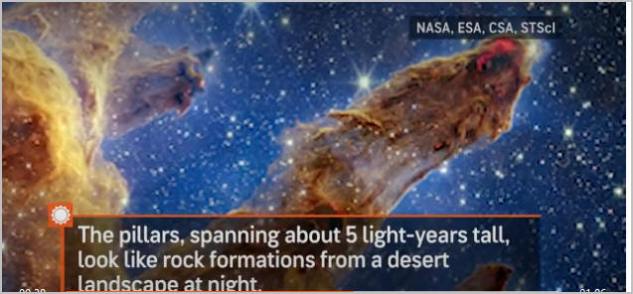
The next month might as well be known as meteor shower season, as up to four separate shooting star events will take place in the night sky.
Four meteor showers are about to peak in less than one month’s time, a celestial series that will kick off before the end of the week thanks to one of the most famous objects in the solar system.
The Orionid meteor shower peaks on the night of Thursday, Oct. 20, into the early morning of Friday, Oct. 21, as the Earth encounters a field of debris left behind by Halley’s Comet. The famous comet will not return to the inner solar system until 2061, but its previous orbits around the sun left behind a trail of cosmic dust and debris that will burn up in sensational fashion when colliding with Earth’s atmosphere this week.
Although the meteor shower is caused by Halley’s Comet, the annual light show is named after the constellation Orion, as meteors will appear to originate from the same area of the sky as the constellation.
.

 .
.
.
Click the link below for the article:
.
__________________________________________
October 19, 2022
Mohenjo
Business, Enthralling, Human Interest, Photographs
amazon, business, Business News, current-events, Future, Hotels, human-rights, medicine, mental-health, research, Science, Science News, technology, Technology News, travel, vacation
Click the link below the picture
.
Lofoten is an archipelago and a traditional district in the county of Nordland, Norway. Lofoten has distinctive scenery with dramatic mountains and peaks, open sea and sheltered bays, beaches, and untouched lands. There are two towns, Svolvær and Leknes – the latter is approximately 169 km (105 mi) north of the Arctic Circle and approximately 2,420 km (1,500 mi) away from the North Pole. The archipelago experiences one of the world’s largest elevated temperature anomalies relative to its high latitude.
Lofoten (Old Norse: Lófótr) was the original name of the island Vestvågøya. The first element is ló (i.e., “lynx”) and the last element is derived from Norse fótr (i.e., “foot”), as the shape of the island must have been compared with that of a lynx’s foot. (The old name of the neighboring island Flakstadøya was Vargfót, “wolf’s foot”, from vargr “wolf”.) Alternatively, it could derive from the word for light in reference to the presence of Aurora Borealis as the word for light itself is the root of the Old Norse word for lynx lóa, although the earliest evidence suggests Lófótr was first the name of the island of Vestvågøy and only later becoming the name of the chain of islands. Most parsimonious is the analogy with Aurora Borealis, as the word fótr is typically not used to describe the feet of beasts of prey, instead using the word hrammr (paw) or löpp (also paw) for animals such as cats or dogs. Fótr can be used to describe legs, and as such, light leg represents the most plausible etymology taking into account the geography of the archipelago, eventually morphing to describe only the island of Vestvågøy before once again describing the island chain from its main island.
Another name one might come across is “Lofotveggen” or the Lofoten wall. The archipelago looks like a closed wall when seen from elevated points around Bodø or when arriving from the sea, some 100 kilometers (62 miles) long, and 800–1,000 meters (2,600–3,300 feet) high.
“There is evidence of human settlement extending back at least 11,000 years in Lofoten, and the earliest archaeological sites … are only about 5,500 years old, at the transition from the early to late Stone Age.” Iron Age agriculture, livestock, and significant human habitation can be traced back to c. 250 BC.[1]
The town of Vågan (Norse Vágar) is the first known town formation in northern Norway. It existed in the early Viking Age, maybe earlier, and was located on the southern coast on eastern Lofoten, near today’s village Kabelvåg in Vågan municipality. The Lofotr Viking Museum with the reconstructed 83-metre-long (272 ft) longhouse (the largest known) is located near Borg on Vestvågøy, which has many archeological finds from the Iron Age and Viking Age.
The islands have for more than 1,000 years been the center of great cod fisheries, especially in winter, when the cod migrate south from the Barents Sea and gather in Lofoten to spawn. Bergen in southwestern Norway was for a long time the hub for further export of cod south to different parts of Europe, particularly so when trade was controlled by the Hanseatic League. In the lowland areas, particularly Vestvågøy, agriculture plays a significant role, as it has done since the Bronze Age.
In March 1941 the islands were raided by British Commandos during Operation Claymore, and in a subsequent diversionary attack to support the Vaagso raid in December.
As of 2017, the islands attract one million tourists a year. Wikipedia
.
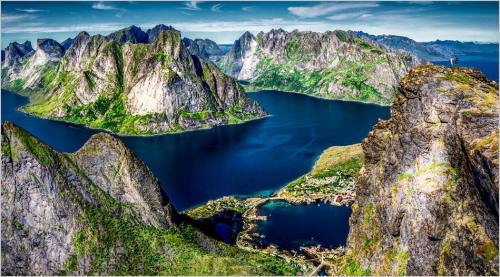 An image from Reinebringen Lofoten
.
.
Click the link below for images:
.
__________________________________________
October 19, 2022
Mohenjo
Business, Food For Thought, Human Interest, Political, Science, Technical
amazon, business, Business News, current-events, Future, Hotels, human-rights, medicine, mental-health, research, Science, Science News, technology, Technology News, travel, vacation
Some content on this page was disabled on April 15, 2025 as a result of a DMCA takedown notice from Guardian Media Group. You can learn more about the DMCA here:
https://wordpress.com/support/copyright-and-the-dmca/
October 19, 2022
Mohenjo
Business, Food For Thought, Human Interest, Political, Science, Technical
amazon, business, Business News, current-events, Future, Hotels, human-rights, medicine, mental-health, research, Science, Science News, technology, Technology News, travel, vacation

Click the link below the picture
.
Dear Prudence,
My 42-year-old son has recently filed for divorce from his wife of 12 years, over her inability to have biological children. Personally, I feel that this is horrible and petty, and while I love my son, he’s not behaving well here. That is as it is, I have spent 17 years getting to know “Jasmine,” and had we met as coworkers or at the gym, I would have considered us friends, not mother-in-law and daughter-in-law. We get along well, and previously went on frequent outings together, in which we did not talk about her relationship with my son, but about everything else.
But, and there is always a but, I don’t want to take sides here. My son is entitled to his wishes and desires, but if this happened to some other couple, I would definitely support the woman here. Is there a way forward to include her in my life, should she want that? I wouldn’t want to cause her additional pain, as she was blind-sided by his request for a divorce by being a reminder of her “failed marriage.” I had thought to write an email, letter, or text saying I was still here and to write back when she was ready, if she wanted to stay friends. But I worry that makes it seem like I don’t want to be. Honestly, at the moment, I’d rather be her mother (who is still living and a positive maternal figure as it is), than my thoughtless son’s.
—Torn Up Inside
.
 Photo illustration by Slate. Photo by PeopleImages/iStock/Getty Images Plus.
.
.
Click the link below for the article:
.
__________________________________________
October 18, 2022
Mohenjo
Business, Enthralling, Human Interest, Photographs
amazon, business, Business News, current-events, Future, Hotels, human-rights, medicine, mental-health, research, Science, Science News, technology, Technology News, travel, vacation
Click the link below the picture
.
The Maddalena Archipelago is a group of islands in the Strait of Bonifacio between Corsica (France) and Sardinia (Italy). The whole archipelago makes the territory of the La Maddalena comune in Sardinia.
The archipelago consists of seven main islands and numerous small islets. The largest one is the island of La Maddalena (Italian: Isola La Maddalena), with a homonymous town, which is the largest settlement in the archipelago. The other six islands, in order of size, are Caprera, Spargi, Santo Stefano, Santa Maria, Budelli, and Razzoli. Only Maddalena, Caprera, and Santo Stefano are inhabited; Budelli had a single caretaker until 2021.
Lying adjacent to the tourist resort of the Costa Smeralda, Maddalena has the same clear waters and wind-blown granite coastlines but remains a haven for wildlife. It is a designated national park, the Parco Nazionale Arcipelago di La Maddalena. It is a popular tourist destination, especially among boaters. In 2006 it was placed on the tentative list for consideration as a World Heritage Site by UNESCO.
The islands have been inhabited since prehistoric times. They were known by the Romans as Cunicularia and were a busy shipping area during the 2nd and 1st centuries BC. The Maddalenas have a strategic value and were the object of a dispute between the maritime republics of Pisa and Genoa in the 13th century and subsequently was abandoned for a long period before being colonized again by Corsican shepherds and by Sardinian settlements in the 18th century. Napoleon Bonaparte, Admiral Nelson, and Giuseppe Garibaldi all have historical links with the area.
The main access into and out of the archipelago is via the frequent car ferries from Palau on Sardinia that run into La Maddalena. There are roads only on Maddalena and Caprera.
From 1973 until 2008 the Santo Stefano island was a home for the NATO naval base which housed US nuclear submarines. Controversy arose in 2003 when the USS Hartford ran aground in the vicinity of the Bisce Island [it] while on maneuvers in the area. Wikipedia
.
 An image from Maddalena Archipelago
.
.
Click the link below for images:
.
__________________________________________
Older Entries
Newer Entries

