February 26, 2023
Mohenjo
Business, Food For Thought, Human Interest, Political, Science, Technical
amazon, business, Business News, current-events, Future, Hotels, human-rights, medicine, mental-health, research, Science, Science News, technology, Technology News, travel, vacation

Click the link below the picture
.
It was the beginning of the late 1980s. Don and Judy were finally ready to start a family. But, after a few attempts, they realized that they would have to adjust their plan. They would need a sperm donor. And, even before they found one, they had already decided. They were going to have two children, and they would never tell their children that their father was not biologically related to them. This was a secret they promised to each other that they would never tell.
For the past decade, I’ve studied the psychology of secrecy. I know the story of Don and Judy’s secret well because I’m their first child, and I learned about this secret the same day I gave an invited talk about my research on secrecy for a job interview. I was 26, and if you’re wondering what it’s like to learn such a major secret, I’ll tell you this: it was surprising. It was shocking to learn that I was not biologically related to my father nor his parents with whom I was very close. And it was even more shocking to learn that my brother was, in fact, my half-brother, conceived from a different donor. But I had not been the keeper of the secret for all those years. And, while the revelation for me was jolting, the greater impact and harm came to my parents themselves.
Secrets usually hurt their holders most. Keeping a secret is associated with lower life satisfaction, lower-quality relationships, and symptoms of poor psychological and physical health. Our secrets often hurt us, but not for the reasons you might think. While hiding a secret in conversation can feel uncomfortable, the hiding turns out to be the easy part. Simply thinking about a secret outside of a social interaction is associated with feelings of shame, isolation, and inauthenticity. These experiences can leave us feeling helpless, at the mercy of our secrets, and unable to cope. And these harms can begin the very moment you decide to keep a secret.
.
 Photo by Alex Majoli/Magnum
.
.
Click the link below for the article:
.
__________________________________________
February 25, 2023
Mohenjo
Business, Food For Thought, Human Interest, Science, Technical
amazon, business, Business News, current-events, Future, Hotels, human-rights, medicine, mental-health, research, Science, Science News, technology, Technology News, travel, vacation
Some content on this page was disabled on April 15, 2025 as a result of a DMCA takedown notice from Guardian Media Group. You can learn more about the DMCA here:
https://wordpress.com/support/copyright-and-the-dmca/
February 25, 2023
Mohenjo
Business, Food For Thought, Human Interest, Political, Science, Technical
amazon, business, Business News, current-events, Future, Hotels, human-rights, medicine, mental-health, research, Science, Science News, technology, Technology News, travel, vacation

Click the link below the picture
.
The first time the Rev. Lettie Moses Carr saw Jesus depicted as Black, she was in her 20s.
It felt “weird,” Carr said.
Until that moment, she’d always thought Jesus was white.
At least that’s how he appeared when she was growing up. A copy of Warner E. Sallman’s “Head of Christ” painting hung in her home, depicting a gentle Jesus with blue eyes turned heavenward and dark blond hair cascading over his shoulders in waves.
The painting, which has been reproduced a billion times, came to define what the central figure of Christianity looked like for generations of Christians in the United States — and beyond.
For years, Sallman’s Jesus “represented the image of God,” said Carr, director of ministry and administrative support staff at First Baptist Church of Glenarden in Maryland.
.
 Painting by Warner Sallman, “Head of Christ,” © 1941 Warner Press Inc., Anderson, Indiana. Used with permission
.
.
Click the link below for article:
.
__________________________________________
February 24, 2023
Mohenjo
Business, Food For Thought, Human Interest, Political, Science, Technical
amazon, business, Business News, current-events, Future, Hotels, human-rights, medicine, mental-health, research, Science, Science News, technology, Technology News, travel, vacation

Click the link below the picture
.
For much of the postwar era, America’s territories thrived. Remnants of the age of imperialism, the five far-flung Caribbean and Pacific outposts added residents faster than most states. But the 2020 Census revealed a troubling turn: Every territory is now shrinking, losing population faster than any state.
The synchronized swoon flummoxed us. They appear to have so little in common!
The largest U.S. territory, Puerto Rico, has 3.3 million people and Spanish and West Indian traditions tracing back to Columbus. The nearby U.S. Virgin Islands (population 87,000) were previously settled by Denmark. Over in the Pacific between Japan and Australia, Guam (pop. 154,000) and the Northern Mariana Islands (pop. 47,000) share Chamorro heritage and tourist economies oriented toward East Asia. And American Samoa (pop. 50,000), in the heart of Polynesia, still employs a communal system of land ownership and lies closer to New Zealand than Hawaii.
One big thing unites them: U.S. rule.
.
 As the sun sets, Carlos Fernandez, 90, stands in the doorway of his shack, down a steep, winding road on a remote mountainside in Villalba, Puerto Rico. (Sarah L. Voisin/The Washington Post)
.
.
Click the link below for the article:
.
__________________________________________
February 23, 2023
Mohenjo
Business, Food For Thought, Human Interest, Political, Science, Technical
amazon, business, Business News, current-events, Future, Hotels, human-rights, medicine, mental-health, research, Science, Science News, technology, Technology News, travel, vacation

Click the link below the picture
.
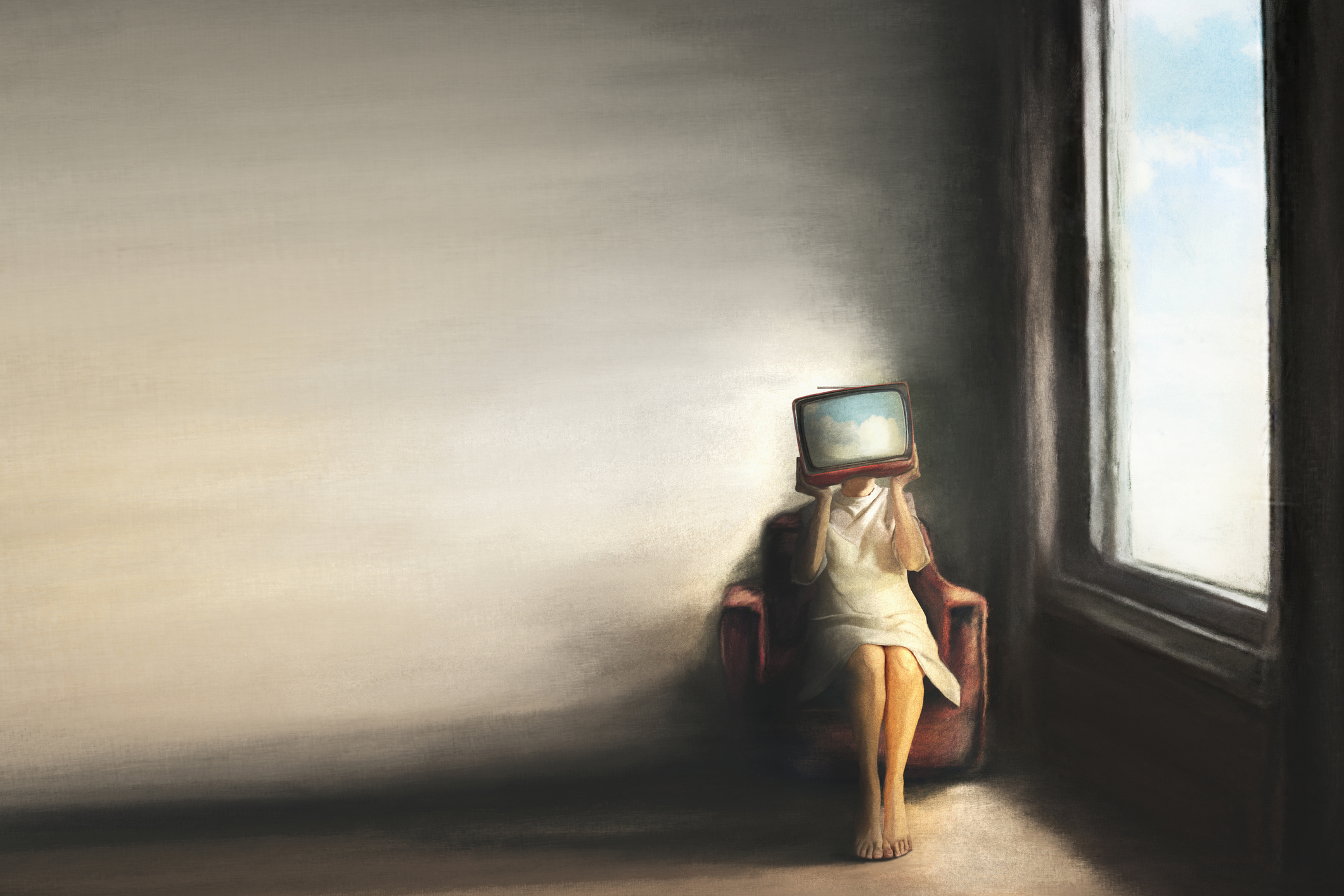
Often derided and the topic of many a teacher’s report card comment daydreaming, or mind-wandering, is generally seen as an undesirable activity, especially among school-age children from whom the education system demands unrelenting focus. “Monica likes to daydream,” notes home to my Mom would read. “I do wonder what she is thinking about.” And yet, on average, we daydream nearly 47% of our waking hours. If our brain spends nearly half of our awake time doing it, there is probably a good reason why.
The term “daydreaming” was coined by Julien Varendonck in 1921 in his book The Psychology of Day-Dreams (with a foreword by Sigmund Freud, so sort of a big deal). While Varendonck and Freud saw benefits to daydreaming, the past 20 years have yielded research that portrays daydreaming as “a cognitive control failure,” with some researchers out of Harvard recently declaring “a wandering mind is not a happy mind.” An exception to that opinion was one held by the late eminent psychologist Jerome Singer, who spent most of his professional life researching daydreaming (he preferred the term to “mind-wandering”). Singer identified three types of daydreaming, and while two can have negative impacts, one is quite beneficial.
The first is “guilty dysphoric” or fear-of-the-future daydreaming, when we either think about the past, perseverating on a negative experience (like reliving a tough phone call over and over), or we catastrophize the future (like imagining failing spectacularly at an upcoming work presentation). Then there is “poor attentional control,” where a person struggles to focus on a particular thought or task, particularly troublesome for those with attention deficits. These two kinds of daydreaming don’t have identifiable benefits. But the third type, “positive constructive daydreaming (PCD),” where we cast our mind forward and imagine future possibilities in a creative, positive way, can be quite beneficial. Helpful for planning and creativity, PCD is the bridge that links our internal observations with the forecasting required for future exploration.
.
 Getty Images
.
.
Click the link below for the article:
.
__________________________________________
February 23, 2023
Mohenjo
Business, Food For Thought, Human Interest, Political, Science, Technical
amazon, business, Business News, current-events, Future, Hotels, human-rights, medicine, mental-health, research, Science, Science News, technology, Technology News, travel, vacation

Click the link below the picture
.
Have you ever been stuck on a single thought, a string of thoughts, or a topic that you keep returning to in your mind over and over again? Perhaps you keep mentally replaying images of that awkward date you had with your long-term crush, thinking about how things could have gone differently. Or perhaps you are apprehensive about an upcoming project and are rehearsing all the ways it could go wrong. Mental rehearsal is a normal and universal experience. However, if you find that you tend to dwell excessively on certain experiences – especially negative ones – you may be engaging in rumination.
What exactly is rumination? It’s defined as a tendency to repetitively fixate on the causes, meaning, and consequences of one’s distress. Rumination is characterized by a style of thought (repetitive and obsessive) rather than the specific content of thoughts; however, it most often involves a preoccupation with negative content. Moreover, some evidence suggests that rumination may reflect difficulties with disengaging from negative information, as opposed to a tendency to easily engage with it.
If you tend to ruminate, you may be wondering what the harm is. Often, rumination starts as an attempt to make sense of, and move on from, a frustrating, depressing or anxiety-inducing experience. Other times, it stems from the desire to solve a problem or prevent one from occurring in the future. In these instances, rumination might help you feel as though you are more in control and that you are capable of handling problems or threats. But frequent rumination can induce chronic stress and worsen mental health difficulties.
.

Photo by Caleb George/Unsplash
.
.
Click the link below for the article:
.
__________________________________________
February 23, 2023
Mohenjo
Business, Food For Thought, Human Interest, Political, Science, Technical
amazon, business, Business News, current-events, Future, Hotels, human-rights, medicine, mental-health, research, Science, Science News, technology, Technology News, travel, vacation

Click the link below the picture
.
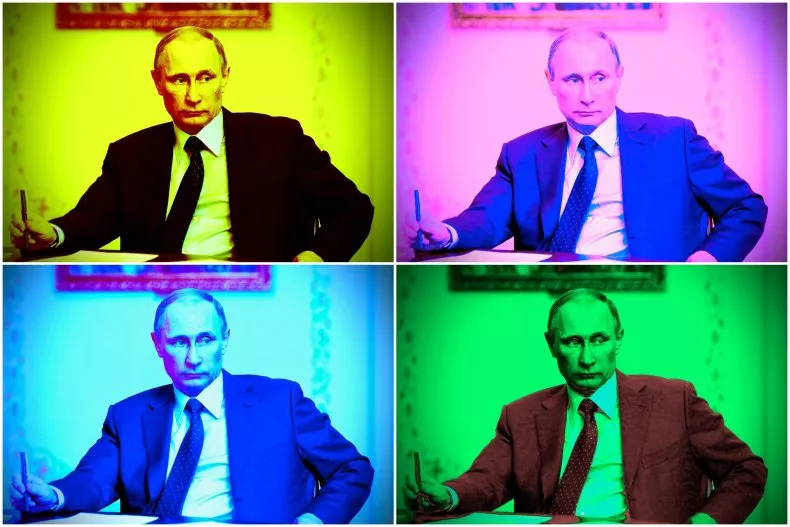
Russian President Vladimir Putin is keeping the world guessing as western intelligence says the invasion he ordered of Ukraine has not been as successful or as swift as he had hoped.
Nearly a week into the largest military campaign in Europe since World War Two, Russian forces have encountered fierce resistance from Ukraine while global condemnation has spurred sanctions that have roiled the Russian economy.
Before the invasion, Putin humiliated his spy chief, Sergei Naryshkyn in a Russian Security Council meeting which showed the president relishing being in control.
But now with the status of global pariah, Putin’s invoking of his country’s nuclear threat has raised alarm at what his actions might be if he felt cornered.
Newsweek spoke to a selection of experts about what they believed could be going through Putin’s mind. Their responses varied widely—from those who said his apparent erratic behavior was part of a calculated grand strategy, to others who believe his increased isolation since the COVID pandemic has made him more emotional and unstable.
.
 Questions surround the state of mind of Russian president Vladimir Putin. After his invasion of Ukraine, there are concerns at how far he might go to secure victory. Getty
.
.
Click the link below for the article:
.
__________________________________________
February 22, 2023
Mohenjo
Business, Food For Thought, Human Interest, Political, Science, Technical
amazon, business, Business News, current-events, Future, Hotels, human-rights, medicine, mental-health, research, Science, Science News, technology, Technology News, travel, vacation

Click the link below the picture
.
Vladimir Putin is reportedly set to “disappear” from his leadership position within the Kremlin because there is “clearly something wrong” with his health, RadarOnline.com has learned.
In a sudden development to come amid rumors and reports the 70-year-old Russian leader’s health is quickly deteriorating, intelligence officials have revealed Putin is preparing to step down as Russia’s leader.
The surprising revelation also comes as Russia’s ongoing war against Ukraine is “going from bad to worse,” and Putin’s political career is “hanging in the balance” as his forces struggle to take the neighboring nation one year after first invading in February 2022.
“He’s probably faced with another call-up. That clearly is deeply unpopular in Russia,” Sir Richard Dearlove, the former head of MI6, recently said according to Daily Star. “There must be massive tensions within the leadership group inside the Kremlin, there must be massive tensions socially across Russia over this whole issue.”
.

Mega © Radar Online
.
.
Click the link below for the article:
.
__________________________________________
February 22, 2023
Mohenjo
Business, Food For Thought, Human Interest, Political, Science, Technical
amazon, business, Business News, current-events, Future, Hotels, human-rights, medicine, mental-health, research, Science, Science News, technology, Technology News, travel, vacation

Click the link below the picture
.
Never believe anything in politics until it’s officially denied.
And even then, when it comes to Vladimir Putin’s health, you can still be forgiven for being at a loss about what to believe, given the bewildering frenzy of speculation over whether something is wrong with the Russian president.
The rumor mill about the now strangely puffy-faced 69-year-old has reached such a fever pitch that Foreign Minister Sergey Lavrov this week felt it necessary to shoot down any suggestion that Putin was sick. “You know, President Putin appears in public every day. You can see him on the screens, read his speeches, listen to his speeches,” he said, speaking to French media TF1.
“I don’t think sane people can discern any sort of symptom of disease in this man,” Lavrov continued. Sane or not, media have for months speculated over the state of the Russian leader, interpreting everything from his bloated appearance as a sign of steroid-use to implying the Russian leader has Parkinson’s and cancer. Video footage showing Putin fiercely gripping a table while looking uncomfortable during a recent meeting, making twitchy hand gestures and seeming to limp during Russia’s Victory Day parade, have only added to this free-for-all among armchair physicians.
.

Russian President Vladimir Putin holds a candle during an Orthodox Easter service in Moscow | Alexander Nemenov/AFP via Getty Images
.
.
Click the link below for the article:
.
__________________________________________
February 22, 2023
Mohenjo
Business, Food For Thought, Human Interest, Political, Science, Technical
amazon, business, Business News, current-events, Future, Hotels, human-rights, medicine, mental-health, research, Science, Science News, technology, Technology News, travel, vacation

Click the link below the picture
.
Among the many looming ecological disasters that terrify us today, one that only a handful of people have contemplated as sufficiently looming and terrifying is the loss of the bats in our belfry. According to “The Darkness Manifesto” (Scribner), by the Swedish ecologist Johan Eklöf, most churches in southwest Sweden had bat colonies back in the nineteen-eighties, and now most of them don’t. Light pollution, his research suggests, has been a major culprit: “District after district has installed modern floodlights to show the architecture it’s proud of, all the while the animals—who have for centuries found safety in the darkness of the church towers and who have for 70 million years made the night their abode—are slowly but surely vanishing from these places.”
The presence of bats in the belfry, as a metaphor for disordered thinking, is usually taken to refer to the way bats would flutter around the upper stories of distressed churches, but a larger madness, Eklöf thinks, is responsible for their absence. A professor at Stockholm University, he is an expert in bats, which might suggest a déformation professionnelle in his interest in darkness, the way an expert in roosters might have a weakness for the dawn. He is able to tell us authoritatively that, though bats do indeed use natural sonar to echolocate their way around, their eyes see well enough in the dark to help in their navigation. (As so often, nature’s secret to survival is not one perfect plan but a little bit of this and a little bit of that.) Of course, Eklöf’s arguments escape the narrow world of roof eaves and pointy ears. Though the book is written as a sort of “Silent Spring” manifesto against the ecological devastations of light pollution, its considerable charm depends on the encyclopedic intensity with which he evokes the hidden creatures of the night.
.
 The Luxor Hotel’s “sky beam,” in Las Vegas, generates forty-two billion candlepower of light each night, confusing flying creatures that are drawn to its radiance. Illustration by Carson Ellis
.
.
Click the link below for the article:
.
__________________________________________
Older Entries
Newer Entries
 James' World 2