No one is better at taking two seemingly conflicting concepts and welding them into one shockingly popular trend than the users of TikTok, an app that has successfully combined desserts with skin care, perfume with gynecology, and salmon with ASMR. A major saga currently unfolding on the platform has called my attention to another contradictory phenomenon: Lunden and Olivia, a popular lesbian influencer couple who are blending gay pride with the well-tanned, preppy aura of a private golf club situated in the South.
Perhaps, given that entire vibe, the reason Lunden and Olivia made it in the news this weekend is not entirely surprising. They got married on October 1, only to immediately find themselves in hot water over the revelation that one of them had an old but startlingly frequent habit of tweeting racial slurs. How frequent, it’s now hard to tell, because both her Twitter (now X) profile and screenshots of its contents have largely disappeared from the internet. But, well, let’s take this one step at a time.
Sorry, but who are these women?
Lunden and Olivia Stallings (formerly Lunden Stallings and Olivia Bennett) are the 26-year-old owners and subjects of a popular TikTok account, @lundenandolivia, where they post adoring dispatches from their life in Georgia. Their content is by and large exactly what you’d expect from two southern white women influencing their hearts out online — shopping recaps from Sephora, breakdowns of their date-night outfits, GRWM videos: basically, an unending sorority rush week — except that, amid all the seersucker and starch-white knits, they are constantly kissing, holding hands, and appending the #lgbtq hashtag to their posts. One recent “day in the life” dispatch shows Lunden starting a packed day of meetings with a spiced vanilla fig Target candle, while Olivia embroiders their matching wedding pajamas. You get the idea.
.
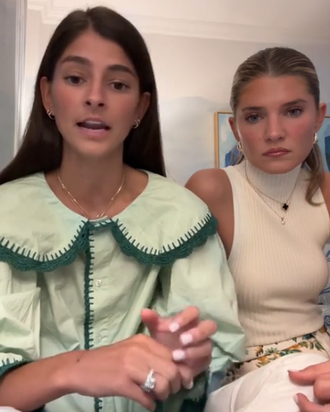
Lunden and Olivia in the now-offline apology video. Photo: @lundenandolivia/TikTok
Some content on this page was disabled on April 15, 2025 as a result of a DMCA takedown notice from Guardian Media Group. You can learn more about the DMCA here:
As neuroscientists struggle to demystify how the human brain converts what our eyes see into mental images, artificial intelligence (AI) has been getting better at mimicking that feat. A recent study, scheduled to be presented at an upcoming computer vision conference, demonstrates that AI can read brain scans and re-create largely realistic versions of images a person has seen. As this technology develops, researchers say, it could have numerous applications, from exploring how various animal species perceive the world to perhaps one day recording human dreams and aiding communication in people with paralysis.
Many labs have used AI to read brain scans and re-create images a subject has recently seen, such as human faces and photos of landscapes. The new study marks the first time an AI algorithm called Stable Diffusion, developed by a German group and publicly released in 2022, has been used to do this. Stable Diffusion is similar to other text-to-image “generative” AIs such as DALL-E 2 and Midjourney, which produce new images from text prompts after being trained on billions of images associated with text descriptions.
For the new study, a group in Japan added additional training to the standard Stable Diffusion system, linking additional text descriptions about thousands of photos to brain patterns elicited when those photos were observed by participants in brain scan studies.
Unlike previous efforts using AI algorithms to decipher brain scans, which had to be trained on large data sets, Stable Diffusion was able to get more out of less training for each participant by incorporating photo captions into the algorithm. It’s a novel approach that incorporates textual and visual information to “decipher the brain,” says Ariel Goldstein, a cognitive neuroscientist at Princeton University who was not involved with the work.
The AI algorithm makes use of information gathered from different regions of the brain involved in image perception, such as the occipital and temporal lobes, according to Yu Takagi, a systems neuroscientist at Osaka University who worked on the experiment. The system interpreted information from functional magnetic resonance imaging (fMRI) brain scans, which detect changes in blood flow to active regions of the brain. When people look at a photo, the temporal lobes predominantly register information about the contents of the image (people, objects, or scenery), whereas the occipital lobe predominantly registers information about layout and perspective, such as the scale and position of the contents. All of this information is recorded by the fMRI as it captures peaks in brain activity, and these patterns can then be reconverted into an imitation image using AI.
.
Artificial intelligence re-creations of images based on brain scans (bottom row) match the layout, perspective, and contents of the actual photos seen by study participants (top row). Creative Commons
Sleep is a semiconscious state, but there are neurons firing in the brain even when all seems quiet. Now brain activity during the deepest sleep phase could make it possible for people to communicate with the waking world during lucid dreaming.
If someone is lucid dreaming, they are aware they are dreaming and able to manipulate what happens in the dream. Sleep expert Michael Raduga of Phase Research Center has developed a “language” that’s intended to allow people to communicate while in that state. Called Remmyo, the first language of its kind, it relies on specific facial muscle movements that can occur during rapid eye movement (REM) sleep. Remmyo can be learned during waking hours like any other language. Anyone capable of lucid dreaming could potentially communicate in Remmyo while asleep.
“You can transfer all important information from lucid dreams using no more than three letters in a word,” Raduga, who founded Phase Research Center in 2007 to study sleep, told Ars. “This level of optimization took a lot of time and intellectual resources.”
Reaching lucidity
It takes about 90 minutes to transition from lighter sleep phases to REM sleep. REM sleep brings on a state of sleep paralysis—arm and leg muscles cannot move, which keeps us from playing out what is happening in the dream. Meanwhile, brain waves, heart rate, and blood pressure all become similar to the levels seen in the awake state. Breathing becomes faster and erratic. Even though eyelids remain closed, the sleeper’s eyes constantly move from side to side, giving the state its name.
This is when most dreams occur, including lucid dreams. Those are still an enigma but thought to be a hybrid of the waking and sleeping states.
Remmyo consists of six sets of facial movements that can be detected by electromyography (EMG) sensors on the face. Slight electrical impulses that reach facial muscles make them capable of movement during sleep paralysis, and these are picked up by sensors and transferred to software that can type, vocalize, and translate Remmyo. Translation depends on which Remmyo letters are used by the sleeper and picked up by the software, which already has information from multiple dictionaries stored in its virtual brain. It can translate Remmyo into another language as it is being “spoken” by the sleeper.
No parent wants their child to know about war. We want our kids to feel safe, loved, and free from worry, but this is not always possible. Wars continue to happen in all corners of the world, and children are going to find out about them whether we want them to or not. They’ll find out at school, from friends, online. And even though it feels terribly difficult, especially when we are deeply afraid ourselves, there will come a time when we need to talk to our kids about frightening world events like war. Here are a few things to consider as you approach these difficult conversations.
Consider their age.
While every child and every family is different, UNICEF recommends that parents try to be mindful of age-appropriateness when discussing big world events like war. Some younger children might not yet have the capacity to comprehend. UNICEF recommends parents “speak calmly and be mindful of your body language” as children are sensitive to our emotional cues and facial expressions.
Stay ahead of the news.
If there is going to be considerable news coverage of a war or conflict, and you know your child will be likely to find out, try to be the first one to explain it to them. Dr. Harold Koplewicz, president of the Child Mind Institute and child psychologist, advises parents and caregivers to try to break the news to their children before they have the chance to stumble across a frightening headline or hear the news from another child. “Don’t delay telling your children about what’s happened … You want to be able to convey the facts, however painful, and set the emotional tone,” Koplewicz suggests.
.
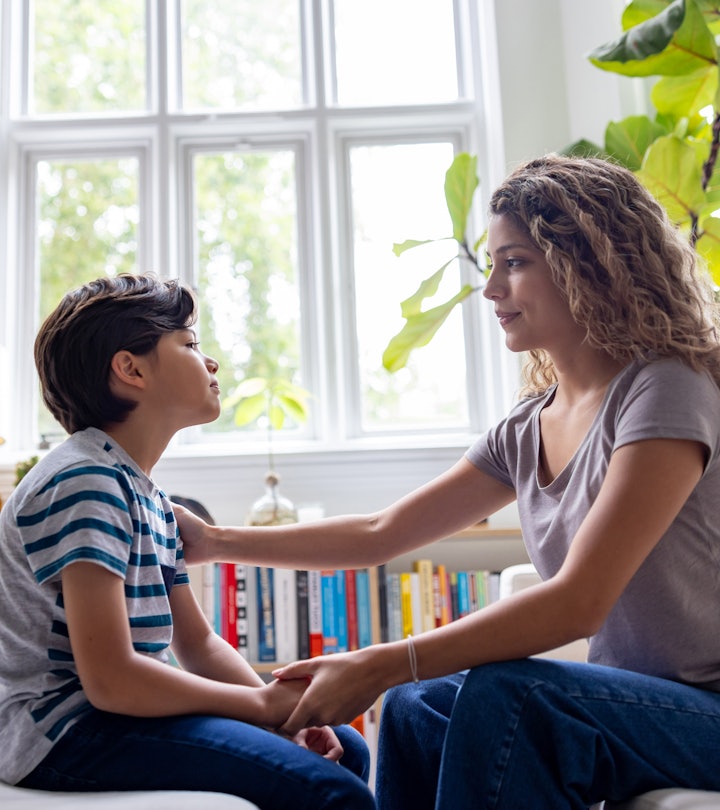
Wars continue to happen in all corners of the world, and children are going to have questions.
Amid the pandemic, TikTok became a fountain of information for, well, just about anything you might be even a little bit curious about. This has brought about a need for social media users to vet their sources, so as to not fall victim to believing and perpetuating the often dangerous misinformation that can go viral. But, thanks to credentialed professionals who have taken to the app, it’s also provided a sense of community, awareness, and access to information about various health-related issues and conditions.
In 2020, Sasha Hamdani, MD, a board-certified psychiatrist and attention deficit hyperactivity disorder (ADHD) specialist based in Kansas City, Missouri, joined TikTok after noticing a need for more evidence-based information about the neurodevelopmental chronic condition on the app. As both a provider and person who has ADHD, Dr. Hamdani is uniquely suited to help others manage their ADHD and understand the way their brain works; she’s also passionate about helping folks with ADHD best care for themselves and prevent burnout.
Posting under the handle @thepsychdoctormd on Instagram and TikTok, Dr. Hamdani’s feed often recounts what living with and treating ADHD is like for her—the ups, the downs, the funny, the wrenching, the frustrating, and all the in-betweens. But the idea that she’d one day share her personal experiences to help so many others manage their ADHD once felt unthinkable.
Dr. Hamdani was diagnosed with ADHD in fourth grade, but didn’t understand what exactly that meant for her until she was in college because her parents had managed her medications and routines—they also hadn’t actually told her what she had.
Like many people I know, I always pee right before I leave the house. This has been a non-negotiable habit ever since the time I was stuck in traffic on the freeway with a painfully full bladder and no relief in sight. It’s become even more important during the pandemic—since many public restrooms are closed, it feels as essential to pee before going out for a social-distanced walk as it is to grab your mask and hand sanitizer.
.
However, while the “just in case” pee seems like a smart strategy, it might actually be pretty bad for your bladder. At least, that’s according to a recent viral TikTok video from Bethany Henry Clark, PT, DPT. In the video, she says that making yourself pee when you don’t feel the immediate need to do so can, over time, actually make you have to pee more and more often. (Mind. Blown.)
I had never heard of this before, so I got in touch with board-certified urologist Lamia Gabal, MD, to get her thoughts on “just in case” peeing.
First off, a normal bladder capacity is about 10-15 ounces, Dr. Gabal says. (Many things can affect this, such as pressure on your bladder from pregnancy or constipation.) In general, it’s normal to pee six to eight times in a 24-hour period if you drink 64 ounces of fluid a day, but this depends on how much you drink. “I often tell my patients, ‘What goes in, must come out!'” she says.
London, a 13-year-old girl who lives in suburban Maryland, took a more considered approach to joining social media than many teenagers do. Knowing her mom was skeptical, London put together a presentation making a case for why she should join TikTok, complete with promises such as allowing her mother to review her posts in advance. It worked: On London’s 13th birthday, she joined TikTok.
Since doing so, she has experienced some of the joys of social media — experiences that were not possible in a less networked world. In her living room, London streams popular dance videos onto a TV, and sometimes her mother (a former dancer) and sister (who has nonverbal autism) join her. TikTok also allows London to stay in closer touch with friends.
Yet the downsides of social media are never far away.
London is constantly confronted with images of people who somehow seem prettier, richer, more fashionable, and more popular. Sometimes, she stumbles on truly disturbing videos, like one claiming to show a woman flushing her baby down a toilet.
Above all, social media takes the normal anxieties of teenage life and hypercharges them. When another girl in London’s school stops replying to her messages at night, London ends up crying. When a group of girls gather to get dressed for a dance, they obsess not only over how they look, but how their before-and-after videos will play on TikTok.
.
London, 13. Credit… Dee Dwyer for The New York Times
When I was a kid in my Alabama hometown, every year brought the same parties in our Nigerian-American community: the Fourth of July cookout in the park; the Christmas throw-down in the hotel banquet hall, where my family and our friends wore our finest traditional clothing, a sea of blinding-bright textures and elaborate head ties, called geles, that stretched toward the ceiling. During those holiday parties, as Fela Kuti and King Sunny Adé played from the speakers, I inevitably ended up staring at my mother’s girlfriends, other married (but sometimes divorced or single) women, as they floated around the hall, eating, talking, laughing. Their hair and makeup were exquisitely done, with big curls and updos, red lipstick, and vivid eye shadow; their outfits, planned weeks in advance, melded glamour and comfort, so they could sweep you up into their folds of crinkly, glittering fabric as they danced; and their jewelry, usually gold or coral, was dramatic. Their shoes and purses matched, obviously. Their swagger seemed both over-the-top and effortless.
I was never exactly sure how to define my relationship to those women in my mom’s life. My mom’s sisters were naturally my aunts, beloved by my brothers and me. But her friends were also a constant part of the background—in our home, at gatherings at the houses of my parents’ friends, and at important moments like birthdays and graduations—and though they weren’t relatives, my mom instructed me to refer to all of them as “Auntie” anyway. The women were not my “age-mate,” as Nigerians like to say, not people I could treat like my school and neighborhood friends, and over time, they became like family. They flooded me with love and praise—and they disciplined me, shouting my name as a warning when I got out of line or ran around like a heathen. (In fact, sometimes I wanted to shout back that they were not my mom.)
.
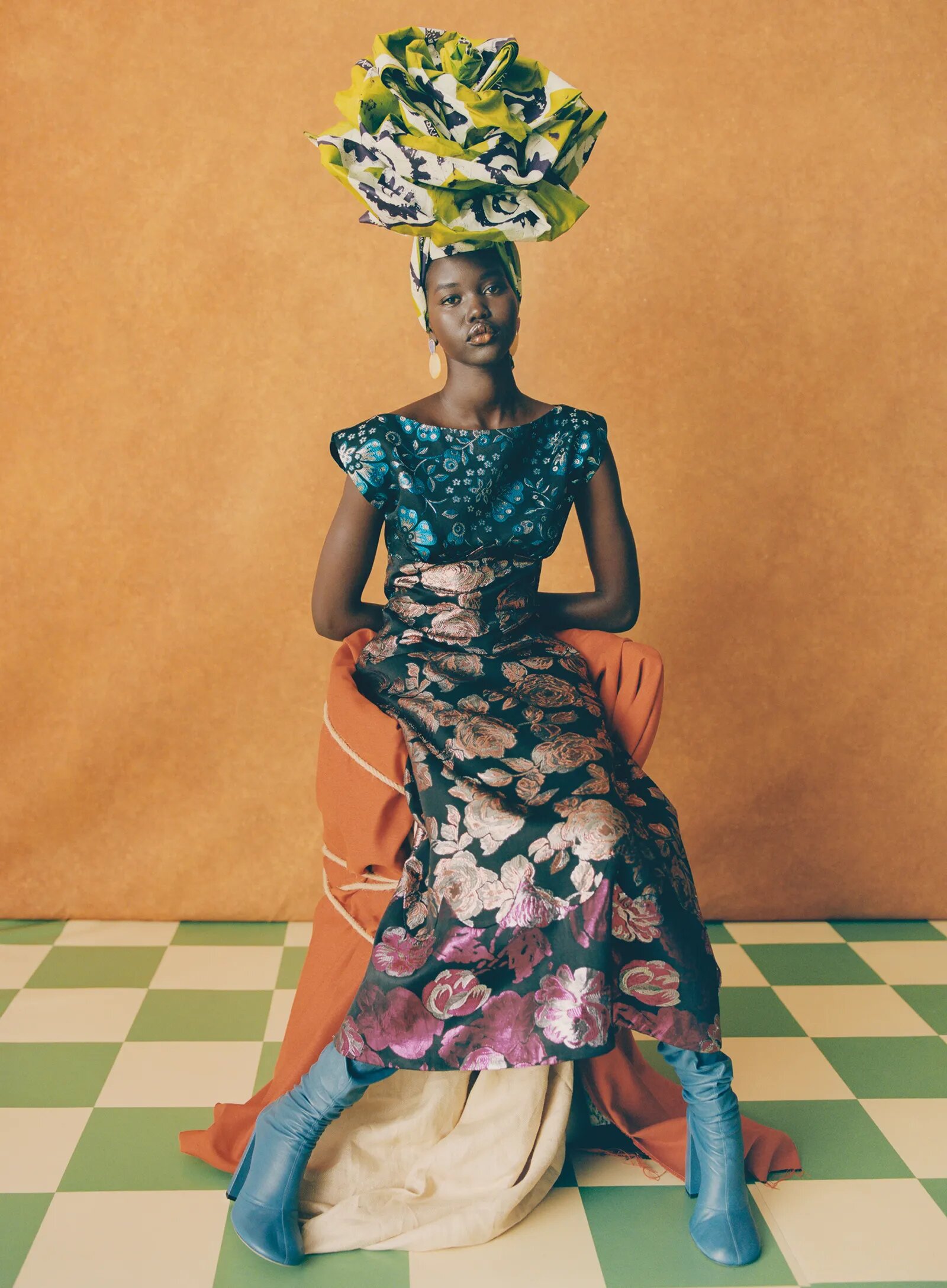
Model Adut Akech sits pretty in a many-patterned Duro Olowu dress (ikram.com) and up-to-there gele, or head tie. Octave Jewelry earrings. Victoria Beckham boots. In this story: Hair, Shiori Takahashi; makeup, Ammy Drammeh. Photographed by Nadine Ijewere, Vogue, December 2020
Some content on this page was disabled on April 15, 2025 as a result of a DMCA takedown notice from Guardian Media Group. You can learn more about the DMCA here:
Film and Writing Festival for Comedy. Showcasing best of comedy short films at the FEEDBACK Film Festival. Plus, showcasing best of comedy novels, short stories, poems, screenplays (TV, short, feature) at the festival performed by professional actors.

 Lunden and Olivia in the now-offline apology video. Photo: @lundenandolivia/TikTok




 Wars continue to happen in all corners of the world, and children are going to have questions.
 Burnout
 Need to go


 James' World 2