If you drive north from Khartoum along a narrow desert road toward the ancient city of Meroe, a breathtaking view emerges from beyond the mirage: dozens of steep pyramids piercing the horizon. No matter how many times you may visit, there is an awed sense of discovery. In Meroe itself, once the capital of the Kingdom of Kush, the road divides the city. To the east is the royal cemetery, packed with close to 50 sandstone and red brick pyramids of varying heights; many have broken tops, the legacy of 19th-century European looters. To the west is the royal city, which includes the ruins of a palace, a temple, and a royal bath. Each structure has distinctive architecture that draws on local, Egyptian and Greco-Roman decorative tastes—evidence of Meroe’s global connections.
Off the highway, men wearing Sudanese jalabiyas and turbans ride camels across the desert sands. Although the area is largely free of the trappings of modern tourism, a few local merchants on straw mats in the sand sell small clay replicas of the pyramids. As you approach the royal cemetery on foot, climbing large, rippled dunes, Meroe’s pyramids, lined neatly in rows, rise as high as 100 feet toward the sky. “It’s like opening a fairytale book,” a friend once said to me.
I first learned of Sudan’s extraordinary pyramids as a boy, in the British historian Basil Davidson’s 1984 documentary series “Africa.” As a Sudanese-American who was born and raised in the United States and the Middle East, I studied the history of ancient Egypt and Mesopotamia, the Levant, Persia, Greece, and Rome—but never that of ancient Nubia, the region surrounding the Nile River between Aswan in southern Egypt and Khartoum in central Sudan. Seeing the documentary pushed me to read as many books as I could about my homeland’s history, and during annual vacations with my family, I spent much of my time at Khartoum’s museums, viewing ancient artifacts and temples rescued from the waters of Lake Nasser when Egypt’s Aswan High Dam was built during the 1960s and ’70s. Later, I worked as a journalist in Khartoum, Sudan’s capital, for close to eight years, reporting for the New York Times and other news outlets about Sudan’s fragile politics and wars. But every once in a while I got to write about Sudan’s rich and relatively little-known ancient history. It took me more than 25 years to see the pyramids in person, but when I finally visited Meroe, I was overwhelmed by a feeling of fulfilled longing for this place, which had given me a sense of dignity and a connection to global history. Like a long-lost relative, I wrapped my arms around a pyramid in a hug.
The land south of Egypt, beyond the first cataract of the Nile, was known to the ancient world by many names: Ta-Seti, or Land of the Bow, so named because the inhabitants were expert archers; Ta-Nehesi, or Land of Copper; Ethiopia, or Land of Burnt Faces, from the Greek; Nubia, possibly derived from an ancient Egyptian word for gold, which was plentiful; and Kush, the kingdom that dominated the region between roughly 2500 B.C. and A.D. 300. In some religious traditions, Kush was linked to the biblical Cush, son of Ham and grandson of Noah, whose descendants inhabited northeast Africa. tangie
.
Meroe, 150 miles north of Khartoum, served as a necropolis for the kings and queens of Kush for close to 600 years. Matt Stirn Text by Isma’il Kushkush; Photographs by Matt Stirn
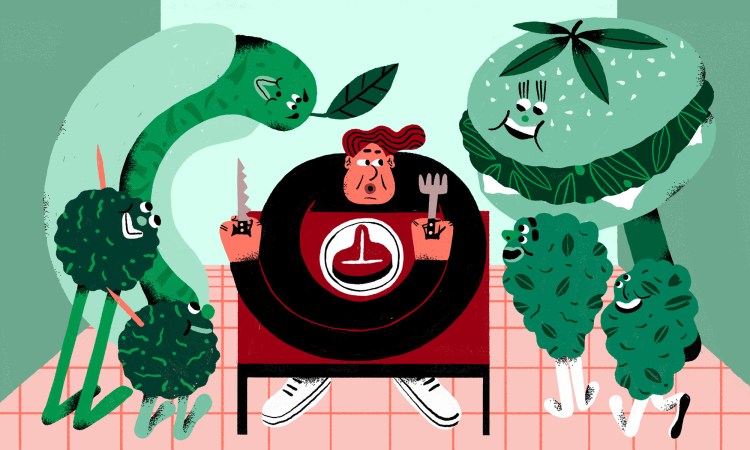
If we want the people in our lives to put down their steak knives and seriously consider changing their diets, we need to change the conversations we’re having with them, says food innovator Bruce Friedrich. Here’s what to say — and what not to say.
We can’t stop eating meat. Global consumption averages 94.8 pounds per person a year, and it’s expected to increase as much as 76 percent by 2050. In steak- and burger-loving countries such as Australia and the US, the average person eats between 220 and 240 pounds of meat and poultry a year.
Yet at the same time, researchers are increasingly aware of the serious consequences of our carnivorous diets. “In 2019 … 30 of the world’s leading scientists released the results of a massive three-year study into global agriculture and declared that meat production is destroying our planet and jeopardizing global health,” said Bruce Friedrich, cofounder and executive director of the Good Food Institute, an organization that supports the creation of plant-based and cell-based meat, in a TED Talk.
What’s more, eating meat has been shown to have a negative impact on personal health. A large-scale analysis found that a long-term diet of high amounts of red meat, particularly processed meat, is associated with an increased risk of mortality, cardiovascular disease, colorectal cancer, and type 2 diabetes. In fact, the World Health Organization’s International Agency for Research on Cancer (IARC) has classified processed meat as a human carcinogen due to its association with colorectal cancer, and WHO has classified red meat as “probably” carcinogenic because of its links to colorectal cancer.
Despite all the evidence, people aren’t putting down their double cheeseburgers, something that Friedrich, a TED Fellow, knows all too well. “Lots of people oppose the harms of industrial animal agriculture, but when they sit down to eat, they put their ethics to the side, and they eat what is delicious and orderable,” he says.
The Tumblr sounds a bit like a college course: People of Color in European Art History.
And its goal is pretty ambitious. The blog’s author, Malisha Dewalt, says that her goal is to challenge the common perception that pre-Enlightenment Europe was all white, which she argues is a much more recent and deliberate invention.
“All too often, these works go unseen in museums, Art History classes, online galleries, and other venues because of retroactive whitewashing of Medieval Europe, Scandinavia, and Asia,” she writes. “[T]his blog is here to emphasize the modern racism that retroactively erases gigantic swaths of truth and beauty.”
And she means erased literally: While it was once the convention to depict one of the Magi — the fabled “three wise men” of the Christian folklore — as a dark-skinned black man, many dark-skinned people who appear in portraits of European royals were later painted white or simply cropped out when they were reproduced in textbooks.
Pamela Patton, a professor of art history who focuses on Iberia, says that artists from the Middle Ages “seem clearly interested in representing a diversity of ethnic variations, including different skin colors, hair textures, and facial features.”
She goes on. “It’s tempting to ask whether they were primed for this by the actual ethnic diversity of the medieval Iberian world, where there were Africans, Arabs, Jews, and other non-European groups in some numbers,” she says. tangie
.
It became an artistic convention during the Middle Ages to depict Balthazar, one of the fabled Magi who come to greet the newborn Christ, as a dark-skinned man. This painting, Adoration of the Magi, is by Bartolome Esteban Murillo. Wikimedia Commons
We all know the numbers by now. Industrial meat production is the single biggest cause of global deforestation.
It creates an estimated 14.5 percent of all human-made greenhouse gas emissions — more than the combined emissions from all forms of transport. In the face of these alarming numbers, there has been a groundswell of people attempting to eat zero, or less, meat.
But what about the little carnivores that share our homes, our beloved pets?
In the US alone, at least 70 percent of households own pets, according to the 2020-2021 APPA National Pet Owners Survey, and many of them are dogs. There are an estimated 77 million individual dogs in America — the highest number since the American Veterinary Medical Association began counting in 1982. Worldwide, more than 470 million dogs live with human families.
But as the food packaging and poop baggies pile up, some owners have begun to wonder about the impact their furry friend is having on the planet. What do we know about dogs’ environmental paw print, and are there things we can do to mitigate it?
Far and away the biggest environmental impact our canine companions exert is through their diet. The global pet food market was worth almost $97 billion in 2020. More than one-third of that food was purchased in the US, with other large markets in the UK, France, Brazil, Russia, Germany, and Japan.
US dogs and cats snarf down more than 200 petajoules (a unit that measures the energy content of food) worth of food per year — roughly the same as the human population of France, according to Gregory Okin, a researcher at UCLA’s Institute of the Environment and Sustainability. “We’re talking about animals whose consumption is on the order of nations,” he says.
Ever since the Rubik’s Cube was released, it’s taunted almost a half billion tinkerers who think they can crack its confounding mysteries, only to be stymied by its maddening secrets. Now, it’s time to unpack the puzzle once and for all—using some deep math. The cube’s literal insides are made of plastic, but its real guts are nothing but numbers. Let’s dive in
Breaking Apart the Blocks
Starting with some basics, a 3x3x3 Rubik’s Cube has six faces, each a different color. The center of each face is attached to the core scaffold that holds the cube together, so they don’t move other than rotating in place. As a result, the same colors always end up opposite from each other; on a standard cube, white is opposite yellow, red opposite orange, and blue opposite green.
Bust open a Rubik’s Cube, and you’ll see it’s made of three types of building blocks. First, there’s that central scaffold, connecting the center of each face. Then there are the cubies—the nickname for the little 1x1x1 blocks. The corner cubies have three colored sides, and the edge cubies have two. A Rubik’s Cube has one core, eight corner cubies, and 12 edge cubies.
The immediate math to be done with those numbers is the total number of ways you can scramble a Rubik’s cube: 43,252,003,274,489,856,000. Written in a more mathematical way, that number is (388!)(21212!)/12. Here’s how that comes together.
The first term, 38, counts every way the eight-corner cubies can be rotated. A corner cubie can fit into its slot, rotated three different ways. That’s a factor of 3 for each of the eight corner cubies, so they multiply to 38.
Lawns are a sign of prestige. Once a sign of upper-middle-class British wealth, over the past century, the traditional yard transformed into an element of the “American Dream”—owning a house of surrounded by a mini field of greenery. It takes a significant amount of water, fertilizer, and labor to maintain a simple grass lawn—and even more resources for keeping sporting arenas, golf courses, and gigantic McMansions in top shape.
Still, some eco-conscious people and landowners are swapping pristine green grass for a sustainable lawn. Plants still cover the ground and provide beautiful greenery, but take up less water to maintain. Some are even great for local pollinators and utilize different plants and grasses that are often native to an area instead—creating beautiful, unique landscapes that support local wildlife. And in a changing climate, there’s plenty of reasons to ditch the monotonous green grass lawn for something more resilent and resource-savvy.
Native Grasses and Plants Use Way Less Water Than a Typical Lawn
According to the Natural Resource Defense Council, grass lawns consume nearly 3 trillion gallons of water a year, 200 million gallons of gas (for all that mowing), and 70 million pounds of pesticides. A challenge to maintain in some areas, considering that some rivers out west are facing historically low levels—it means water shortages for residents out in Western states. The U.S. has experienced a “megadrought” this year, and hot dry conditions are also worsening the incidence of forest fires in various states across the West Coast.
Creeping herbs like thyme and oregano, ornamental grass, evergreen moss or even covering an area with rocks and then surrounding it with perennial native plants require less water and physical maintenance than regular grassy lawns but still make for a beautiful, colorful lawn.
.
Clover is a great plant to start with for making your lawn more environmentally-friendly. Couleur from Pixabay
Plenty of articles about gardening “hacks” assume that everyone has access to truckloads of nutritious soil and enough space for plenty of plants. This will not be one of them. We know these gardening staples aren’t always easy to come by, especially if you live in a city. Thankfully, there are some veggies that can regenerate using water and sunlight alone.
The premise behind regrowing vegetable scraps in water is simple: plants are generally built to harness energy from the sun and nutrients from the earth. A small glass or dish of water won’t provide the same nutrients as hearty soil, but plants can still use it to grow new tasty shoots or soil-ready roots.
Plants that will grow shoots
You can easily regrow the edible stems and leaves of some common kitchen veggies by simply placing their inedible base in water. For best results, position these stumps on a sunny windowsill and change the water frequently.
Lettuce and cabbage
Chances are, you usually discard that tough white chunk at the base of a head of cabbage or lettuce once you’ve torn off all its leaves for your salad. But by placing this part in water, you can coax out some new leaves. Put it in a wide mug or shallow bowl with an inch or two of water, leaf-side up, and check it often to make sure the outside isn’t getting slimy. Within a week or two, new baby leaves should start sprouting from the center of the stump. Your homegrown head won’t return to its full leafy glory, but this can be a great way to grow garnishes or supplement a larger dish.
.
You might not get enough mint to sustain your mojito habit this way, but you can certainly grow some starter plants. DepositVad / Depositphotos
One of the most frustrating hobbies I ever took up was archery, but not because it’s hard to hit a target on the wall (it is, but I got pretty good at that). My problem was that one of the popular ways to go out and have fun with archery was to do “3D shoots,” where you would have to shoot at a series of statues of animals, each positioned at an unknown distance.
Estimating distance turned out to be my downfall. If you don’t have a good sense of how far away the fake deer is, you’ll end up shooting way over its back or burying your arrow under the ground beneath its feet. At the time, I assumed that estimating distance was less a learnable skill and more a gut feeling. Hence, my surprise when I recently came across a quick eyeball-and-mental-math trick that allows anyone to estimate distance pretty accurately.
The technique involves some gut-level estimation, but a much easier type. Then you just multiply by 10. Here’s how it works:
Hold your thumb in front of you (with your arm fully outstretched), and close one eye. Line up your thumb with an object whose size you have some sense of (for example, a car).
Without moving your thumb, close your open eye, and open the other one. Your thumb will appear to be in a different place. (see article for next steps)
Not long after the James Webb Space Telescope came online in 2022, astronomers’ jaws hit the floor.
“I remember thinking, This just can’t be right!” says Mike Boylan-Kolchin, a University of Texas Austin astronomer.
The observations he’s referring to would, to you and me, seem like little smudgy red blobs among a field of other smudges and blobs. But in his eyes, they represented a potential challenge to the story scientists have painstakingly constructed about the formative years of our universe.
That is, some time after the Big Bang, around 12-plus billion years ago, when the universe went from a dark, diffuse place full of gas to a light-filled universe populated by stars and galaxies. This is the era that laid the foundation for everything to come — including our solar system, and you and me.
Scientists had some theories about what happened during this crucial period, but the new telescope put them to the test by observing regions of space humans have never seen before.
And if the observations were correct, Boylan-Kolchin thought, “everything we know about cosmology is wrong at some level.” Cosmology is the study of how our universe evolved from the earliest times onward. So, the potential to be wrong about it “was pretty unpalatable,” he says.
Boylan-Kolchin was agog, but not alone in his thoughts. “I cannot even get across how mind-boggling the past year has been of looking at JWST [James Webb Space Telescope] data,” says Caitlin Casey, also an astronomer at UT Austin. “We have been seeing all sorts of wild, wild things in the early universe.”
.
The James Webb Space Telescope can produce “deep field” images that reveal the history of the cosmos. NASA, ESA, CSA, I. Labbe (Swinburne University of Technology), and R. Bezanson (University of Pittsburgh). Image processing: Alyssa Pagan (STScI)
The ancient Babylonians were a remarkable bunch. Among many extraordinary achievements, they found a now-famous mathematical solution to an unpleasant challenge: paying tax.
The particular problem for the ordinary working Babylonian was this: Given a tax bill that has to be paid in crops, by how much should I increase the size of my field to pay it?
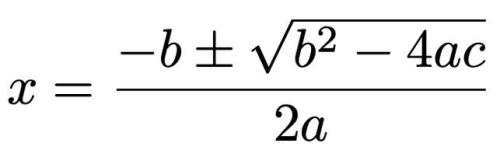
This problem can be written down as a quadratic equation of the form Ax2+Bx+C=0. And it is solved with this formula:
Today, over 4,000 years later, millions of people have the quadratic formula etched into their minds thanks to the way mathematics is taught across the planet.
But far fewer people can derive this expression. That’s also due to the way mathematics is taught—the usual derivation relies on a mathematical trick, called “completing the square,” that is far from intuitive. Indeed, after the Babylonians, it took mathematicians many centuries to stumble across this proof.
Before and since, mathematicians have found a wide range of other ways to derive the formula. But all of them are also tricky and non-intuitive.
So it’s easy to imagine that mathematicians must have exhausted the problem. There just can’t be a better way to derive the quadratic formula.
Enter Po-Shen Loh, a mathematician at Carnegie Mellon University in Pittsburgh, who has found a simpler way—one that appears to have gone unnoticed these 4,000 years.
Film and Writing Festival for Comedy. Showcasing best of comedy short films at the FEEDBACK Film Festival. Plus, showcasing best of comedy novels, short stories, poems, screenplays (TV, short, feature) at the festival performed by professional actors.

/https://tf-cmsv2-smithsonianmag-media.s3.amazonaws.com/filer/1b/20/1b205e98-4c95-4d82-a053-5bc6e8d34c65/sudan_opener_socialmedia.jpg)

 Cari Vander Yacht

 Alamy
Alamy


:format(webp)/cdn.vox-cdn.com/uploads/chorus_image/image/73062155/stsci_01gqqfcdz3j7arc9f8qdxe0f7z__1_.0.jpg)


 ??
?? James' World 2