Some content on this page was disabled on April 15, 2025 as a result of a DMCA takedown notice from Guardian Media Group. You can learn more about the DMCA here:
Clean like you mean it: the ultimate guide to spring cleaning your home
April 26, 2024
Business, Food For Thought, Human Interest, Political, Science, Technical amazon, business, Business News, current-events, Future, Hotels, human-rights, medicine, mental-health, research, Science, Science News, technology, Technology News, travel, vacation 4 Comments
Climate Doom Is Out. ‘Apocalyptic Optimism’ Is In.
April 26, 2024
Business, Food For Thought, Human Interest, Political, Science, Technical amazon, business, Business News, current-events, Future, Hotels, human-rights, medicine, mental-health, research, Science, Science News, technology, Technology News, travel, vacation Leave a comment

Click the link below the picture
.
The philanthropist Kathryn Murdoch has prioritized donations to environmental causes for more than a decade. She has, she said, a deep understanding of how inhospitable the planet will become if climate change is not addressed. And she and her colleagues have spent years trying to communicate that.
“We have been screaming,” she said. “But screaming only gets you so far.”
This was on a morning in early spring. Murdoch and Ari Wallach, an author, producer, and futurist, had just released their new PBS docuseries, “A Brief History of the Future,” and had hopped onto a video call to promote it — politely, no screaming required. Shot cinematically, in some never-ending golden hour, the six-episode show follows Wallach around the world as he meets with scientists, activists, and the occasional artist and athlete, all of whom are optimistic about the future. An episode might include a visit to a floating village or a conversation about artificial intelligence with the musician Grimes. In one sequence, marine biologists lovingly restore a rehabbed coral polyp to a reef. The mood throughout is mellow, hopeful, even dreamy. Which is deliberate.
“There’s room for screaming,” Wallach said. “And there’s room for dreaming.”
“A Brief History of the Future” joins some recent books and shows that offer a rosier vision of what a world in the throes — or just past the throes — of global catastrophe might look like. Climate optimism as opposed to climate fatalism.
Hannah Ritchie’s “Not the End of the World: How We Can be the First Generation to Build a Sustainable Planet” argues that many markers of disaster are less bad than the public imagines (deforestation, overfishing) or easily solvable (plastics in the oceans). In “Fallout,” the television adaptation of the popular video game that recently debuted on Amazon Prime Video, the apocalypse (nuclear, not climate-related) makes for a devastated earth, sundry mutants, and plenty of goofy, kitschy fun — apocalypse lite.
.
 Photo Illustration by Doug Chayka
.
.
Click the link below for the article:
.
__________________________________________
#InternationalJazzDay #April30
April 25, 2024
Business, Food For Thought, Human Interest, Political, Science, Technical amazon, business, Business News, current-events, Future, Hotels, human-rights, medicine, mental-health, research, Science, Science News, technology, Technology News, travel, vacation 3 Comments

Click the link below the picture
.
5 days to go till the greatest day and the world’s largest celebration of #jazz – #InternationalJazzDay #April30
Be sure to watch the All-Star Global Concert from our host city #Tangier, #Morocco
.

2012 Them There Eyes: @chakakhan @joelovanojazz @terence_blanchard @chrmcbride @vinniecolaiuta
#georgeduke #jimmyheath #jazzday #chakakhan
.
.
Click the link below for the article:
https://www.instagram.com
.
__________________________________________
‘The Crow’ soundtrack turns 30: Looking back on the album that defined an era
April 25, 2024
Business, Food For Thought, Human Interest, Political, Science, Technical amazon, business, Business News, current-events, Future, Hotels, human-rights, medicine, mental-health, research, Science, Science News, technology, Technology News, travel, vacation 1 Comment

Click the link below the picture
.
The ’90s was a time of epic soundtracks, from Clueless‘s pop extravaganza to Romeo + Juliet‘s swoony seduction to Trainspotting‘s frenzied club mix. But before all these came The Crow: Original Motion Picture Soundtrack, featuring original songs from The Cure, Nine Inch Nails, My Life with the Thrill Kill Kult, and Stone Temple Pilots. While grunge was mainstream by 1994, a soundtrack this hard-edged — flaunting heavy metal alongside goth rock — was far from common. But this album did more than sing the song of the eponymous anti-hero; it also sang of the lost Brandon Lee.
Inspired by James O’Barr’s comic books, The Crow was to be Lee’s launchpad to stardom. As the forlorn lover Eric Draven, who is resurrected from the dead on the anniversary of his fiancée’s murder to seek vigilante justice, Lee would get to flex his acting chops along with his physical prowess. However, the Alex Proyas-directed movie would define Lee’s legacy, not only because of his powerful performance as an avenging angel, but also because a notorious accident on set led to Lee’s death at 28.
The Crow and its soundtrack went on to become a major hit, spawning sequels, a short-lived Canadian superhero TV series, a soon-to-hit reboot, and a legion of fans who’ve adored this tale of loss and love for decades now.
As the soundtrack reaches its 30th anniversary, it hasn’t lost a bit of its entrancing power. Hitting play is like time-traveling back to my teen years, lured into the rush of hormones and emotions from the opening bird cries of The Cure’s “Burn.” Seeking to uncover how The Crow soundtrack came to be a three-time platinum hit that changed the soundtrack landscape and gripped a generation, Mashable reached out to Jeff Most, who produced the film and executive produced the soundtrack with Jolene Cherry, the music supervisor of the 1994 hit.
In separate interviews, they shared their recollections of the long and difficult journey of two and half years to not only complete the film after the death of their beloved leading man, but also to pull together an album that extended The Crow beyond the movie.
The Crow soundtrack began with Eric Draven getting a job.
In the comics, it’s unclear what revenant Eric Draven did for a living, though — according to Most — creator O’Barr imagined he’d have a job like housepainter or something decidedly unglamorous. For Most, who had worked as a radio DJ and produced a television series called Top 40 Videos, making Draven a musician could give the character a sharper context for the movie. Plus, it would allow for a rocking soundtrack that could be a “very emotive way to show this artistic side of [Draven].”
.

This soundtrack burned then, and it burns now. Credit: Composite: Mashable, Ian Moore / Image credits: Miramax / Dimension Films / Paul Natkin / L. Busacca / WireImage / Mike Pont / Gett
.
.
Click the link below for the article:
.
__________________________________________
A Scientist Says He Has the Evidence That We Live in a Simulation
April 25, 2024
Business, Food For Thought, Human Interest, Political, Science, Technical amazon, business, Business News, current-events, Future, Hotels, human-rights, medicine, mental-health, research, Science, Science News, technology, Technology News, travel, vacation Leave a comment

Click the link below the picture
.
-
Many philosophers and scientists have pondered if we live in a simulated universe, and University of Portsmouth scientist Melvin Vopson believes he has evidence.
-
Using his previously formulated Second Law of Infodynamics, Vopson claims that the decrease of entropy in information systems over time could prove that the universe has a built-in “data optimization and compression,” which speaks to its digital nature.
-
While these claims warrant investigation, they’re far from a discovery themselves, and would likely need rigorous proof for the scientific community at large to seriously consider this theory.
In the 1999 film The Matrix, Thomas Anderson (a.k.a. Neo) discovers a truth to end all truths—the universe is a simulation. While this premise provides fantastic sci-fi fodder (and explains how Neo can learn kung-fu in about five seconds), the idea isn’t quite as carefully relegated to the fiction section as one might expect.
University of Portsmouth scientist Melvin Vopson, who studies the possibility that the universe might indeed be a digital facsimile, leans into the cinematic comparison. In an article published on website The Conversation this past October, Vopson invoked the Wachowskis’ sci-fi masterpiece, and around the same time, he published a book on the subject—Reality Reloaded, a subtle hat tip to the title of the less successful Matrix sequel. While he is just one among many who’ve contemplated the idea, Vopson claims to have one thing that those before him lacked: evidence.
“In physics, there are laws that govern everything that happens in the universe, for example how objects move, how energy flows, and so on. Everything is based on the laws of physics,” Vopson said back in 2022. “One of the most powerful laws is the second law of thermodynamics, which establishes that entropy—a measure of disorder in an isolated system – can only increase or stay the same, but it will never decrease.”
Based on this famous law, Vopson similarly expected that entropy in information systems—which his previous research defined as a “fifth state of matter”—should similarly increase over time. But it doesn’t. Instead, it remains constant, or even decreases to a minimum value at equilibrium. This is in direct contrast to the second law of thermodynamics, which inspired Vopson to adopt the Second Law of Information Dynamics (or Infodynamics).
.
 Andriy Onufriyenko//Getty Images
.
.
Click the link below for the article:
.
__________________________________________
5 Ways To Stop ‘Kitchen Sinking’ Your Partner For A Better Love Life
April 24, 2024
Business, Food For Thought, Human Interest, Political, Science, Technical amazon, business, Business News, current-events, Future, Hotels, human-rights, medicine, mental-health, research, Science, Science News, technology, Technology News, travel, vacation Leave a comment

Click the link below the picture
.
Kitchen sinking refers to the tendency for partners to bring up a list of past grievances and unrelated issues during arguments, diverting attention from the current topic of discussion. This cluttered mix of complaints, criticisms, and unresolved issues make it difficult to address the original concern effectively.
This communication pattern is detrimental to relationships because it muddles the core issue, leading to confusion and emotional overwhelm. By inundating discussions with past grievances, partners may feel invalidated or attacked, hindering open and constructive dialogue.
Consequently, kitchen sinking can escalate conflict and erode trust and intimacy, fostering an atmosphere of defensiveness and misunderstanding rather than promoting resolution and mutual respect in relationships.
Here are five ways to stop “kitchen sinking” your partner and work through conflict healthily.
1. Be Intentional
Before engaging in important discussions, decide on the specific issue you want to address and remain mindful of where the conversation is going. Bring yourself back to the present when you catch yourself recollecting different negative instances or feeling the need to bring them up. Avoid blaming, criticizing, and using aggressive language or tone to assert dominance or control.
.

Here’s how to avoid letting relationship issues build up and explode at the wrong time. Getty
.
.
Click the link below for the article:
.
__________________________________________
Is the Earth itself a giant living creature?
April 24, 2024
Business, Food For Thought, Human Interest, Political, Science, Technical amazon, business, Business News, current-events, Future, Hotels, human-rights, medicine, mental-health, research, Science, Science News, technology, Technology News, travel, vacation Leave a comment

Click the link below the picture
.
In the 1970s, chemist James Lovelock and microbiologist Lynn Margulis put forth a bold theory: The Earth is a giant living organism.
When a mammal is hot, it sweats to cool itself off. If you nick your skin with a knife, the skin will scab and heal. Lovelock and Margulis argued that our planet has similar processes of self-regulation, which, arguably, make it seem like the Earth itself is alive.
The idea wasn’t unprecedented in human history. “The fundamental concept of a living world is ancient,” says Ferris Jabr, a science journalist and author of the upcoming book Becoming Earth: How Our Planet Came to Life. The book explores all the ways life has shaped our physical world and, in doing so, inevitably revisits the question “Is the Earth alive?”
Lovelock and Margulis called the idea “the Gaia Hypothesis” — named after the ancient Greek goddess of the Earth. It was openly mocked by many in mainstream Western science. “For many decades, the Gaia hypothesis was considered kind of this fringe sort of woo-woo idea,” Jabr says. “Because for biologists,” Jabr says, life is a specific thing. “It is typically thought of as an organism that is a product of Darwinian evolution by natural selection. And Earth as a planet does not meet those criteria.”
It didn’t help that the original articulation of Gaia granted Earth a certain degree of sentience. The hypothesis argued “all of the living organisms on Earth are collaborating to deliberately create a climate that is suitable for life,” as Jabr says. But yet, this idea has persisted, for a few reasons. Scientists have never been able to precisely define what life is. So, it’s been hard to dismiss Gaia completely.
The Gaia hypothesis has also evolved over the years. Later iterations deemphasized that life was “collaborating” to transform the Earth, Jabr explains. Which still leaves a lot to be explored: Certainly living things don’t need to be thought of as conscious, or have agency, to be considered alive. Consider the clam, which lacks a central nervous system.
Jabr found in the years since Gaia was first introduced, scientists have uncovered more connections between biology, ecology, and geology, which make the boundaries between these disciplines appear even more fuzzy. The Amazon rainforest essentially “summons” its own rain, as Jabr explains in his book. They learned how life is involved in the process that generated the continents. Life plays a role in regulating Earth’s temperature. They’ve learned that just about everywhere you look on Earth, you find life influencing the physical properties of our planet.
In reporting his book, Jabr comes to the conclusion that not only is the Earth indeed a living creature, but thinking about it in such a way might help inspire action in dealing with the climate crisis.
Brian Resnick spoke to Jabr for an episode of Unexplainable, Vox’s podcast that explores scientific mysteries, unanswered questions, and all the things we learn by diving into the unknown. You can listen to the full conversation here. This interview has been edited for length and clarity.
.
:format(webp)/cdn.vox-cdn.com/uploads/chorus_image/image/73295619/RachelHillis_Vox.0.jpg)
.
.
Click the link below for the article:
.
__________________________________________
Lithium, the Elemental Rebel
April 23, 2024
Business, Food For Thought, Human Interest, Political, Science, Technical amazon, business, Business News, current-events, Future, Hotels, human-rights, medicine, mental-health, research, Science, Science News, technology, Technology News, travel, vacation 2 Comments

Click the link below the picture
.
Inside every rechargeable battery—in electric cars and phones and robot vacuums—lurks a cosmic mystery. The lithium that we use to power much of our lives these days is so common as to seem almost prosaic. But this element turns out to be a wild card, a rebel that’s been challenging our most basic understanding of the formation of the universe itself.
Beyond the lithium ion-powered batteries, beyond the glass and ceramic manufacture, optical systems, air purification, fireworks and rocket propellants, nuclear weapons, and mood stabilizing pills, lithium is cast about the cosmos. But there is not nearly as much of it out there as there should be. And we don’t know why.
This wily little element has defied explanation for generations, refusing to obey the rest of our cosmological orthodoxy. The robust Big Bang theory, among other accomplishments, allows us to precisely predict the abundances of all of the light elements across the universe.
Except lithium.
Which means there might be something wrong with our understanding of the Big Bang. There might be something wrong with our measurements. There might be something wrong with both. Or this might be a signal that there are new, as-yet undiscovered forces that were at work in the early universe. Whatever the solution is, this rebel and its so-called “cosmological lithium problem” are here to teach us a radical new fact about the universe.
We just have to figure it out.
Here on Earth, lithium had laid underfoot since the planet’s formation, with nobody suspecting that the element even existed. Taken from the Greek word for “rock,” on Earth, lithium is usually only found in trace amounts in larger mineral conglomerations. In 1800, the Brazilian chemist José Bonifácio de Andrada e Silva discovered it as a new ore on the island of Uto, Sweden. Seventeen years later, the chemist Jöns Jakob Berzelius isolated the new element within the ore. Since then, the silvery-white metal has found itself making possible so many of our contemporary luxuries.
But most of the universe’s lithium is bound up inside of stars.
.
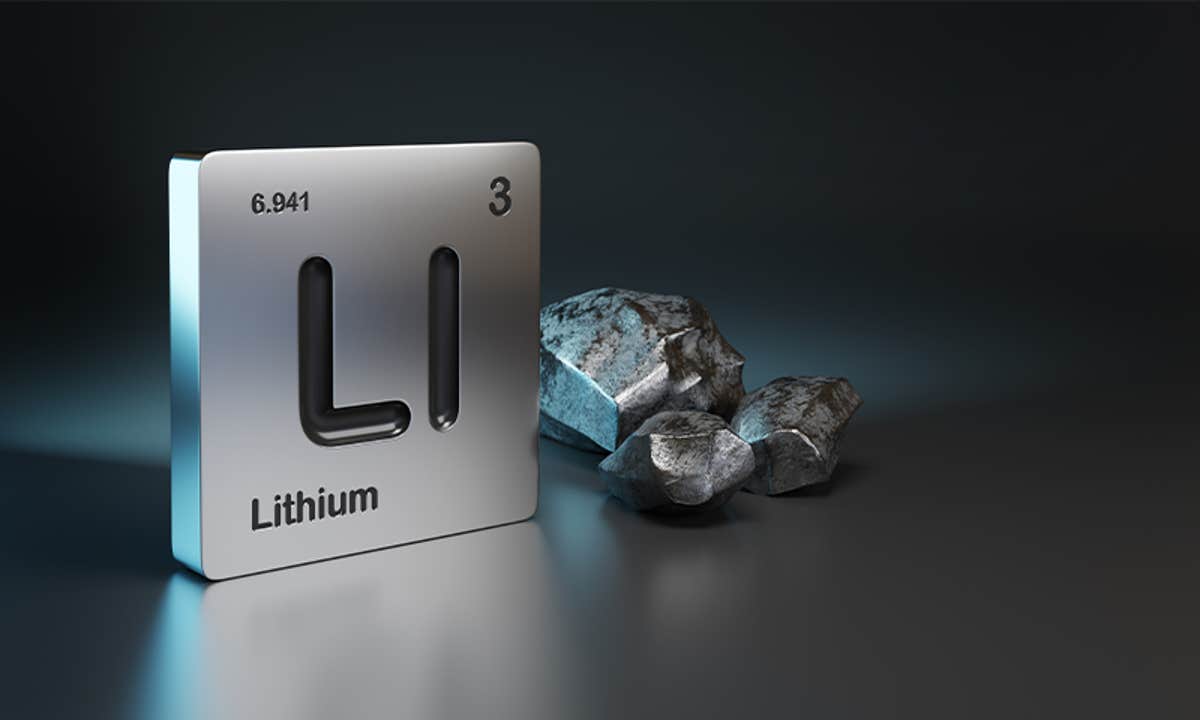 What a missing element can teach us about the universe.
.
.
Click the link below for the article:
https://nautil.us
.
__________________________________________
The Top 5 Longreads of the Week (new set)
April 23, 2024
Business, Food For Thought, Human Interest, Political, Science, Technical amazon, business, Business News, current-events, Future, Hotels, human-rights, medicine, mental-health, research, Science, Science News, technology, Technology News, travel, vacation Leave a comment

This is tricky, click each title 1 through 5 for the long read desired, and close the new tab when you’re finished, then choose the next title. Enjoy!
Click the link below the picture
.
A glimpse into this week’s list:
- Forcibly displacing the Maasai tribe in the name of “conservation.”
- The death of an Alabama pastor—and the grief of the community he left behind.
- Studying Alaska’s little brown bats.
- A dispatch from a conference on artificial intelligence.
- Remembering Shaun of the Dead, 20 years later.
1. The Great Serengeti Land Grab
Stephanie McCrummen | The Atlantic | April 8, 2024 | 8,385 words
The pastoral, semi-nomadic Maasai have lived on their land in northern Tanzania since the 17th century. But under the guise of conservation and modernization, the Tanzanian government is resettling the tribe, destroying their compounds and seizing their cattle—in other words, erasing their traditional way of life.
etc, etc, etc,. —CLR
.

Myotis lucifugus (little brown bat). Image by Joe McDonald/Getty Images.
.
Click the link below for the five articles:
https://longreads.co
.
__________________________________________
Mucus is gross. But here are 9 things you should know about it.
April 22, 2024
Business, Food For Thought, Human Interest, Political, Science, Technical amazon, business, Business News, current-events, Future, Hotels, human-rights, medicine, mental-health, research, Science, Science News, technology, Technology News, travel, vacation Leave a comment
Sorry, gross…
Click the link below the picture
.
Mucus is not widely considered a topic for polite conversation. It’s something to be discreetly blown into a tissue, folded up, and thrown away.
But the simple truth is that without mucus, you wouldn’t be alive.
“Mucus is essential for the protection of your body,” says Jeffrey Spiegel, an ear, nose, and throat surgeon at Boston University. “It’s a protective barrier, and it allows you to breathe comfortably. If you had no mucus, you’d be quite sorry you didn’t.”
Given how important mucus is — and how often colds and allergies cause mucus-related symptoms — it’s worth learning a bit more about it.
1) You produce about 1.5 quarts of mucus a day — and swallow the vast majority
Most of us think of mucus as something that leaks from our nose, but the truth is that it also gets secreted in your trachea and other tubes that carry air through your lungs, where it’s technically called phlegm. Wherever it’s produced, mucus is a mix of water and proteins, and most of it gets pushed to the back of your throat by microscopic hairs called cilia.
Whether you’re aware of it or not, you’re constantly swallowing all this mucus, and it harmlessly ends up in your stomach. “You’re swallowing, on average, twice a minute — even when you’re sleeping at night,” says Michael Ellis, an ear, nose, and throat doctor at Tulane University.
Ellis says that, on average, a person produces about 1.5 quarts of mucus per day, and contrary to what you might think, it doesn’t vary by all that much. But that mucus gets diluted by a separate, watery secretion (called serous fluid), which can vary widely based on your health.
2) Mucus is basically the body’s flypaper
Mucus has two main functions: it keeps the nasal cavity and the other airways inside your body moist, preventing them from drying out due to all the air that flows over them. (Relatedly, the serous fluid that mucus is mixed with also moistens the air itself before it enters the lungs.)
Mucus’ other function, though, might surprise you. “Mucus is kind of like flypaper,” Ellis says. “Debris that comes into the nose or throat sticks to it, and then you swallow it, so it doesn’t get into your lungs.”
Mucus, in other words, is nature’s filter for your delicate lungs. The bacteria, dust, and other tiny particles that you breathe in get stuck in mucus and pulled down into your stomach, where they’re destroyed by enzymes.
.
:format(webp)/cdn.vox-cdn.com/uploads/chorus_image/image/45663604/shutterstock_231805510.0.0.jpg)
.
.
Click the link below for the article:
.
__________________________________________
 James' World 2