May 6, 2024
Mohenjo
Business, Food For Thought, Human Interest, Political, Science, Technical
amazon, business, Business News, current-events, Future, Hotels, human-rights, medicine, mental-health, research, Science, Science News, technology, Technology News, travel, vacation

Click the link below the picture
.
After three decades researching human hope and happiness, I discovered a method you can use to measure your happiness. It’s based on this simple equation:
Hope ÷ Hunger = Happiness
This math formula — hope divided by hunger equals happiness — says that the more hopeful and less hungry you are, the happier you become.
When I say hungry, I don’t just mean you have a hunger for food. I’m saying you have a compelling desire or craving for:
- Inclusion and acknowledgment
- Intimacy and trusted companionship
- Food and comfort
- Information and answers
- Continuity and certainty
Hope, meanwhile, comes from:
- High self-esteem
- Robust human relationships
- A good sense of economic sufficiency
- Adequate knowledge
- Spiritual assurances
To measure hope and hunger — and therefore happiness — with this formula, I developed a questionnaire that identifies whether you’re languishing, flourishing, or functioning somewhere in between.
If you’re languishing, it means you’re overwhelmingly hungry, unhappy, and disconnected, with feelings of emptiness, low hope, and a hollow sense of purpose. You’re functioning at the lowest end of the wellbeing spectrum.
If you’re flourishing, on the other hand, it means you’re happy, full of hope, and functioning well emotionally and socially.
So if you can confidently make these six statements, you’re flourishing — living a happier, more hopeful life than most people:
.
 Westend61 | Getty
.
.
Click the link below for the article:
.
__________________________________________
May 5, 2024
Mohenjo
Business, Food For Thought, Human Interest, Political, Science, Technical
amazon, business, Business News, current-events, Future, Hotels, human-rights, medicine, mental-health, research, Science, Science News, technology, Technology News, travel, vacation

Click the link below the picture
.
Crows, chimps, and elephants: these and many other birds and mammals behave in ways that suggest they might be conscious. And the list does not end with vertebrates. Researchers are expanding their investigations of consciousness to a wider range of animals, including octopuses and even bees and flies.
Armed with such research, a coalition of scientists is calling for a rethink in the animal–human relationship. If there’s “a realistic possibility” of “conscious experience in an animal, it is irresponsible to ignore that possibility in decisions affecting that animal”, the researchers write in a document they call The New York Declaration on Animal Consciousness. Issued today during a meeting in New York City, the declaration also says that there is a “realistic possibility of conscious experience” in reptiles, fish, insects, and other animals that have not always been considered to have inner lives, and “strong scientific support” for aspects of consciousness in birds and mammals.
As the evidence has accumulated, scientists are “taking the topic seriously, not dismissing it out of hand as a crazy idea in the way they might have in the past”, says Jonathan Birch, a philosopher at the London School of Economics and Political Science and one of the authors of the declaration.
The document, which had around 40 signatories early today, doesn’t state that there are definitive answers about which species are conscious. “What it says is there is sufficient evidence out there such that there’s a realistic possibility of some kinds of conscious experiences in species even quite distinct from humans,” says Anil Seth, director of the Centre for Consciousness Science at the University of Sussex near Brighton, UK, and one of the signatories. The authors hope that others will sign the declaration and that it will stimulate both more research into animal consciousness and more funding for the field.
Blurry line
The definition of consciousness is complex, but the group focuses on an aspect of consciousness called sentience, often defined as the capacity to have subjective experiences, says Birch. For an animal, such experiences would include smelling, tasting, hearing, or touching the world around itself, as well as feeling fear, pleasure, or pain — in essence, what it is like to be that animal. But subjective experience does not require the capacity to think about one’s experiences.
.
 Steven Brisson Photography/Getty Images
.
.
Click the link below for the article:
.
__________________________________________
May 5, 2024
Mohenjo
Business, Food For Thought, Human Interest, Political, Science, Technical
amazon, business, Business News, current-events, Future, Hotels, human-rights, medicine, mental-health, research, Science, Science News, technology, Technology News, travel, vacation

Click the link below the picture
.
I’ve tried a lot of strange workouts in the name of science, but there was no experience quite like seeing myself in an EMS suit for the first time. It’s all black, with straps and buckles everywhere. A long wire is about to connect me to a computer. I feel like I’m suiting up to operate a spaceship or a giant robot. Instead, I’m about to do lunges and pushups while being told that I’m getting a much better workout than those suckers who just go to a regular gym.
To try it out for myself, I accepted an offer of a free session at BODY20, a growing chain of EMS fitness studios. Its workouts are pricey, at $40 to $100 per session, depending on where the studio is located and what kind of membership you sign up for.
So, is an EMS workout any better than the regular thing? Probably not. (We’ll get into the details in a minute.) But after seeing myself in the mirror, I kind of get the appeal.
What is EMS?
Electrical muscle stimulation (EMS) workouts are having a moment—not for the first time, and probably not for the last—based on their futuristic vibes and the fitness industry’s constant quest to sell you newer, cooler workouts than what everyone else is doing.
Electrical muscle stimulation is a family of techniques and technologies that trigger your muscles to contract by passing a mild electric current through your body. You may be familiar with some of the other uses of passing electric current through your body for health and fitness purposes, so I’ll describe them for comparison.
If you’ve used a TENS machine for pain relief, you know one type. You’ll put sticky electrodes on your skin, and turn on a handheld machine that’s connected to them by wires. TENS uses a mild current that feels like tingling, but it doesn’t make your muscles twitch or contract. The idea is that the tingling feeling interferes with pain signals. TENS stands for transcutaneous electrical nerve stimulation, meaning that the electrical current crosses the skin and the sensation is picked up by your nerves, but it’s not designed to contract muscles.
.
 Credit: Shendelle Gleim
.
.
Click the link below for the article:
.
__________________________________________
May 4, 2024
Mohenjo
Business, Food For Thought, Human Interest, Political, Science, Technical
amazon, business, Business News, current-events, Future, Hotels, human-rights, medicine, mental-health, research, Science, Science News, technology, Technology News, travel, vacation

Click the link below the picture
.
The best meteor shower of the spring will kick off a month featuring a variety of astronomical sights, none of which will require a telescope to see.
Warming weather across North America will provide more comfortable conditions for spending time under the stars with summer right around the corner, although there may still be a few chilly nights across the northern tier of the United States.
The first weekend of the month will bring the peak of the Eta Aquarid meteor shower, the second event of its kind in less than two weeks following the Lyrids in late April. And experts say 2024 will be a particularly good year for viewing the event.
“Most observers in the northern hemisphere usually see a maximum of 15-20 eta Aquariid meteors per hour under ideal conditions. Those rates could be doubled this year,” the American Meteor Society explained on its website.
The peak falls on the night of Saturday, May 4, into the early hours of Sunday, May 5. The best time to view the event is between 2 a.m. and 5 a.m., local time, on Sunday.
Mercury is one of the most challenging planets to spot in the sky due to its proximity to the sun, but early risers will have the opportunity to see the planet during the first full week of the month.
On May 9, Mercury will be visible low in the eastern sky before sunrise. If cloudy conditions obscure the sky, stargazers should be able to see the planet on the mornings that follow if the cloud conditions improve, although Mercury may not appear quite as high in the sky compared to May 9.
No telescope is required to see Mercury, but it will be dim and low in the sky, so onlookers will need a clear view of the eastern horizon and to look for it about an hour before sunrise.
The last full moon of spring will rise on Thursday, May 23, a moon that has many nicknames due to the flora and fauna on full display during the month.
The most common nickname for May’s full moon is the Flower Moon, as it is the time when blooming and blossoming flowers are on full display across North America, according to the Old Farmer’s Almanac.
Other nicknames for May’s full moon include the Budding Moon, the Egg Laying Moon, the Fog Moon, and the Planting Moon.
.
 Silhouette of countryside landscape under the starry skies and meteor shower. (Getty Images)
.
.
Click the link below for the article:
.
__________________________________________
May 4, 2024
Mohenjo
Business, Food For Thought, Human Interest, Political, Science, Technical
amazon, business, Business News, current-events, Future, Hotels, human-rights, medicine, mental-health, research, Science, Science News, technology, Technology News, travel, vacation
Click the link below the picture
.
The stereotype of attention deficit hyperactivity disorder (ADHD) is someone, often a young boy, who can’t focus and can’t sit still. And there are certainly people who fit that description. But the condition often presents very differently—for instance, some people with ADHD have a tendency to sit for hours and focus on a project to the point that they forget to eat and ignore the world around them. In that case, ADHD can be more about an overabundance of focus rather than a deficit. And many with ADHD—especially girls, who tend to go undiagnosed—aren’t hyperactive at all.
A new book, ADHD Is Awesome: A Guide to (Mostly) Thriving with ADHD (Harper Horizon, 2024), by Penn and Kim Holderness, aims to update the conversation about ADHD and point out the benefits along with the challenges. “ADHD is a superpower,” says Penn Holderness, who sees many benefits of his own ADHD diagnosis, including a special ability to concentrate on things he’s interested in, solve problems, and be creative. He and his wife, Kim Holderness, have gained fame for creating popular online videos about family life, many of which showcase aspects of ADHD. Penn struggles with remembering daily tasks—and sometimes leaves his keys in the refrigerator. But he and Kim also credit his ADHD superfocus for their 2022 win in the CBS reality competition The Amazing Race, which required them to solve puzzles, assemble musical instruments, and complete detailed memory tests, among other challenges, during a trip around the world.
Scientific American spoke to the Holdernesses about ADHD perception versus reality, ways to support loved ones with the condition, and how ADHD helped them win $1 million.
What do you hope people get out of the book?
PENN HOLDERNESS: I hope people get that they’re not alone, and they’re not broken. There’s nothing inherently wrong with them. If they have ADHD, they actually have a pretty fantastic brain—a very unique brain—and the world would be very boring without all of us.
They didn’t have this book when I was a kid. I can’t go back in time and give this book to myself, the kid who struggled and wondered why he was so weird. We’ve gone on a journey to discover what ADHD really is because even those who have it don’t always really understand it unless they take a deep dive into it. Once you realize what it is, you can quickly discover that there are some wonderful traits to this, as long as you put systems in place to manage the rough stuff.
.

Penn and Kim Holderness hold their new book, ADHD Is Awesome. Samantha Pressman
.
.
Click the link below for the article:
.
__________________________________________
May 4, 2024
Mohenjo
Business, Food For Thought, Human Interest, Political, Science, Technical
amazon, business, Business News, current-events, Future, Hotels, human-rights, medicine, mental-health, research, Science, Science News, technology, Technology News, travel, vacation

Click the link below the picture
.
Functional fitness is a type of workout that focuses on movements that mimic everyday activities. It’s all about training your body to perform better in real-life situations by improving strength, mobility, flexibility, and balance.
Functional fitness includes movements such as pushing, pulling, bending, squatting, walking, lunging and core strength. Some examples of functional fitness exercises are squats, lunges, pushups, single-leg deadlifts, and planks.
10 functional fitness exercises
Below is list of functional fitness exercises you can add to your routine to train your body to move with more ease during daily activities.
Squat
Stand with your feet shoulder-width apart and toes pointed forward. Pull your shoulders back and down to keep your chest up and head looking forward. Pull your navel in toward your spine to engage your core. Bend at the hips and knees while keeping your heels and toes on the floor. Slowly sit back into a squat position. Make sure that your knees do not move past your toes and that they are as close to a 90-degree angle as possible. Pressing into your heels to straighten the legs and return to standing. Squeeze your glutes at the top, tilting your pelvis forward.
.
 One of ten
.
.
Click the link below for the article:
.
__________________________________________
May 3, 2024
Mohenjo
Business, Food For Thought, Human Interest, Political, Science, Technical
amazon, business, Business News, current-events, Future, Hotels, human-rights, medicine, mental-health, research, Science, Science News, technology, Technology News, travel, vacation

Click the link below the picture
.
My 70-year-old father tells me he’s routinely startled simply by seeing his face in the mirror. “Who’s that old guy?” he thinks. Science shows he’s far from alone in this feeling.
Neuroscientists have explored the puzzling gap between our real age and how old we feel in our heads (aka our “subjective” age) and discovered that, on average, middle-aged adults in Western societies feel 20 percent younger than their actual number of years.
I’m 43, so this formula says I probably feel about 35, and my father is likely expecting to see a less wrinkly and white-haired 56-year-old in the mirror. Sounds about right.
But what does science have to say about why this common pattern exists and what, if anything, you can do to change your subjective age?
How old do you feel?
It may be clear that most adults feel younger than they are. Why remains a bit of a mystery. This long Atlantic article from Jennifer Senior offers several fascinating possibilities, as well as great anecdotes from a variety of people about their own inner age.
One theory is that years rich in new experiences seem to make more of an impression on our brains. When we enter into maturity, we settle down and the years seem to count less, throwing off our internal clocks.
“Adolescence and emerging adulthood are times dense with firsts (first kiss, first time having sex, first love, first foray into the world without your parents’ watchful gaze); they are also times when our brains, for a variety of neurodevelopmental reasons, are inclined to feel things more intensely, especially the devil’s buzz of a good, foolhardy risk,” Senior explains about a Duke neuroscientist’s theory.
More intensity means more memories, which means these years feel longer and weightier. Middle-aged routine adds less life to our internal tally, slowing our inner clock. This effect also may be why the tedious pandemic years seem to have fallen into a memory hole for many people and why time seems to speed up as we age.
But there are other theories too. Several people Senior spoke instead suggested their subjective age was frozen at a particular point because of a trauma they experienced, like the death of a loved one. A few “old souls” told her they felt older than their years. Meanwhile, cross-cultural studies show that people in societies that revere elders seem not to internally discount their years as much.
Can you change your subjective age?
There may be some broad patterns in how people settle on an internal age, but the process is clearly quirky and personal. There is no such thing as a “correct” subjective age. But that doesn’t mean you might not want to shift your own. If you’re feeling aged beyond your years by the stresses of being an adult and entrepreneur, are there ways to feel internally younger?
Yup, answers science. Here are the steps research suggests — and they are pretty simple, if not entirely easy.
.
 Photo: Getty Images
.
.
Click the link below for the article:
.
__________________________________________
May 3, 2024
Mohenjo
Business, Food For Thought, Human Interest, Political, Science, Technical
amazon, business, Business News, current-events, Future, Hotels, human-rights, medicine, mental-health, research, Science, Science News, technology, Technology News, travel, vacation
Click the link below the picture
.
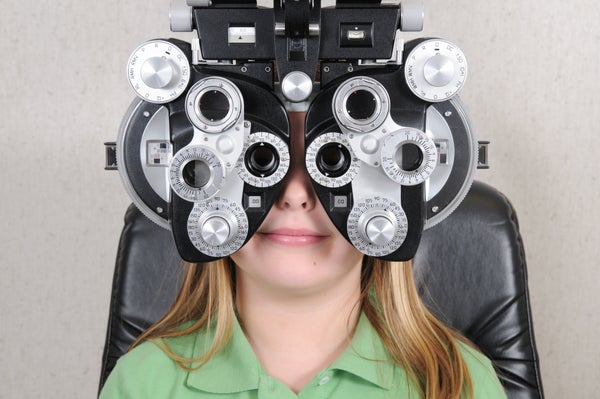
Optometry researchers estimate that about half of the global population will need corrective lenses to offset myopia by 2050 if current rates continue – up from 23% in 2000 and less than 10% in some countries.
The associated health care costs are huge. In the United States alone, spending on corrective lenses, eye tests, and related expenses may be as high as US$7.2 billion a year.
What explains the rapid growth in myopia?
I’m a vision scientist who has studied visual perception and perceptual defects. To answer that question, first, let’s examine what causes myopia – and what reduces it.
How myopia develops
While having two myopic parents does mean you’re more likely to be nearsighted, there’s no single myopia gene. That means the causes of myopia are more behavioral than genetic.
Optometrists have learned a great deal about the progression of myopia by studying visual development in infant chickens. They do so by putting little helmets on baby chickens. Lenses on the face of the helmet cover the chicks’ eyes and are adjusted to affect how much they see.
Just like in humans, if visual input is distorted, a chick’s eyes grow too large, resulting in myopia. And it’s progressive. Blur leads to eye growth, which causes more blur, which makes the eye grow even larger, and so on.
Two recent studies featuring extensive surveys of children and their parents provide strong support for the idea that an important driver of the uptick in myopia is that people are spending more time focusing on objects immediately in front of our eyes, whether a screen, a book or a drawing pad. The more time we spend focusing on something within arm’s length of our faces, dubbed “near work,” the greater the odds of having myopia.
.
 DawnPoland/Getty Images
.
.
Click the link below for the article:
.
__________________________________________
May 2, 2024
Mohenjo
Business, Food For Thought, Human Interest, Political, Science, Technical
amazon, business, Business News, current-events, Future, Hotels, human-rights, medicine, mental-health, research, Science, Science News, technology, Technology News, travel, vacation

Click the link below the picture
.
In 1956, my uncle John F. Kennedy, then a U.S. senator, wrote a book that is probably more famous for its great title than its contents. It was called Profiles in Courage. And it was about eight U.S. senators who JFK felt had made particularly courageous contributions to American history.
For a while now, I have been thinking about what courage means to me. While growing up with my father, Ted Kennedy, in the Senate, and then serving in the House of Representatives myself for many years, I saw quite a bit of bravery in politics. But the truth is, the most courageous people I know qualify not for what they do in public, but what they are able to endure and rise above in private. This is especially true of people who struggle every day with mental illness, or addiction, or both, or who help loved ones or family members in their struggles.
The details and daily dramas of these struggles usually remain private, hidden. And even when people discuss them publicly, it’s often in a brief or very cautious way—enough to admit to having a diagnosis or a problem, or “issues,” in order to support advocacy, but rarely enough to inform a public that wants and needs to understand what living with these illnesses is like every day. When I was younger, and first outed for substance use disorder treatment in the tabloids by someone I was in rehab with, I thought this was all harder for people in the public eye. But I have since learned better: we all live with the same stigma, and pay the same price for our silence.
We often quote the statistic that, at any given time, at least a quarter of all Americans struggle with mental illness, substance use disorder, or both. And while these are still sometimes viewed as two separate illnesses—because two distinct worlds developed to address them—I can tell you as someone who has them both that they are best understood and treated together as one complex continuum of diseases of the brain and mind.
.

Then Senator John F. Kennedy autographs a copy of his book ‘Profiles in Courage’ for a group of young men and women. Corbis—Getty Images
.
.
Click the link below for the article:
.
__________________________________________
May 2, 2024
Mohenjo
Business, Food For Thought, Human Interest, Political, Science, Technical
amazon, business, Business News, current-events, Future, Hotels, human-rights, medicine, mental-health, research, Science, Science News, technology, Technology News, travel, vacation
Click the link below the picture
.
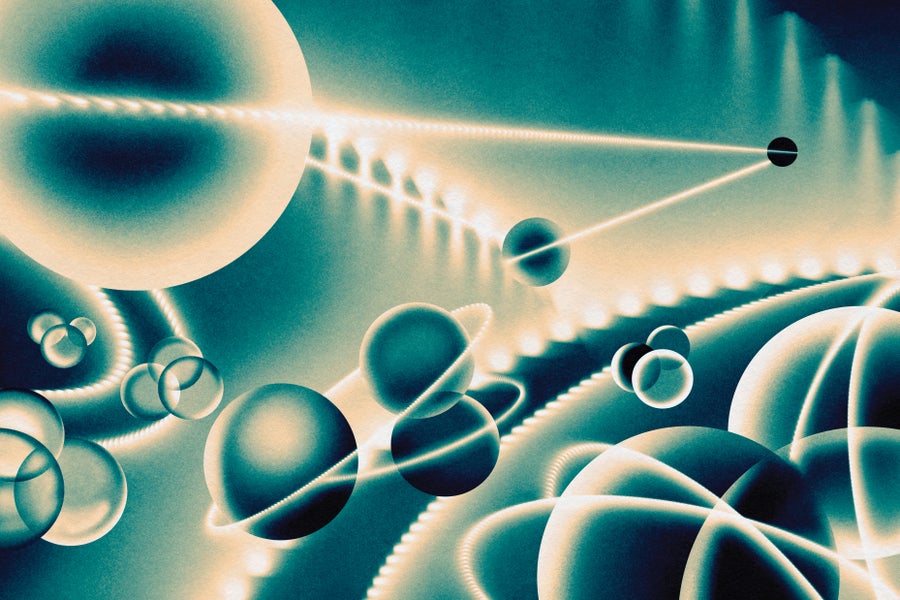
The strongest force in the universe is called, aptly, the strong force. We never get to witness its fearsome power because it works only across subatomic distances, where it binds quarks together inside protons and neutrons and joins those nucleons into atomic nuclei. Of the four basic forces of nature, the strong force is by far the most potent—it’s 100 trillion trillion trillion times stronger than the force of gravity. It’s also the most mysterious.
Despite knowing roughly how it compares with the other forces, scientists don’t know precisely how strong the strong force is. The other three forces—gravity, the electromagnetic force, and the weak nuclear force (responsible for some radioactivity)—are much better measured. The strength of electromagnetism, for example, denoted by its “coupling constant,” has been measured with the same precision as the distance between New York and Los Angeles, to within a few hair breadths. Yet the strong force’s coupling constant, called αs (“alpha s”), is by far the least understood of these quantities. The precision of the best measurements of αs is 100 million times worse than that of the electromagnetic measurement.
Even this level of (un)certainty is known only in the simplest domain of the strong force theory, at very high energies involved only in some of the rarest and most extreme events in nature. At the lower energies relevant to the world around us, the strong force earns its name by becoming truly intense, and concrete information on αs in this range is scarce. Until recently, no one had made any experimental measurements of αs at this scale. Theoretical predictions for its value were unhelpful, covering the entire span from zero to infinity.
The strong force’s might makes it difficult to study in lots of ways. The theory describing how it works, called quantum chromodynamics, is so complicated we can’t use it to make direct calculations or precise predictions. One of the reasons for this complexity is that the carrier of the strong force—a particle called the gluon—interacts with itself. Electromagnetism, in comparison, is simple because its carrier, the photon, is chargeless. But the gluon carries the strong force’s version of charge, called color, and its self-interactions quickly get out of hand. So despite its importance to nuclear physics and building the material world, the strong force is not unconditionally loved by researchers. Instead many look at the domain where the strong force is truly strong as a “Terra Damnata,” a realm to avoid at all costs.
.
 Deena So’oteh
.
.
Click the link below for the article:
.
__________________________________________
Older Entries
Newer Entries
 James' World 2