
Click the link below the picture
.
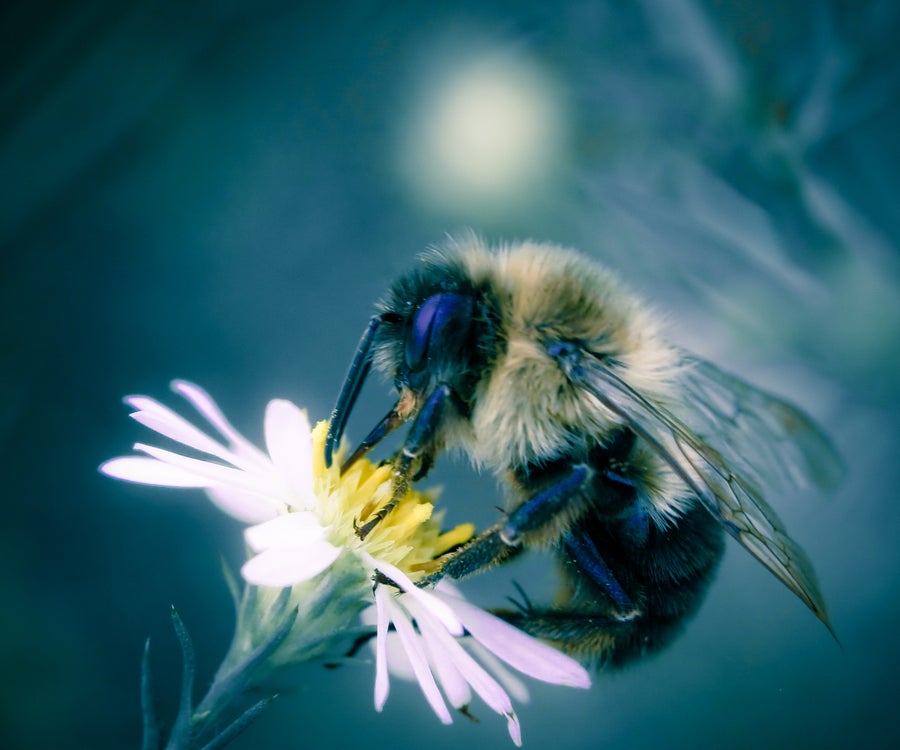
Crows, chimps, and elephants: these and many other birds and mammals behave in ways that suggest they might be conscious. And the list does not end with vertebrates. Researchers are expanding their investigations of consciousness to a wider range of animals, including octopuses and even bees and flies.
Armed with such research, a coalition of scientists is calling for a rethink in the animal–human relationship. If there’s “a realistic possibility” of “conscious experience in an animal, it is irresponsible to ignore that possibility in decisions affecting that animal”, the researchers write in a document they call The New York Declaration on Animal Consciousness. Issued today during a meeting in New York City, the declaration also says that there is a “realistic possibility of conscious experience” in reptiles, fish, insects, and other animals that have not always been considered to have inner lives, and “strong scientific support” for aspects of consciousness in birds and mammals.
As the evidence has accumulated, scientists are “taking the topic seriously, not dismissing it out of hand as a crazy idea in the way they might have in the past”, says Jonathan Birch, a philosopher at the London School of Economics and Political Science and one of the authors of the declaration.
The document, which had around 40 signatories early today, doesn’t state that there are definitive answers about which species are conscious. “What it says is there is sufficient evidence out there such that there’s a realistic possibility of some kinds of conscious experiences in species even quite distinct from humans,” says Anil Seth, director of the Centre for Consciousness Science at the University of Sussex near Brighton, UK, and one of the signatories. The authors hope that others will sign the declaration and that it will stimulate both more research into animal consciousness and more funding for the field.
Blurry line
The definition of consciousness is complex, but the group focuses on an aspect of consciousness called sentience, often defined as the capacity to have subjective experiences, says Birch. For an animal, such experiences would include smelling, tasting, hearing, or touching the world around itself, as well as feeling fear, pleasure, or pain — in essence, what it is like to be that animal. But subjective experience does not require the capacity to think about one’s experiences.
.
 Steven Brisson Photography/Getty Images
.
.
Click the link below for the article:
.
__________________________________________


May 06, 2024 @ 05:20:10
Beautiful! 👍
LikeLike
May 06, 2024 @ 08:42:02
Thank you!
LikeLiked by 1 person
May 06, 2024 @ 09:05:06
💐
LikeLike