A sunken ‘pyramid’ located near Taiwan has researchers rethinking everything they know about ancient civilizations. Discovered near the Ryukyu Islands of Japan in 1986, the Yonaguni monument is a striking structure with sharp-angled steps and a pyramid shape. Sitting just 82 feet below sea level, it stands roughly 90 feet tall and is made entirely of stone, which has led many to believe it might be a man-made structure.
However, tests of the stone reveal it to be over 10,000 years old, meaning that if this pyramid was built by humans, it would have been constructed before the region sank underwater—more than 12,000 years ago. This would place it several thousand years older than known ancient monuments such as the Egyptian pyramids and Stonehenge. The discovery challenges existing theories about the timeline of human civilization, suggesting the possibility of an advanced society predating known ancient cultures.
Dr. Sam Wainwright was caring for new moms when he noticed a major gap in the health care system.
As an internist and pediatrician, he ran a University of Illinois Health clinic providing primary care and resources for at-risk mothers and their children. When interviewing new moms about their needs, many responded with: “This extra support is really great, but could you see my husband? … Could you see my baby’s father?”
Wainwright realized that to truly help moms at the clinic, they needed to treat postnatal depression in dads, too. So he piloted an innovative study on screening fathers.
“The American Academy of Pediatrics tells us that we should be screening moms, our moms are telling us that we should be talking to dads, so what would it look like to start … integrating fathers into the care we provide?” Wainwright said.
Christine Kowaleski, a psychiatric nurse practitioner at Crouse Health and co-chair of the New York chapter of Postpartum Support International (PSI), receives similar requests. She has found that some men choose not to speak up because they are so focused on providing for their family.
“[Postpartum] is all about mom and baby for dads,” she said. “There’s only so much emotional space in a room, and if mom is taking up that space … dad is kind of left out of that room.”
New dad depression tends to be triggered by difficult situations like trouble conceiving, traumatic births, NICU stays, or supporting mom’s mental health. Research shows at least 10% of fathers are affected, but both Kowaleski and Wainwright say that the real number might be higher. To understand why it gets overlooked, we talked to two dads who lived with it, and we asked the experts to explain the subtle warning signs.
Symptom #1: Acting Withdrawn, Separated Or Distant
When a mom and newborn get attention, dad can feel pushed aside. With no positive reinforcement, he might become insecure in his new role.
“Moms bond very quickly with the baby, but it takes dads about two months, so for those two months they are kind of outside looking in,” said Kowaleski.
One father we spoke to, who wants to remain anonymous, started feeling distant on the day his twins were born. Twin Dad was at the hospital waiting to be brought in for his wife’s routine C-section. When the medical staff came, they said an emergency C-section was performed and the twin boy and girl had already been delivered.
“I missed it all,” he said. “I didn’t get to support and say … ‘You’re doing great!’ I didn’t get to cut an umbilical cord. I didn’t get any of the experiences that you see in the movies or TV.”
When my older son Jack, was in high school, he accepted a summer job selling solar panels door-to-door. My first reaction was to tell him not to do it. I felt protective—afraid of the rejection he would face on doorsteps all summer long. I just couldn’t see how my thoughtful son, a good athlete and straight A student, could cope with so much failure.
As a parent, it’s natural to want to shield your kids from failure. But we often hover over our kids in what are arguably low-stakes situations, inadvertently robbing them of essential learning experiences and causing anxiety rather than the confidence we had intended to build.
Instead, we can learn to let kids fail well.
To be fair, we are in a bind: if we overprotect, we are ridiculed as helicopter parents, but if we underprotect, we suffer the potentially catastrophic consequences of a child’s immature decision-making. Making the job even harder, every few years the parenting pendulum seems to swing: the three-martini playdate replaces the anxious co-piloted playdate and back again. It’s easy to see why parents are torn: Should you let children make their own mistakes, or stay close by, removing obstacles, limiting risks, and preventing failure? Struggling to manage the bind, parents suffer. And so do their kids.
But there is a path forward that avoids either/or thinking and helps kids build good judgment to accompany a learning-oriented, adventuresome spirit. It supports kids in pursuing the right kind of failures, while helping them avoid danger. Extrapolating from my organizational research and personal experience, I think it’s a parent’s responsibility to help children develop the failure muscles they need to stretch and learn, and to grow into responsible members of society. To do this, we need to examine two dimensions of failure science: assessing the context for risk and understanding that failures are not all alike.
Consider three kinds of failure I’ve identified in my research: basic, complex, and intelligent.
Basic failures have single causes—usually a simple mistake. They are preventable. This is why we childproof our homes when children are small, and ensure that medicine bottles can’t be opened without the strength to twist and pinch. Basic failures don’t bring new knowledge, and most of us would be better off avoiding them (such as by paying attention when we’re following a recipe). But they’re part of the experience for any child learning to master a new topic or skill, and it’s good to remind children to take the time to learn from mistakes, so they can keep improving.
Complex failures have multiple causes—each innocuous on its own—that come together to produce havoc. You forget to charge your cell phone, get stuck behind an overturned truck on the highway, can’t reach your spouse, and miss the day care pick up. Most complex failures can be prevented with vigilance, but we’ve all had days where everything goes wrong, and these kinds of failures will continue to slip through in our increasingly complex and interconnected world. We should learn from them and move on.
The intelligent failures are the ones that matter here, the ones parents should let happen to help children thrive.
It starts with learning to reframe failure as a source of discovery and personal development. I believe that most of us, to live the fullest lives, should experience more failures, not fewer. Whether it’s tennis champion Roger Federer winning only 54 percent of the thousands of points he played in his illustrious career (proving that, as he put it, “even top-ranked tennis players win barely more than half of the points they play”) or top chemistry professor Jennifer Heemstra saying that 90 percent of the experiments in her lab end in failure, the most successful among us have long demonstrated that you have to be willing to fail. So why do so many parents feel a need to protect their children from failure?
It was 2016, and I’d been a zookeeper for seven years. I lived with my partner and two stepchildren in a Victorian terrace house in Bristol. We’d met when her kids were four and eight, so I had not experienced the early baby stages, the sleepless nights, nappies, and bottle-feeding.
But that was about to change.
On 15 March, I parked my car outside the house as usual, but rather than bowling inside to shower and eat, I unclipped the car seat and carried a baby gorilla into the lounge. Afia had been born by emergency C-section at Bristol zoo after her mum, Kera, developed pre-eclampsia. I first took her home when she was four weeks old.
On the couch, she nestled in the crook of my arm and clutched my thumb with a delicate fist of wrinkled grey fingers. The trust in her dark eyes snapped awake an instinctive devotion in me – the foundation of the bond that grew between us.
I worked with a family group of seven western lowland gorillas at the zoo. Classified as critically endangered, they are at imminent risk of extinction in the wild. The captive population is managed collectively across Europe by a specialist team: zoos don’t own the species they keep, or sell them, but rather they maintain the genetic diversity within the population by moving animals from one collection to another. I followed industry-wide husbandry guidelines, but what we were doing with Afia had never been tried in the UK before. As a gorilla keeper, I was now part of the team that would hand-rear her.
Hand-rearing is a rare part of zoo keeping, and the goal is always to reunite the baby with its own kind as quickly as possible. As gorillas rely on their mother’s milk for three years, the aim with Afia was to try to get her back with her mother or, failing that, train one of the adult females to become her surrogate mum. Afia would need to be acting like a normal gorilla infant by the time we introduced her into the troop; if we could achieve this within a year, she wouldn’t remember travelling in the car each night or sleeping in a bed with a duvet.
Baby gorillas develop more quickly than humans, so my parenting ride lasted just seven months. I wore a string vest, to replicate a gorilla’s fur, as the first thing Afia needed to learn was to hang on to me wherever I went. She slept on my chest at night, clung to me in fear at unexpected noises, and I helped with her first stiff-legged steps.
y day, we spent time with the adult gorillas, particularly with Kera, Afia’s mum. Adult gorillas are dangerous animals, which meant we would never go into the enclosure with them. Kera remained separated from the rest of the group and struggled to recover from the C-section. Our interactions were through grilled windows and doors in the gorilla house, but Kera was so sick and unresponsive that no maternal bond with Afia could be formed.
Soon, Afia began to ride on my back, furry arms clamped around my neck. She could climb and was trying to master swinging from one rope to another. I recognised her facial expressions – sleepy, solemn, inquisitive – and she had full trust in me, knowing that I would keep her safe. At six months, she was running around the lounge and throwing her toys about. My favourite expression was her play face, a grin that we both knew meant diving off the sofa and wrestling. I would take up my regular spot on the floor and wait for Afia to push the coffee table up against the couch so she could climb on to it more easily. She would spend the next hour leaping on to me or the cushions she’d chucked nearby.
My own family group had to be hands off, as part of the hand-rearing protocol. The kids mentioned later they felt waves of irrational jealousy. When I was rolling around on the floor, Afia chuckling with gorilla laughter, my partner said: “I can see now what sort of parent you’d have been for the kids at that age.”
We ate dinner together as a family, Afia on my lap, enthusiastically drumming her hands on the kitchen table and making grabs for the cutlery. The gorilla troop eats together at the same time, so sharing meals needed to be the norm for Afia, and she would look around the table at us all, squishing fistfuls of steamed sweet potato through her fingers. After dinner, she’d slump across me on the couch, asleep, briefly waking up for a bottle-feed before bed, where she would snuffle and belch cheesy milk breath over me. In bed, Afia had started off sleeping on my chest, but now she was older, she would slide off to snuggle next to me, or roll over and throw a hairy arm over my partner instead.
.
My parenting ride … Alan and Afia in 2016. Photograph: Ryan Walker
Spring has finally arrived in the U.S., bringing its bright spectacle of budding trees and migrating birds, along with more subtle but equally important changes—among them, the first emergence of native bees.
But “native bees” doesn’t actually include the insect most of us picture upon hearing the word “bee.” That yellow-and-black-striped, hive-living, honey-making critter—formally Apis mellifera—hails from Europe. Farmers rely on these tiny imports as, essentially, livestock animals that pollinate food crops and produce honey. But their wild, native counterparts are something completely different.
“Take the majority of what you know about honeybees and throw it away,” says Sydney Shumar, a biologist and manager of the U.S. Geological Survey’s Bee Lab. “It does not apply to our native bee friends.” To celebrate spring, Scientific American spoke with Shumar about North American native bee species’ variety, differences from honeybees, and importance in their ecosystem.
Do I have this right that there are more than 4,000 native bee species in the U.S.? How is that number so big?
The reason why there are so many native bees is you have all these different little things evolving to pollinate groups or species of plants. So they all have very different characteristics. When you look at pictures of our native bees, they look totally different than a honeybee, and you have huge ranges of color, size, how they collect pollen and how they nest.
There are no native bees in North America that live in a hive or produce honey. Most of them live in very small family units, or you could think of it as more like an apartment where you might have families aggregating together.
“If you go anywhere in the United States, you are bound to find some native bees.” —Sydney Shumar, biologist
None of them produce honey; none of them produce wax; none of them make big structures like you would think of with a honeybee. Some are stem-nesting; most of them are ground-nesting, so when you’re walking around in the winter, you are walking on top of millions of ground-nesting bees that are just laying low until it’s time for them to come out with spring.
Is this true even in cities? Do they have preferences or types of ground that they need?
A lot of our native bees are specialists, so they do like a particular type of soil; we have a couple that particularly like sand. In cities and more urban areas, you have a lot of impervious surfaces, so that is going to make it harder for them. But if you have loose soil, if you have native plants, you’re most likely going to find native bees.
Are there any U.S. ecosystems that don’t have native bees, such as deserts or something?
No, we worked on a project on xeric habitat, and when you think of xeric, you think of dry; you think of nothing blooming, just arid—and the researchers caught hundreds—hundreds—of bees. If you go anywhere in the United States, you are bound to find some native bees.
Are there any species or groups that you find particularly cool?
Besides all of them? I am very fond of this group that’s called squash bees. They’re medium-sized; they’re very cute and fluffy. But as you’d guess, they are squash specialists. They come out super early in the morning; you have to get there at first light. And if you have squash plants, then you most likely have them. The scientific name of the most widespread species is Peponapis pruinosa, and you’ll find them just relaxing in the big squash bloom, usually early in the morning.
.
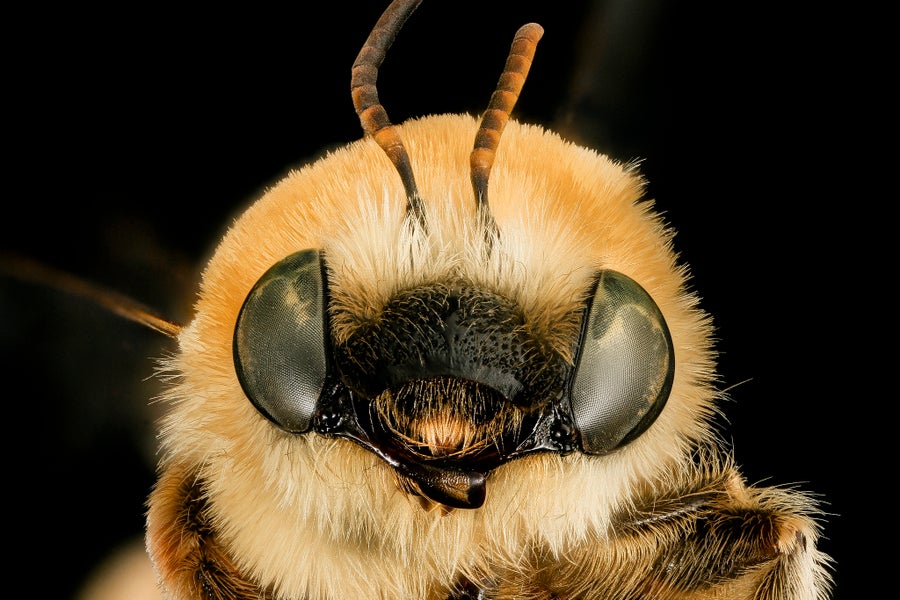
A Martinapis luteicornis bee found in the desert in Cochise County, Arizona.Amanda Robinson//USGS Bee Lab via Flickr
Archaeologists digging under the Church of the Holy Sepulchre in Jerusalem have found signs of an ancient garden that align with biblical descriptions.
Many Christians believe the church is where Jesus was buried and it continues to be a major pilgrimage site.
Now, the discovery of 2,000 year-old olive trees and grapevines are believed to reflect accounts in the Gospel of John of where Jesus was crucified and laid to rest.
“Now in the place where he was crucified there was a garden, and in the garden a new tomb in which no one had yet been laid,” the Gospel of John states.
“The archaeobotanical findings have been especially interesting for us, in light of what is mentioned in the Gospel of John, whose information is considered written or collected by someone familiar with Jerusalem at the time,” Professor Francesca Romana Stasolla told the Times of Israel.
“The Gospel mentions a green area between the Calvary and the tomb, and we identified these cultivated fields.”
Excavations have since been as the churches expect crowds of pilgrims over Easter celebrations.
The 2022 project marked the first major restoration since the 19th century and was headed by a Sapienza University of Rome professor.The restoration had to be agreed on by the Roman Catholic, Armenian, and Greek Orthodox custodians. It also needed an Israel Antiquities Authority licence.“With the renovation works, the religious communities decided to also allow archaeological excavations under the floor,” Professor Stasolla said.
The team found layers dating from the Iron Age under the basilica, including pottery, oil lamps, and soil samples.
The presence of pre-Christian artefacts suggests the land changed over time from a quarry, through cultivated land to a burial site over time.
The Independent is the world’s most free-thinking news brand, providing global news, commentary and analysis for the independently-minded. We have grown a huge, global readership of independently minded individuals, who value our trusted voice and commitment to positive change. Our mission, making change happen, has never been as important as it is today.
.
Many Christians believe the church is where Jesus was crucified and buried and it continues to be a major pilgrimage site (AFP/Getty)
The success of Netflix drama Adolescence, along with concerns about misogynistic influencers such as Andrew Tate, has brought the “manosphere” into public discussion.
Many parents, particularly of young boys, may fear they don’t know enough about what their children are exposed to online.
I research radical misogyny online, and the pathways by which young people encounter these spaces.
Here is what parents should know about this content.
What is the manosphere?
The manosphere is a network of communities that create, consume, and distribute content online aimed at men and boys. It includes multiple groups that differ in their aims and focus, but are all largely anti-feminist.
These groups discuss masculinity, but also topics such as health, gaming, politics and finance. They trivialise hateful rhetoric through memes, comedy, and trolling (provocation or bullying for amusement) by framing it as self-help, entertainment, and tools for financial success. This can make it difficult for parents to identify and for children to realise the extreme messages they are being exposed to.
Manosphere content is promoted by various influencers on popular social media platforms. These influencers often showcase unattainable wealth and status, selling the illusion that followers can achieve success by adopting their teachings.
The most notable manosphere influencer is Andrew Tate, who rose to fame in 2022. He and his brother Tristan are currently under investigation in Romania for charges of rape, human trafficking and money laundering, and in the UK for rape and human trafficking. However, he is not the only influencer out there.
In recent years, there have been a number of incidents of violence that have been linked to manosphere content. The extent of real-world effects is difficult to measure, and not everyone who engages with the manosphere will go on to commit violence. But it’s clear that these communities can promote violence or spread harmful ideas about women and girls.
It is important to note, however, that this content also harms men and young boys. The manosphere promotes unrealistic expectations and extreme measures, which can lead to poor self-esteem, mental health problems, and, in some cases, suicide. This content preys on vulnerabilities and insecurities of boys and young men, especially related to social isolation and sexual rejection.
Misinformation and pseudoscience
Much of the content that spreads in the manosphere is based on disinformation or pseudoscientific theories. These provide an easy framework for men to assess and improve their status while framing women and feminism as the problem.
For example, the “80/20 rule” refers to the pseudoscientific theory that 80 per cent of women are only attracted to the top 20 per cent of men. In the manosphere, this rule is used to blame women for mens’ feelings of sexual or romantic rejection.
Influencers and community members promote step-by-step instructions that people can follow to improve their social standing. Many of these guides involve extreme or harmful physical transformations in a phenomenon known as “looksmaxxing”, which can even involve facial surgery in a bid to increase their sexual “value”.
.
Adolescence creator says trolls have questioned if he has ‘too much oestrogen’ since Netflix release
We see myriad examples of ambitious kids hoping not to disappoint their big-shot Ivy League parents, from the White Lotus’ Saxton, who is eagerly hoping to impress his seemingly successful Duke-grad finance dad, to the pressure facing Rory Gilmore to succeed at Yale, her grandparents’ alma mater, in Gilmore Girls. The desire to mirror parents’ success may work against some aspirational college students, churning up signs of physiological stress, according to one study.
The study, published in Frontiers in Psychiatry from researchers in Germany and Switzerland, analyzed how parental educational attainment may be associated with the stress of their teenage children starting college. Researchers compared hair cortisol concentrations (HHCs) from women in their first semester of college from families where parents had graduated from tertiary education with students from families where parents did not (the stress hormone is typically measured using blood, urine, or saliva samples, and, more recently, hair). While the study was published in 2020, it may be especially timely today, as students face more economic uncertainty and a workforce rapidly changing, largely thanks to AI.
Those who had at least one parent graduate from college appeared to have more physiological stress after starting school than those whose parents did not graduate from college. While self-reported stress levels did not vary, the physiological stress measured by HHCs did.
“Our findings are in line with the theoretical and empirical work of sociologists who argue that individuals from academic families may be frightened of experiencing a social (academic) drop if they fail while attending a university,” the researchers write. “Based on this argumentation, we assumed that there may be social pressure for academic family members to continue the family tradition, that is, to acquire a higher education at a university.”
There’s more parental involvement across the board, and it could be argued that parents of a particular educational attainment may be more likely to place particular career aspirations on their children. A recent Pew Research study found that 41% of parents say their children (between ages 18 and 34) “rely on them a great deal or a fair amount for emotional support,” with the majority saying their children come to them for advice and 73% saying they text with them at least a few times week.
The small study of 71 women in one university in Switzerland has limitations. A more comprehensive analysis across academic disciplines with more participants could add to the association between parental education, area of study, and stress levels.
But the results add to the literature that Gen Zers across the board are anxious about being financially less stable than their parents, as they consider financial success to be a net worth twice as large as their Gen X parents. They are also struggling with the rising cost of living amid economic turmoil.
And that anxiety is not limited to a privileged few: Research from the journal Cogent Mental Health also finds high rates of anxiety, depression, and stress among first-generation college students, many of whom have faced systemic barriers to equal educational attainment, financial stress, and debt that can exacerbate stress.
.
A recent Pew Research study found that 41% of parents say their young adult children “rely on them a great deal or a fair amount for emotional support.” Halfpoint Images—Getty Images
From Facebook to X to TikTok, today’s social media giants position themselves as bastions of free speech. Meta CEO Mark Zuckerberg now says fact-checking caused “too much censorship,” while TikTok brandishes a freedom-of-expression argument against its forced sale. Who, after all, could argue against the untrammeled freedom to speak?
The answer, it transpires, might be anyone paying attention. As we begin to understand the cataclysmic effect of viral misinformation flooding social media, the undeniable reality is that these media empires profiteer hugely from division and fear. In everything from politics to health, falsehoods propagated across social media cause immense harm. From 2018’s genocide against Myanmar’s Rohingya people, incited on Facebook, to X, Facebook and Telegram posts last year that sparked violent anti-immigrant riots in the U.K. to the people who gave 1.8 million views to a TikTok video that encouraged them to take bleach enemas to cure supposed parasite infestation, the evidence is clear that social media myths cause huge societal harm.
While Europe has moved to hold social media giants accountable, U.S. efforts have almost completely faltered, with YouTube, X and other platforms curtailing misinformation teams and allowing conspiracy theories to run riot. The industry’s now familiar attempts to deny responsibility for the harms of immensely lucrative products follows a familiar, deeply instructive playbook: the tobacco industry’s strategy of obstruction.
Just as four in 10 people were once smokers in the U.S., poisoning their lungs, vast numbers of people now get their news through the editorial prism of social media, poisoning their perceptions.
Around a fifth of Americans now get their news from social media influencers. A recent European survey of older teenagers and young adults found that 42 percent got their news mainly from social media platforms such as TikTok and Instagram. In the past two decades, social media giants have displaced traditional media as the news source for many, without the pesky issues of journalistic integrity or editorial responsibility. Instead they profit off engagement. And it is here that the corporate avarice and mendacity of the tobacco industry are especially illuminating.
Long before the overwhelming harms of smoking were widely known, tobacco companies already knew their product was harmful and addictive. Instead of taking corrective action, they spent decades undermining any regulation, even while cigarettes continued to kill millions. Opting not to mitigate harms but to instead distract from the overwhelming evidence their product was deadly, they aggressively pushed their product on vulnerable audiences. One now infamous leaked memo from a tobacco company in the 1960s bragged that “doubt is our product,” a means to distract from the harms of their profitable industry.
In the information age, social media companies are no different. From their own internal metrics, tech giants have long known what independent research now continuously validates: that the content that is most likely to go viral is that which induces strong feelings such as outrage and disgust, regardless of its underlying veracity. Moreover, they also know that such content is heavily engaged with and most profitable. Far from acting against false, harmful content, they placed profits above its staggering—and damaging—social impact to implicitly encourage it while downplaying the massive costs.
We’ve known this at least since the aftermath of the divisive 2016 American presidential election, where the culpability of social media for its signature triumph of fictions was greeted with what now looks like mock contrition. Tech giants such as Facebook even trumpeted their partnerships with fact-checking organizations.
CLIMATEWIRE | Widespread layoffs this week at the Department of Health and Human Services have effectively dismantled programs aimed at keeping Americans safe from extreme heat and other climate-driven weather.
Last year was the warmest on record. But layoffs at HHS include staff that administer grants that help state and local health departments prepare and respond to extreme weather events such as heat waves, as well as federal workers tasked with maintaining online tools that raise awareness about the dangers of heat and tell people how to protect themselves from fatal conditions such as heat stroke.
“This is really important, valuable work,” said Lori Freeman, CEO for the National Association of County and City Health Officials. “As entire departments are cut, we are concerned that it will decimate resources available to key state and local work.”
That includes the entire staff of a federal program that helps low-income households pay utility bills for air conditioning and heating.
Congress’ recently passed continuing resolution allocated $378 million to the Low Income Home Energy Assistance Program. It provides support to some 6 million Americans.
But the staff who normally would process that money and send it to states where it can be spent to keep air conditioners running through summer heat waves are now all on administrative leave, and will be terminated June 2.
“There are over 6 million families that are helped through this program, and now there is a possibility that the administration won’t allocate them,” said Mark Wolfe, executive director of the National Energy Assistance Directors Association, which represents states. “It’s deeply disturbing.”
Heat can be deadly when people don’t have access to air conditioning, as the majority of Americans who die from heat perish indoors. Cutting LIHEAP staff, and potentially preventing funds from reaching people in need, could cost lives, said Amneh Minkara, deputy director of the Sierra Club Building Electrification Campaign.
“The elimination of the staff administering LIHEAP could have dire, potentially deadly, impacts for folks who will not be able to safely cool their homes as we enter what is predicted to be another historically hot summer,” she said.
LIHEAP isn’t alone. At the Centers for Disease Control and Prevention, nearly the entire staff for the Division of Environmental Health Science and Practice (DEHSP) has been axed, including those who worked in the climate and health program that provides grants to local and state health departments.
Currently, the climate program, which annually receives $10 million in congressional appropriations, is funding grants to 13 state and local health departments. Those grants are in their fourth of five years, and recipients next week are supposed to submit annual reviews of how they have used the funds before they can be allocated the last year of funds.
“The reports are just going to sit there because there is no one left to review them and approve their next year of funding,” said one employee who until this week worked in DEHSP’s climate and health program. The employee was granted anonymity for fear of reprisal.
Asked about the funds, HHS spokesperson Emily Hilliard said the agency “will continue to comply with statutory requirements, and as a result of the reorganization, will be better positioned to execute on Congress’ statutory intent.”
She did not respond to follow-up questions asking how HHS would allocate funds to states without help from staff members who have been laid off.
Asked about HHS layoffs more broadly during a POLITICO Live event, HHS special government employee Calley Means said, “it is insane for you to insinuate that the thing standing between us and better health is more government bureaucrats.”
.
A woman in Thermal, Calif., wipes her face after doing her laundry under a blazing morning sun, with a temperature of 95 degrees Fahrenheit at 9 a.m. on a July day in 2023. Irfan Khan/Los Angeles Times via Getty Images
Film and Writing Festival for Comedy. Showcasing best of comedy short films at the FEEDBACK Film Festival. Plus, showcasing best of comedy novels, short stories, poems, screenplays (TV, short, feature) at the festival performed by professional actors.




 AzmanL/Getty Images







 rob dobi/Getty Images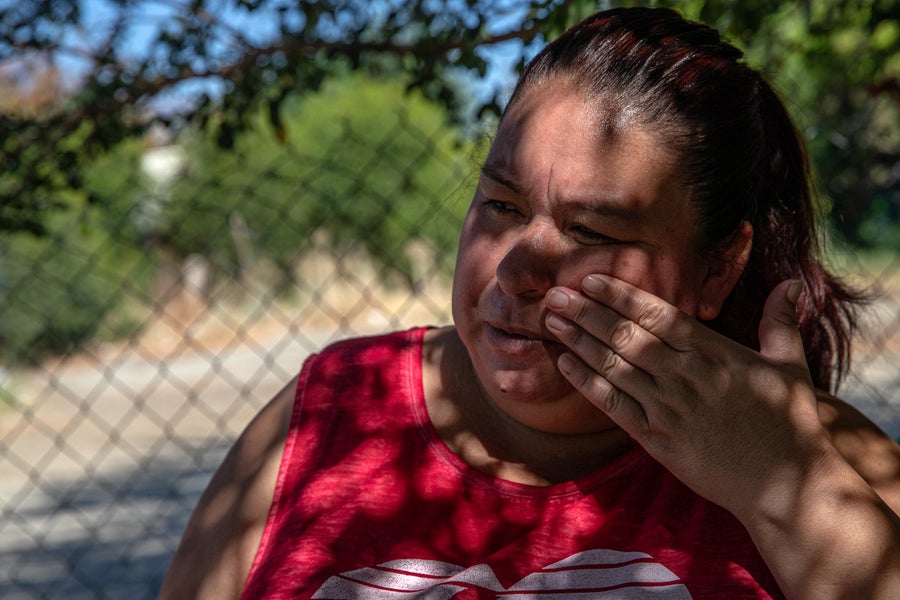
 James' World 2