April 15, 2025
Mohenjo
Business, Food For Thought, Human Interest, Political, Science, Technical
amazon, business, Business News, current-events, Future, Hotels, human-rights, medicine, mental-health, research, Science, Science News, technology, Technology News, travel, vacation
From

Click the link below the picture
.
Is micro-management, a lack of career progression, and workplace boredom getting you down? The answer may lie in understanding the symptoms of ‘rust-out’. According to the old adage, if you love what you do, you’ll never work a day in your life. However, most of us know that’s not strictly true. Even if you enjoy aspects of your job, it’s combined with stress and pressure, whether that’s urgency overload or feeling like an outsider in your workplace. Throw in a toxic boss and the rise of quiet quitting, and it’s easy to see how just a few taxing elements can build into overwhelm and disillusion.
We know already that burnout is a giant generational problem impacting almost half of UK adults, but experts are also now pointing to a rise in ‘rust-out’: the condition of being chronically under-stimulated, uninspired, and unsatisfied at work.
“Do you find yourself clock-watching as the end of the workday approaches, counting down until finish time? Are Monday mornings a particular grind as you find it difficult to motivate yourself to get going because nothing feels challenging or stimulating? If so, you might be experiencing rust-out,” explains Sharon Peake, founder of gender equality consultancy Shape Talent.
According to Peake, when we are in roles that provide the right level of immersion and stimulation in our work, we experience a phenomenon called ‘flow’, where the level of challenge of the work aligns with our capability and motivation and we become completely absorbed in our work, leading to a sense of wellbeing and positive energy connected with our job. With burnout, the demands of the role exceed our time, ability, and resources; however, and when the demands of the role are lower than our skills and ability, we can experience boredom, frustration, and, ultimately, rust-out.
Rust-out is also more likely to affect women than men due to the unique workplace barriers that women experience, such as the double burden of paid and unpaid (domestic) work. This often leads highly capable and experienced women to return to work part-time, working at a lower level of responsibility after maternity leave, or even opting out of the workforce.
“Rust-out can leave employees feeling uninspired at work and stagnant in their careers, with repetitive meetings and admin taking a mental toll,” adds Becca Moore, associate director at recruitment consultancy Michael Page. “Our recent survey of 5,000 UK workers revealed that ‘a sense of purpose’ was a key driver for happiness in the workplace (48%), but concerningly, just a quarter of UK workers (24%) say they are hugely passionate about their career.”
It doesn’t just affect our morale. As Sarah Markham, a workplace culture expert and founder of Calm In A Box, tells Stylist, when we lose a sense of purpose or feel our work isn’t meaningful, it can cause us to ‘doom loop’, when we repeat unhelpful stories about ourselves. Of course, this doesn’t mean that we should fear every office lull and less-than-fascinating project. Most of us will experience some kind of tedium at work, but rust-out relates to chronic boredom that is so serious it can be detrimental to both your mental and physical health.
How to navigate rust-out at work
In 2023, a Gallup study found that only 33% of employees feel like they are thriving at work. And with micromanaging bosses, the deskilling of jobs, unnecessary bureaucracy, and fewer promotion opportunities, it’s easy to see why.
As Peake explains, the impact of being under-stimulated at work leads to a lack of engagement, boredom, reduced workplace performance, and in some cases, it can even result in anxiety and diminished confidence as the individual starts to question their own capability. So it’s important to act as soon as you sense rust building.
Moore agrees: “When you start to feel the impact of rust-out, it’s critical that you act sooner rather than later. What are the tasks that you used to love doing? What would you like to do more of? What excites and challenges you? Set up some time with your manager to talk through the areas that you’d like to develop and anything that you might like to change.
According to Moore, being open and honest about what motivates you will help your manager delegate tasks and opportunities that better align with your goals and sense of purpose. “It’s a win-win, as they will end up receiving better quality work from you as a result,” she says.
“Finding ways to get better alignment between your capability and work challenges is key,” Peake continues. “Could you get involved in special projects or assignments that will stretch you more? Sometimes extracurricular learning, such as a course of study, can help to provide the missing stimulus. But if none of this is right for you, then it may be time to find a new job and workplace that better meets your needs.”
.
 Credit: Getty
.
.
Click the link below for the complete article:
.
__________________________________________
April 14, 2025
Mohenjo
Business, Food For Thought, Human Interest, Political, Science, Technical
amazon, business, Business News, current-events, Future, Hotels, human-rights, medicine, mental-health, research, Science, Science News, technology, Technology News, travel, vacation

Click the link below the picture
.
CLIMATEWIRE | President Donald Trump on Tuesday made an unprecedented peacetime intervention in the electricity sector, using executive orders to force aging coal-burning plants to stay open and feed soaring energy demand from American tech companies.
At a White House signing ceremony that resembled a campaign-style rally, Trump signed orders squarely aimed at reviving coal mining and coal power, which have both been in decline for more than a decade. Among other things, they direct Secretary of Energy Chris Wright to identify which regions are at risk of electricity shortages and bar the shutdowns of coal plants deemed essential.
“Unlike wind and solar, coal plants can run 24 hours a day in rain, sleet or snow,” Trump said, flanked by rows of coal miners donning hard hats. “From now on, we’ll ensure our critically needed coal plants … remain online and fully operational.”
The president signed a total of four executive orders after a speech that downplayed the danger of climate change, blasted the “green new scam,” lauded “beautiful clean coal,” and attacked past administrations pursuing tough pollution standards and for making it harder to mine for coal.
The announcement was quickly followed by a slew of policy shifts, including the Interior Department’s lifting of a ban on leasing in the Powder River Basin, one of the biggest coal-producing hubs in the nation. Conservation groups immediately warned the orders would catapult carbon emissions and dangerous pollution.
“Trump’s attempt to bail out coal is a recipe for raising prices for consumers,” said Jenny Rowland-Shea, public lands director at the Center for American Progress. “Coal’s decline was a problem of economics, and its revival only works if prices increase. These executive orders threaten to make energy costs higher for Americans while continuing to ignore real solutions to energy independence.”
Through his order, Trump reiterated the need to meet the demand of the tech industry build-out of data centers. The nation’s ability “to remain at the forefront of technological innovation depends on a reliable supply of energy from all available electric generation sources and the integrity of our nation’s electric grid,” Trump’s order states.
But the pace of electricity demand to serve future data centers is still guesswork. The centers could consume between 7 percent and 12 percent of U.S. electricity output in 2028, from 4.4 percent now, according to estimates. Total peak power demand for centers could range from 74,000 to 132,000 megawatts in 2028.
In the meantime, tens of thousands of megawatts of coal plant capacity were expected to shut down through the end of the decade. Coal generation that accounted for half of U.S. electricity in 2001 is now at about 15 percent. Most of the planned or proposed generation to replace it has been solar or wind power, along with battery storage. But the projects have struggled to get under construction. And they now face a more hostile Trump administration.
Power companies looking to build new natural gas generation are also seeing longer wait times for turbines. That makes the next few years a time of unusual risk for power operations, according to the North American Electric Reliability Corp., the interstate grid’s security monitor.
‘Go through hell’
Wright’s review of what coal generation is needed and where is due in 90 days. No other deadline were set for taking action under the order. Trump’s action is tied to a 90-year-old provision in the Federal Power Act, section 202(c), that was written for wartime use, according to legal scholars, but has been used in recent decades in short-duration grid emergencies.
.

President Donald Trump speaks Tuesday during an executive order signing ceremony related to expand the mining and use of coal in the United States in the East Room of the White House. Anna Moneymaker/Getty Images
.
.
Click the link below for the complete article:
.
__________________________________________
April 14, 2025
Mohenjo
Business, Food For Thought, Human Interest, Political, Science, Technical
amazon, business, Business News, current-events, Future, Hotels, human-rights, medicine, mental-health, research, Science, Science News, technology, Technology News, travel, vacation

Click the link below the picture
.
One of the most paralyzing lies in modern entrepreneurship is the belief that you need to find your purpose before you build your business. I hear it all the time: “I’m still trying to figure out my why,” or “Once I discover my purpose, then I’ll know what to create.”
But what if purpose isn’t something you find? What if purpose is something you build — through action, through service, and through consistent effort?
This mindset shift is critical. Purpose isn’t a destination waiting to be uncovered; it’s a direction you choose, refine, and reinforce every single day. It’s the outcome of commitment, not the prerequisite for starting.
The trap of purpose-driven procrastination
We live in a time where purpose is romanticized. Social media is filled with content urging people to “follow their passion” or “never settle for less than your purpose.” While well-intentioned, this advice often causes paralysis.
Instead of taking small steps toward clarity, many people keep waiting for a lightning bolt of inspiration. They’ll postpone launching that product, starting that service or building that team until they feel 100% aligned with some abstract higher calling.
This is what I call purpose-driven procrastination. And it’s killing real businesses before they’re even born. People feel guilty for starting something that doesn’t yet feel “meaningful enough,” not realizing that meaning is created through action, not imagination.
Real purpose comes from real practice
When I launched Coworking Smart, I didn’t start with a fully defined purpose statement. I started with a simple intention: to help entrepreneurs operate professionally, spend less, and grow more.
Over time, through daily work and real interactions with real clients, the deeper purpose emerged. The testimonials. The feedback. The impact. All of these gave shape to a purpose I could never have “found” sitting on a couch waiting for clarity.
Purpose is revealed in motion, not in stillness. You earn alignment through doing the work, paying attention, and staying present with what’s unfolding.
The data doesn’t lie: Sustainable beats inspirational
According to CB Insights, the #1 reason startups fail is lack of market need, not lack of purpose. And a study by Business Insider found that 87% of self-made millionaires built wealth from traditional businesses, not passion projects.
Meanwhile, data from MIT Sloan shows that consistent, incremental improvement is a stronger predictor of success than initial vision.
This tells us something powerful: While purpose feels personal, business success often hinges on how well we execute repeatable systems that create value for others.
3 shifts to build purpose through action
1. Replace the quest for clarity with a commitment to learning
You don’t need a perfect vision to begin. What you need is the willingness to learn. The pursuit of knowledge, especially through practical questions, is where strategy begins.
As Peter Drucker famously said, “The most serious mistakes are not being made as a result of wrong answers. The truly dangerous thing is asking the wrong questions.”
.
.
.
Click the link below for the complete article:
.
__________________________________________
April 13, 2025
Mohenjo
Business, Food For Thought, Human Interest, Political, Science, Technical
amazon, business, Business News, current-events, Future, Hotels, human-rights, medicine, mental-health, research, Science, Science News, technology, Technology News, travel, vacation
Click the link below the picture
.
The Trump administration is preparing to eliminate the Federal Emergency Management Agency (FEMA), the agency that leads the nation’s disaster response. We predict this move will have the unintended consequence of bankrupting some small towns and accelerating the relocation of people out of high-risk areas. Cutting off the post-disaster financial assistance that FEMA provides to states will drive up taxes, drive down services, and drive out residents and small businesses. This “climate doom loop” poses the very real risk of destroying small-town America.
The number of billion-dollar disasters in the U.S. is increasing. A recent report says FEMA made a disaster declaration somewhere in the U.S. every four days, on average, in 2024. Disasters have displaced anywhere between one million and four million Americans per year in recent years; an estimated 20 percent of these people never return home. Some move in with family and friends, whereas others either cannot afford to return home or they have nothing left to lose by moving elsewhere in the search for a better life.
Then there are significant challenges for local governments associated with accommodating displaced households, whether individuals or families. They must extend resources to accommodate new students in schools and manage crowding-out pressures associated with rapid inflation in home prices and rents. From Chico, Calif., to Orlando, Fla., cities where people have relocated after disasters have faced significant pressures from the influx. After the 2018 Camp Fire all but destroyed the town of Paradise, Calif., 20,000 people moved to Chico. The sudden relocation caused a 21 percent spike in housing prices and triggered a homelessness surge that the city still struggles with seven years later. Disasters are not just local events.
Even California, with one of the largest economies in the world, cannot afford individual assistance grants that shelter and feed its own residents. The state most certainly cannot afford to replace the federal public assistance dollars that repair and replace the basic infrastructure for turning on the lights and flushing the toilets. Without FEMA’s financial support, state and local governments will be forced to borrow more money, increase taxes, and even privatize public infrastructure. Many small towns will be forced to scale back critical services, including closing schools, libraries, park,s and solid waste facilities, because they are limited in how much money they can borrow and how much they can tax residents.
Increased taxes and utility bills on top of skyrocketing insurance costs are already pushing people to move. The situation is so dire with natural disasters and spiraling insurance costs in Louisiana that Moody’s Investor Service is concerned that the ongoing and projected loss of working-age people represents a material credit risk for the state. Even wealthy states such as Florida face significant credit risks without FEMA’s financial assistance, particularly as tax rolls shrink with waning property values in high-risk counties. Florida is only a few catastrophic hurricanes away from an income tax, which would have a chilling impact on its population growth. Florida already experiences more deaths than births, and its future is entirely reliant on people moving to the Sunshine State.
Natural hazards and climate-attributed extreme events are wrecking havoc on communities and local economies across the Sun Belt. People initially moved there for warm weather, but the real reason for the region’s growth since the 1990s has been centered on the readily available supply of affordable housing. Recent research has even found evidence that some people are beginning to move away from the Sunbelt, particularly retirees and younger households who are rethinking where they want to plant their roots in the long term. These people are sensitive to the unexpected costs of disasters and insurance eating into their hard-earned wealth just as they are attempting to retire or build families. When people move, they take their tax revenue with them.
The cost of living will no doubt continue to increase in higher-risk areas across the Sunbelt and beyond, and without FEMA, those costs will skyrocket. FEMA does not just help coordinate recovery. The agency also invests in risk-reduction infrastructure, and it sets rules that offer predictability and keep costs down for insurance policies and mortgages. FEMA also provides grants and affordable loans for infrastructure projects that keep schools safe and hospitals accessible for tens of millions of American households. Without FEMA, municipal bond and mortgage investors on Wall Street will decide who gets to rebuild and who gets left behind.
Those local governments that do begin the long process of rebuilding will still face the erosion of both their local population and their economy. The costs of debris removal, toxic cleanup, and infrastructure recovery are so significant that one in five county governments impacted by disasters have to borrow money and implement public funding cuts while they wait for FEMA assistance. These events drain so much cash that even the City of Los Angeles faced a negative credit outlook from its credit rating agency after recent wildfires, meaning there was concern about the city’s ability to meet financial obligations.
.

An aerial view of a neighborhood destroyed by the Camp Fire in Paradise, California, on Nov. 15, 2018. Carolyn Cole/Los Angeles Times via Getty Images
.
.
Click the link below for the complete article:
.
__________________________________________
April 13, 2025
Mohenjo
Business, Food For Thought, Human Interest, Political, Science, Technical
amazon, business, Business News, current-events, Future, Hotels, human-rights, medicine, mental-health, research, Science, Science News, technology, Technology News, travel, vacation

Click the link below the picture
.
How can you measure productivity you can’t see? When we try to evaluate whether someone is “killing it” in their role simply by hearing them mansplain their digital transformation strategy or their AI-powered journey of innovation, it’s hard to disentangle facts from fiction, competence from confidence, and talent from, well, BS.
The harder it is to decipher what someone is doing, the easier it is to fake it. Ironically, this means that the more you get paid for doing what you do, because specialized skills and in-demand jobs tend to involve operating in abstract, intellectual, and symbolic processes rather than visible, tangible, observable work, the harder it is to know if you are any good at it.
Welcome to the modern workplace, where the line between working and pretending to work is not just thin, it’s vanishing. This is particularly true with the advent of AI, which produces content indistinguishable from what humans produce, if not better. If knowledge workers are merely promptly AI and instructing the AI agents to work for them, are humans still working?
When work became hard to see
One of the great historical transitions in the knowledge economy is that as work became more “intellectual,” it also became less visible. Unlike a farmer’s harvest or a blacksmith’s horseshoe, knowledge work is abstract. You can’t see a PowerPoint deck’s impact (if we could, we would probably not devote so many hours in our life to create slides), or touch a well-formatted spreadsheet (though we can admire it, sure). And when results are ambiguous, evaluations become subjective. More importantly, the connection between the behaviors people perform or display (typing, thinking, reading, writing) and the desirable work or organizational outcomes (growth, productivity, innovation, performance) is invisible, which allows people to brag about their apparent accomplishments on LinkedIn and their resumés: “during my tenure we increased profits by 25%” . . .. because of you, despite you, or coincidentally while you were there?
The modern office was once thought to be a factory of ideas, but more often, it is a theater of activity. Slack pings, emails sent at 11:47 p.m., and meetings scheduled for no good reason serve as proxies for productivity. As psychologist Adam Grant noted, we confuse responsiveness with competence. Presence—whether physical or digital—is misread as performance, or even talent.
Even performance reviews have become more performative than evaluative. As my colleagues and I have shown, most managers are bad at assessing performance—biased by recent events, likability, and self-confidence. The upshot? It’s easier to reward those who are good at appearing to work than those who are actually working. And our notion of “adding value” is conflated with being rewarding to deal with.
Confidence over competence
It gets worse. As work becomes more cerebral, we also become better at gaming the system. Impression management has become a meta-skill: not the work itself, but the ability to make others believe that we are working, and working well.
This isn’t just anecdotal. Psychological studies repeatedly show that people are poor judges of competence, often mistaking confidence for ability. One study shows that speaking more than others in group settings predicts being selected as leader to that group: Yes, there is an ROI to mansplaining!
In fact, in a world where perception trumps reality, those who can tell a compelling story about their work often outperform those who quietly produce real results. This explains why buzzwords thrive in business: “leveraging synergies” sounds more important than “talking to another department.” And therein lies the tragedy: The more time you devote to pretending to work, which by definition decreases the time you can devote to actually working, the more successful you may be in an organizational setting.
As our skills evolved to navigate complex knowledge ecosystems, so did our capacity to appear productive. This is a uniquely modern skill, honed through LinkedIn updates, Zoom facial expressions, and the subtle art of replying-all. For all the talks of “authenticity” and being yourself at work, as my upcoming book documents, there is hardly ever a reward for being honest and transparent when you are up against masters of deceptions and deception eclipses reality. Those who confess that they prefer to have their achievements speak for themselves are no doubt noble and ethical—but they will generally go unnoticed compared to people who proactively engaged in politics, self-promotion, and sucking up to their boss.
The rise of meaningless work
In Bullshit Jobs, the late anthropologist David Graeber describes a category of work so pointless that even the people doing it can’t justify its existence. Entire industries—corporate compliance, middle management, strategic communications—are filled with people who aren’t sure what their job is for, but are sure it requires a calendar full of meetings.
.
 [Source Photo: Freepik]
.
.
Click the link below for the complete article:
.
__________________________________________
April 12, 2025
Mohenjo
Business, Food For Thought, Human Interest, Political, Science, Technical
amazon, business, Business News, current-events, Future, Hotels, human-rights, medicine, mental-health, research, Science, Science News, technology, Technology News, travel, vacation
Click the link below the picture
.
Researchers have created the largest and most detailed wiring diagram of a mammalian brain to date, by mapping cells in a cubic millimetre of a mouse’s brain tissue. In a landmark achievement, the diagram also details the activity of individual neurons on a large scale―a neuroscience first.
The high-resolution 3D map contains more than 200,000 brain cells, around 82,000 of which are neurons. It also includes more than 500 million of the neuronal connection points called synapses and more than 4 kilometres of neuronal wiring, all found in a tiny block of tissue in a brain region involved in vision. The only brain map of comparable scale is that of a cubic millimetre of human brain, which included 16,000 neurons and 150 million synapses. The new map also captured the activity of tens of thousands of neurons firing signals and interacting with each other to process visual information.
This brain-activity map, combined with the wiring diagram, marks a milestone in connectomics, a field that aims to show how brains process and organize information. Behind the massive efforts are more than 150 researchers in the Machine Intelligence from Cortical Networks (MICrONS) project, who described their work in a package of eight papers published today in Nature and Nature Methods. The MICrONS project has made its resources available for the neuroscience community online, and other teams are already exploring them in different studies.
“They managed to do something that we haven’t done as a neuroscience community in basically all of our history, which is to be able to map the activity of neurons onto the wiring on a very large population of neurons,” says Mariela Petkova, a neuroscientist at Harvard University in Cambridge, Massachusetts, who is not involved with the project. “We have never seen it at this scale.”
The data “are really stunningly beautiful,” says Forrest Collman, a neuroscientist at the Allen Institute for Brain Science in Seattle, Washington, who co-authored the studies. “Looking at it really gives you an awe about the sense of complexity in the brain that is very much akin to looking up at the stars of night.”
Mouse in a matrix
To create the breakthrough map, researchers first recorded the firing of almost 76,000 neurons in the visual cortex of a mouse as the animal watched various videos, including clips from The Matrix, for two hours. Then they sliced up a cubic millimetre of the mouse’s brain into thousands of tissue slices, each about one four-hundredth the width of a human hair.
The scientists imaged each slice and assembled the images into a 3D map. Finally, they used artificial intelligence and machine-learning algorithms to annotate the neurons, their branching projections, and their synapses. The team also matched the neurons in the map with their recordings of brain cells in action.
Moritz Helmstaedter, a neuroscientist at the Max Planck Institute for Brain Research in Frankfurt, Germany, says “the combination of function and structure at that scale” is unprecedented. It’s “a very impressive endeavour and success”.
Fire together, wire together
The work yielded insights into the basic rules that shape neural circuits in the mouse brain. For example, the authors found that neurons in the cortex that respond to similar types of visual feature—such as certain shapes or directions of movement—often form more connections with one another, no matter how far apart they are, than they do with neurons that specialize in a different type of feature.
.
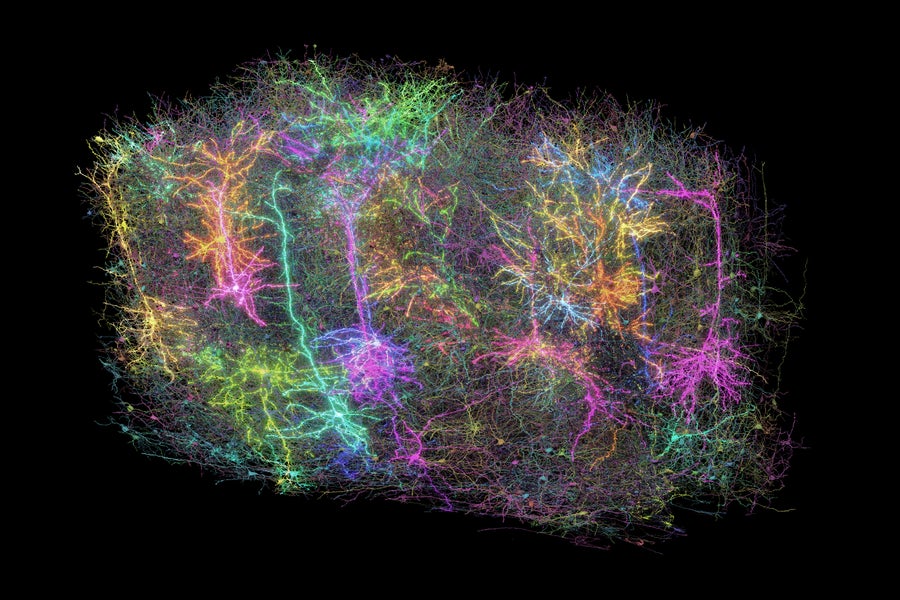
A rendering of more than 1,000 brain cells out of the those reconstructed from analysis of a cubic millimetre of brain tissue from a mouse. Allen Institute
.
.
Click the link below for the complete article:
.
__________________________________________
April 12, 2025
Mohenjo
Business, Food For Thought, Human Interest, Political, Science, Technical
amazon, business, Business News, current-events, Future, Hotels, human-rights, medicine, mental-health, research, Science, Science News, technology, Technology News, travel, vacation

Click the link below the picture
.
There was a time when entering couples therapy was seen as the death knell of a relationship – a last-ditch attempt to save a partnership beyond salvation.
“People are afraid that once you’ve gone to couples therapy, you’re on a negative track,” says Dr Matthew Siblo, a licensed professional counselor in Washington, DC.
Now, couples therapy is more commonplace. One 2023 survey found that 37% of US couples who live together have been to couples therapy. In 2022, nearly 30% of UK therapists reported a rise in the number of inquiries for couples counseling.
It’s also more successful. “Success, how we define it, is the couple establishing a closer friendship, a closer sense of connection … and better conflict management,” says Dr Julie Gottman, a clinical psychologist and co-founder of the Gottman Institute. According to Gottman, the success rate of couples therapy used to be about 17%. Now, the Gottman Institute’s methods have about a 75% success rate.
But what about when a relationship truly seems to be on its last legs? Will a couples therapist ever tell a pair to break up?
“I would not, personally,” says Siblo.
Siblo says he has never directly told a couple that he thinks they should break up, because he doesn’t think it would be appropriate or productive.
“I’m there to create a space of greater understanding,” he says. If that leads to people deciding to separate, Siblo can help them navigate that process. But telling a couple their relationship is not viable risks distracting them from the issues at hand; the focus becomes the therapist’s opinion rather than the pair’s relationship. Not only that, it could end up pushing the couple closer together by uniting them against a common enemy: the therapist.
“It would backfire,” Siblo says.
Telling clients what to do puts them in an “infantilized position”, says Gottman. If a couple is at a complete loss on how to move forward, Gottman might present them with several different options – including separation, in some cases – and talk them through each.
The goal is to empathize and disarm some of the defensiveness or critical ways of communicating
Gottman has intervened more directly in certain situations, she says, including cases involving domestic violence. There are two types of domestic violence, Gottman explains.
Roughly 80% is “situational”, meaning both people are involved and the violence is mild to moderate – for example, pushing, shoving or slapping. In these cases, Gottman says, “both people really want to change” and “they both might feel deeply ashamed and guilty”. Situational domestic violence is often the result of both partners getting emotionally “flooded” – going into fight-or-flight mode – during conflict. This dynamic can be successfully resolved with proper couples therapy, Gottman says.
But in the 20% of cases that are “characterological” – meaning there’s a clear victim and a perpetrator who takes no responsibility for the violence and inflicts major injuries – Gottman says intervention is appropriate.
“It’s crucial that the couple break up and the [victim], typically the wife, get somewhere safe,” she says.
In these instances, Gottman says she talks to the couple separately, and works with the victims on a safety plan to extricate themselves and any children from the relationships.
.
 Couples therapy has become more commonplace; a 2023 survey found that 37% of US couples who live together had tried it. Illustration: Angelica Alzona/Guardian Design
.
.
Click the link below for the complete article:
.
__________________________________________
April 11, 2025
Mohenjo
Business, Food For Thought, Human Interest, Political, Science, Technical
amazon, business, Business News, current-events, Future, Hotels, human-rights, medicine, mental-health, research, Science, Science News, technology, Technology News, travel, vacation
Click the link below the picture
.
CLIMATEWIRE | The Trump administration is canceling a popular grant program that has given states and communities billions of dollars to protect against natural disasters, according to an internal document obtained by POLITICO’s E&E News.
Federal Emergency Management Agency acting Administrator Cameron Hamilton wrote in a memo Thursday that the agency will not allocate the $750 million that was planned this year for Building Resilient Infrastructure and Communities grants. The BRIC program funds local projects that reduce damage from flooding, tornadoes, and other weather-related events.
FEMA also will stop funding projects that were previously approved for BRIC grants and are still underway, Hamilton wrote.
The cancellation is the Trump administration’s latest blow to FEMA, which provides tens of billions of dollars a year in disaster aid and grants. The administration has also frozen $10 billion in disaster aid for nonprofits, including hospitals, as it scrutinizes FEMA programs for potentially helping undocumented migrants.
Homeland Security Secretary Kristi Noem has floated shrinking or dissolving the agency, saying in March, “We’re going to eliminate FEMA.”
Although the agency has faced criticism — notably from President Donald Trump — for its response to major disasters, BRIC drew wide praise as an effort to make communities better able to withstand natural disasters and climate impacts.
BRIC has distributed $5 billion in grants since it began in 2020 during the first Trump administration, FEMA records show. The grants typically pay 75 percent of a project’s cost and have given some projects as much as $50 million.
The program was so popular that FEMA had to reject nearly 2,000 applicants seeking $13 billion in BRIC grants. The agency itself touts BRIC for helping states, localities, and native tribes “reduce their hazard risk” and “build capacity and capability.”
But Hamilton wrote Thursday that “BRIC grants have not increased the level of hazard mitigation as much as desired, and may supplant state, local, tribal and territorial capital investment planning.”
“With that in mind, I am providing new direction for the BRIC Program,” Hamilton added in his two-page memo.
Former senior FEMA officials expressed concern over the decision to stop releasing previously approved BRIC grant money.
“All of those things that were selected but had not begun will get canceled,” said one former senior official who asked not to be named to avoid alienating FEMA. The cancellation could apply to entire projects or to the second half of a project that is halfway completed.
“That will crush projects that are underway,” a second former senior FEMA official said.
Although BRIC is supported by Congress and coveted by states, the program has become a target of the Trump administration because of its focus during the Biden administration on addressing climate change and promoting equity.
.
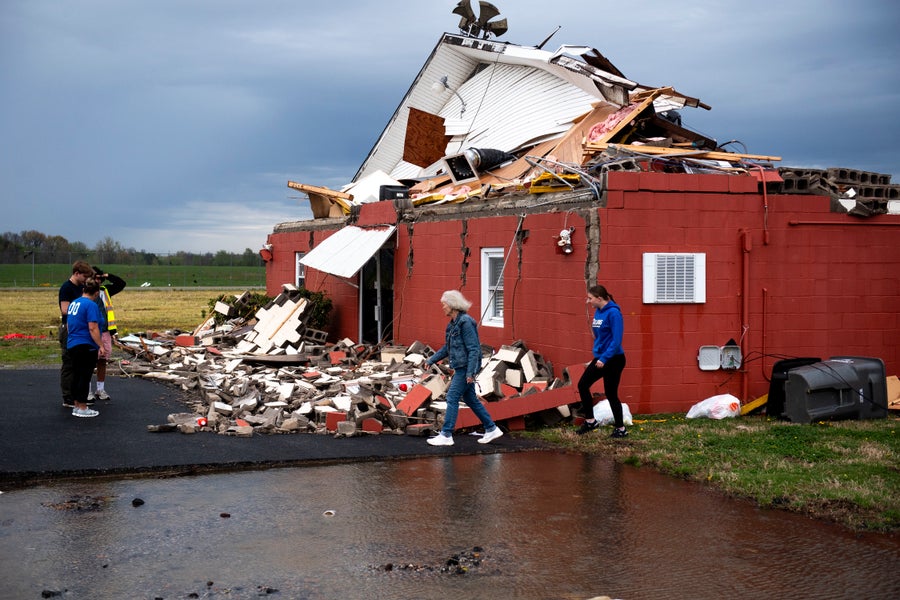
Parishioners and community members look over damage after a tornado struck the Christ Community Church on April 3, 2025, in Paducah, Kentucky. Kentucky Governor Andy Beshear issued a state of emergency ahead of the storms that are expected to cause flash flooding and tornadoes across Kentucky. Michael Swensen/Getty Images
.
.
Click the link below for the complete article:
.
__________________________________________
April 11, 2025
Mohenjo
Business, Food For Thought, Human Interest, Political, Science, Technical
amazon, business, Business News, current-events, Future, Hotels, human-rights, medicine, mental-health, research, Science, Science News, technology, Technology News, travel, vacation

Click the link below the picture
.
When I was pregnant with my daughter, my husband and I were already discussing being “one and done.” We’re both the oldest of three siblings in our respective families and knew the stressors that multiple kids placed on our parents. Yet, the door wasn’t totally shut on having more than one child.
Until I lost my job when I was six months pregnant.
The unexpected financial hardship was overwhelming. We were preparing to move into a larger apartment and were shocked by the high prices of baby essentials. We were already concerned about affording a baby with two incomes, so losing one without warning was our worst nightmare. Although my career and our finances eventually recovered, it became clear that we could comfortably only afford one child, especially given the uncertain job market and economy.
In the 10 years since I’ve had my daughter, I’ve encountered more and more parents, particularly millennials, who are choosing to have only one child. This trend may contradict recent research on people’s ideal family structure: a 2023 Gallup poll found that 47% of U.S. adults believe one or two children is the ideal family size, while 45% prefer three or more children. What’s more, the preference for larger families (three or more children) is currently at its highest point since 1971.
But the reality of what it costs to raise a child in the U.S. today makes plans for multiple children unattainable for many parents. On a positive note, there’s a silver lining to having one child, even if you wanted more.
The Rising Cost of Raising Children
The fertility rate in the U.S. has steadily declined since the Great Recession of 2007, according to Kent Bausman, PhD, professor of sociology at Maryville University in St. Louis. This pattern has been consistent for both millennials and Gen Z (who entered prime childbearing age in 2015).
In the two decades prior to the recession, the fertility rate in the U.S. remained relatively stable at just above replacement levels, fluctuating from 2.08 in 1990 to 2.12 in 2007.2However, the fertility rate has fallen below replacement levels every year since 2010 and has continued a steady decline from 1.9 in 2010 to 1.7 in 2024.
Dr. Bausman believes structural factors, such as skyrocketing housing costs, rising medical expenses, and the high price of child care, are playing a significant role in the decision to have one child.
“Child care was not as substantial a portion of the household budget for baby boomers and early Gen Xers,” Dr. Bausman explains. “For many millennials, having multiple children feels financially impossible.”
Estimates suggest the annual cost of raising a child in 2023 ranged from $15,512.52 to $17,459.43. For families with multiple children, the estimated cost per child ranged from $12,350 to $13,900 per year. Dr. Bausman adds the cumulative financial burden of another child is often comparable to adding an additional mortgage.
Lack of support
The high cost of living and child care is compounded by the lack of paid parental leave in the United States.
“Women are participating in the workforce more than ever before and their participation is needed for our economy to grow at a healthy pace,” says Setu Shah, founder and CEO of Financial Doula. “However, without proper paid leave and affordable child care, many parents are unable to take the financial burden of raising another child due to the sacrifice they would need to make to their careers, income, and/or lifestyle.”
Child care can be more expensive than rent and in-state college tuition in many states.6 Shah says many families are dipping into savings, taking on debt, and cutting out other major expenses just to afford it.
A mental load increase
Then there is the mental load of raising children. The unpaid, and typically invisible, cognitive labor that comes from handling a household has only intensified in recent years. That’s particularly due to increased demands and societal pressures that are greatly fueled by social media.
.
:max_bytes(150000):strip_icc()/PARENTS-mom-with-daughter-one-and-done-be4b089f38d644a19c8646b2ea68ced8.jpg) Parents/GettyImages/Akarawut Lohacharoenvanich
Parents/GettyImages/Akarawut Lohacharoenvanich
.
.
Click the link below for the complete article:
.
__________________________________________
April 10, 2025
Mohenjo
Business, Food For Thought, Human Interest, Political, Science, Technical
amazon, business, Business News, current-events, Future, Hotels, human-rights, medicine, mental-health, research, Science, Science News, technology, Technology News, travel, vacation
Click the link below the picture
.
Neuroscientists have observed for the first time how structures deep in the brain are activated when the brain becomes aware of its own thoughts, known as conscious perception.
The brain is constantly bombarded with sights, sounds, and other stimuli, but people are only ever aware of a sliver of the world around them—the taste of a piece of chocolate or the sound of someone’s voice, for example. Researchers have long known that the outer layer of the brain, called the cerebral cortex, plays a part in this experience of being aware of specific thoughts.
The involvement of deeper brain structures has been much harder to elucidate, because they can be accessed only with invasive surgery. Designing experiments to test the concept in animals is also tricky. But studying these regions would allow researchers to broaden their theories of consciousness beyond the brain’s outer wrapping, say researchers.
“The field of consciousness studies has evoked a lot of criticism and scepticism because this is a phenomenon that is so hard to study,” says Liad Mudrik, a neuroscientist at Tel Aviv University in Israel. But scientists have increasingly been using systematic and rigorous methods to investigate consciousness, she says.
Aware or not
In a study published in Science today, Mingsha Zhang, a neuroscientist at Beijing Normal University, focused on the thalamus. This region at the centre of the brain is involved in processing sensory information and working memory, and is thought to have a role in conscious perception.
Participants were already undergoing therapy for severe and persistent headaches, for which they had thin electrodes injected deep into their brains. This allowed Zhang and his colleagues to study their brain signals and measure conscious awareness.
The participants were asked to move their eyes in a particular way depending on whether they noticed an icon flash onto a screen in front of them. The icon was designed so that the participants would be aware of its appearance only about half of the time.
During the tasks, the researchers recorded neural activity in multiple regions of the brain, including the thalamus and the cortex. This is the first time that such simultaneous recordings have been made in people doing a task that is relevant to consciousness science, says Christopher Whyte, a systems neuroscientist at the University of Sydney in Australia. The work “is really pretty remarkable,” he says, because it allowed the team to look at how the timing of neural activity in different regions varied.
Gatekeeper
The activity in the participants’ thalamus and prefrontal cortex when they were aware of the icon’s appearance was markedly different from the activity when they were not. The activity when they were aware of the icon appeared earlier and was stronger in sections of the thalamus than in sections of the cortex, and seemed to be coordinated across the two areas. This suggests that the thalamus acts as a filter and controls which thoughts get through to awareness and which don’t, says Mac Shine, a systems neuroscientist at the University of Sydney.
.

An MRI image of the human brain. Alain Jocard/AFP via Getty Images
.
.
Click the link below for the complete article:
.
__________________________________________
Older Entries
Newer Entries
 James' World 2