The investigator in Syria had made the drive perhaps a hundred times, always in the same battered truck, never with any cargo. It was forty miles to the border, through eleven rebel checkpoints, where the soldiers had come to think of him as a local, a lawyer whose wartime misfortunes included a commute on their section of the road. Sometimes he brought them snacks or water, and he made sure to thank them for protecting civilians like himself. Now, on a summer afternoon, he loaded the truck with more than a hundred thousand captured Syrian government documents, which had been buried in pits and hidden in caves and abandoned homes.
He set out at sunset. To the fighters manning the checkpoints, it was as if he were invisible. Three reconnaissance vehicles had driven ahead, and one confirmed by radio what the investigator hoped to hear: no new checkpoints. Typically, the border was sealed, but soldiers from the neighboring country waved him through. He drove until he reached a Western embassy, where he dropped off the cargo for secure transfer to Chris Engels, an American lawyer. Engels expected the papers to include evidence linking high-level Syrian officials to mass atrocities. After a decade spent training international criminal-justice practitioners in the Balkans, Afghanistan, and Cambodia, Engels now leads the regime-crimes unit of the Commission for International Justice and Accountability, an independent investigative body founded in 2012, in response to the Syrian war.
In the past four years, people working for the organization have smuggled more than six hundred thousand government documents out of Syria, many of them from top-secret intelligence facilities. The documents are brought to the group’s headquarters, in a nondescript office building in Western Europe, sometimes under diplomatic cover. There, each page is scanned, assigned a bar code and a number, and stored underground. A dehumidifier hums inside the evidence room; just outside, a small box dispenses rat poison.
.
Image: Breaking News and Opinion on The Huffington Post
It sucks to be Merrick Garland right now. He was nominated to the job of his life — Supreme Court justice — and Republicans won’t even give him a vote. It’s not that they have bad things to say about him; they just don’t want President Barack Obama to fill the empty court seat.
It’s worth noting there are 46 other Merrick Garlands. That is, 46 other judicial nominees are in the same boat. They’re not in line for the Supreme Court, but like Garland, they’re nominees to federal courts who aren’t getting votes (except one, who just got scheduled for a Monday vote). That’s because GOP leaders don’t want to confirm judges until 2017. By then, they hope, a Republican will be in the White House and will put forward nominees they like better.
Not only are they screwing the judicial branch of government by dragging out confirmations — when vacancies pile up on district and circuit courts, people’s cases can get delayed for years and judges burn out — but they’re screwing themselves. Some GOP senators really need judicial nominees confirmed, but are being denied by their own party leaders.
.
Chip Somodevilla via Getty Images
Some snails glide at a faster pace than Senate Majority Leader Mitch McConnell (R-Ky.) is confirming federal judges.
What happens to the environment when humans disappear? Thirty years after the Chernobyl nuclear disaster, booming populations of wolf, elk and other wildlife in the vast contaminated zone in Belarus and Ukraine provide a clue.
On April 26, 1986, a botched test at the nuclear plant in Ukraine, then a Soviet republic, sent clouds of smoldering radioactive material across large swathes of Europe. Over 100,000 people had to abandon the area permanently, leaving native animals the sole occupants of a cross-border “exclusion zone” roughly the size of Luxembourg.
.
Vasily Fedosenko/Reuters
A white-tailed eagle lands on a wolf’s carcass in the 30 km (19 miles) exclusion zone around the Chernobyl nuclear reactor, in the abandoned village of Dronki, Belarus, on Feb. 15, 2016.
Around 20 million people in Bangladesh are drinking water with dangerously high levels of arsenic, and very little is being done to amend this situation, according to a Human Rights Watch report published Wednesday.
Development organizations implemented a massive national initiative in Bangladesh between the 1970s and 2000 to drill tube wells. It was a response to the widespread problem of fecal-contaminated water. However, what the development community didn’t realize was they were paving the way for a far worse crisis.
The ground water there contained tasteless and odorless arsenic, which, at high enough levels, can cause cardiovascular disease, cancer, skin legions and can ultimately lead to death and, in children, cognitive impairment. When the crisis was addressed in 2002, the World Health Organization called it “the largest mass poisoning of a population in history.”
The web of hidden money and offshore shell companies documented in the Panama Papers reveals an alternate financial universe that links a single law firm with a globe-spanning rogue’s gallery of politicians, moguls, criminals and shady agents.
While much attention has focused on links to Russian President Vladimir Putin, whose name doesn’t appear in the documents, the leaked files — reported by The International Consortium of Investigative Journalists — also expose new details about far-flung capers dating back decades.
The cases have little in common other than the involvement of the law firm, Mossack Fonseca. The connections are sometimes tangential, and the firm insists it did nothing illegal.
.
The Panama Papers leak details connections between the 1983 Brink’s-Mat gold heist in London to a shell company set up by Mossack Fonseca. PA Wire / via AP
Iceland’s Prime Minister Sigmundur David Gunnlaugsson is to step down after leaked documents from a Panamanian law firm showed his wife owned an offshore company with big claims on collapsed Icelandic banks, his party said.
Gunnlaugsson became the first prominent casualty from the revelations in the so-called Panama Papers, which have cast light on the financial arrangements of an array of politicians and public figures across the globe and the companies and financial institutions they use.
Earlier on Tuesday, Gunnlaugsson had asked Iceland’s president to dissolve parliament in the face of a looming no-confidence vote and mass street protests over the revelations.
.
Sigtryggur Johannsson/Reuters Iceland’s Prime Minister Sigmundur David Gunnlaugsson resigned Tuesday after a massive leak of documents revealed his wife owned an offshore company with big claims on collapsed Icelandic banks.
.
.
Click link below for story, video, photos and slideshow:
The interrogation room in which Iceland’s recent history was rewritten is sparse, furnished only with a table, some chairs, and a computer. A camera is fixed to the wall, and the frosted, double-glazed windows have completely blocked out the sound of the gale-force winds in Reykjavik’s Faxafloi Bay.
It was in this room that some of Iceland’s most powerful bankers, executives, and investors had to answer to special investigator Olaf Hauksson. A tall man with a heavy build, Haukkson has spent the past six years investigating the transactions that brought Iceland’s economy to its knees in October 2008.
At the time, the country’s three biggest banks folded within just three days, in part because their senior executives had illegally doctored the stock listings of their own banks. “Market manipulation”, as Hauksson curtly calls it.
.
Image: Breaking News and Opinion on The Huffington Post
.
.
Click link below for articles (read all articles):
President Barack Obama on Friday questioned Donald Trump’s qualifications for the presidency, arguing that the businessman’s recent comments on foreign policy suggest he “doesn’t know much” about global politics.
Obama, who has intensified his criticism of Trump in recent weeks, laid into him at the Nuclear Security Summit in Washington, when asked about the GOP front-runner’s remarks in a March 26 interview with The New York Times. Trump proposed withdrawing U.S. troops from Japan and South Korea, where tens of thousands of Americans are stationed, and suggested those countries should manufacture their own nuclear weapons — a reversal from decades of bipartisan consensus on nuclear disarmament.
Trump’s comments “tell us that the person who made the statements doesn’t know much about foreign policy or nuclear policy or the Korean peninsula or the world generally,” Obama said.
.
Image: Breaking News and Opinion on The Huffington Post
Editor’s note: Donald Trump regularly incites political violence and is a serial liar, rampant xenophobe, racist, misogynist and birther who has repeatedly pledged to ban all Muslims — 1.6 billion members of an entire religion — from entering the U.S.
Five of the biggest names on the U.S. women’s national soccer team roster filed a complaint against the U.S. Soccer Federation on Wednesday, demanding equal pay for equal work and calling for an investigation of what they believe to be U.S. Soccer’s discriminatory wage practices.
The complaint comes less than nine months after the women’s team hoisted up the gold trophy at the 2015 World Cup, a feat the men’s team has never accomplished.
While Carli Lloyd, Alex Morgan, Megan Rapinoe, Becky Sauerbrunn and Hope Solo were the players who actually inked their names onto the filing, they emphasized they were taking action on behalf of the entire national team.
Most people remember that the Arab Spring started with a guy who lit himself on fire. What they don’t remember is that he did it as a protest against corruption: Mohamed Bouazizi, a Tunisian fruit vendor, decided he’d been shaken down by police officers one too many times.
Bouazizi’s death set in motion the biggest political upheaval of the 21st century. The Arab Spring was “mostly about corruption,” said FBI Special Agent George McEachern, one of the leading investigators of global graft. “Corruption leads to failed states, which leads to terrorism.”
That’s what makes the corruption revealed in a new trove of confidential emails from a mysterious Monaco-based company called Unaoil so significant.
On Wednesday, The Huffington Post and its Australian partner, Fairfax Media — led by reporters Richard Baker and Nick McKenzie — published the results of a months-long investigation of Unaoil, an obscure firm that helps big multinational corporations win contracts in areas of the world where corruption is common.
.
The Age
A massive new foreign corruption scandal could ensnare big-name American, European and Asian companies.
Film and Writing Festival for Comedy. Showcasing best of comedy short films at the FEEDBACK Film Festival. Plus, showcasing best of comedy novels, short stories, poems, screenplays (TV, short, feature) at the festival performed by professional actors.
 Image: Breaking News and Opinion on The Huffington Post


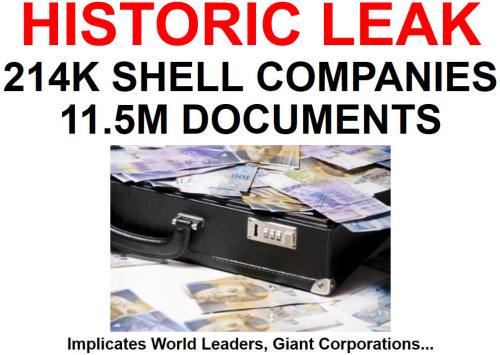 Image: Breaking News and Opinion on The Huffington Post
 Image: Breaking News and Opinion on The Huffington Post


