Is the outlook for technology in 2018 exciting — or slightly terrifying? Flip a coin. You’d be right either way.
As I look into my crystal ball at what new technologies are most likely to shape our lives in the next 12 months, I see science-fiction dreams coming to life: glasses that mix reality and imagination, an electric car in my driveway and gadgets that charge without plugs.
But coming out of a year where most Americans were hacked and Silicon Valley got scolded by Congress, there’s plenty to worry about. How many ways will artificial intelligence make decisions without us? And how long should we remain panicked about cybersecurity lapses?
.
After such a hectic year for tech, here’s what The Post’s Geoffrey A. Fowler expects in 2018.(Jhaan Elker/The Washington Post)
President Donald Trump on Thursday said he believes he holds ultimate authority to direct the Department of Justice as he sees fit, while noting the ongoing inquiry into Russian intervention in the 2016 presidential election has made the country “look very bad.”
Trump, speaking in an impromptu interview with The New York Times from his golf club in West Palm Beach, Florida, said more than a dozen times that no collusion had been uncovered during the sweeping probe by special counsel Robert Mueller. While he noted that the sooner the inquiry was completed, “the better it is for the country,” Trump also broke with his most ardent supporters and said he believed Mueller would treat him fairly.
“I have absolute right to do what I want to do with the Justice Department,” he told the Times. “But for purposes of hopefully thinking I’m going to be treated fairly, I’ve stayed uninvolved with this particular matter.”
Five Sherpas surrounded the frozen corpse. They swung axes at the body’s edges, trying to pry it from its icy tomb. They knocked chunks of snow from the body, and the shattered pieces skittered down the mountain. When they finally freed a leg and lifted it, the entire stiff and contorted body shifted, down to its fingertips.
The sun was shining, but the air was dangerously cold and thin at 27,300 feet above sea level. A plume of snow clouded the ridge toward the summit of Mount Everest, so close above. When the Sherpas arrived — masks on their faces, oxygen tanks on their backs — the only movement on the steep face came from the dead man’s frayed jacket pockets. They were inside out and flapping in the whipping wind.
More than a year of exposure to the world’s wickedest elements had blackened and shriveled the man’s bare face and hands. His hydrant-yellow summit suit had dulled to the hue of a fallen leaf. The bottom of his boots pointed uphill. His frozen arms were bent at the elbows and splayed downhill over his head. It was as if the man sat down for a rest, fell backward and froze that way.
.
Subhas Paul, left, and his guide, Lakpa Sherpa, at the summit.Subhas Paul
An 81-year-old veteran hobbled into the emergency room at the rural Veterans Affairs hospital here in December, malnourished and dehydrated, his skin flecked with ulcers and his ribs broken from a fall at home.
A doctor examining the veteran — a 20-year Air Force mechanic named Walter Savage who had been living alone — decided he was in no shape to care for himself and should be admitted to the hospital. A second doctor running the inpatient ward agreed.
But the hospital administration said no.
Though there were plenty of empty beds, records show that a nurse in charge of enforcing administration restrictions said Mr. Savage was not sick enough to qualify for admission to the hospital. He waited nine hours in the emergency room until, finally, he was sent home.
.
Walter Savage, 81, an Air Force veteran, at a medical center in Roseburg, Ore. Mr. Savage was turned away from the veterans hospital there even though two doctors said he should have been admitted.CreditRuth Fremson/The New York Times
A scientist recruited by the renowned Cleveland Clinic is stuck in India because his visa is delayed. An entrepreneur courted by Silicon Valley companies had his application denied. Many green card applicants have new interviews to pass.
The Trump administration has pursued its immigration agenda loudly and noticeably, ramping up arrests of undocumented immigrants, barring most travel from several majority-Muslim countries and pressing the case for a border wall.
But it has also quietly, and with much less resistance, slowed many forms of legal immigration without the need for Congress to rescind a single visa program enshrined in the law.
.
The Cleveland Clinic has faced challenges securing visas for foreign-born specialists, one of many employers affected by President Trump’s tougher approach toward immigration.CreditT.J. Kirkpatrick for The New York Times
It was a spring Friday night when one of Japan’s best-known television journalists invited Shiori Ito out for a drink. Her internship at a news service in Tokyo was ending, and she had inquired about another internship with his network.
They met at a bar in central Tokyo for grilled chicken and beer, then went to dinner. The last thing she remembers, she later told the police, was feeling dizzy and excusing herself to go to the restroom, where she passed out.
By the end of the night, she alleged, he had taken her back to his hotel room and raped her while she was unconscious.
The journalist, Noriyuki Yamaguchi, the Washington bureau chief of the Tokyo Broadcasting System at the time and a biographer of Prime Minister Shinzo Abe, denied the charge and, after a two-month investigation, prosecutors dropped the case.
.
Shiori Ito told the police she had been raped by Noriyuki Yamaguchi, then the Washington bureau chief for the Tokyo Broadcasting System and a biographer of Prime Minister Shinzo Abe.CreditJeremie Souteyrat for The New York Times
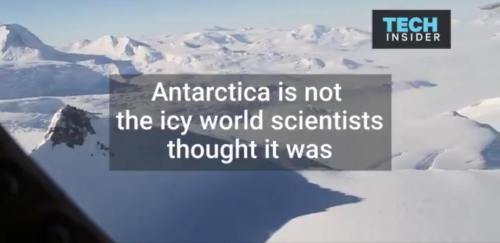
Antarctica is melting more than expected, and it’s changing sea levels. A team of scientists recently compiled the most detailed map yet of liquid water across Antarctica. They found water in places where it was thought to be impossible.
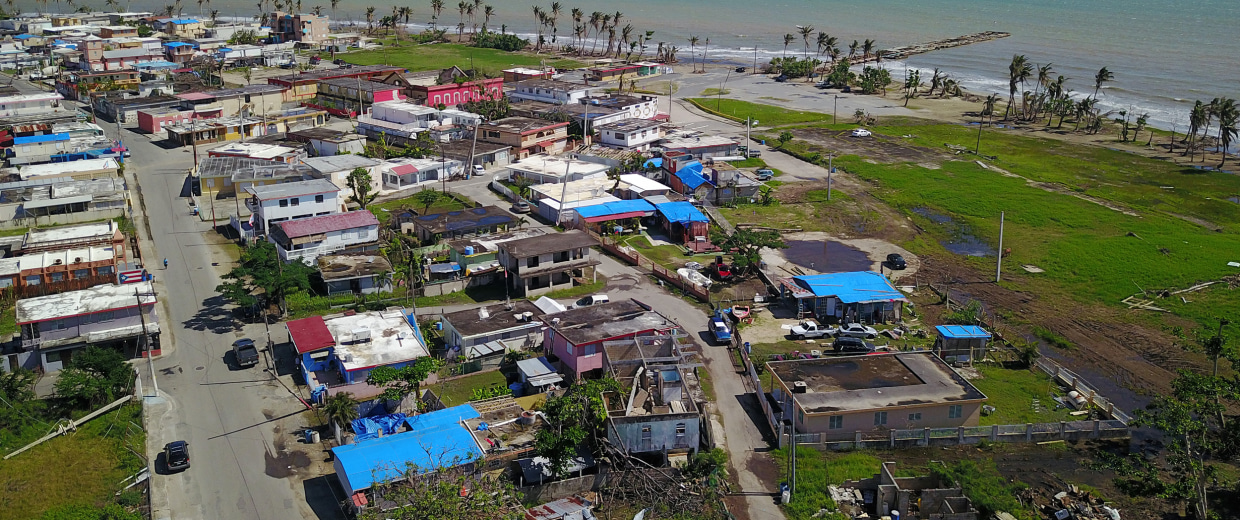
The world-renowned resort community here is a ghost town. No one sits by the three-tiered pool even though it’s high tourist season. At the area’s largest hospital, four of the five floors are closed. Long lines still form for ice and water. Livelihoods have disappeared. “No hay luz” (there is no power) is a repeated refrain from almost everyone.
It has been three months since Hurricane Maria entered Puerto Rico like a battering ram through Humacao, sweeping through this southeastern coastal city and into the island’s history as its worst natural disaster.
But the catastrophe continues. Still largely without electricity and clean water, people who withstood the hurricane’s force feel abandoned and question whether the U.S. government cares about their survival.
.
The Punta Santiago beachfront neighborhood in Humacao, Puerto Rico. Ricardo Arduengo / for NBC News
Film and Writing Festival for Comedy. Showcasing best of comedy short films at the FEEDBACK Film Festival. Plus, showcasing best of comedy novels, short stories, poems, screenplays (TV, short, feature) at the festival performed by professional actors.

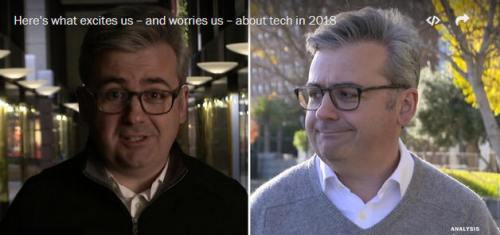 After such a hectic year for tech, here’s what The Post’s Geoffrey A. Fowler expects in 2018.





 .
.
 .
.
 James' World 2