
Click the link below the picture
.
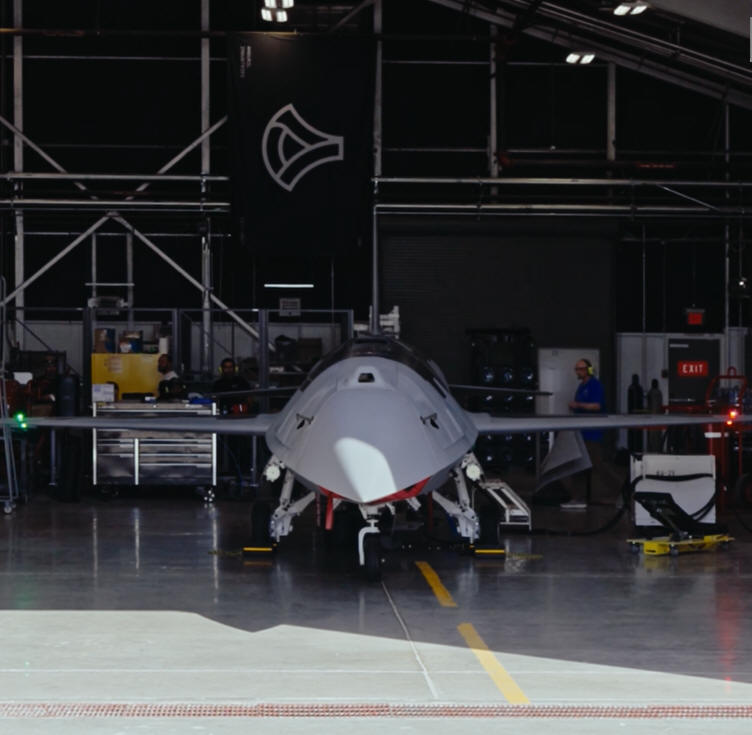
On a clear afternoon this month, high above the Mojave Desert, an A.I.-powered drone launched a missile in a test that could reshape modern warfare.
Since the dawn of the jet age, the U.S. military has used the isolation over this stretch of sand to push secret, experimental aircraft to their aerodynamic and technological limits. It’s doing the same today: fine-tuning machines capable of engaging in aerial combat with barely any human intervention. These drones’ flight is controlled not by a pilot, not by human remote control, but entirely by onboard software. It’s a historic advancement in drone technology that aims to incorporate artificial intelligence into everyday warfighting.
Today’s conflicts are increasingly defined by unmanned weapons, delivering destruction over battlefields in Ukraine, Iran and Sudan. But in almost all these cases, there is a human operator sitting somewhere, steering each robot toward its target.
The two types of next-generation drones being tested over Southern California today, built for the Air Force by Anduril and General Atomics Aeronautical Systems, can fly entirely on their own. They make hundreds of split-second decisions to maneuver, evade, and attack enemy targets, based upon countless hours of flight data and computer processing. A human is involved at just a few key moments in each flight: to program the drone’s mission, to start and stop the mission, and to decide whether or not the drone should launch a weapon. Late last year, the companies’ drones flew for the first time. Anduril fired its first missile two weeks ago, and General Atomics says it is not far behind.
The Air Force program is part of a sweeping overhaul in how the American military prepares for war. Defense Secretary Pete Hegseth said in January that he intended to make the military “an ‘A.I. first’ warfighting force across all domains.” Throughout the Pentagon, Uncle Sam-style recruitment posters with Mr. Hegseth’s likeness declaring “I want YOU to use A.I.” are plastered on the walls. His department has requested $54.6 billion in next year’s budget for the Defense Autonomous Warfare Group, or DAWG, a body recently set up to coordinate all autonomous weapons programs across U.S. forces.
The United States isn’t alone in this pursuit. Around the world, and particularly in China and Russia, an arms race is emerging to mass-produce autonomous, A.I.-operated war machines. President Vladimir Putin of Russia declared in 2017 that whoever leads in A.I. “will become the ruler of the world.” President Xi Jinping of China has poured billions of dollars into A.I. development for the country’s military. Prototypes of smaller, rudimentary A.I.-assisted weapons have already been reported in action in Ukraine, Libya, Azerbaijan and Gaza. In a few years, we could see swarms of self-guiding robots not only in the skies, but also at sea and on the ground.
As the world’s militaries race to weaponize artificial intelligence, the international community has failed to establish limits on its use. The United Nations has spent a decade deliberating how to restrict autonomous weapons — a rare instance of anticipating a global threat before it arrives. Yet these efforts have yielded no binding rules or codes of conduct.
Instead, global leaders are accelerating toward an era of automated warfare. The fear of body bags has been one of the greatest deterrents to conflict in history. Mass-produced, expendable robots do not carry the human or financial costs that have tempered the urge to go to war for centuries.
“Right now, we’re racing in the dark,” said Jack Shanahan, a retired Air Force lieutenant general and former director of the military’s Joint Artificial Intelligence Center. “No one is talking to one another about the technology their nations are developing, and there’s an incentive to rush it into the field. I do think, unfortunately, something may go horribly wrong before it gets better.”
.
 Aleksey Kondratyev For The New York Times
.
.
Click the link below for the complete article:
.
__________________________________________


Leave a Reply