A Bermuda high parked over the western Atlantic is pulling sweltering air up from the south, challenging records in parts of the eastern U.S.
For those in the eastern half of the country, mid-May is feeling a lot more like midsummer, with an early heat wave bringing record-breaking temperatures.
Boston hit 96 degrees Fahrenheit on Tuesday, breaking the date’s previous record of 90 degrees F, which was set back in 1949. Washington Dulles International Airport near Washington, D.C., hit 94 degrees F, surpassing the previous record for May 19 of 92 degrees F. The city reached 97 degrees F, surpassing the previous record by one degree F. And Philadelphia reached 98 degrees F on Tuesday, besting the previous record of 96 degrees F, which was set in 1962.
The cause of the roasting heat is a weather system that always accompanies a big spike in temperatures: a high-pressure ridge. In this specific case, the system is called the Bermuda high, a semipermanent area of high pressure hanging out over the Atlantic Ocean to the east of North America that is also one of the atmospheric features that steers summer hurricanes. The clockwise flow of air around the Bermuda high pulls up warm, humid air from the south.
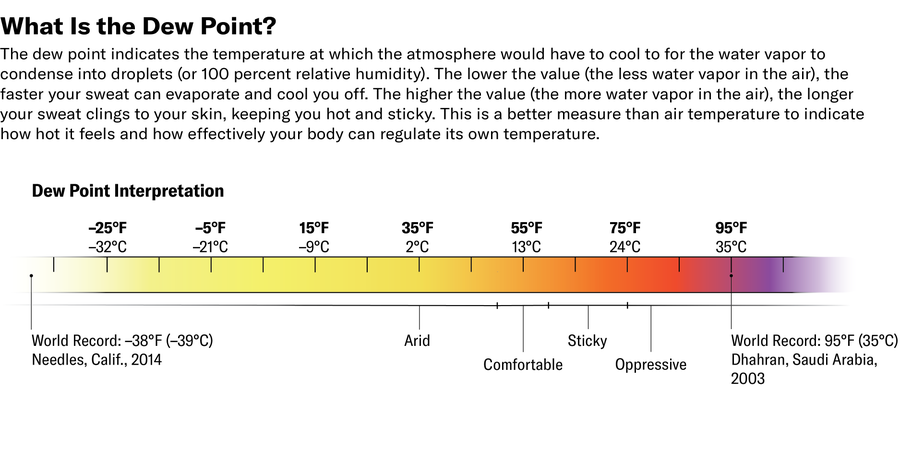
This heat wave is not as intense as the one that sent temperatures soaring well into the triple digits in the Southwest in March, but it’s still bringing temperatures into the 90s Fahrenheit from the mid-Atlantic to the Northeast—well ahead of average. Humidity is also rising, with dew points in the 60s F—that’s not as sweltering as they can be in the dog days of summer, but it’s the highest they have been so far this year, says Marc Chenard, a meteorologist at the National Weather Service’s (NWS’s) Weather Prediction Center.
Zane Wolf; Source: National Weather Service (data)
.
Though this week’s temperatures won’t challenge any all-time record highs, they still pose a health risk because people are less acclimated to heat this early in the year. The NWS’s HeatRisk map tool shows “major” heat risk—the second highest category—from Washington, D.C., up to Boston. Relatively high overnight temperatures are a particular concern because they mean people’s body doesn’t have a chance to cool down and recover.
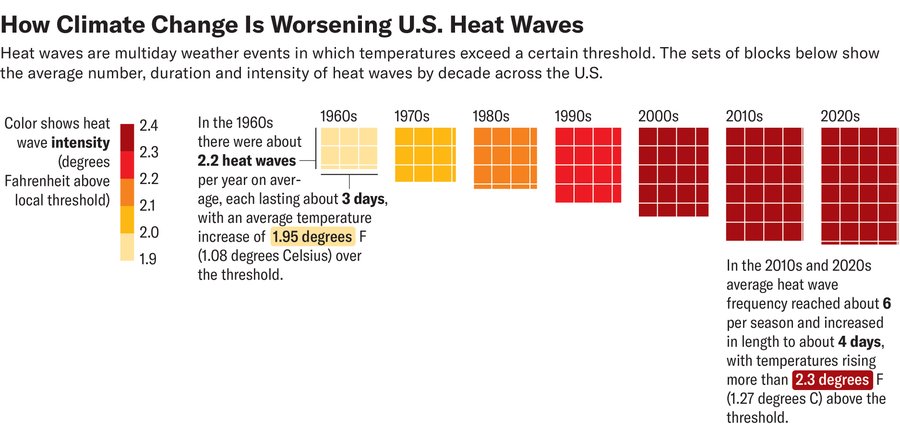
Climate change is driving this event, too. Overall, summer heat waves are becoming more intense, longer-lasting, and more frequent. The high-heat season is also bleeding into spring and fall. For this particular heat wave, a tool from the nonprofit research group Climate Central shows that this heat event is two to five times more likely because of climate change.
This heat wave will be short-lived for northern areas because a “back-door cold front” will roll through later on Wednesday, Chenard says. First, a more traditional cold front, with winds from the northwest, will move into the area, and then winds will switch to become northeasterly. That shift will reinforce the coolness and keep the heat from reasserting itself over the mid-Atlantic and Northeast. The Southeast, though, will continue to feel sultry temperatures amid a widespread drought that is raising wildfire risks.
.
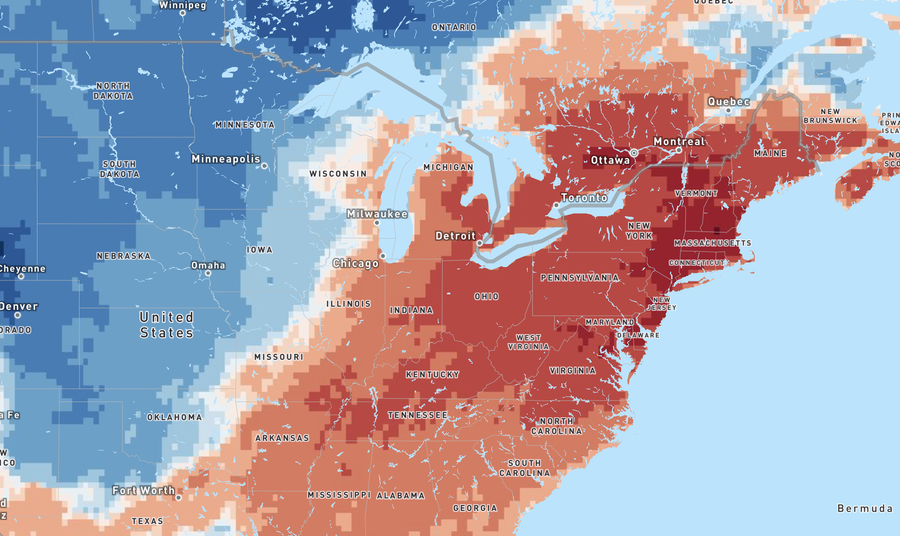
Temperatures were more than 10 degrees Fahrenheit above normal (darkest red shades) on May 19. Climate Central
In the world, human beings are facing various problems. People who are full of greed, anger, and ignorance are seen to be fighting with each other in words and deeds. As the fighting continues, various problems such as civil wars, wars of aggression, and wars of aggression are occurring. As world peace is being destroyed, humans are facing unbearable problems. Innocent children and women are not getting the rights they deserve and deserve. I can't think of one thing every time. What is it? The United Nations. If we look at the responsibilities and duties of the United Nations, I think it is not suitable for solving the problems that are happening in the world today. In fact, the United Nations and the World Security Council, such an organization must rule the world, must be able to give orders, and must have various ways to obey orders. There must be no organization that can influence more than that organization. There should be experts from each country. They can even dominate the superpowers like the US, China, and Britain. Only then will global peace be achieved quickly. Now, if a country with power develops more militarily, economically, or socially than its own country, then powerful countries will jealously seek out enemies and wage war. Or they will attack with fighter jets. In this, innocent people are losing their lives. No one understands the value of a life. You should think about how to achieve global peace by controlling these. If the US continues to be the permanent president of the UN, world peace will never be achieved. If you think carefully, no one sees that they are working for the common good, but for their own benefit, for the benefit of their own country. The permanent president of the UN and the Security Council has rejected this, As a young Rohingya, I have come to realize that only by electing the president and secretary from among the countries in the world through a secret ballot system and governing the world fairly can we achieve global peace. The United Nations and the Security Council are organizations in which any country must govern, give orders, and make them obey their orders. For example, only when a defendant is tried in court can we hold the leaders of the countries in check and control them, can we achieve global peace smoothly. Otherwise, it will not be easy for powerful countries to use various excuses to end this war every year, every year, for the benefit of themselves and their countries. No country's leaders pay any attention to the words of the United Nations and the Security Council. If we look at it in practice, look at the Rohingya issue. Myanmar is a small country. Even that country has been under siege for 8 years. What action can be taken? Why is the UN and the Security Council Powerless? Without such Power, how can the organization bring about global peace? Everyone should think about it. Whether there is a veto or a strong one, all countries in the world can only achieve global peace if they are subject to the UN and the Security Council. Seek peace in the quiet embrace of nature. Peace is an indispensable need of the human race. It is not as if one person can kill another person, and it is as if one country can attack another country, but instead of trying to build peace, we must try to destroy the peace now, and the world is getting hotter and is on the verge of collapse. I especially appeal to all the world experts to urgently try to bring about peace in all parts of the world. Mr, Noor Muhamed Arkhan Rohingya Youth Myanmar
Film and Writing Festival for Comedy. Showcasing best of comedy short films at the FEEDBACK Film Festival. Plus, showcasing best of comedy novels, short stories, poems, screenplays (TV, short, feature) at the festival performed by professional actors.



May 24, 2026 @ 02:23:20
Nice information.
LikeLike
May 24, 2026 @ 02:40:16
Thank you sir! Some people will say the end the near cause you can’t tell winter from summer!
LikeLiked by 1 person