
Click the link below the picture
.
As a human being, every time I see a new jaw-droppingly gorgeous astronomical image, I’m staggered by the beauty of the cosmos.
But as an astronomer who’s been observing the universe his whole life, when I see these images, I’m amazed at how far we’ve come in that time, technologically speaking, and how much easier they are to make than they used to be. It’s true that the very best pictures still require large observatories on the ground or in space, but even holding your smartphone to the eyepiece of a consumer-grade telescope can yield images that only a few decades ago would have been the envy of all the world’s astronomers.
And remarkably, this awesome power to casually capture breathtaking celestial snapshots—or selfies, for that matter—with a camera that fits in your pocket traces back, in part, to the work of astronomers using giant telescopes on the ground and in space. Both share a common legacy. Astronomers, it turns out, were among the first to develop and realize the power of digital cameras. Next time you upload a snapshot to social media, don’t forget to thank us. And you’re welcome!
I’m old enough to have used film cameras when I was young. In high school, I bought a fancy camera and snapped roll after roll of astrophotography through my telescope. It was difficult, expensive, and time-consuming, but a lot of fun—despite my mom’s complaints about the noxious smells of photographic chemicals coming from my makeshift darkroom where I developed the film.
Professional astronomers used similar techniques back then, but instead of flexible plastic film, they preferred glass plates with light-sensitive material sprayed onto one side. These were loaded into complex (and heavy!) metal boxes that were mounted to the back ends of telescopes and exposed to the target. Once the observations were complete, chemicals were applied to develop the plates and create the photo. The big advantage of this was stability—many archives today still house thousands of plates dating back well more than a century. These priceless troves of data from the past can’t be replicated—but they can’t be erased or corrupted with an errant keystroke, either, like so much of today’s digital images.
But the process of analog astrophotography is arduous, and slow. The tiny, light-reactive grains of chemicals that produce the picture are not terribly sensitive, so exposures take many hours. Even then, seeing faint objects is difficult. Getting quantitative science from them is a pain as well because measuring the brightness of an object recorded this way is arduous and not as precise as one could hope. But for a long time this was the best astronomers—or anyone else—could get, so these drawbacks were tolerable.
.
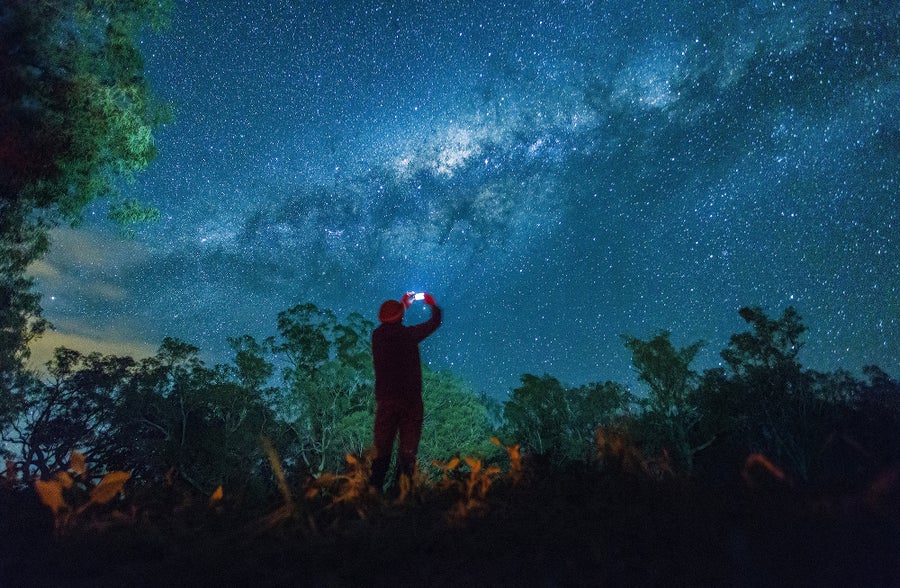
David Trood/Getty Images
.
.
Click the link below for the article:
.
__________________________________________
 James' World 2
Jun 13, 2024 @ 20:30:54
nice share
LikeLike
Jun 14, 2024 @ 09:00:46
Thank you, thanks for the visit!
LikeLike