
Click the link below the picture
.
A little less than one-third of the universe—around 31 percent—consists of matter. A new calculation confirms that number; astrophysicists have long believed that something other than tangible stuff makes up the majority of our reality. So then, what is matter exactly?
One of the hallmarks of Albert Einstein’s theory of special relativity is that mass and energy are inseparable. All mass has intrinsic energy; this is the significance of Einstein’s famous E=mc2 equation. When cosmologists weigh the universe, they’re measuring both mass and energy at once. And 31 percent of that amount is matter, whether it’s visible or invisible.
That difference is key: Not all matter is alike. Very little of it, in fact, forms the objects we can see or touch. The universe is replete with examples of matter that are far stranger.
What is matter?
When we think of “matter,” we might picture the objects we see or their basic building block: the atom.
Our conception of the atom has evolved over years. Thinkers throughout history had vague ideas that existence could be divided into basic components. But something that resembles the modern idea of the atom is generally credited to British chemist John Dalton. In 1808, he proposed that indivisible particles made up matter. Different base substances—the elements—arose from atoms with different sizes, masses, and properties.
.
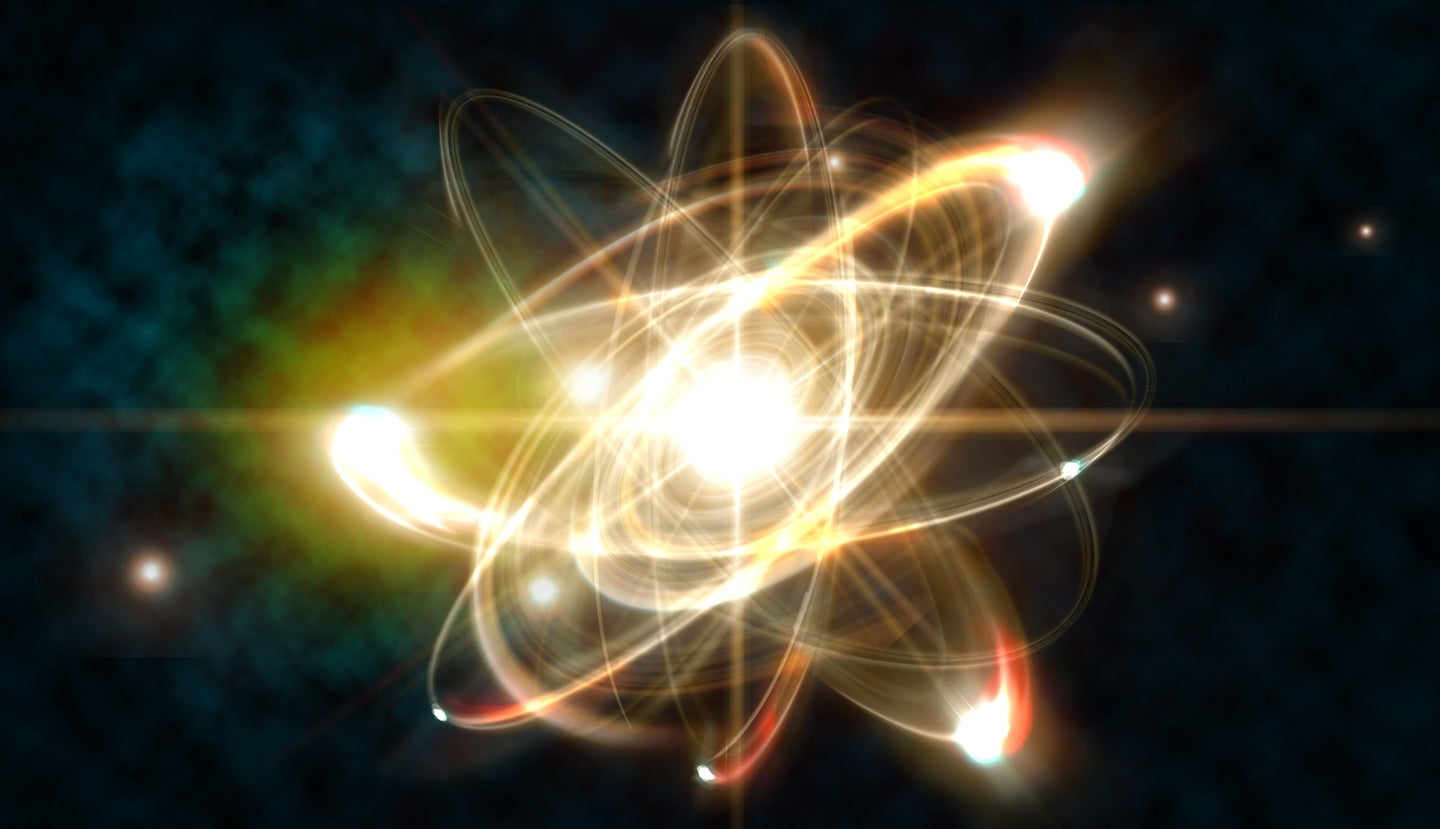 An atom consists of protons, neutrons, electors, and a nucleus. But matter consists of a whole lot more. Deposit Photos
.
.
Click the link below for the article:
https://www.popsci.com
.
__________________________________________
 James' World 2
Sep 28, 2023 @ 14:51:21
Nice Post ❤️💯👋🇪🇦
LikeLike
Sep 28, 2023 @ 19:03:49
Thank you!
LikeLike